
What Is Wrong with Decommunization in Odesa
Today, against the backdrop of the Odesa local authorities’ overt sabotage of the Law of Ukraine “On the Condemnation and Prohibition of Propaganda of Russian Imperial Policy in Ukraine and the Decolonization of Toponymy,” a threatening situation has also developed regarding compliance with the Law of Ukraine “On the Condemnation of the Communist and National Socialist (Nazi) Totalitarian Regimes in Ukraine and the Prohibition of Propaganda of Their Symbols,” which entered into force back on 21 May 2015.
In our view, this is connected with the mayor’s position. From 2014 right up to the beginning of the full-scale invasion, Hennadii Leonidovych played the card of Odesa’s pro-Russian separatism in his domestic political struggle. His position shifted depending on the foreign-policy landscape and the situation at the front: from “The people in Crimea made their choice” in an interview with Green Leaf journalist Vira Zaporozhets on 10 May 2014 to “I am worried by the growth of hatred of all things Russian” in an interview with The New York Times, 18 June 2022.
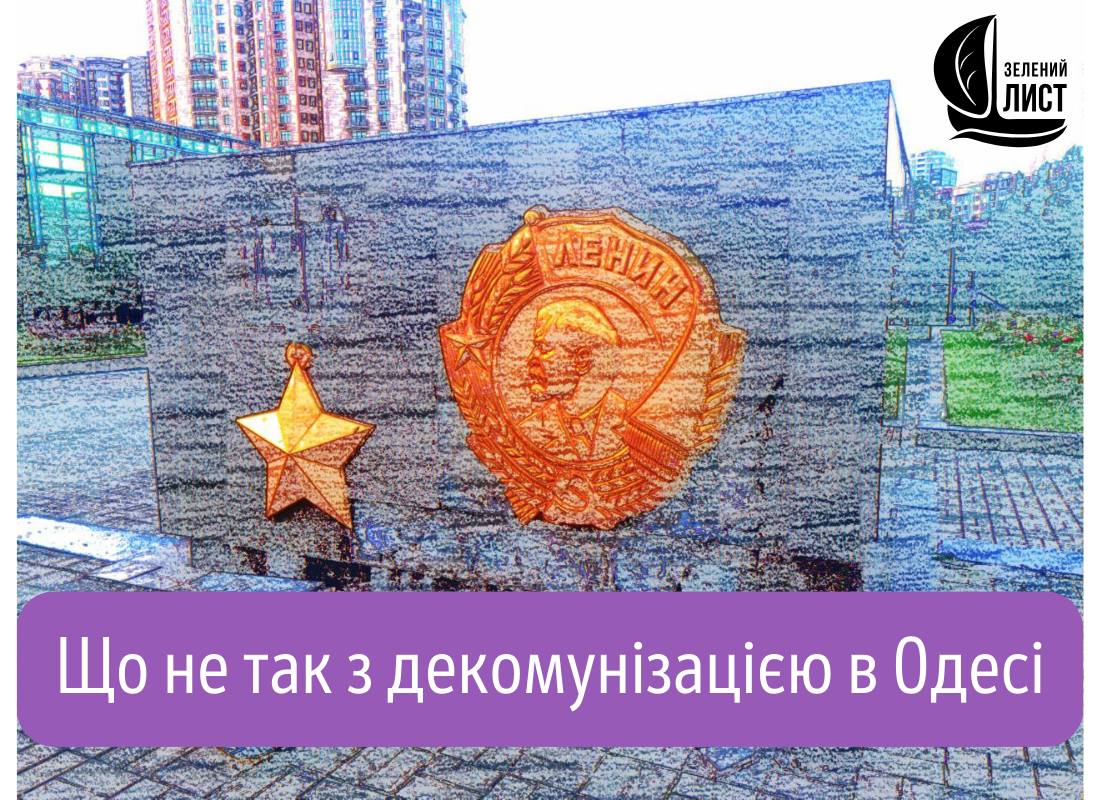
One litmus test of the consequences of this kind of “concern” on Trukhanov’s part is the effort to preserve symbols of Soviet rule and imperial toponymy. Even though the Historical and Toponymic Commission, at its meeting on 18 December 2023 (Minutes No. 7.2-2023), decided to recommend removing the image of the Order of Lenin from the Wings of Victory Memorial, that decision is simply being ignored.
On 2 September 2024, an appeal was sent to the mayor of Odesa by Odesa City Council deputy Maryna Boiko as well. However, the editorial office received no response to that letter.
On 7 September 2024, Serhii Hutsaliuk also stated that the Odesa city authorities were sabotaging implementation of the decommunization law..
This state of affairs in Odesa is also connected with the position of the police
When necessary, the police simply “do not see” blatant violations of these laws and are in no hurry to enforce their provisions.
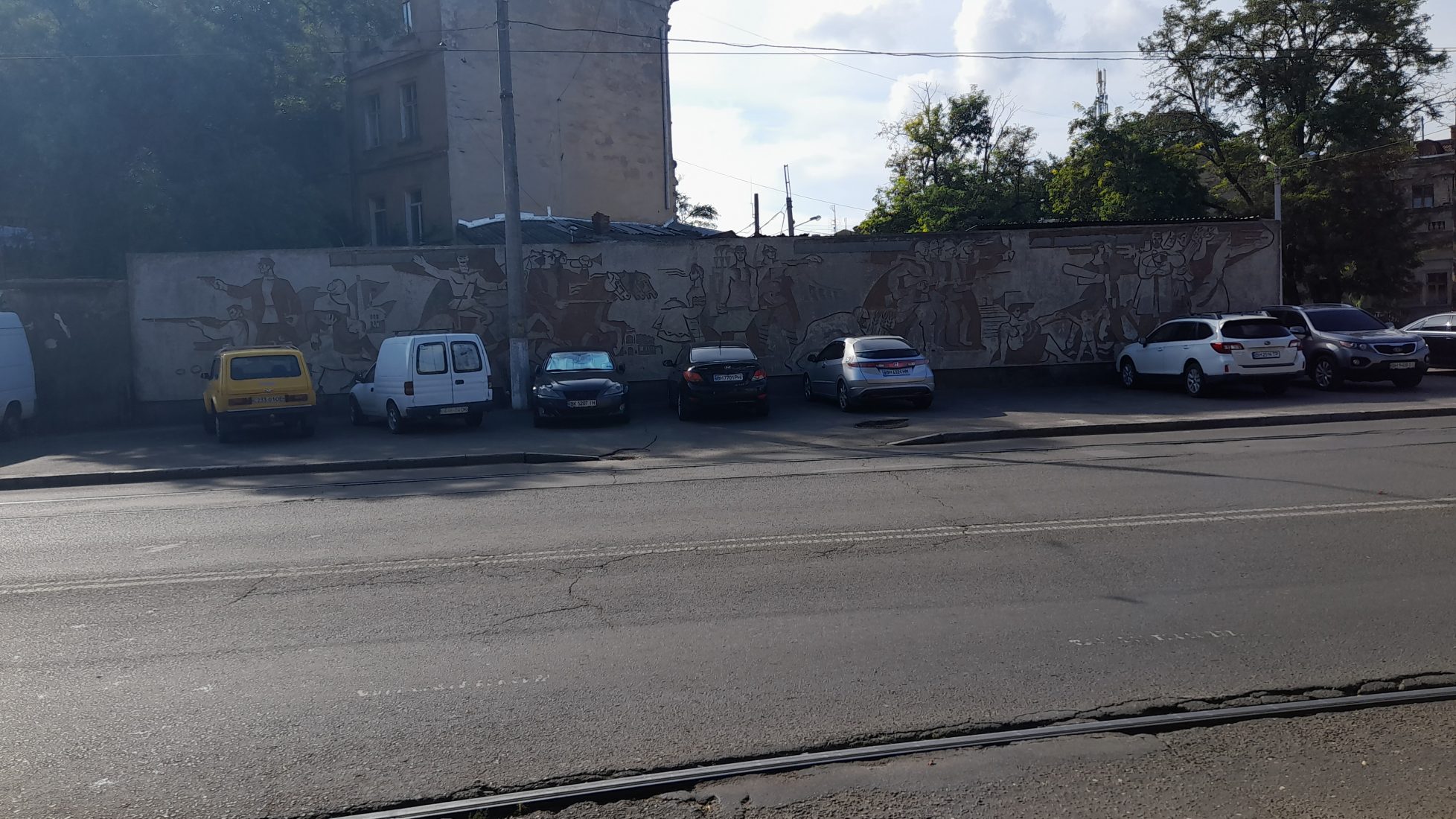
On 20 September, Green Leaf appealed to Police Department No. 3, opposite which the bas-relief “Fighters for Soviet Power in Odesa” still stands. It was erected in honour of revolutionaries who died during the January uprising — the armed revolt of 1918 organized by the Bolshevik Party against the Ukrainian Central Rada and the Ukrainian People’s Republic during the advance of Bolshevik troops. As a result of the uprising, the city came under Bolshevik control and the lawful authorities in Odesa were overthrown.
Green Leaf also appealed to the Main Directorate of the National Police in Odesa Oblast regarding a memorial plaque to Komsomol members and Communists that still remains on the building at 44 Preobrazhenska Street.
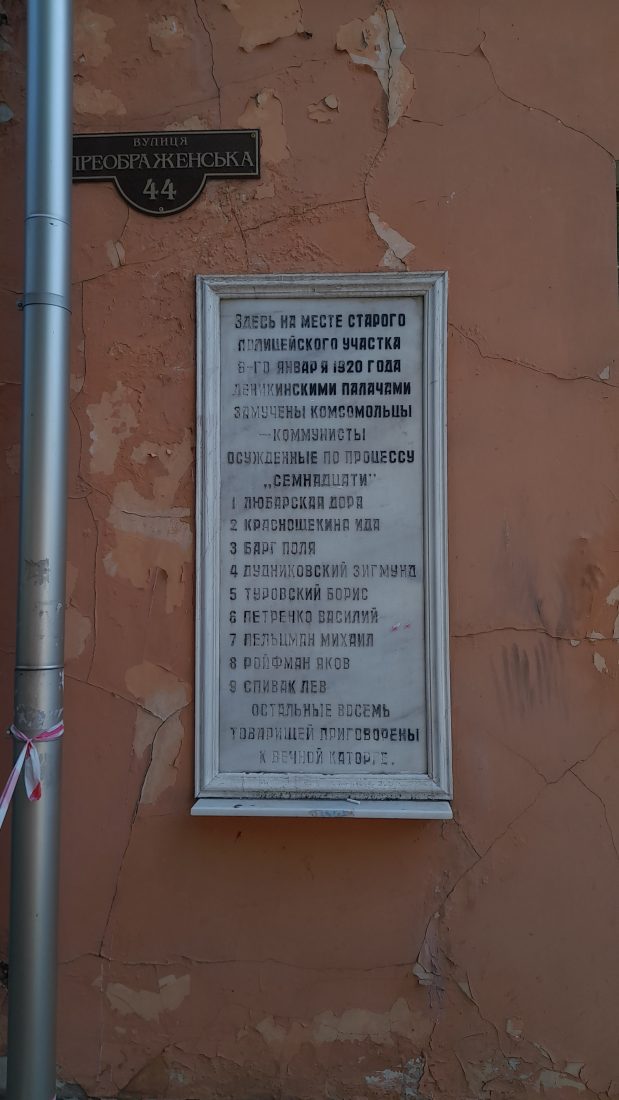
Both symbols of Soviet rule fall within the scope of the Law. Yet the police are not only in no hurry to enforce the Law; on the contrary, their presence appears to protect symbols of the era of the Soviet occupation of Odesa.
At the same time, the police intervene when civic activists try to fulfil the requirements of the Law themselves, but can think of nothing better than drawing up reports under Article 173 of the Code of Ukraine on Administrative Offences (petty hooliganism).
So we end up with a Law adopted, among other things, to safeguard human and civil rights and freedoms and to outlaw symbols of the Soviet era; we have the police duty to protect human rights and freedoms; and we have the reality in which the city authorities and the police do not want to comply with the requirements of a Law adopted almost ten years ago.