
Vegetable oil released into the Black Sea after Russian strikes on port infrastructure in December 2025 and spring 2026 continues to pollute the coast of Tuzlivski Lymany National Nature Park. In late October and early November, park staff found more contaminated stretches of the sandy barrier and shallow coastal waters. After storms, researchers observed signs that oil may have accumulated both on the surface and within layers of sand.
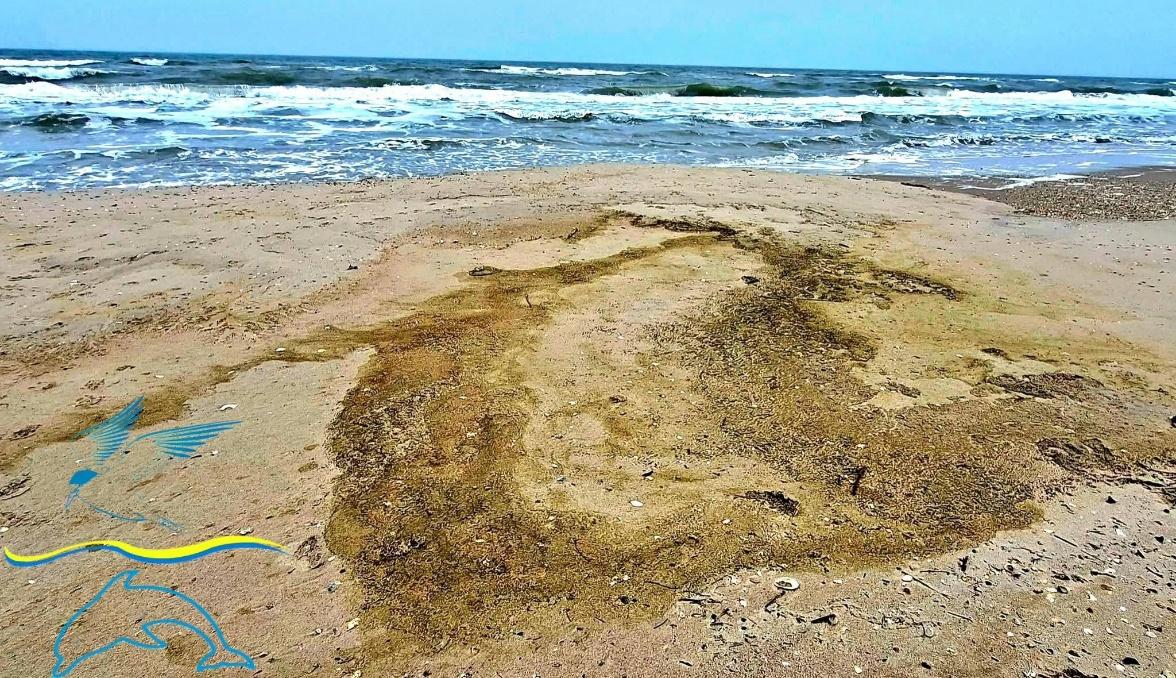
According to Ivan Rusev, head of the park’s research department, a strong easterly wind drove oil onto new stretches of beach and the sandy barrier on 26 October. He estimated the total affected area at around 100,000 square metres, nearly 10 hectares. In the spring, the contaminated area of the barrier had been about 10,000 square metres.
On 27 and 28 October, national park staff found several large new areas of contamination along the coast and in the shallow waters of the Black Sea near the Katranka and Raseika resorts in the Lymanska territorial community. Further deposits were recorded on 3 and 4 November, following powerful storms.
The pollution affects several sections of the sandy barrier, including the park’s strictly protected zone. It harms the vulnerable microbial communities of the sandy coast.
How oil persists in the marine environment
The pollution originated from vegetable oil that leaked from tanks damaged by Russian strikes at the Port of Chornomorsk and at the Port of Pivdennyi near the Adzhalyk Lagoon. Satellite monitoring indicates that the spill reached the Black Sea waters within Tuzlivski Lymany National Nature Park in spring 2026. Powerful waves then washed oil onto different sections of the barrier.
Rusev explains that much of the oil may have reached the near-bottom zone and then become buried beneath the sand. During storms, waves and near-bottom currents mix sand with oil particles and clumps, lift them into the water column and wash them ashore. Persistent emulsions can form in the water, and oily deposits can accumulate on the beach.
Observations by Vladislav Balinsky, who showed fresh oil deposits on the coast on 28 October, also point to the persistence of the pollution. He stresses that several months have passed since the spring spill, yet there is still no basis for saying that the pollution has disappeared.
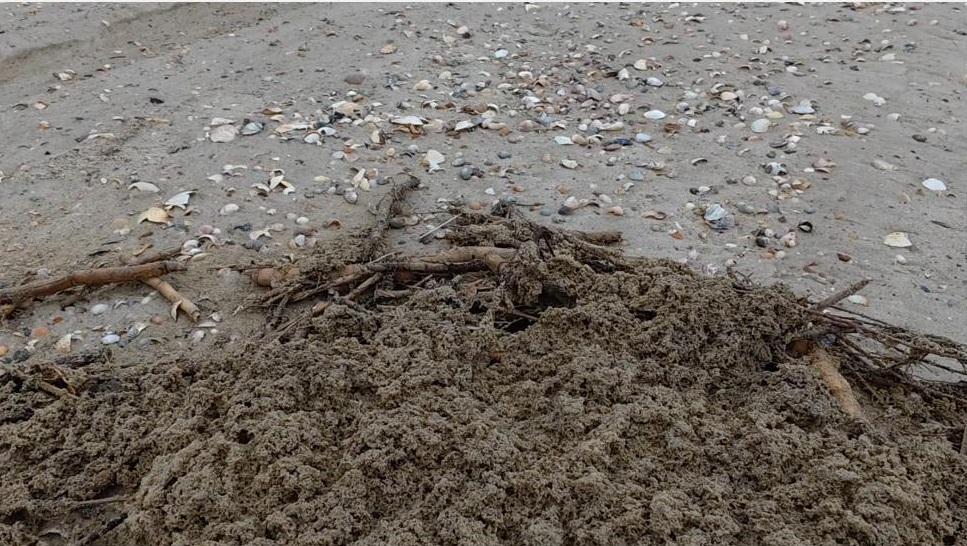
Balinsky says researchers predicted in the spring that oil pollution would reach the national park, based on their analysis of satellite imagery. The pollution did reach the coast, and he suggests that a substantial share may have travelled both at the surface and within the water column.
Balinsky also draws attention to the possible effects of oil polymerisation under solar radiation. He says polymerised oil can form sticky strands that clog the gills of aquatic organisms and cause asphyxiation. He links this possible mechanism to the deaths of Red Data Book-listed seahorses observed in the winter of 2026.
Oil-bearing layers within the sandy barrier
On 10 November, Ivan Rusev published new observations that may point to another mechanism by which the contamination persists. After storm erosion cut into the sandy barrier, he saw darker horizontal layers and patches in the exposed vertical section that appeared wetter or showed signs of hydrophobic impregnation.
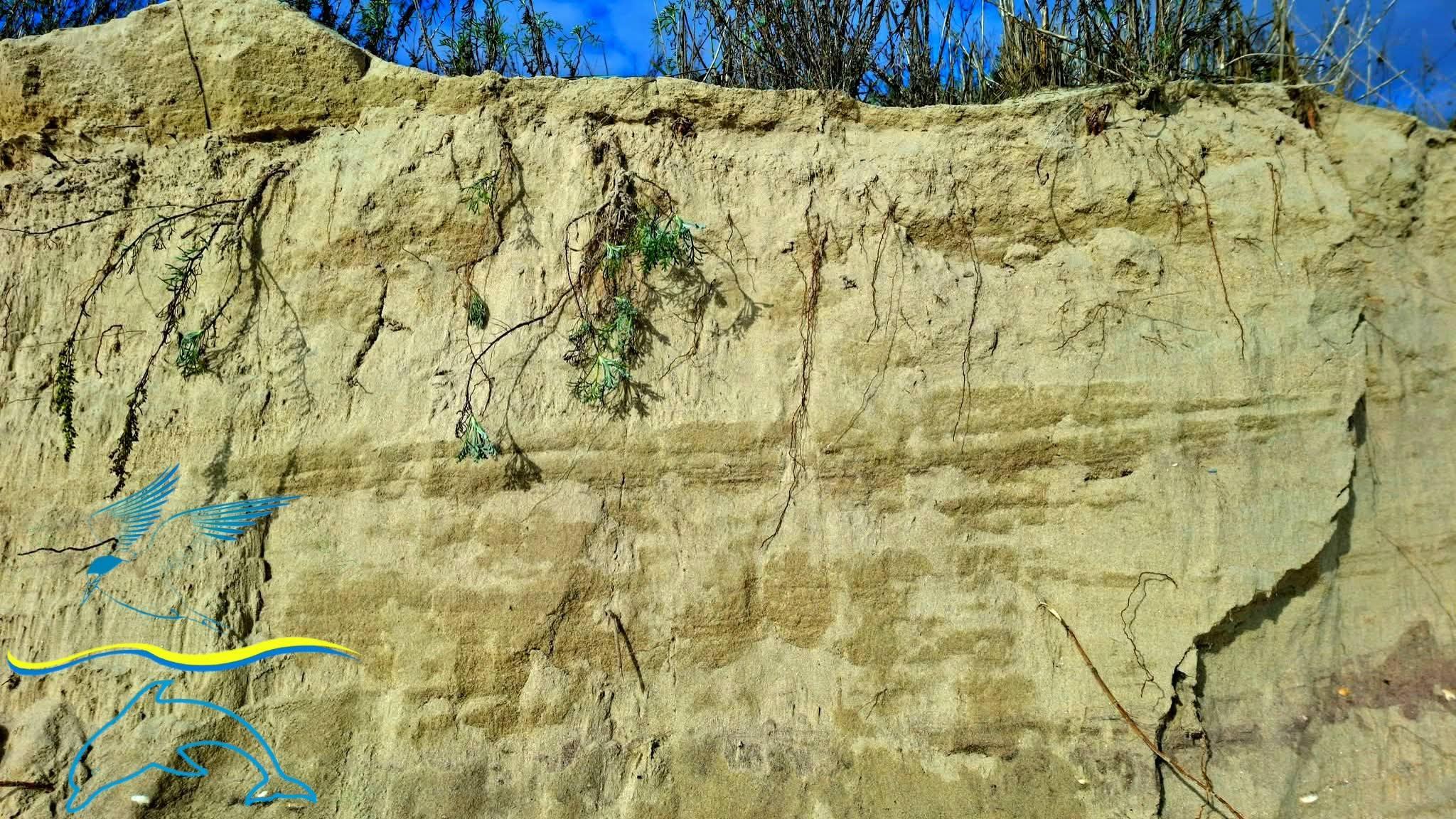
Rusev suggests that oil emulsions and clumps came ashore during the spring storms and saturated the sand. Later waves or wind covered the contaminated areas with new layers of cleaner sand. This may have produced human-induced marker horizons, layers of contaminated sand buried beneath later deposits.
Rusev suggests that vegetable oil binds sand grains and forms a film, causing contaminated layers to appear darker and retain moisture for longer. When such a layer is buried, oxygen availability can fall and bacterial degradation can slow.
The researcher also describes his field checks. When sampling a dark layer, he noted the sand’s greasy texture, smell and poor wettability. He says oil-impregnated sand can leave oily droplets or an iridescent film on the water surface.
Rusev believes storm erosion in late October and early November exposed these buried layers. These observations remain a field interpretation. Laboratory analysis is needed to confirm the composition of the layers and the processes that allow the pollution to persist. Park staff collected samples of oil-contaminated sand to send to researchers at the National Ecological Centre of Ukraine for further analysis.
The repeated appearance of oil on the Tuzlivski Lymany coast shows that the environmental effects of Russian attacks on port infrastructure persist after visible surface pollution has been cleared. Some contaminants can remain in the marine environment or accumulate in sandy deposits, then return to the water and shore during storms.
Balinsky emphasises the long-term, cumulative effects of the war, which continue to affect the natural environment and cause secondary pollution. Coastal monitoring therefore needs to continue after the visible traces of the initial spill disappear from the surface.
The Black Sea coast needs systematic, long-term monitoring because the environmental effects of Russian attacks extend well beyond the moment port infrastructure is damaged or a slick appears on the water. Some pollutants can remain in the marine environment, accumulate near the seabed and in sandy deposits, and later return to the coast. Monitoring must document each new incident, trace the fate of the pollution, investigate its effects on ecosystems and preserve evidence of the damage. This is necessary to assess the extent of the war’s environmental impacts, identify restoration needs and properly document the harm to Ukraine’s environment.
The Black Sea Environmental Evidence Platform was created for this purpose. It brings together remote and field monitoring and tracks oil pollution in the Kerch Strait and the Tuzlivski Lymany area. The project received financial support from the German Federal Environmental Foundation (Deutsche Bundesstiftung Umwelt, DBU).
The platform currently brings together three cases of severe pollution in the Black Sea documented in connection with Russia’s war: the Volgoneft tanker disaster in the Kerch Strait on 15 December 2024, vegetable oil pollution in the Adzhalyk Lagoon after the attack on the Port of Pivdennyi on 20 December 2025, and vegetable oil pollution in the Port of Chornomorsk after the attack on 26 April 2026. Work on the map continues.
