
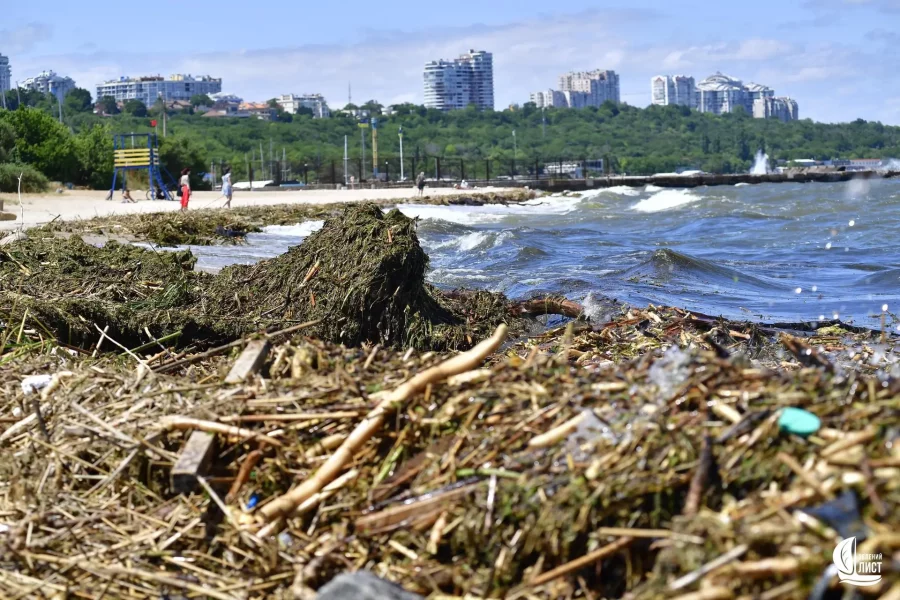
On 6 June 2023, the Russian occupiers carried out one of the largest terrorist attacks on Ukrainian territory — they blew up the dam of the Kakhovka Hydroelectric Power Plant. Ukrainian officials regard the destruction as ecocide and a war crime. Even now, almost a year and a half after the tragedy, it is impossible to fully assess all the consequences of the disaster. The destruction of the dam, which caused extensive flooding and the draining of the Kakhovka Reservoir, in addition to human casualties and material damage, caused a humanitarian and technological disaster, destroyed landscapes, altered ecosystems, polluted aquifers, and littered coastlines and water bodies.
Perhaps decades from now our descendants will call the Kakhovka disaster and its impact on the environment and the state of the Black Sea a second Chornobyl.
Chronology of events
6 June 2023:
– at 6 a.m., Operational Command “South” reported that the Russian occupiers had blown up the dam of the Kakhovka Hydroelectric Power Plant.
– at 06:45, Head of the Kherson Regional Military Administration Oleksandr Prokudin announced an evacuation because of the threat of flooding. Prokudin noted that the water would reach a critical level within five hours.
– at 8 a.m., Kherson City Council reported a power outage in the Korabel neighbourhood of Kherson because of the flooding threat and also announced that gas supplies had been cut off. By about 9 a.m., the district began to flood.
– the water level in the Kakhovka Reservoir began to fall rapidly, by approximately 15 cm per hour.
– at around 10 a.m., the Prosecutor General’s Office reported that criminal proceedings had been opened over ecocide and violations of the laws and customs of war. In the morning, in Nova Kakhovka (territory occupied by Russian forces — ed.) the following were flooded: the Kazkova Dibrova zoo, the summer theatre, the Shevchenko monument, a café, a children’s playground in the city, a boat station and a yacht club. Nova Kakhovka Mayor Volodymyr Kovalenko also reported that the water was approaching Dniprovskyi Avenue and that internet service in the city was unstable. In his view, the Russians were “jamming communications” in order to leave residents in an information vacuum.
7 June 2023:
– since the accident, the water level had risen by approximately 5 metres at the Kherson gauge. In Nikopol (upstream of the destroyed dam), the water level had fallen by 2.2 metres. According to a preliminary forecast by Ukrhydroenergo, it was expected that water from the Kakhovka Reservoir would fully drain into the lower Dnipro by 12 June 2023. This involved a volume of 18.2 cubic kilometres of water. “The Kakhovka Reservoir will empty very quickly. This means an exposed bottom covered with silt and the death of hundreds of plant and animal species. It will lead to a shortage of drinking water and drought throughout the south, which was supplied with water by the Kakhovka HPP. Animal burial sites, cemeteries and graves will be washed out and end up in surface waters in the lower Dnipro,” said Ruslan Havryliuk, Head of the National Ecological Centre of Ukraine.
– evacuated 1,700 people.
– 29 settlements were flooded, 19 of them in Ukraine-controlled territory.
8 June 2023:
– by evening, the water level in the Kakhovka Reservoir stood at 12.5 m — below the so-called “dead level”, beneath which water intake is impossible. Half of the station was under water and the other half was 70% submerged. The earth embankment between the lock and the power station was also under water and being eroded.
– the average flood level was 5.61 m. Six hundred square kilometres of Kherson Oblast were under water, 32% on the right bank and 68% on the left bank.
– the following were completely or partially flooded: Tyahynka, Lvove, Odradokamianka in Beryslav district, Ivanivka, Mykilske, Tokarivka, Poniativka, Bilozerka and the Ostriv neighbourhood in Kherson.
– authorities managed to evacuate 2,198 people. During the evacuation, Russian troops shelled Kherson, injuring nine people.
9 June 2023:
– the Kakhovka Reservoir continued to become shallower, with the overall drop in water level reaching 4.7 metres. By morning, the reservoir level near Nikopol was 11.74 m. Every second, about 40,000 cubic metres of water were flowing out of the reservoir.
10 June 2023:
– the water level near Nikopol fell to 10.42 m, while the level in the Zaporizhzhia Nuclear Power Plant cooling pond was 16.67 m, which Energoatom said was sufficient to meet the plant’s needs.
11 June 2023:
– the level of the Kakhovka Reservoir near Nikopol was 9.35 m. Over the course of a day, the water level fell by more than a metre, and by more than seven metres since the dam was destroyed.
– authorities managed to evacuate 2,678 people from Kherson Oblast.
In the four days after the dam was destroyed, 18 cubic kilometres of water rushed downstream along the Dnipro, flooding more than 620 square kilometres and 80 settlements. According to official figures, dozens of people died. But the real number of victims of this disaster will be known only after the affected territory is de-occupied. Up to one million people lost access to drinking water.
In October 2023, the Ukrainian government estimated the cost of the disaster at approximately $14 billion. Almost half of this figure — $6.4 billion — represented the estimated loss of ecosystem services due to chemical pollution and habitat destruction along the Dnipro, one of Europe’s largest rivers.
Water from the Kakhovka Reservoir was used to irrigate about 200,000 hectares of agricultural land where sunflowers, grain and vegetables were grown. “When the base of the Kakhovka HPP dam was blown up, the turbine hall was also destroyed. There were approximately 450 tonnes of technical fuel oil in that turbine hall. One hundred and fifty tonnes are already in the Dnipro River and are moving at high speed through Kherson and further downstream,” reported Ukrainian Interior Minister Ihor Klymenko on 6 June.
The destruction of the Kakhovka HPP dam and the subsequent flooding washed a toxic flow into the Black Sea, including mines, chemicals, sewage, dead animals, remains from cemeteries and toxic silt deposits. The entire Dnipro basin is an industrial region with a large number of mines and factories dating back to the Soviet era. Manganese, arsenic, lead and cadmium are typical elements used in these industries.
Poisoned “cradle”
After the dam was destroyed, water from the Kakhovka Reservoir began moving rapidly towards the Black Sea. Within a few hours it had reached the Dnipro-Buh Estuary, within a day the Black Sea, within two days the Odesa coast, and within a week the shores of the Danube. The powerful surge carried parts of destroyed houses, household appliances, dead and even live animals — both domestic and wild — as well as chunks of land torn from the shore with reeds and trees to the coast of Odesa Oblast.
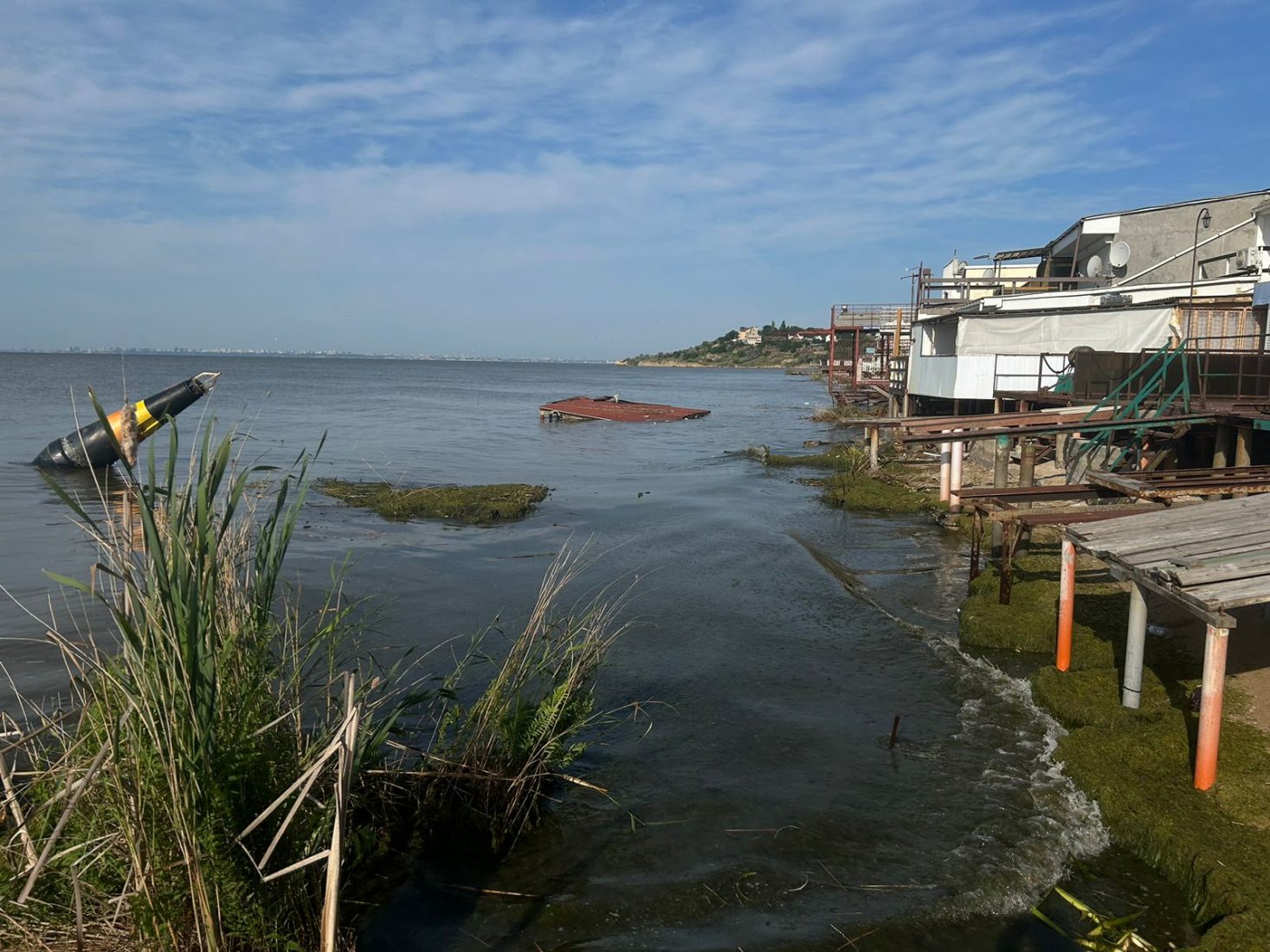
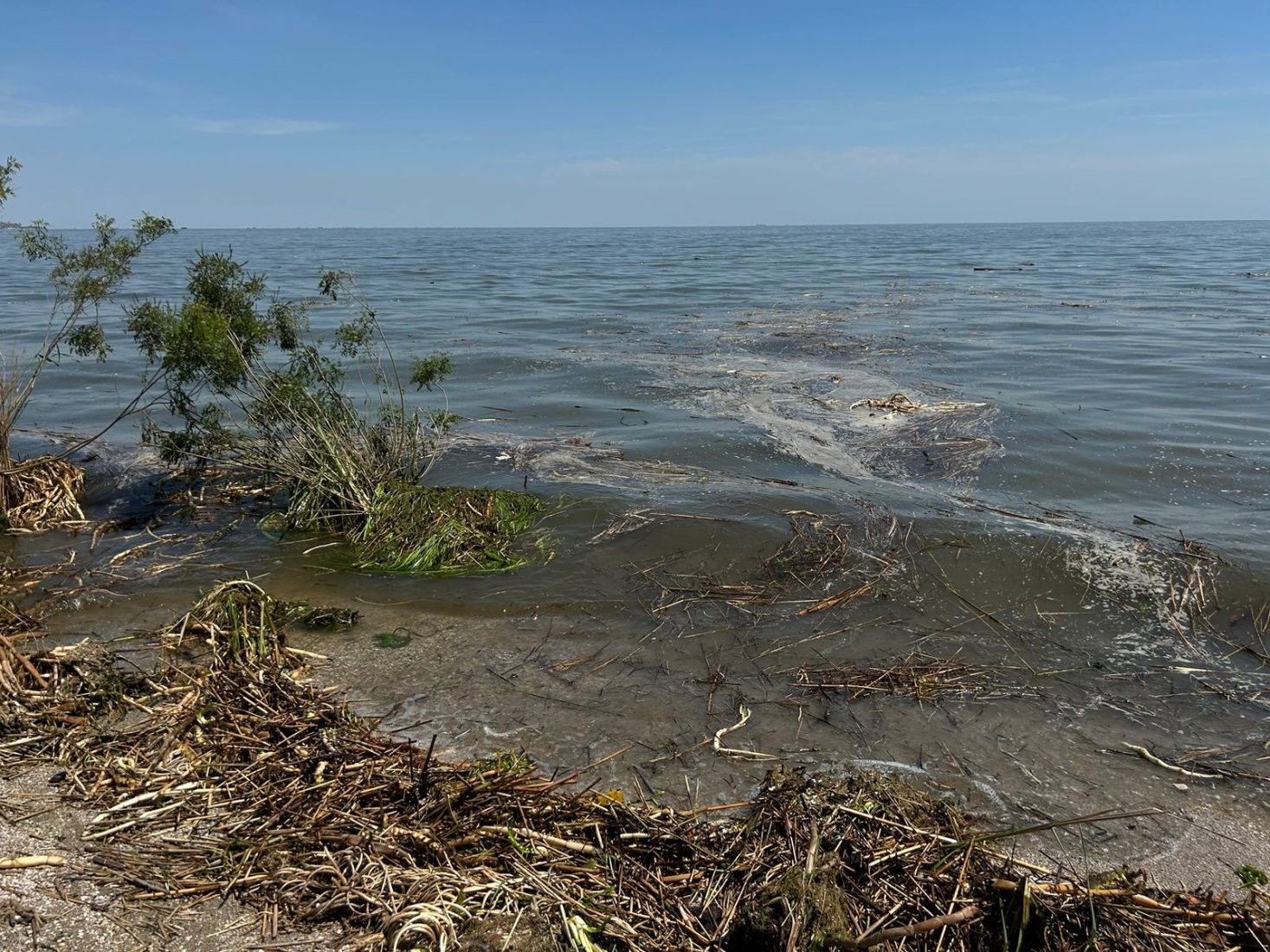
Satellite images clearly show that the plume of dirty water, including suspended silt lifted from the bottom of the reservoir, fertile soil washed from flooded areas, and debris from inundated settlements, merged with currents in the north-western Black Sea and moved south towards the coasts of Romania and Bulgaria.
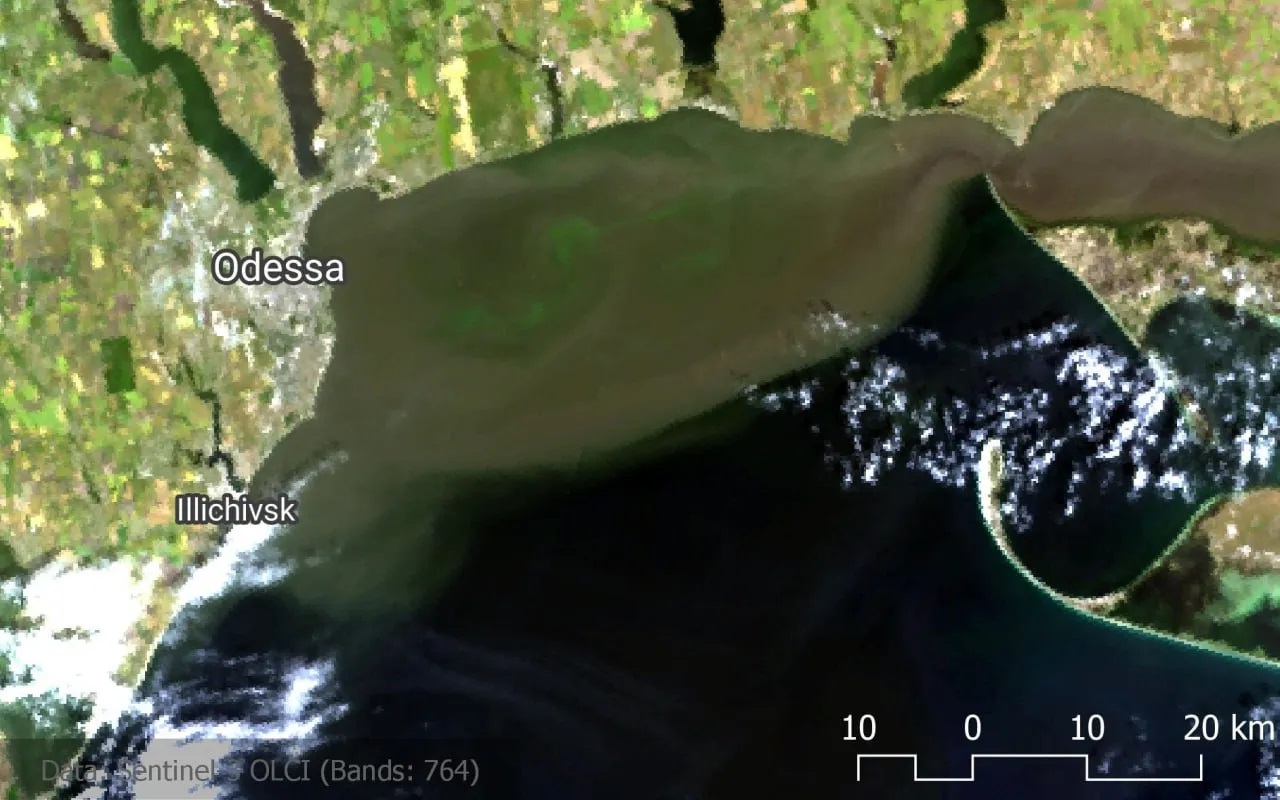
Sentinel-3 OLCI image taken on 10 June 2023 at 11:26 Kyiv time. Image — Ukrainian Nature Conservation Group
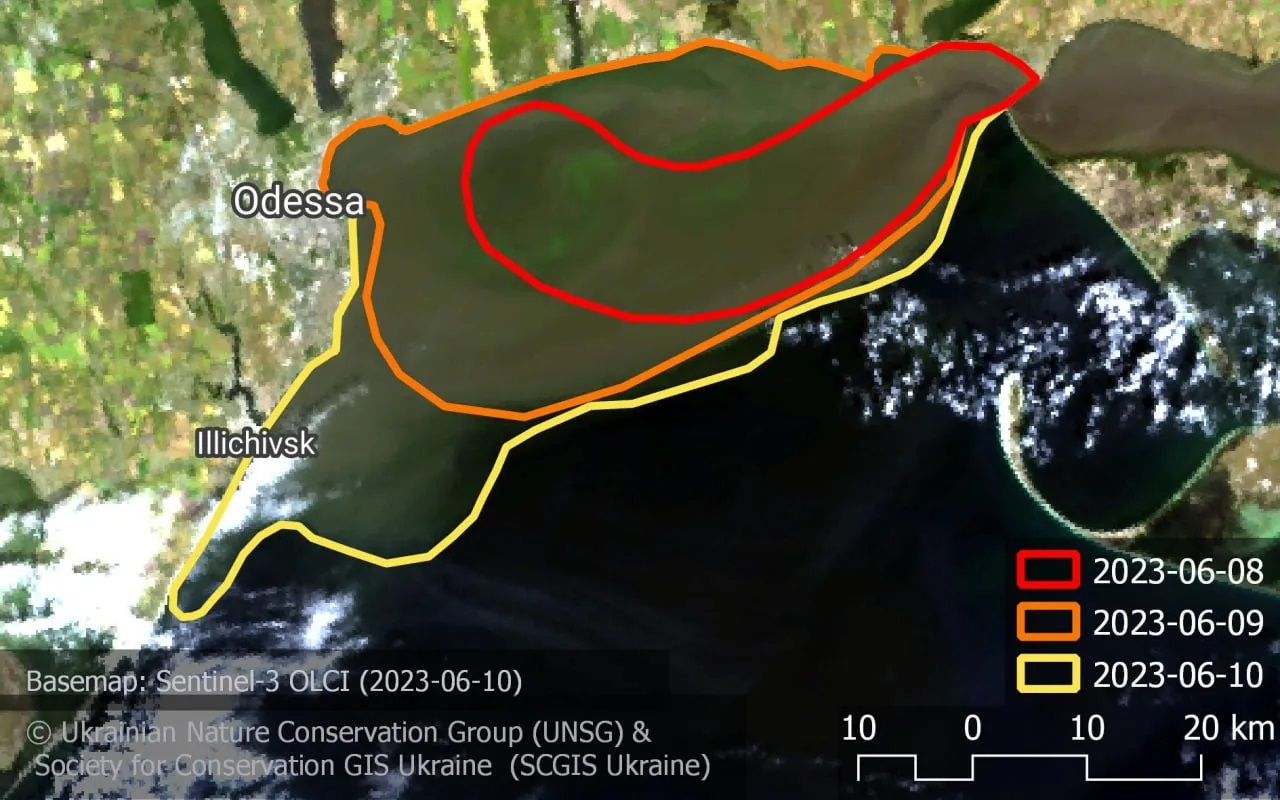
The area of sea turbidity was 616.8 km² on 6 June and 1,248.2 km², and on 10 June — 1,710 km². Image — Ukrainian Nature Conservation Group.
The south-western part of the Black Sea between Odesa and the Danube Delta bore the brunt of the impact. This section of the shelf, adjoining many of the shallow Black Sea lagoons, is the most valuable for biodiversity and plays an important role in the reproduction of aquatic organisms. It is not called the “cradle of the Black Sea” for nothing.
The Kakhovka surge brought two major negative consequences for the marine ecosystem — freshening and pollution of seawater.
According to data from laboratory studies by the State Environmental Inspectorate of the South-Western District of Ukraine, whose specialists sampled seawater at three different locations in and around Odesa, by 10 July 2023 the salinity of seawater had fallen to almost one-third of its normal level. Fresh water from the Kakhovka Reservoir entered the Black Sea three to four days after the dam breach and reached the Odesa coast, reducing normal seawater salinity from the usual 17–18‰ to 4‰.
The Ukrainian Scientific Centre of Ecology of the Sea (UkrSCES) reported that, according to satellite data, during the first week after the dam was destroyed, polluted river water covered more than 7,300 km2 of the north-western Black Sea shelf.
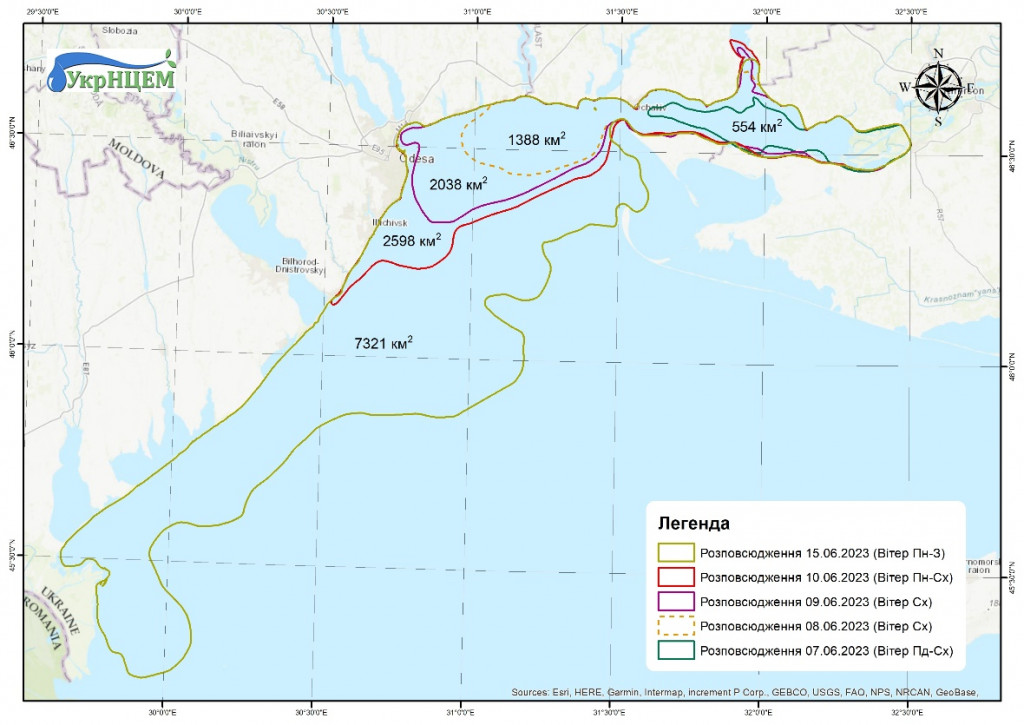
Map showing the spread of polluted river water after the destruction of the Kakhovka HPP dam according to satellite images. Source — UkrSCES.
“Water from the Kakhovka Reservoir did not simply move along the surface; it displaced seawater,” acting UkrSCES director Viktor Komorin said at the round-table meeting “Impact of Hostilities on Ukraine’s Marine Ecosystems”, held on 30 May 2024.
According to Viktor Komorin, such an unnatural volume of fresh water entering the sea “is a man-made disaster”.
Freshening of seawater leads to the proliferation of blue-green algae. When they bloom in the sea, oxygen becomes insufficient for living organisms and they die. Increased blooms and lower salinity affect zooplankton, fish and dolphins. Dead phytoplankton sink into deeper layers of the sea and consume large amounts of oxygen, turning oxygenated zones into hydrogen-sulphide zones.
To assess possible threats to the Black Sea marine ecosystem resulting from the Kakhovka disaster, the Institute of Marine Biology of the National Academy of Sciences of Ukraine (hereinafter — IMB) carried out intensive monitoring of the marine ecosystem.
Beginning on 6 June, IMB staff conducted fieldwork in different parts of Odesa Oblast (Lanzheron, Malyi Fontan, Fontanka, and the border with Mykolaiv Oblast). On 11 June 2023 they recorded an extremely high concentration of ammonium nitrogen in freshened seawater — twice the maximum permissible concentration. Similar concentrations of ammonium nitrogen were recorded near Kobleve in Mykolaiv Oblast. Such an increase may be associated with direct pollution caused by sewage being washed out after collectors, cesspits and other facilities were flooded along the path of water flowing from the Kakhovka Reservoir.
On 11 June, the IMB website published alarming information: “A sample from Lanzheron beach showed the development of acute water toxicity.”
Because of the significant deterioration in seawater quality and the real danger to public health, the commission on technological and environmental safety and emergencies of the Odesa City Council executive committee prohibited swimming at Odesa beaches and recommended refraining from eating fish and seafood of unknown origin. Laboratory tests — virological, microbiological and parasitological — of water samples by laboratories of the Odesa Regional Centre for Disease Control and Prevention of the Ministry of Health of Ukraine in mid-June 2023 detected infectious agents including Salmonella enteritidis and S. typhimurium, rota- and astroviruses, non-agglutinable cholera-like vibrios, Vibrio alginolyticus and V. parahaemolyticus, as well as eggs and larvae of human and animal helminths (pinworms, whipworms, dog roundworms and Cryptosporidium oocysts). In addition, the index of lactose-positive coliform bacteria significantly exceeded regulatory limits. The presence of all these biological pathogens in open waters of Odesa Oblast, including the Black Sea, the Dniester Estuary and the Danube River, posed a real threat to human life and health.
In mid-June, in another report, IMB staff, based on analysis of satellite images, recorded deviations in various indicators tens of times above normal levels, associated with organic matter entering the sea (turbidity, chlorophyll-a concentration, and suspended matter in the water). “This creates a risk of increased trophic status of the aquatic ecosystem, development of microorganisms, microalgal blooms and a general deterioration of conditions for biological communities,” the specialists concluded.
In mid-June, IMB scientists stated: “The inflow of river water from the Kakhovka Reservoir into the north-western Black Sea caused an algal bloom in which, as of 15 June 2023, the average chlorophyll-a concentration across the entire north-western area doubled, representing a positive anomaly of more than 80%. In some areas located along the path of river water from the Dnipro-Buh Estuary, the value exceeded 100 mg/m3, meaning that it increased by practically more than 90 times.”
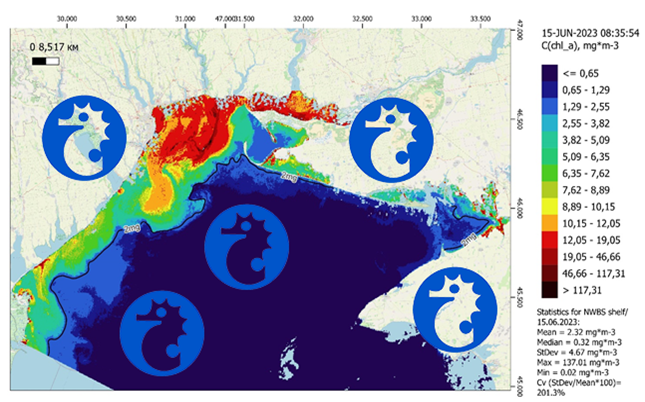
Area and chlorophyll-a concentration in the north-western Black Sea as of 15 June 2023. Image — IMB.
Analysis of satellite imagery shows that almost half of the north-western Black Sea area (45.8%) was affected by the inflow of Kakhovka Reservoir water as of 15 June 2023. About 1,500 km² was affected by intense algal blooms. Heavily polluted areas (petroleum products and organic matter) covered about 6,000 km².
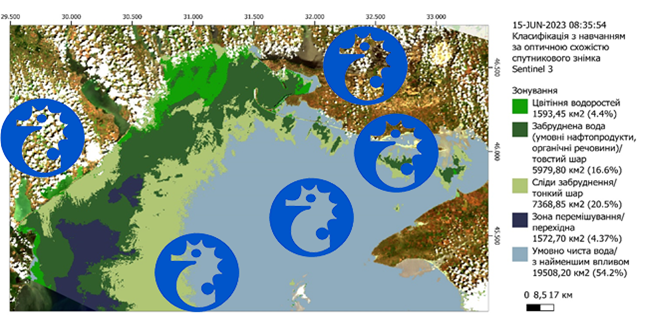
Consequences of Kakhovka Reservoir water entering the south-western Black Sea. Image — IMB.
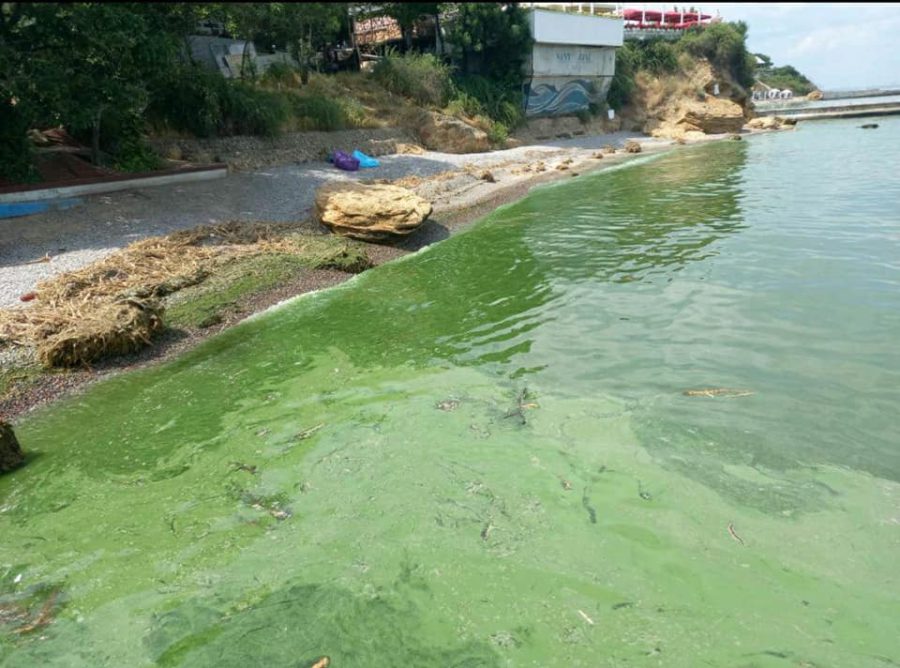
The active process of the “sea bloom” was also observed by Green Leaf NGO head Vladyslav Balinskyi. On 22 June, the Black Sea coast of Odesa was covered by a “red tide”. This occurs when toxic algae — dinoflagellates — proliferate rapidly in seawater.

Sea blooms have been observed along the Odesa coast for years. Previously, however, this was a local phenomenon, usually associated with a significant rise in air temperature in summer. During spring floods and intense summer downpours, eutrophication processes — an increase in the concentration of nutrients of anthropogenic origin — are observed within the north-western Black Sea shelf. The associated rise in seawater temperature leads to rapid phytoplankton growth.
“This time the bloom extended from Odesa Bay to the Turkish coast,” said Viktor Komorin, Candidate of Geographical Sciences and acting director of UkrSCES. “Such a situation, when the entire coast blooms, occurs only at the end of summer, never at the beginning. So it is clear that this was caused precisely by the emergency at Kakhovka.”
In the case of the “red tide”, the phenomenon was caused by the rapid growth of unicellular photosynthetic dinoflagellate algae, dominated by Lingulodinium polyedra. Toxins released by such microalgae pose a threat to fish, molluscs and other marine organisms and may also be dangerous to people who come into contact with contaminated water or consume seafood from affected areas.
By late June, the bloom had even reached the botanical reserve “Zernov’s Phyllophora Field” — a unique aggregation of red algae of the genus Phyllophora located near Zmiinyi Island.
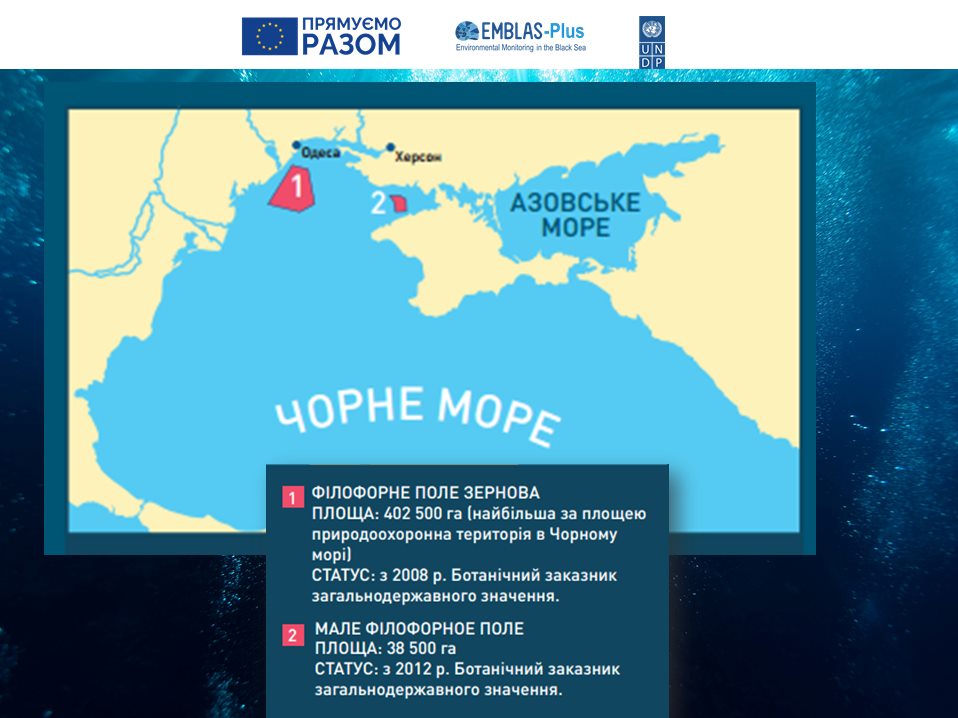
Image from the Facebook page Fana Chornoho Moria
Yurii Tkach, Senior Researcher at IMB and Doctor of Biological Sciences, says that satellite data show seawater over this protected area continued to bloom until early August. Oxygen depletion caused by algal blooms is dangerous not only for fish and molluscs but also for the Red-Listed Phyllophora. However, it is currently impossible to assess the condition of the reserve.
A time bomb
But the condition of the water is only part of the problem. The Kakhovka water flow carried downstream a mixture of bottom sediments from the reservoir and flooded areas. UkrSCES staff together with volunteers from the environmental movement Let’s do it Ukraine collected water samples from the Dnipro River near Kherson, the Dnipro-Buh Estuary, the Black Sea near Ochakiv and Odesa Bay, and analysed them for toxic pollution. The tests showed that pollution levels at all four sites were equally hazardous. Concentrations above maximum permissible levels were detected everywhere for petroleum products, toxic metals — zinc, cadmium and arsenic — and organochlorine compounds — lindane and PCBs. The latter are chemical compounds that can cause malignant tumours when they enter the body.
The high concentration of carcinogenic compounds is due to the fact that bottom sediments in the Kakhovka Reservoir may have accumulated for years, receiving discharges from industrial enterprises located upstream. Pollutants from industry and agriculture accumulated in the sediments, including toxic pesticides that are now banned.
These bottom sediments may now become a genuine time bomb for many years. According to Yuliia Markhel, leader of the environmental movement Let’s do it Ukraine, waste and heavy metals from the bottom of the Kakhovka Reservoir did not disappear: they settled on the seabed and are resuspended into the upper layers of seawater during storms.
Metals such as zinc and cadmium are toxic to many aquatic species, especially at high concentrations. They can affect reproductive, growth and other biological processes in marine organisms. Even if some species can tolerate high levels of copper and zinc, these metals can accumulate through the food chain, leading to even higher concentrations in organisms at higher trophic levels, such as marine mammals or humans. People who eat seafood or drink water containing high levels of copper or zinc may experience health problems, including liver, heart, kidney or nervous-system disorders.
Highly toxic chlorinated organic compounds such as heptachlor and PCBs may be dangerous to many species of aquatic organisms, including fish and invertebrates. They can damage the nervous system, leading to paralysis and death. These pollutants tend to accumulate in organism tissues, especially fatty tissues. This means they can build up through the food chain, causing even greater harm to organisms at higher trophic levels, including humans.
It is therefore extremely important to continue studying the composition of these sediments, not only to forecast their impact on ecosystems but also to develop recommendations for neutralising such contaminated sites.
In 2024, the Czech NGO Arnika and its Ukrainian partners Free Arduino (Ivano-Frankivsk) and Green World (Dnipro), within the Clean Air for Ukraine project, conducted a study of bottom sediments from the Dnipro River and soil samples from Zaporizhzhia Oblast.
To determine the level of risk posed by possible contamination of exposed riverbed sediments, the researchers analysed fourteen samples: eleven from sediments of the former Kakhovka Reservoir, two soil samples from impact craters left by Russian S-300 missiles, and one soil sample from an industrial district of Zaporizhzhia. The samples were tested for a wide range of pollutants. Numerous hazardous toxic substances were detected, including heavy metals: arsenic, cadmium, manganese, chromium, lead, nickel and titanium. From the standpoint of public health, however, the researchers were most concerned by levels of DDT, 16 PAHs and C10–C40 hydrocarbons in a sample of Dnipro River sediment from Zaporizhzhia.
Bottom sediments accumulated in the Kakhovka Reservoir are also being studied by the National Ecological Centre of Ukraine (NECU), including within the SUNDANSE. The project is aimed at developing innovative and sustainable solutions for sediment management in the Danube–Black Sea system, addressing critical sediment-related environmental problems and promoting the health and resilience of our waterways.
The Ukrainian project participants — NECU and the Danube Hydrometeorological Observatory — will develop a Sediment Management Guide for the Danube River Basin, which will make it possible to study the effects of pollutants on human activities and biodiversity in the Black Sea ecosystem. The research will also focus on the transfer of microplastics through the food chain and on assessing the terrorist attack on the Kakhovka HPP dam through the food chain.
Impact on wildlife
“The consequences of the Kakhovka environmental disaster had a significant negative impact on the aquatic biological resources of the Odesa region,” scientists conclude in a study by IMB on the impact of the Kakhovka disaster on the Black Sea shelf ecosystem.
Three days after the disaster, on 9 June, a large mass of fresh water was moving rapidly near Fontanka towards Odesa Bay, carrying hundreds of so-called “floating islands” — masses of reeds held together by their roots. Along with these floating islands, various organisms washed out of the Dnipro delta reached the coast in large numbers: frogs, crustaceans, freshwater and terrestrial molluscs and insects, many of which died in seawater.
Two protected species of newts (Triturus cristatus — the great crested newt, and Triturus dobrogicus — the Danube crested newt) inhabited the lower Dnipro. Both populations were devastated and swept out of their normal habitat. The animals died or became “forced migrants”.
Odesa residents rescued newts on local beaches and brought them to Odesa Zoo. Staff of Tuzly Lagoons National Nature Park rescued 55 newts and took them to the Danube Biosphere Reserve, where they were released at different locations along the river.
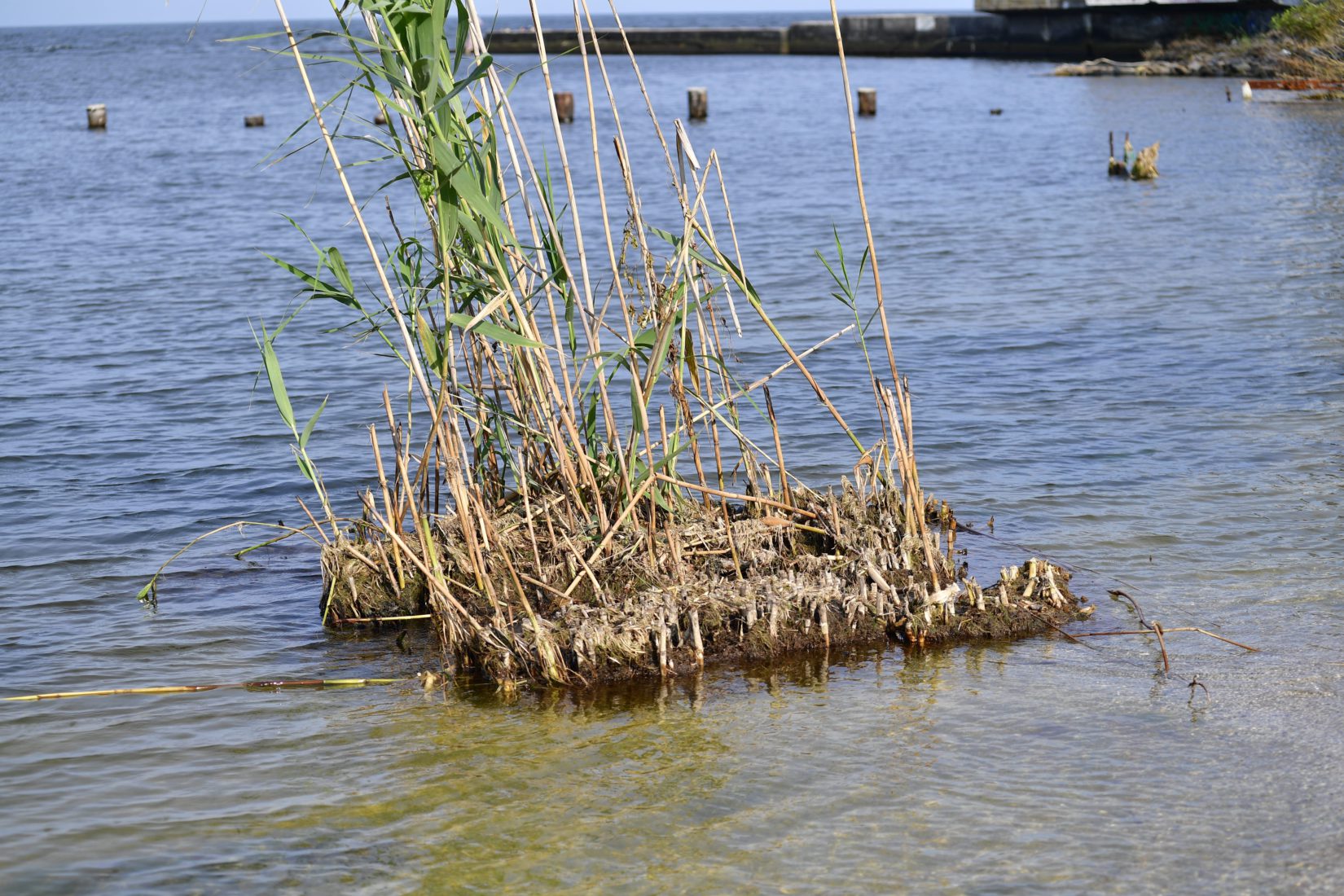
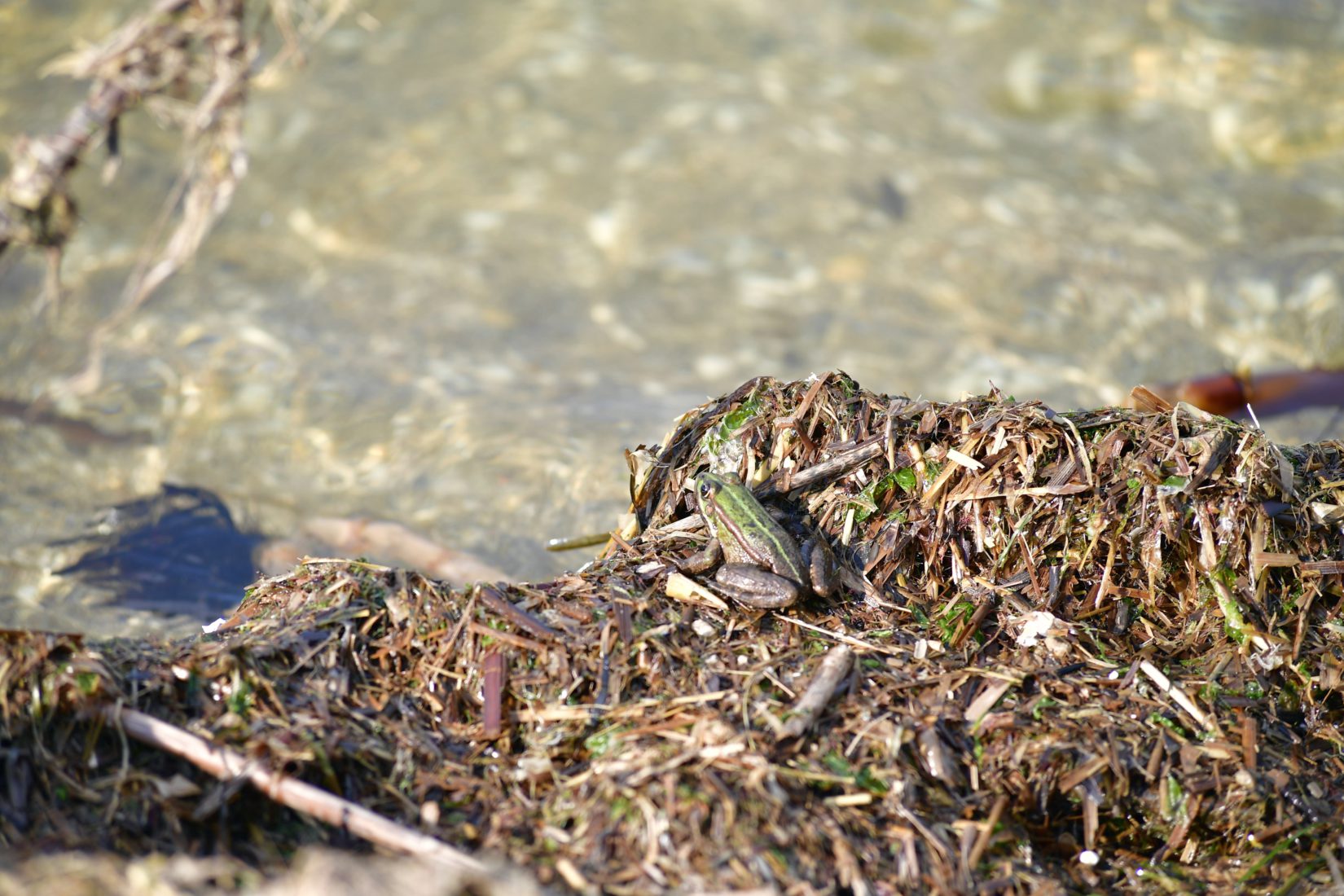

In mid-July, Green Leaf NGO head Vladyslav Balinskyi, during another survey of the Black Sea coast in Odesa, discovered an alarming phenomenon — mass mortality of mussels. “About 50% of all mussels died in the basin at Sobachyi Beach,” he wrote on Facebook. “The process is so extensive that limestone rocks have become exposed in places. I think the situation with mussels is similar at all Odesa beaches with breakwaters. In colonies 100 metres beyond the breakwater on the seaward side, there are considerably fewer dead mussels (up to 20%), but even that, within the marine area affected by freshening, amounts to hundreds and hundreds of tonnes. The overall appearance of the colonies is terrible — they are covered with mucus like a film.”
The environmentalist’s conclusion was bleak: “The sea’s capacity for self-purification in Odesa Bay, especially in its coastal zone, has been significantly undermined. Deposits of plant debris are a persistent pollutant as a continuous source of organic suspension and pose a threat in terms of local hypoxic die-off events.”
Overall, in just the first ten days after the Kakhovka disaster, about one million mussels died off the coast of Odesa. This amounted to approximately 3,700 tonnes of dead molluscs, or about 40% of the natural coastal mussel population in the north-western Black Sea. These figures were presented by IMB director Halyna Minicheva at the aforementioned round-table meeting “Impact of Hostilities on Ukraine’s Marine Ecosystems”.
Why are dolphins dying?
In the first months of the full-scale war, bodies of dead dolphins whose fins had not been cut off began appearing on Ukraine’s Black Sea coast and on the coasts of other Black Sea countries. This meant the cetaceans had not died after becoming entangled in fishing nets, as had often happened before. Ivan Rusev, Doctor of Biological Sciences and Head of the Research Department at Tuzly Lagoons National Nature Park, began investigating the causes of dolphin deaths.
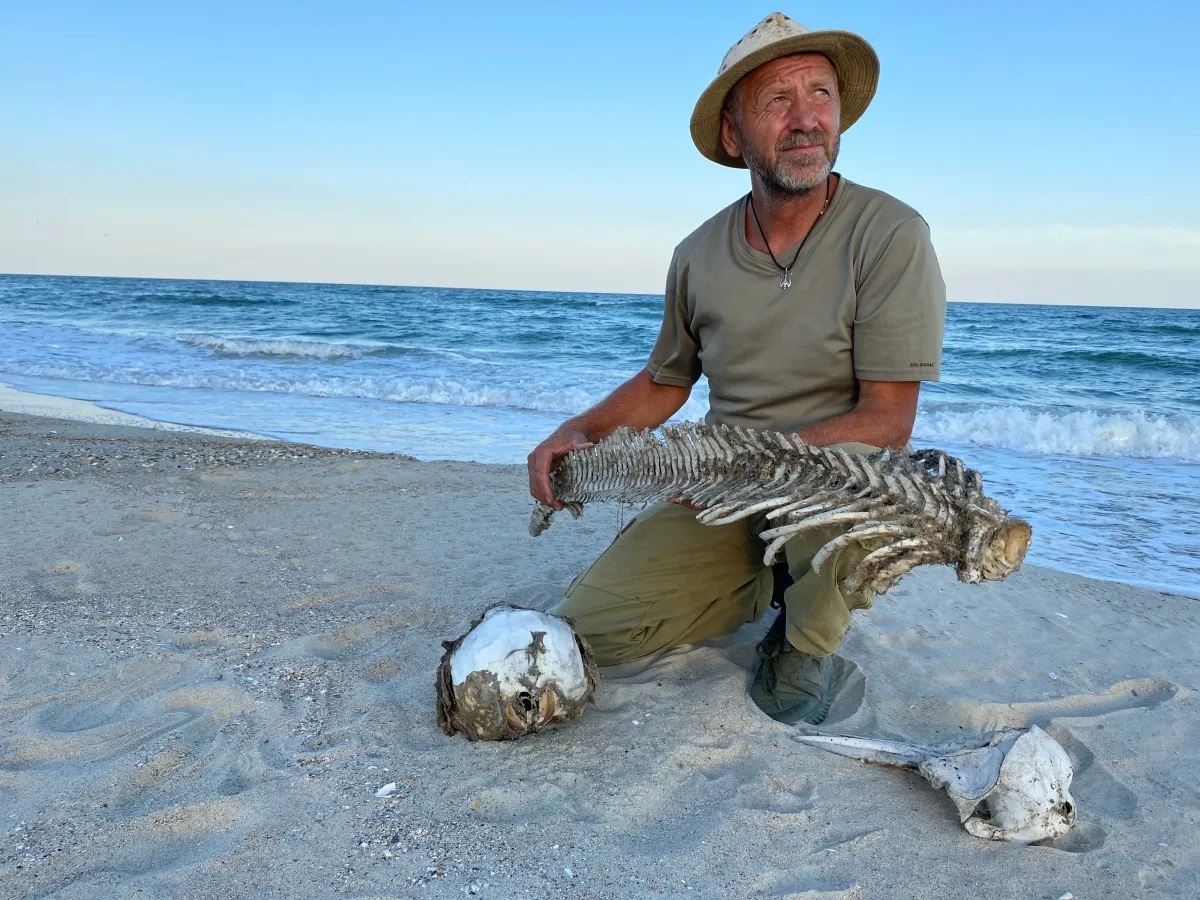
Rusev described a mechanism that can damage an animal’s health and lead to death: sonar systems used by Russian military vessels cause acoustic trauma in dolphins, impairing their ability to orient themselves in space and hunt fish, weakening immunity and contributing to viral infections and epizootics. The health of marine mammals is also adversely affected by Russian warships shelling the Ukrainian coast from the Black Sea, mine explosions and carbon emissions from the burning Boyko Towers. In total, according to Rusev’s estimates, at least 50,000 animals have died in the Black Sea as a result of war-related factors.
“Overall, the largest number of affected dolphins washed ashore was recorded at the beginning of the full-scale invasion (February–October 2022), because at that time many Russian warships and submarines were present in the Black Sea,” say the authors of the recently presented in Odesa book “My Friend — the Black Sea”. “During this period, 900 dead animals were recorded throughout the Black Sea. Scientists carried out photo and video identification of the dead animals and collected samples from damaged organs of marine mammals. These samples were sent to laboratories in Germany and Italy to determine the cause of death. Among other findings, weakened immunity was detected, which in turn may be the result of prolonged stress or hidden injuries.”
Pavlo Goldin, Doctor of Biological Sciences, leading researcher at the I. I. Schmalhausen Institute of Zoology of the National Academy of Sciences of Ukraine and a well-known Ukrainian cetacean researcher, identifies the following causes of dolphin deaths: infectious diseases; acoustic or mine-and-blast injuries, which affect not only internal organs and especially the brain but also cetacean echolocation and thus their ability to navigate and hunt; poisoning by toxic substances, including components of rocket fuel entering the sea; stress; loss of feeding grounds; and depletion of the food base.
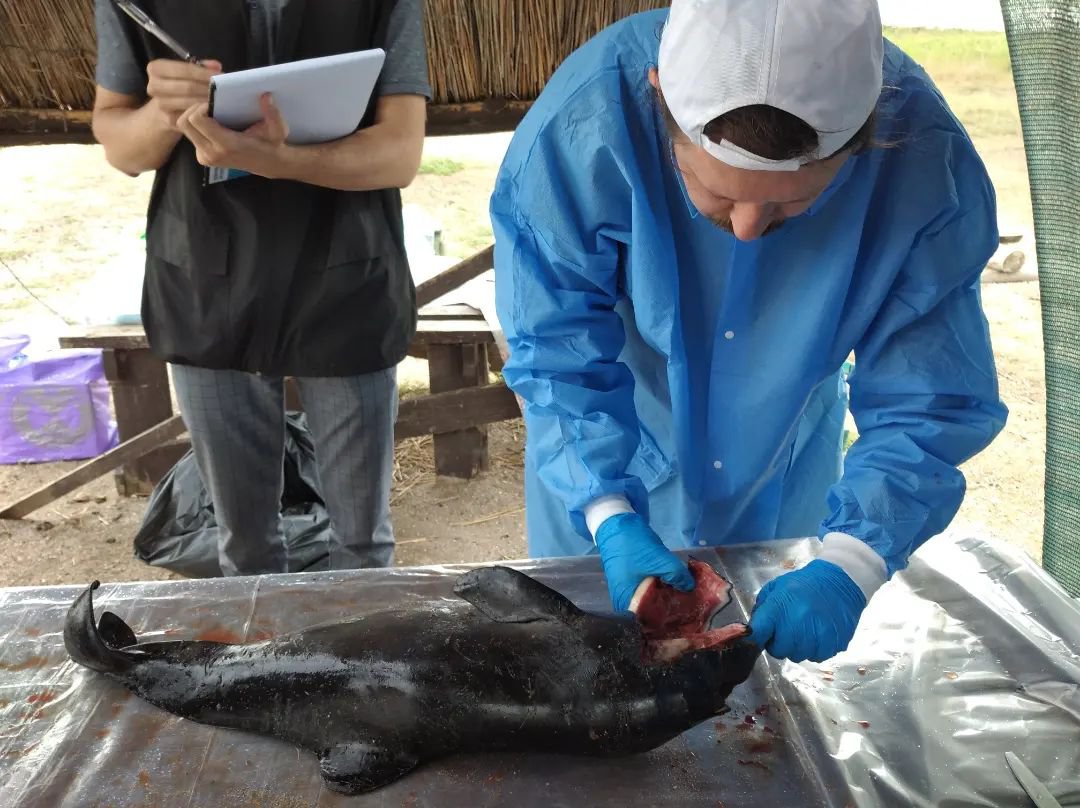
The Kakhovka disaster, in Goldin’s view, also affected the animals’ resilience: a large amount of various organic substances entered the sea, including fertilisers from fields and municipal sewage. Naturally, this increases the risk of infectious disease. Organic compounds become a basis for mass algal blooms, some of which release toxins into the sea that can poison molluscs, fish and mammals.
Viktor Komorin, who together with colleagues tested fish, mussels and dead dolphins for toxic substances after the Kakhovka disaster, says they found toxic-substance levels in mussels exceeding the norm by thousands of times.
Law-enforcement agencies regard dolphin deaths caused by war-related factors as ecocide. Under the procedural supervision of the Odesa Prosecutor’s Office, the Security Service of Ukraine is investigating a case under Article 441 of the Criminal Code of Ukraine concerning Russia’s armed aggression, which caused the mass death of Black Sea dolphins.
Green Leaf NGO created an interactive map, containing important information about the Kakhovka disaster and its consequences, including official responses to the organisation’s information requests. The map is intended for all researchers studying this terrible Russian terrorist act.
The sea digested the dirt, but did not become clean
The condition of the marine ecosystem improved during the year after the tragedy, environmentalists note. But in Vladyslav Balinskyi’s view, some processes in the sea are irreversible.
“The Dnipro-Buh Estuary took the main blow to the ecosystem. It became the principal buffer between the Dnipro and the Black Sea,” explains Viktor Komorin. “A large amount of pollutants remained on the coast of this estuary. Even now, all this pollution continues to enter the water and reach the Odesa coast. If we look at the pollution spectrum for the Odesa region, petroleum pollution previously predominated, with toxic pollution in some areas. Now, by contrast, we have large quantities of organochlorine hydrocarbons and toxic metals. So even a year later, after a large amount of toxic substances has been redistributed across the Black Sea, we are still experiencing the effects of that situation.”
Toxic substances that are still present in the Odesa coastal ecosystem accumulate in marine organisms — molluscs, crustaceans, fish and dolphins — which may die from exposure to them.
Ukraine’s Marine Environmental Strategy, which Ukraine approved on 11 October 2021 to implement the requirements of the Association Agreement between Ukraine and the EU, includes quality descriptors to be used in determining “good” environmental status in our marine region. There are currently 11 such characteristics of “good” environmental status for the Black Sea and the Sea of Azov. Ukrainian scientists studying the condition of Ukraine’s seas now propose adding a 12th descriptor to the Marine Strategy of Ukraine — Military impact.
“The consequences of this disaster, extending over thousands of square kilometres, became apparent over the year that followed and are likely to persist for an indefinite period,” say the authors of a study of the destruction of the Kakhovka dam and its consequences conducted by the NGOs Truth Hounds and Project Expedite Justice, “Flooded by War”.
The report’s authors assessed all arguments for qualifying the destruction of the Kakhovka dam as a war crime. The case could become the first application by the ICC of Article 8(2)(b)(iv) of the Rome Statute, which concerns causing “excessive” environmental damage in relation to the anticipated military advantage. International law could therefore become more effective in punishing environmental crimes worldwide.
Tetiana Herasymova
This material was produced with the support of Journalismfund Europe