On 27 June in Odesa a meeting was held with representatives of the Ministry of Environmental Protection and Natural Resources of Ukraine, the State Agency of Water Resources, basin administrations, international environmental organisations and WWF-Ukraine. Participants discussed the important role of the Danube for millions of people and the need to protect the Danube basin, the implementation status of the Danube River Basin Management Plan (RBMP) and those of other rivers in Ukraine. They stressed the need for effective coordination among all parties involved — the government, local authorities, communities and international partners.
Threats to the Danube
29 June is International Danube Day, dedicated to one of Europe’s greatest rivers. The Danube basin spans 19 countries and is home to around 83 million people. For more than 20 million residents, the river is the main source of drinking water.
This day is not only an occasion for celebration, but also a time for serious reflection on the condition and protection of the Danube. Major threats include water pollution from insufficiently treated wastewater. One of the most pressing problems remains uncontrolled development of the coastal zone, which changes the river’s natural flow and contributes to pollutants entering the water directly. The situation is complicated by increasing freight traffic, including transportation of petroleum products from Black Sea ports to Danube terminals.
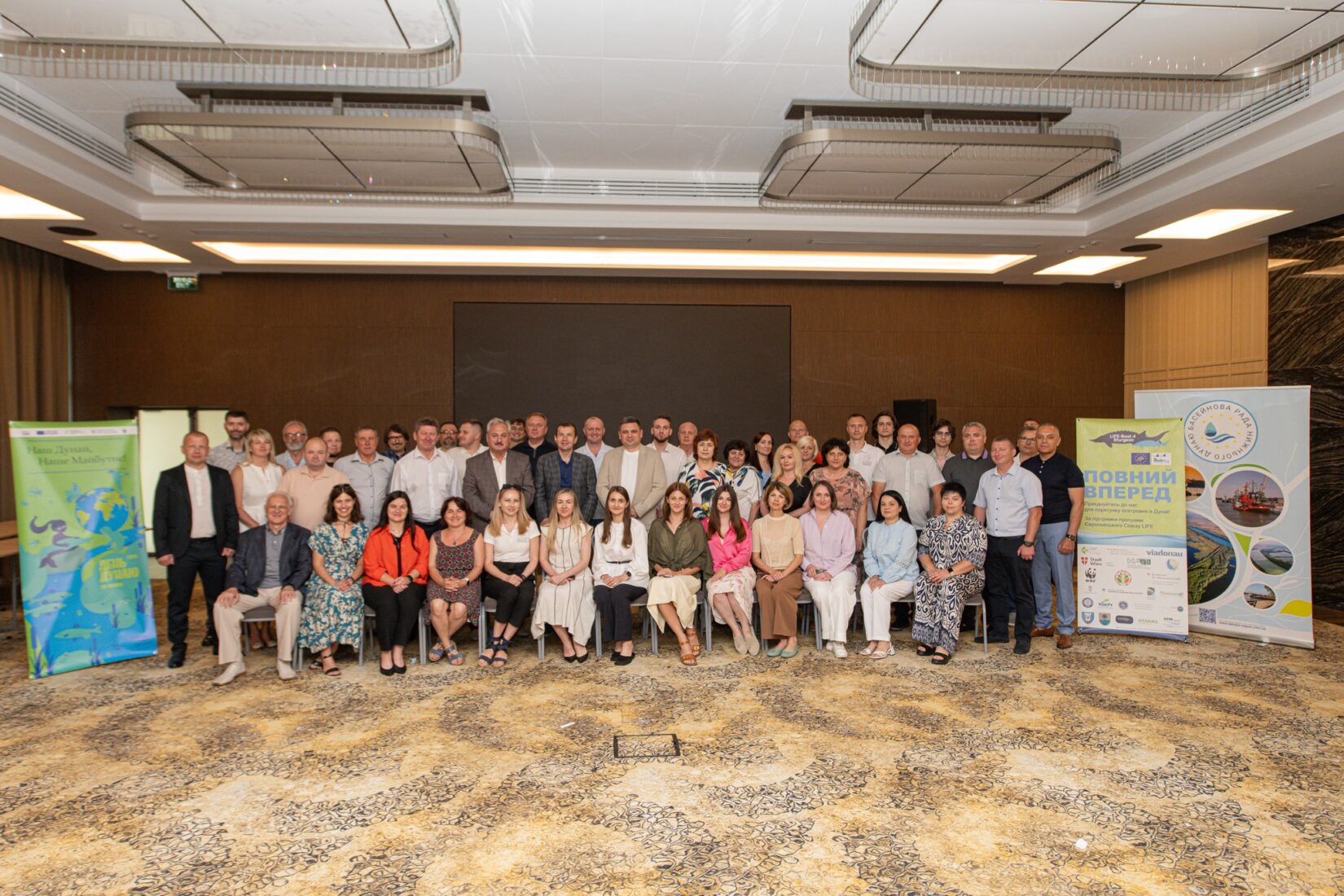
The event in Odesa therefore became a platform for analysing interim results from implementation of the main programme for protecting the Danube — the Danube River Basin Management Plan (RBMP) — as well as RBMPs for other Ukrainian rivers. Participants also discussed coordination among all parties involved — the Ministry of Environment, the Ministry for Communities and Territories Development, central government, regions, basin administrations, basin councils, communities and international partners.
What do the RBMPs provide for, and how are they being implemented?
Serhii Vlasenko, Deputy Minister of Environment, stressed the importance of introducing systematic water-resource management in line with European standards. The RBMPs provide for 1,681 measures worth more than UAH 348 billion, which are intended to become the basis for regional and sectoral planning.
Oksana Konovalenko, head of the Water programme at WWF-Ukraine, once again emphasised the importance of restoring free-flowing rivers by removing artificial barriers. This is one of the key steps for improving the condition of aquatic ecosystems and fulfilling Ukraine’s European-integration commitments.
Our country has undertaken commitments to implement the provisions of the EU Water Framework Directive, which requires achievement of good ecological status for water bodies. River Basin Management Plans are an important instrument for this, defining specific measures to achieve environmental objectives.
According to the Water Strategy of Ukraine, starting in 2025, at least 5 km of uninterrupted river flow should be restored in our country each year.
Problems the Danube RBMP is intended to address
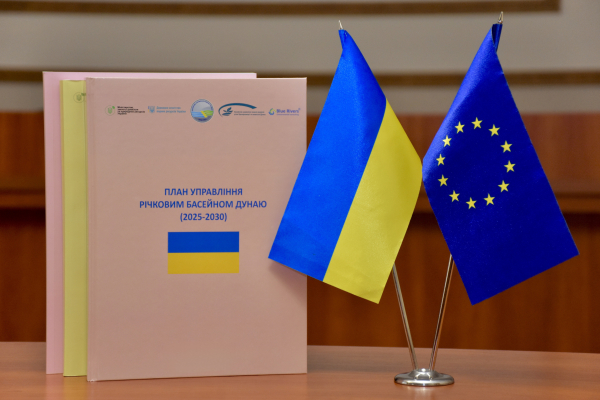
The Danube River Basin Management Plan for 2025–2030 was adopted on 31 December 2024. Implementation of the plan is aimed at addressing the following major water and environmental problems: pollution of surface waters with organic, nutrient and hazardous substances; hydromorphological changes; pollution and depletion of groundwater; climate change; reduction of the impact of infrastructure projects on water status; littering of water bodies with household waste; biological pollution (spread of invasive species); and the impact of hostilities.
In particular, during the first implementation cycle of the Danube RBMP for 2025–2030, reconstruction of wastewater-treatment facilities in Uzhhorod, Mukachevo, Berehove, Khust, Kolomyia, Chernivtsi and Izmail is planned to reduce pollution by organic, nutrient and hazardous substances.
Overall, the programme of measures under the Danube RBMP contains 293 main measures and 58 additional ones. These measures are aimed at improving/restoring the hydrological regime and morphological indicators where free river flow has been disrupted, hydraulic connectivity between river channels and their floodplains has been impaired, hydrological changes have occurred, river morphology has been modified, and water bodies are littered with household waste, among other issues.
Declaration on Cooperation in the Danube Basin signed
During the event in Odesa, Ihor Hopchak, head of the State Agency of Water Resources (SAWR), reported on progress in the first quarter of RBMP implementation: 3 measures were completed, implementation of 103 measures began, and 268 measures were incorporated into planning documents.
Mariia Shpanchyk, head of the Water Resources Provision Department at SAWR, spoke about the successful screening of national legislation in the Water Quality sector under Chapter 27 ‘Environment, Climate and Civil Protection’ as part of Ukraine’s EU accession negotiations. Ukraine is moving toward the basin principle of water-resource management, demonstrating the water sector’s readiness for European standards.
During the event, heads of basin water-resource administrations (BWRAs) and chairs of basin councils signed a Declaration on Cooperation in the Danube Basin, which will serve as a basis for further coordination of water-management activities.

Photo — State Agency of Water Resources of Ukraine
International cooperation and the SUNDANSE project
International Danube Day, celebrated annually on 29 June, is a symbol of unity, cooperation and shared responsibility for the future of 19 countries.
Specialists from different sectors in Danube countries therefore implement many projects aimed at improving the condition of the river. One such project is SUNDANSE (‘Innovative sediment management framework for a SUstainNable DANube black SEa system’). The goal of this ambitious project is to create an innovative sediment-management system for the Danube River basin. The 20 project partners live and work in 10 European countries. They include universities, research institutions, innovation-implementation centres, national waterway organisations, private companies and civil-society organisations from Romania, Ukraine, France, Israel, Austria, Belgium and other European countries.
Ukrainian SUNDANSE partners — staff of the National Ecological Centre of Ukraine (NECU) and the Danube Hydrometeorological Observatory — carry out an important part of the project’s work in the Ukrainian section of the Danube. NECU plays a crucial role in implementing the SUNDANSE project by contributing expertise and resources and participating in various aspects related to environmental management and policy development.
Additional information
On 29 June 1994, the Danube River Protection Conventionwas signed. The high hopes associated with its signing are entirely realistic: cooperation among government and civil-society organisations, scientific institutions and industry continues to grow. The work was so successful that it became a model for the entire world.
On 27 October 1998, the International Commission for the Protection of the Danube Riverwas established and functions as the implementing body of the Danube River Protection Convention. The International Commission for the Protection of the Danube River (ICPDR) is an international platform for ensuring cooperation among Danube-basin countries and other stakeholders.
At present, 14 countries and the European Commission are members of the ICPDR. Based on the EU Water Framework Directive, the ICPDR also cooperates with Danube-basin countries that are not parties to the Convention. These include Italy, Switzerland, Poland, Albania and the former Yugoslav Republic of Macedonia, as well as 21 international organisations with observer status. They include the Black Sea Commission, the Danube Commission, the Danube Environmental Forum, the Danube Tourist Commission, the Global Water Partnership, the Ramsar Convention, the World Wide Fund for Nature (WWF), the Carpathian Convention and others.
Ukraine ratified the Danube River Protection Convention in 2002. Since 2003, Ukraine has been a member of the ICPDR and has participated in the work of its bodies and expert groups.
In 2004, the ICPDR proposed establishing 29 June as a permanent date across the river basin for celebrating Danube Day.
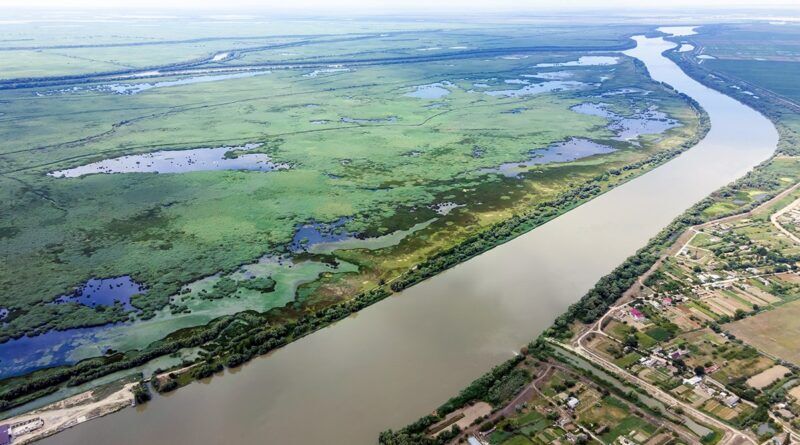
Main photo — the Danube. Author: Tudor Baciu, Romania
The SUNDANSE project is funded by the European Union. The views and opinions expressed in this material are solely those of the author and do not necessarily reflect the position of the European Union or the European Climate, Infrastructure and Environment Executive Agency (CINEA). Neither the European Union nor the funding body can be held responsible for the content.