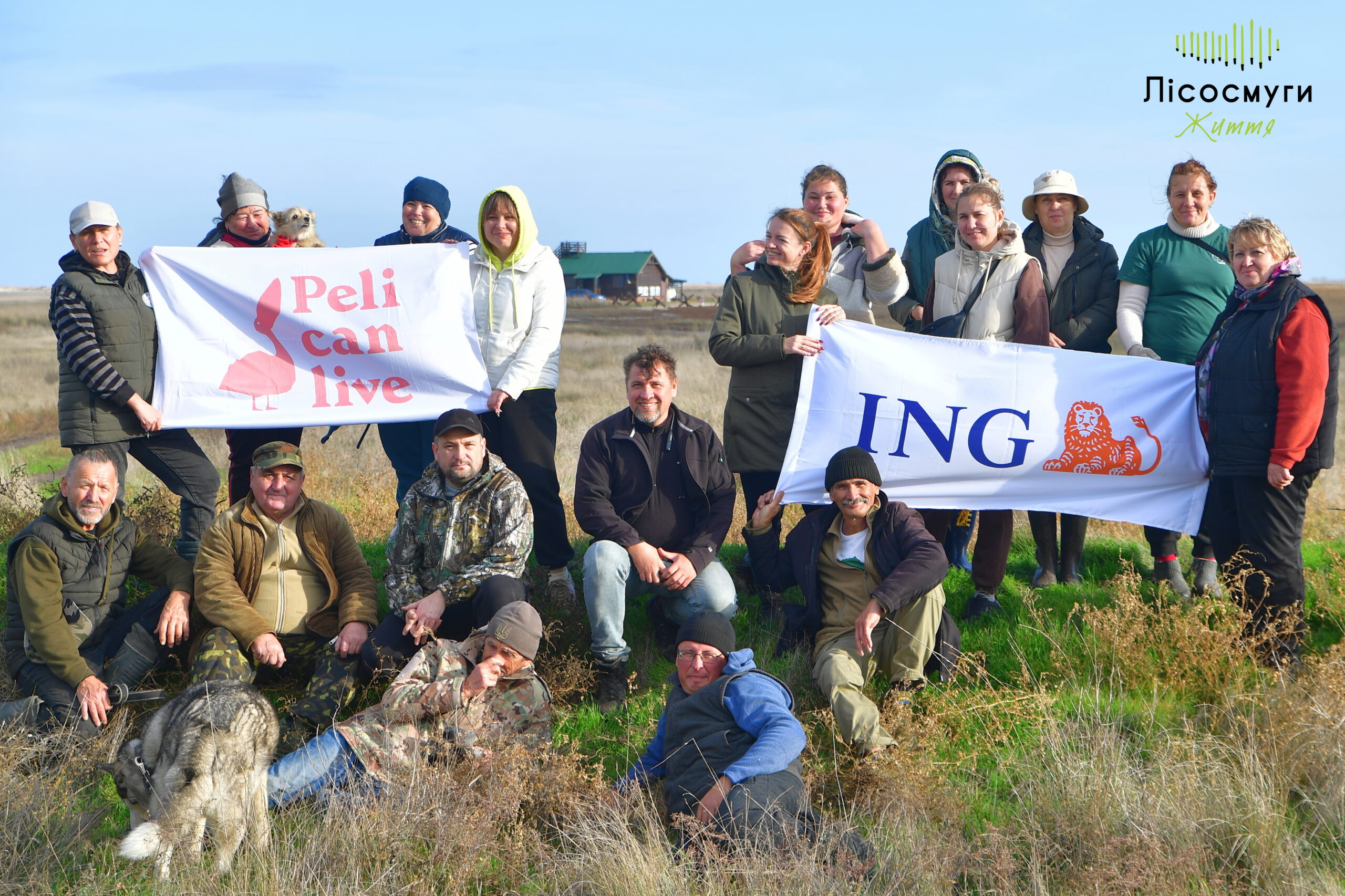
At the end of 2025, the steppe near Tuzlivski Lymany National Nature Park changed. Along the boundary between the protected area and arable land, a new living line of defence appeared: the first one and a half thousand trees and shrubs were planted as part of the Forest Belts of Life project, implemented by the Peli can live charitable foundation in partnership with NUBiP Ukraine with financial support from #INGBankUkraine.
This is not a one-off ‘planting campaign’ but the beginning of systematic work to demarcate the steppe, protect soils, and introduce a European approach to sustainable farming under climate change.
A living boundary instead of another furrow
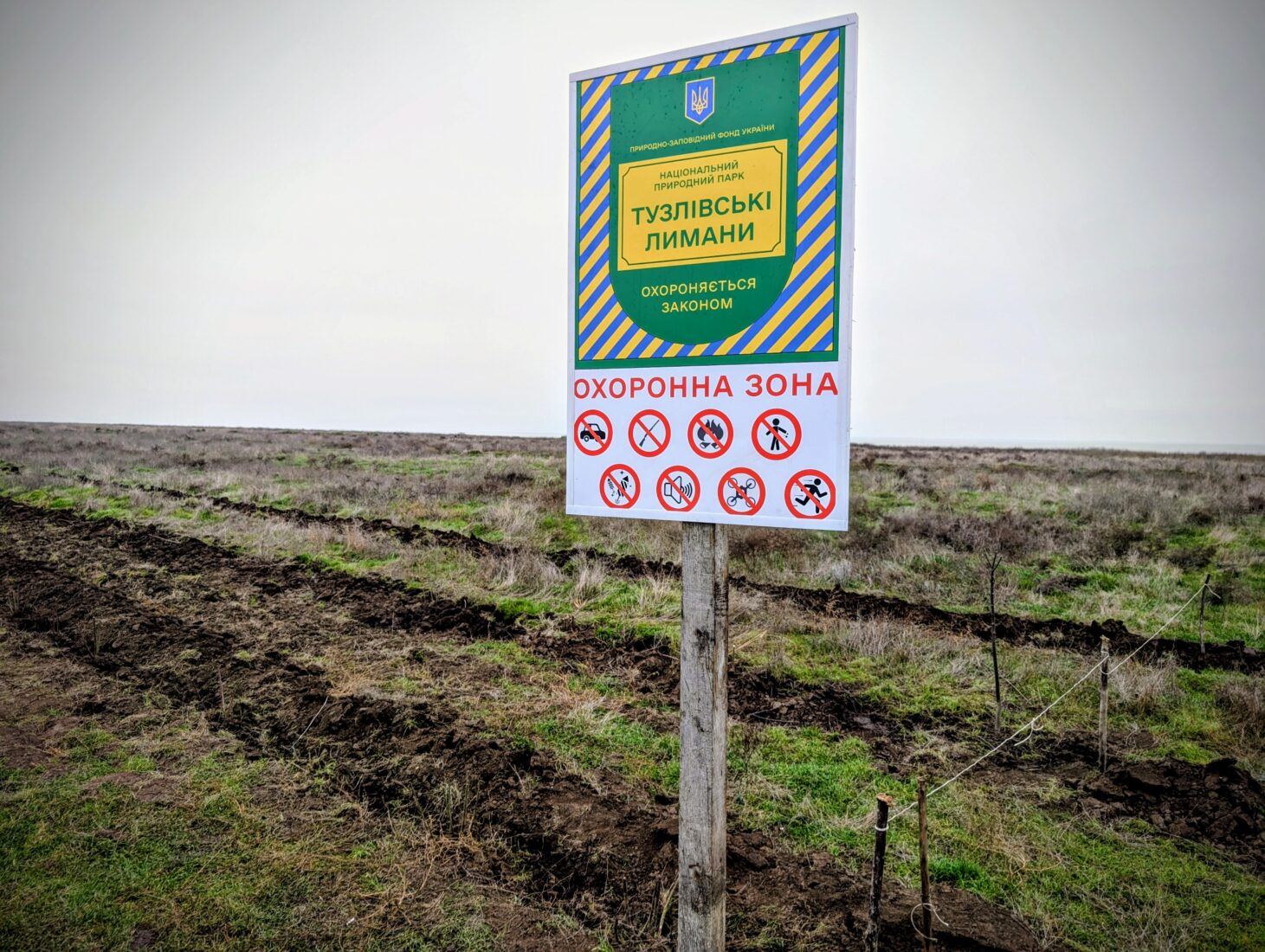
The national park team set an ambitious goal: to create demarcation forest belts on the parts of the steppe most affected by illegal ploughing. These are narrow but extremely important strips of land along the Park boundary, where every year farmers may be tempted to ‘move the plough a little’ into protected steppe areas.
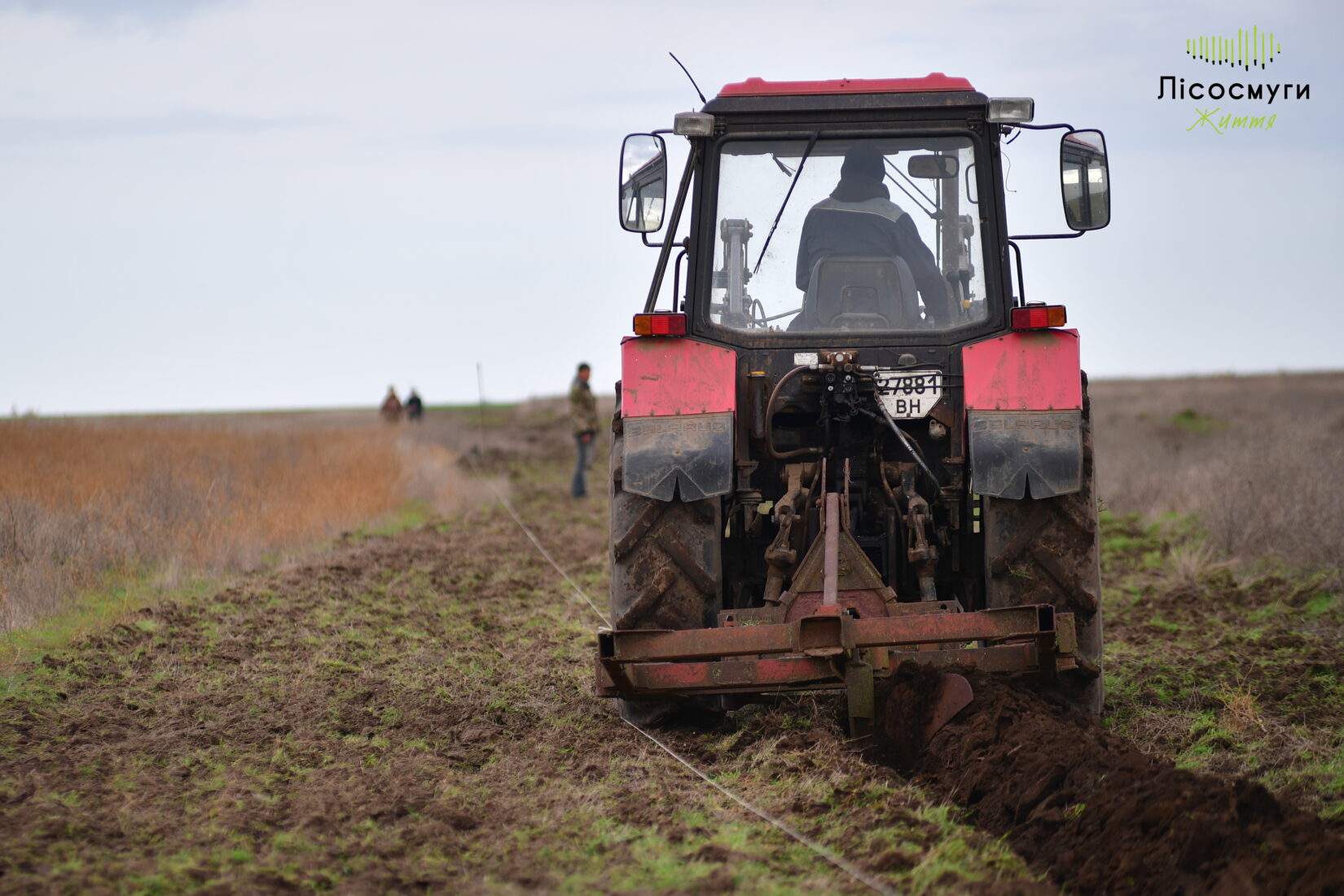
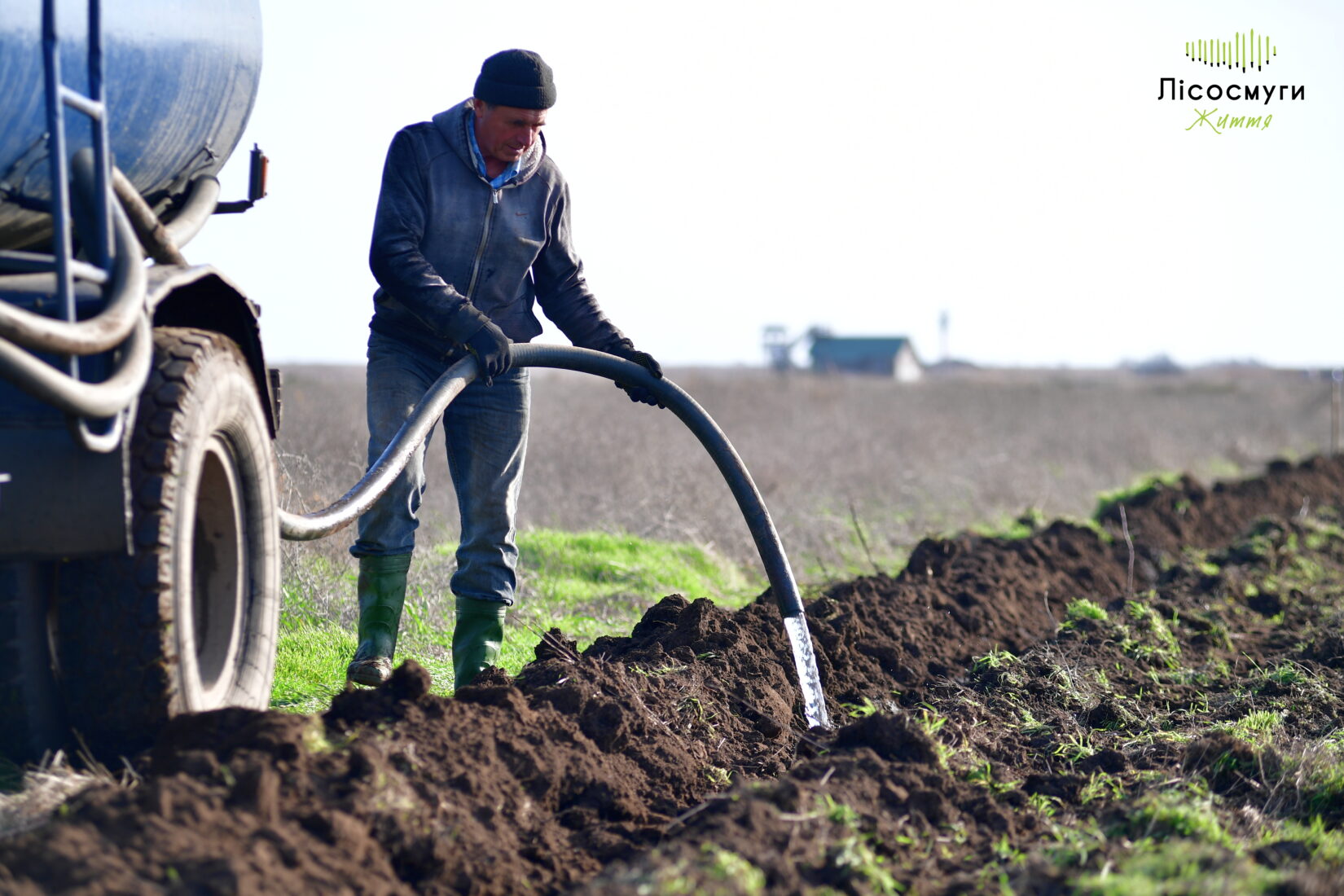
The first step is a pilot section, near the Shagany Lagoon, close to Prymorske village, about 500 metres long, planted in three rows of trees and shrubs.Here, rangers of Tuzlivski Lymany National Nature Park, park staff, botanists and volunteers, supported by the #ForestBeltsOfLife project, worked together to establish a new forest belt that already marks a living boundary between arable land and virgin steppe.
In the future, forest belts are also planned on other problematic sections of the Park; they will become the next link in a single protective belt around Tuzlivski Lymany National Nature Park. In the longer term, these separate sections are intended to become a continuous green line — a hedgerow that will not only physically prevent ‘creeping’ ploughing but also create an integrated ecological corridor along the Park.
For land users, such a forest belt is a clear signal: the arable field ends here and protected virgin steppe begins. For the steppe, it is a shield against machinery and erosion that will grow stronger each year; for the community, it is a visible marker that land has not only cadastral but also ecological value.
The right to the steppe: a legal compromise with farmers
The Forest Belts of Life project near the Tuzlivski Lymany shows how confrontation can be replaced by cooperation. Conscientious farmers whose fields directly border the national park voluntarily agreed to allocate narrow strips of their land for the creation of demarcation forest belts.
For farmers, this means losing several metres of land, but in return they receive:
- a clearly marked and legally understandable plot boundary;
- a natural barrier against wind erosion and dust storms;
- a better microclimate and more stable yields on the rest of the field in the long term.
The national park, in turn, undertakes:
- scientific substantiation and planning;
- organisation of the work and monitoring of plant survival;
- subsequent care of the plantings.
The charitable foundationPeli can live and NUBiP provide the project with
- expertise both at the planning stage and during plant-care stages;
- material resources for organising planting and caring for the plants (property worth a total of UAH 110,397.00 was purchased for the Park and transferred into its ownership, including a walk-behind tractor, wood chipper, auger, electric fence energiser, and other items);
- information support.
This model of work fully corresponds to the European approach to sustainable land use, where shelterbelts, hedgerows and buffer strips are regarded as integral infrastructure of the agricultural landscape, on a par with roads or irrigation.
Agroforestry as a response to climate change
Southern Odesa, Mykolaiv and Kherson regions are already living with the reality of aridification: droughts are becoming more fSouthern Odesa, Mykolaiv and Kherson regions are already living with the reality of aridification: droughts are becoming more frequent, hot dry winds stronger, and chernozem soils are losing humus.
Under such conditions, a forest belt is not merely ‘green decoration’ but a vital piece of natural engineering infrastructure.
The new demarcation forest belts near Tuzlivski Lymany National Nature Park will:
- reduce wind speed and the intensity of dust storms;
- retain snow and rainwater moisture in the fields;
- lower air and soil temperatures during hot periods;
- improve soil structure and promote humus accumulation;
- create favourable conditions for plants to establish on neighbouring plots.
This is the classic effect ofagroforestry: when a sufficiently substantial belt of trees and shrubs forms, surrounding plants can better withstand climate extremes and establish their roots.
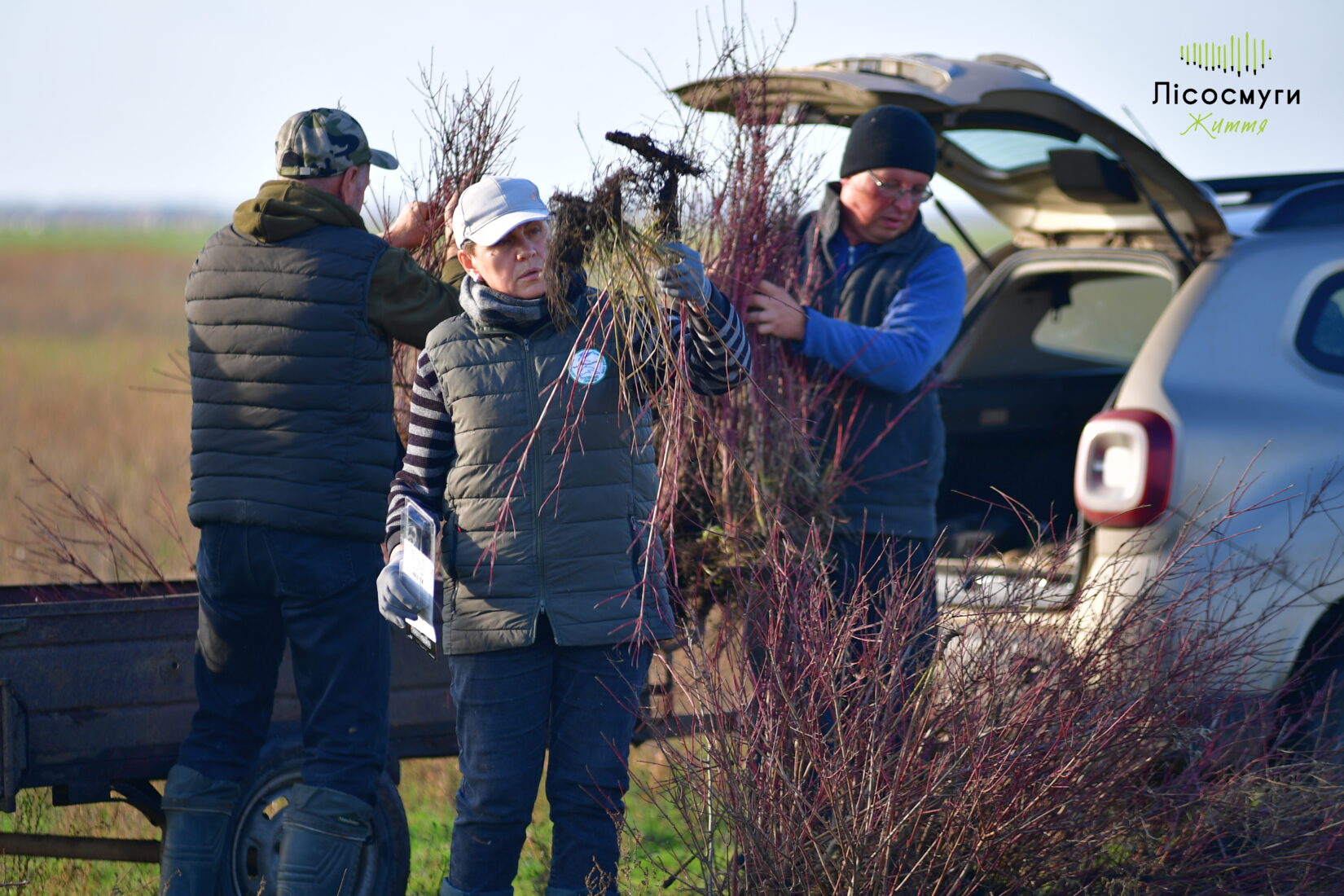
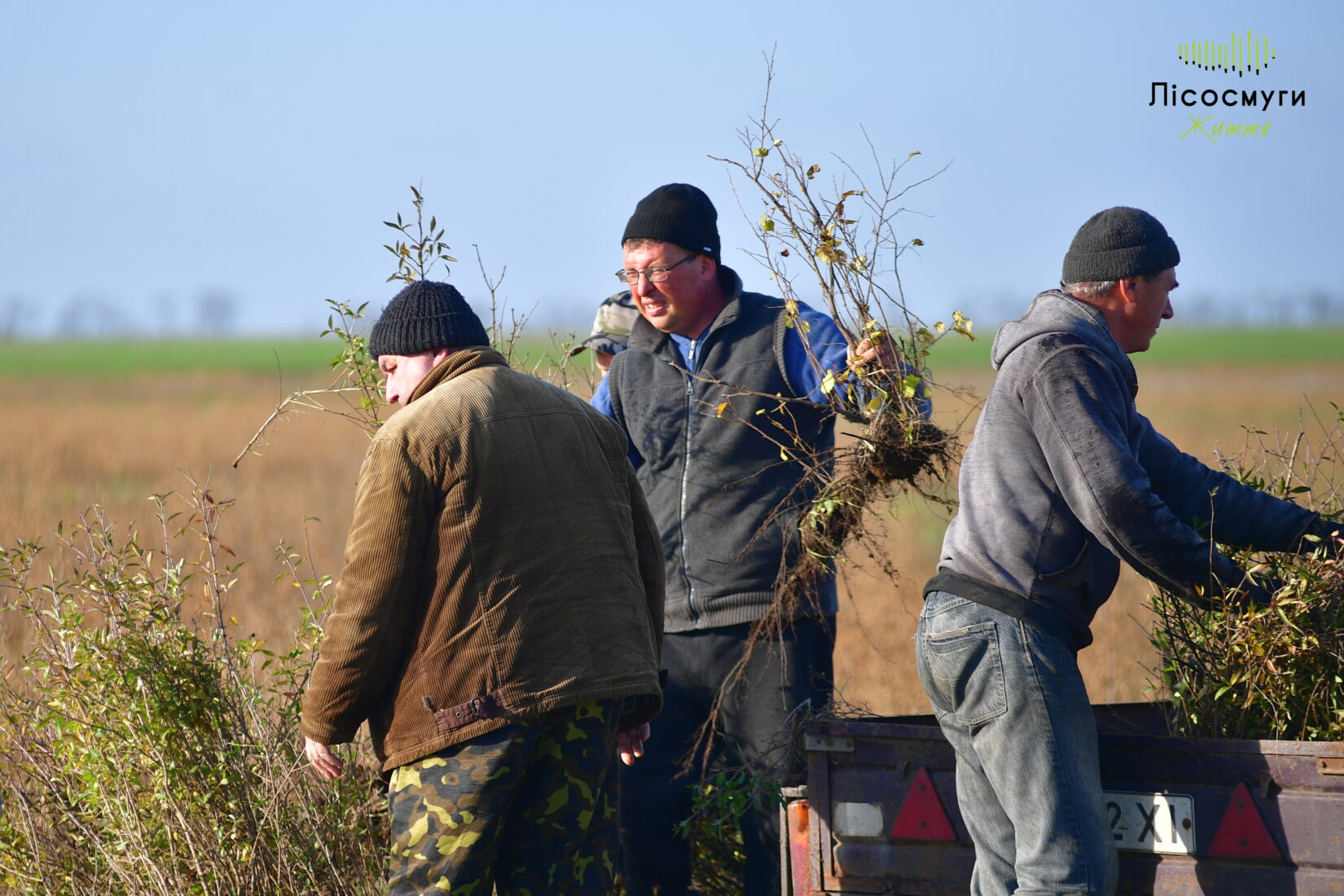
That is why the first stage of the project prioritised the most resilient shrub species — above all privet and wild rose, which tolerate drought and wind well. Once these have created a suitable microclimate, more demanding tree species can be added.
A botanical experiment under real field conditions
The project on the boundary of Tuzlivski Lymany National Nature Park is also a full-scale botanical experiment. The planting scheme and species composition were developed specifically for the Park by the scientific experts of the Forest Belts of Life project Oleksandr SovakovandNataliia Pashkevychtogether with the national park’s botanistsOlena BronskovaandOlena Popova.
All trees and shrubs being planted are native species historically characteristic of the forest-steppe gullies and ravines of this area. The plantings include, in particular:
Tree species:
- pedunculate oak (Quercus robur) — a key long-lived species of steppe gullies;
- European ash (Fraxinus excelsior);
- field elm (Ulmus minor);
- field maple (Acer campestre).
Shrub species:
- common privet (Ligustrum vulgare);
- wild rose (Rosa spp.);
- dogwood (Cornus spp.);
- smoke tree (Cotinus coggygria);
- black elder (Sambucus nigra);
- spindle (Euonymus spp.);
- hawthorn (Crataegus spp.) and other species characteristic of steppe shrub communities.
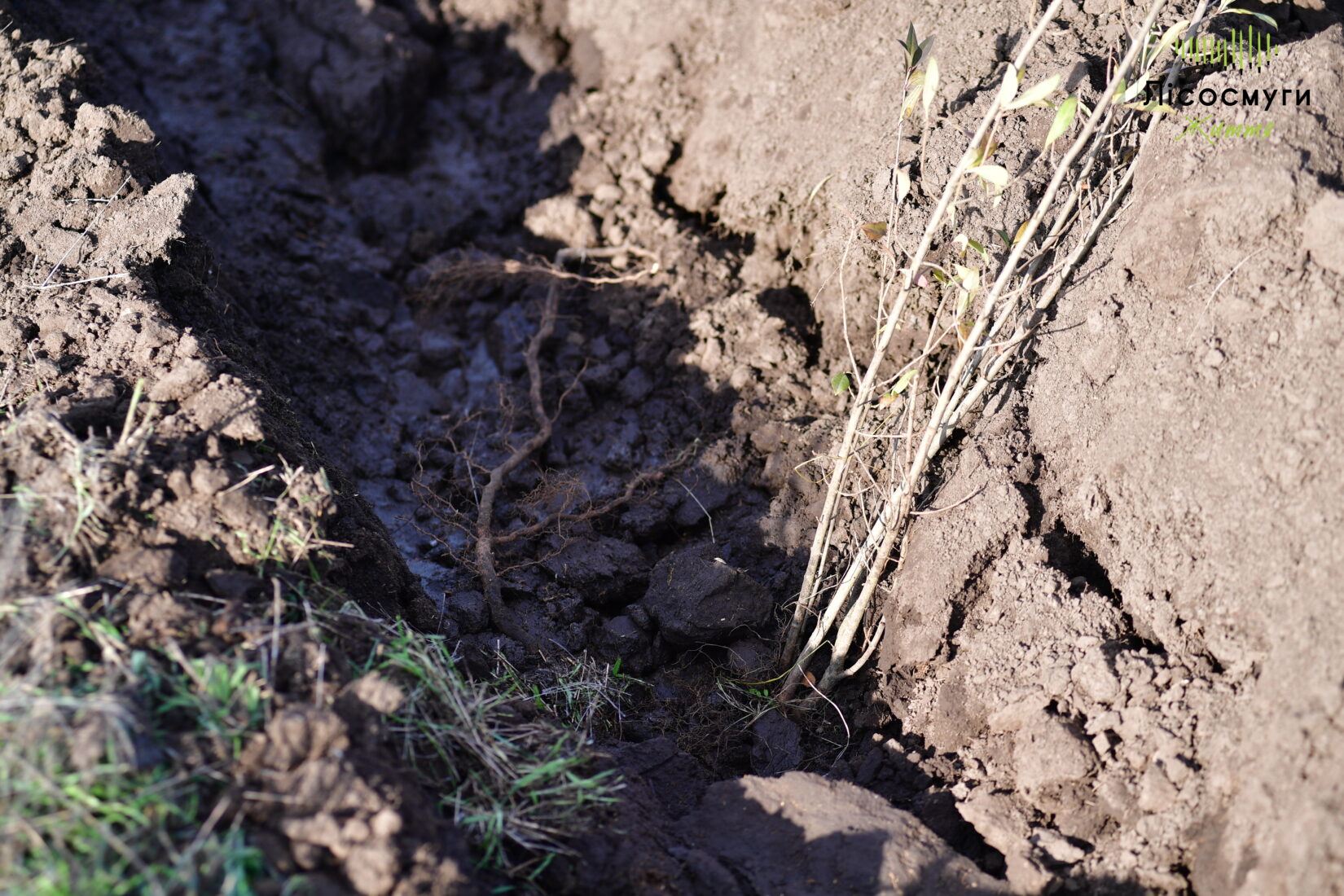
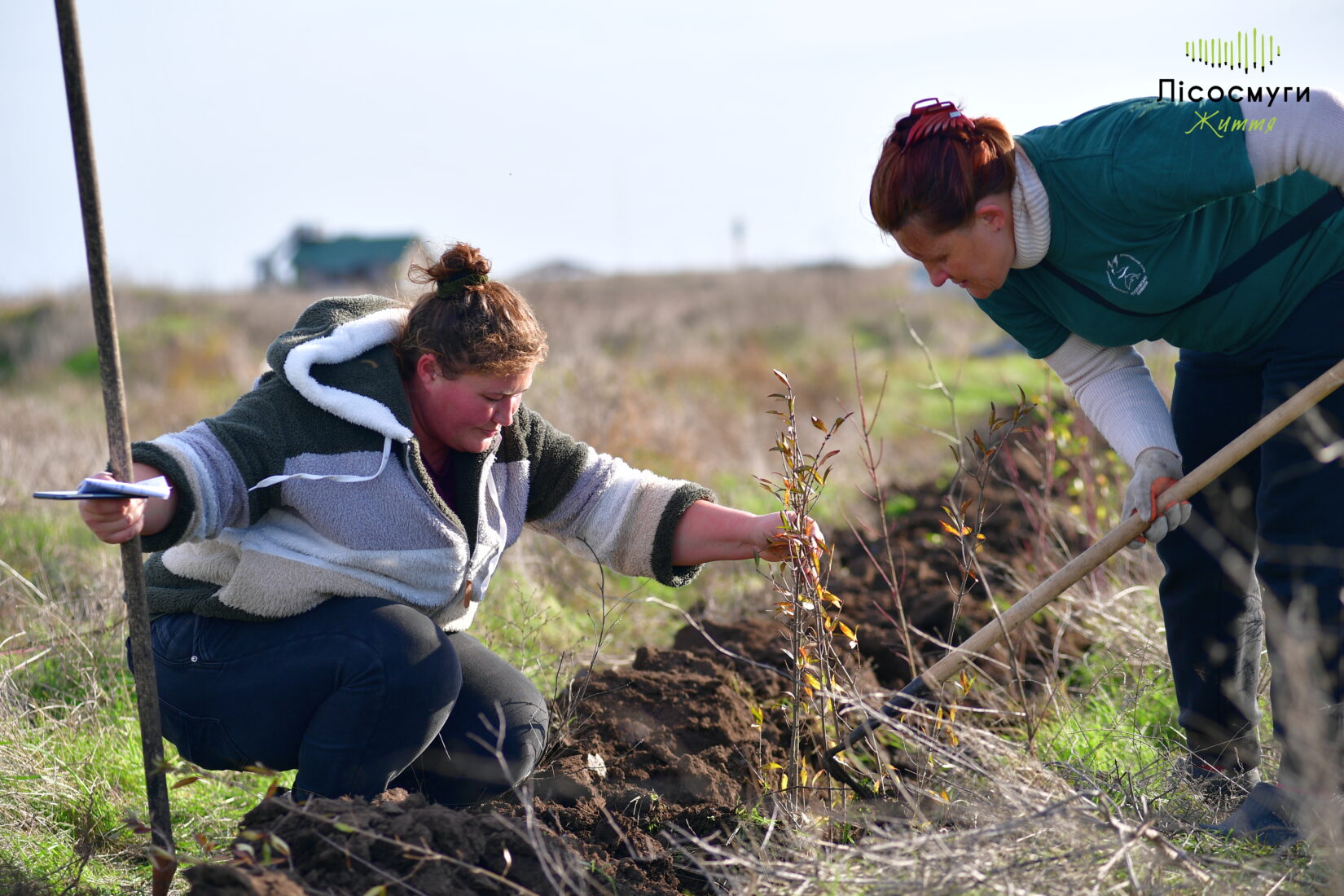
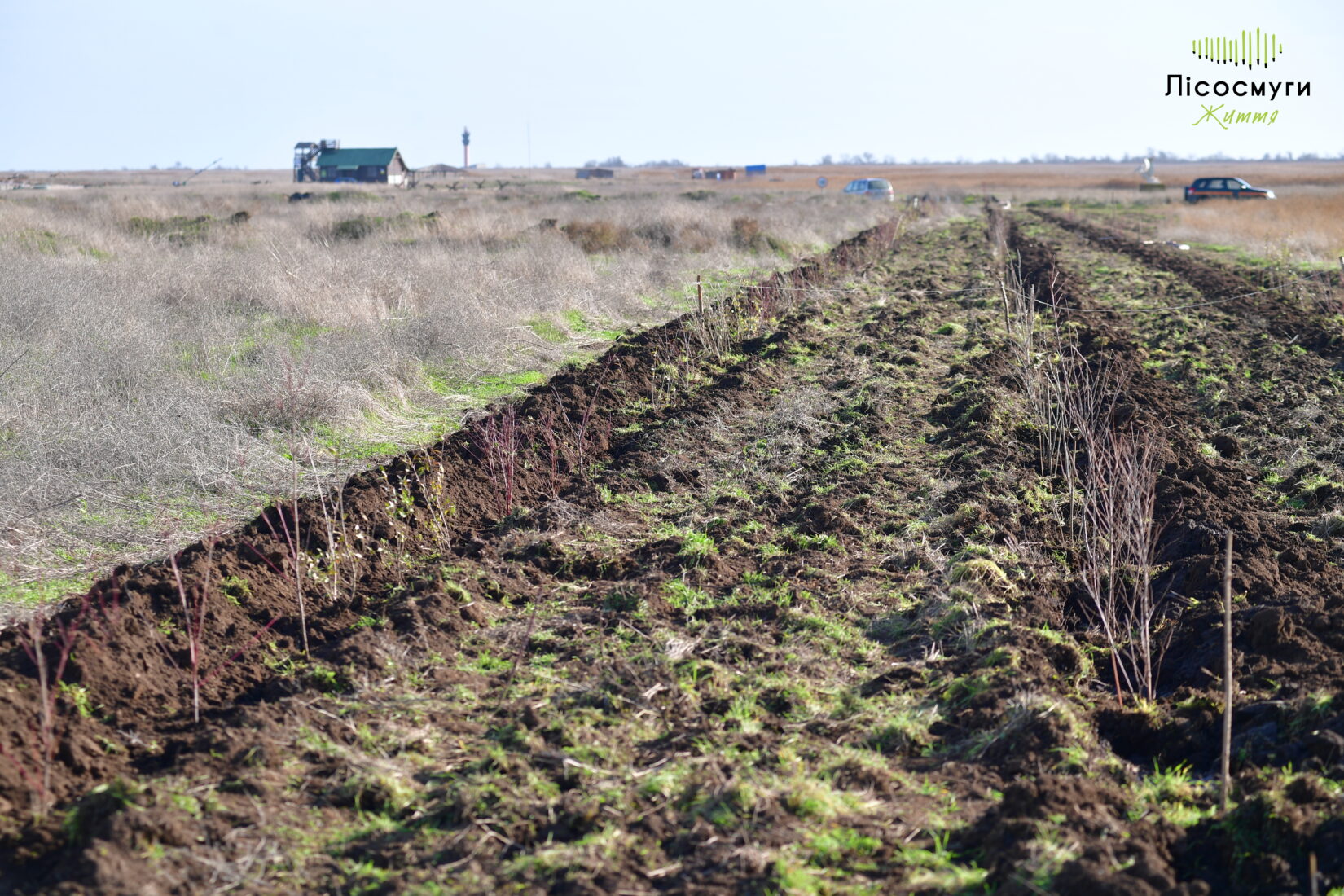
The planting scheme consists of three rows. A dense shrub barrier is formed on the windward side, behind it a layer of trees of varying heights and longevity, and in some places an understorey and herbaceous cover. This structure closely resembles a natural gully and creates diverse microhabitats for birds, insects, small mammals and other steppe inhabitants.
For scientists, this is a unique opportunity to observe how species traditional to the region behave under new climatic conditions — in an open steppe zone exposed to constant winds, where droughts have already become the norm.
The steppe — Ukraine’s cradle and corridors of life
The steppe is often perceived as an ‘empty field’, but in reality it is one of the country’s most complex and vulnerable ecosystems. Rare plant and animal species associated with open landscapes survive here — from steppe orchids to larks and birds of prey.
The new forest belts are woven into this mosaic asbiological corridors:
- for birds — safe routes between nesting sites in the steppe and feeding areas on the lagoons;
- for small mammals, reptiles and amphibians — places for shelter, wintering and reproduction;
- for pollinating insects — uninterrupted ‘lines of flowering’ and nectar throughout the season.
Where yesterday there was only a bare tractor track, tomorrow there will be a shrub where a bunting sings, a hedgehog hides, and wild bees settle. The steppe, Ukraine’s cradle, is gaining threads of life that connect separate fragments of natural habitat into a single network.
The people who hold the steppe
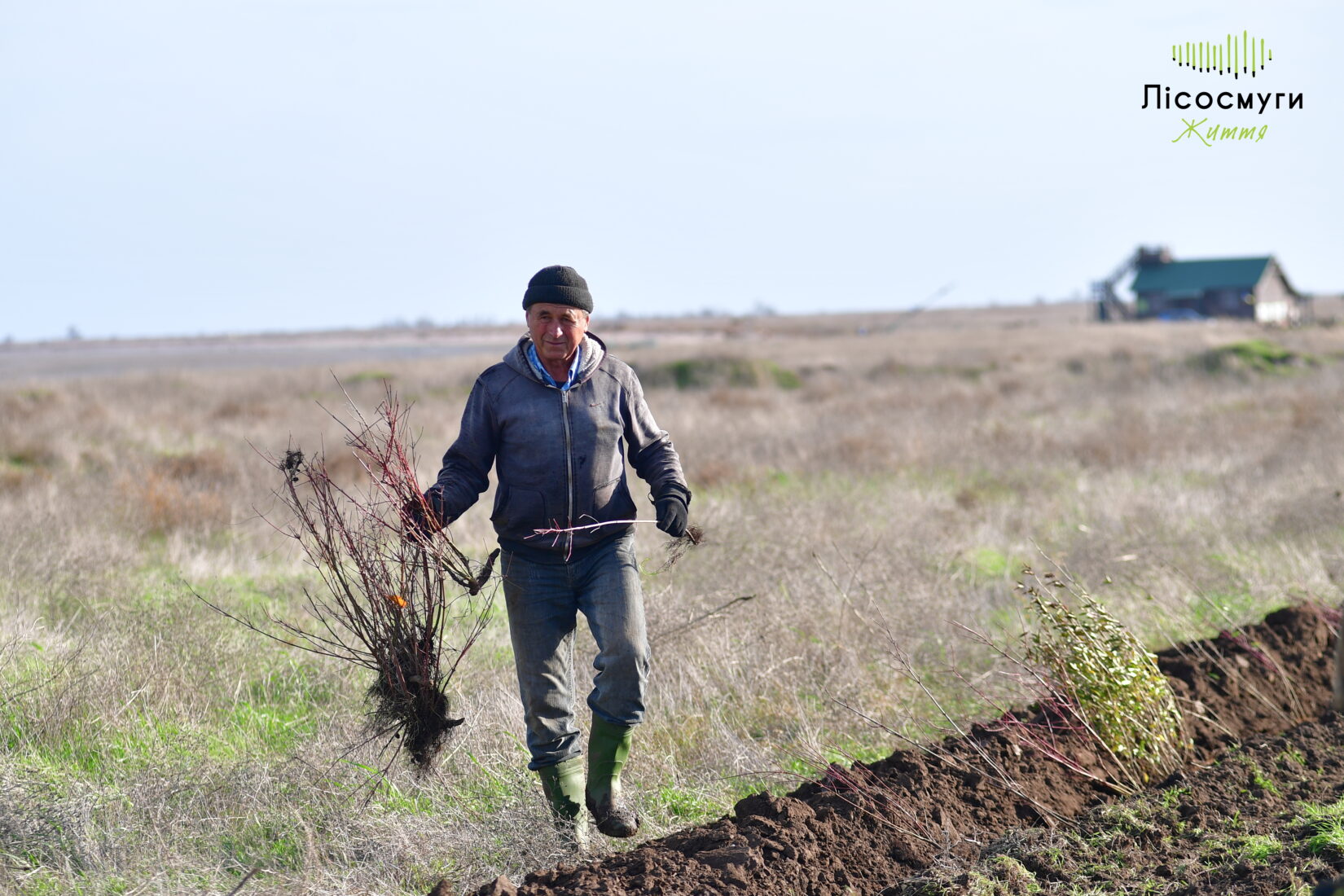
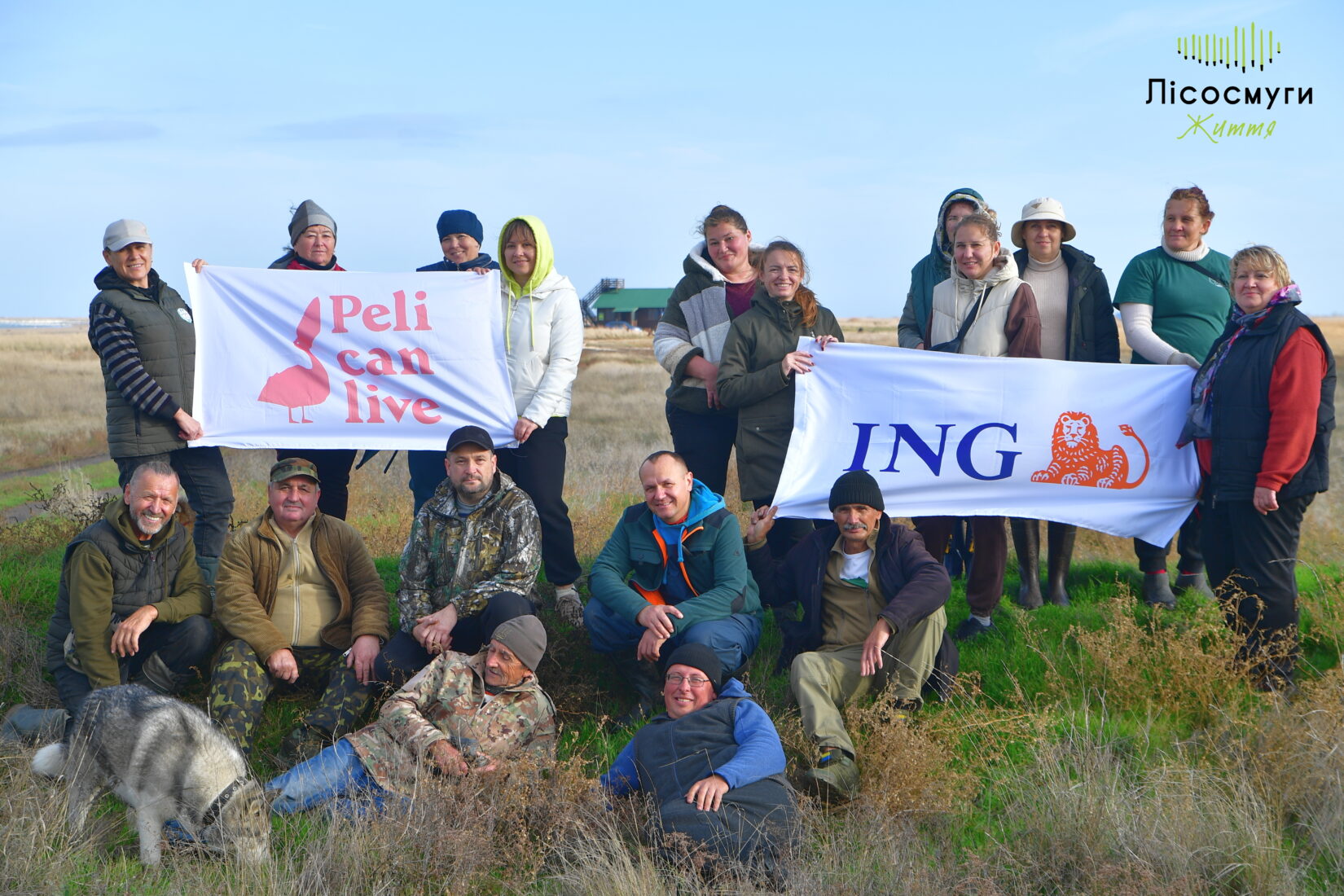
Behind every young sapling are real people. Rangers of Tuzlivski Lymany National Nature Park go out into the steppe every day — patrolling the Park boundaries, documenting violations, talking with farmers, and rescuing injured birds. On planting day they worked alongside scientists, volunteers, partners and local residents. Dogs ran through the fields with them — faithful companions of the steppe rangers. For these people, these landscapes are not an abstract ‘protected area’ but a home they return to every day.
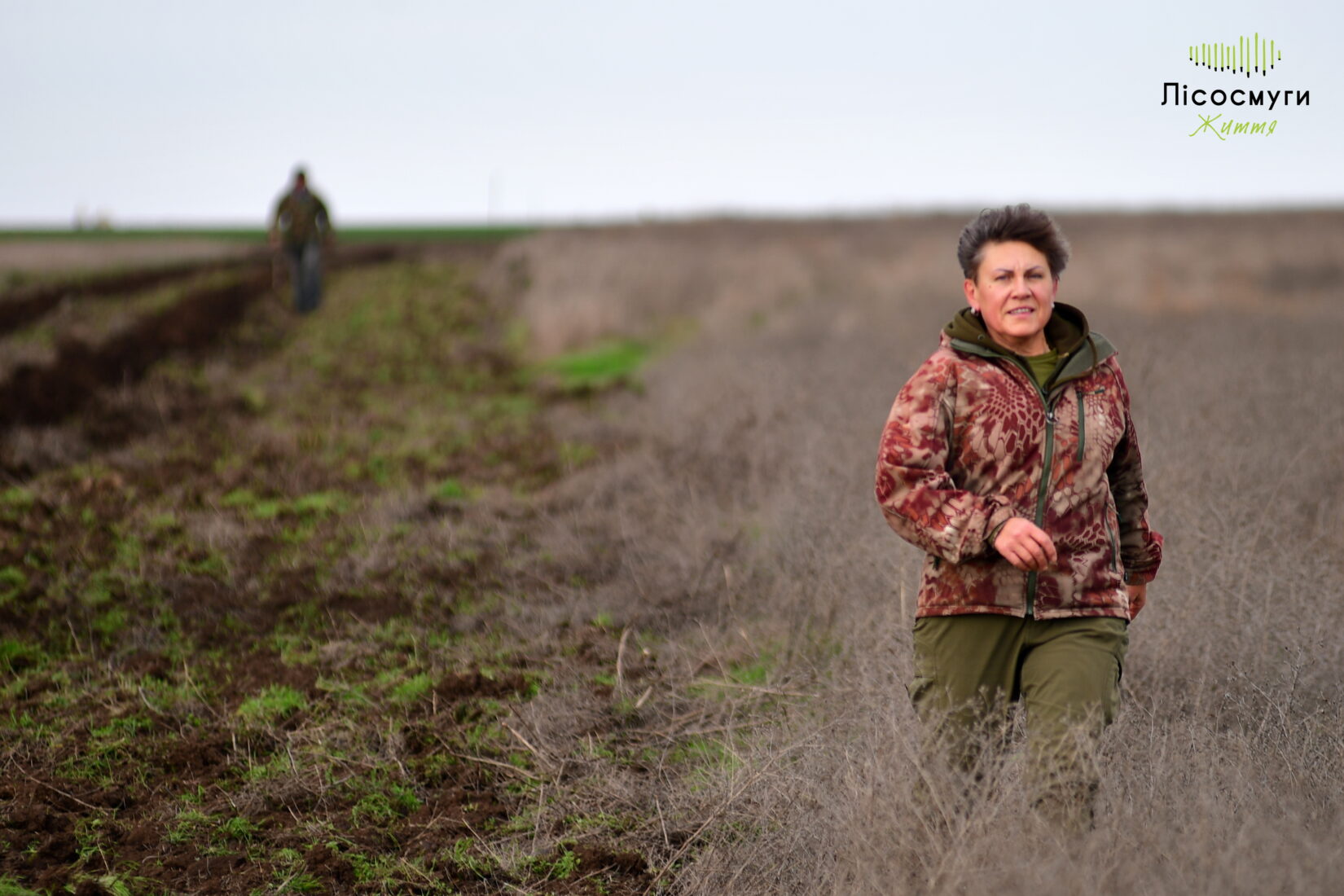
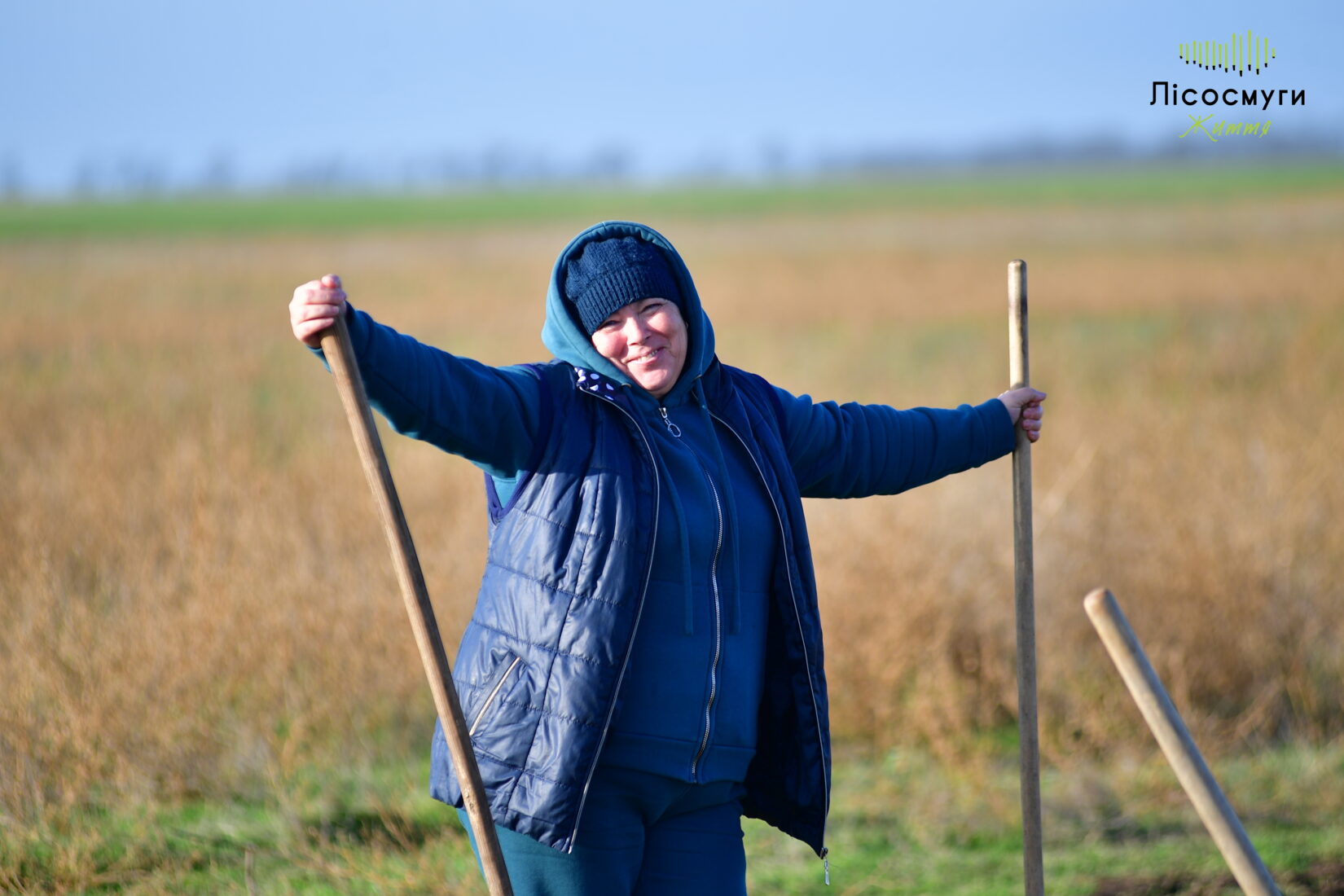
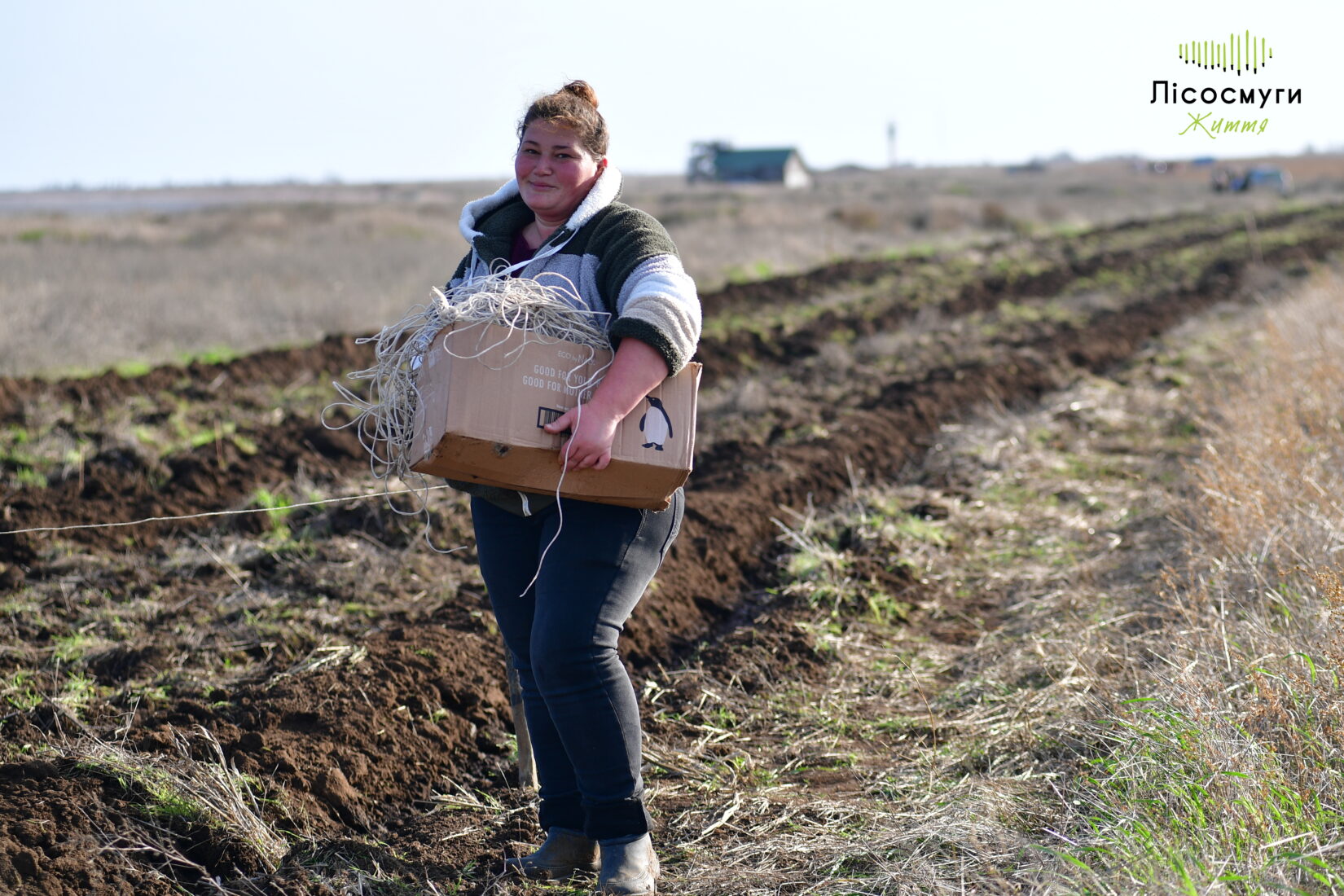
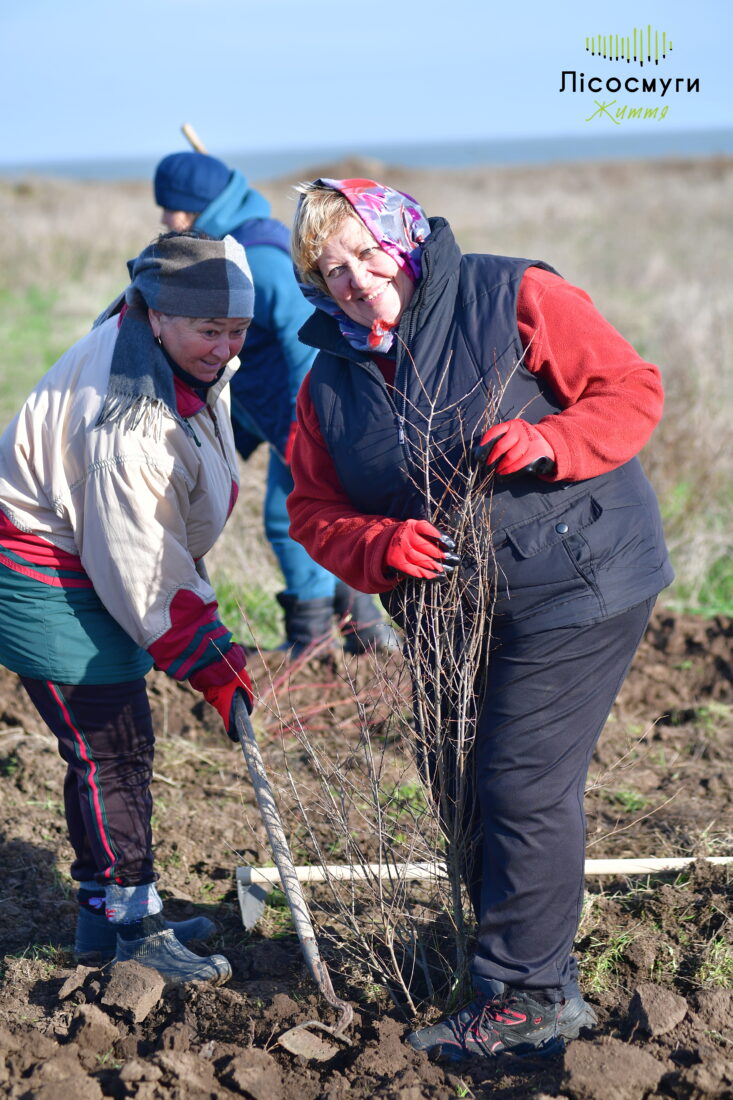
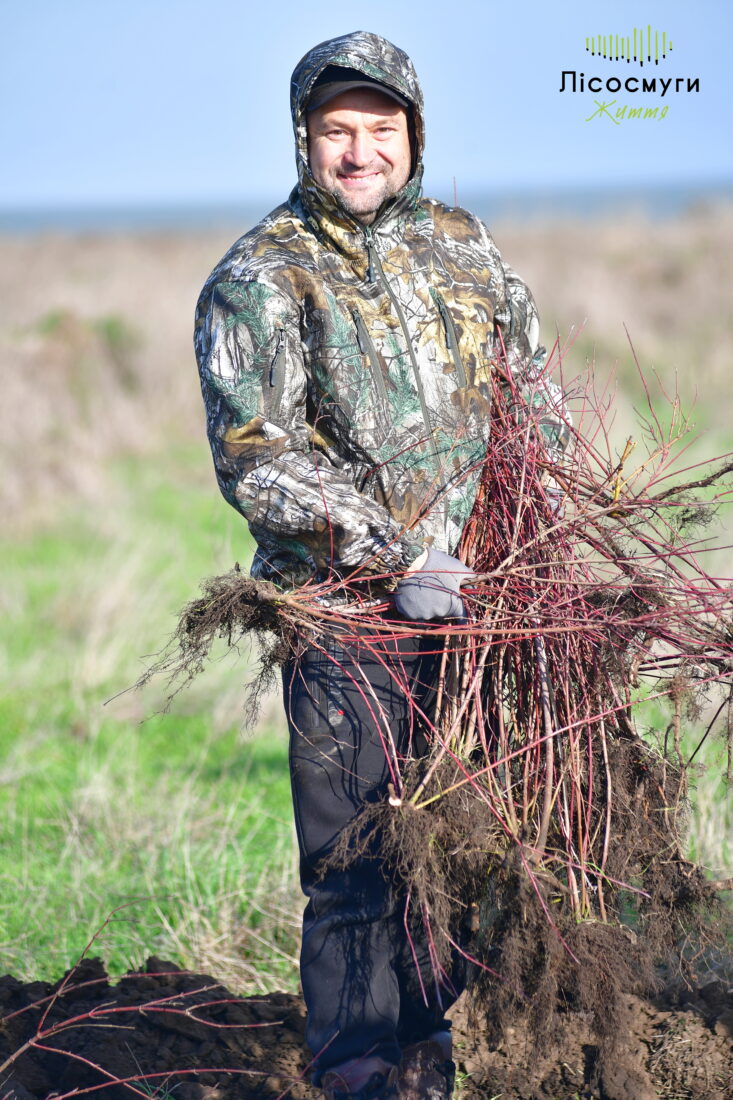
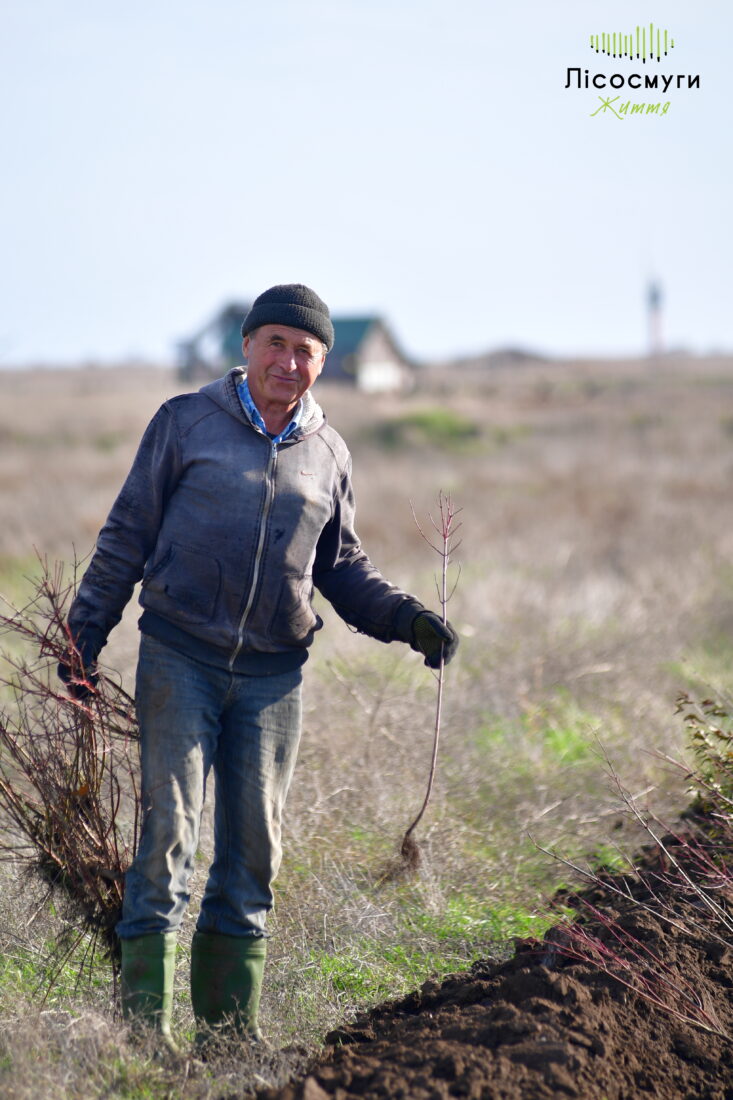
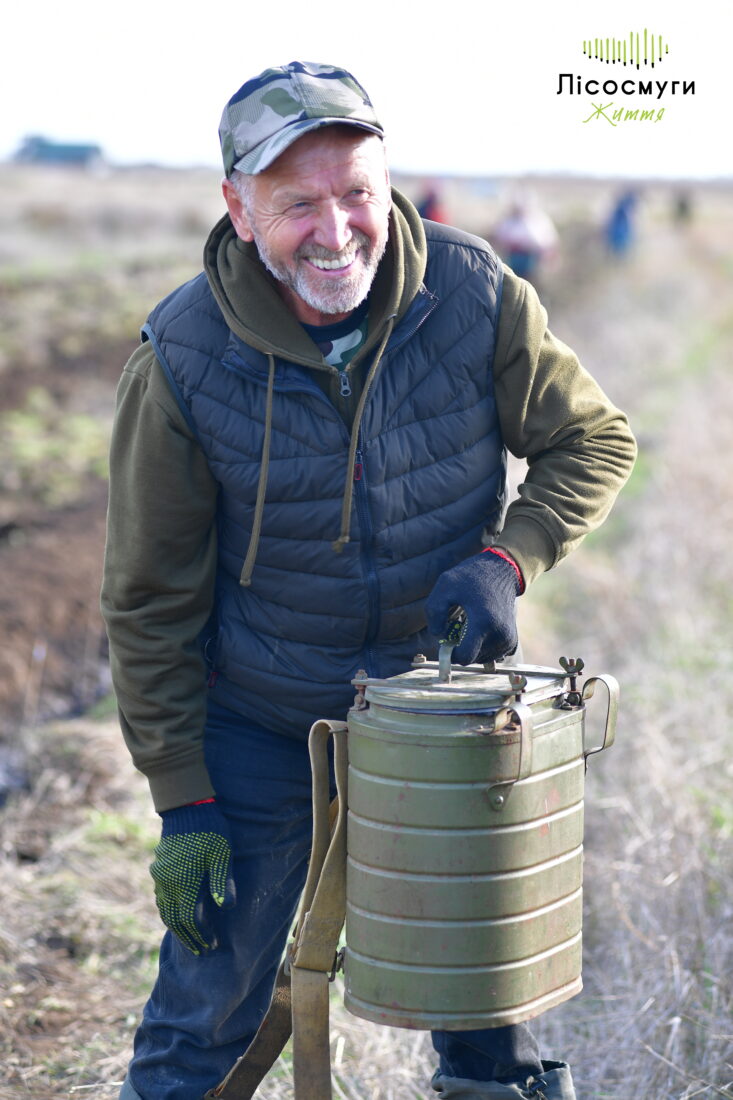
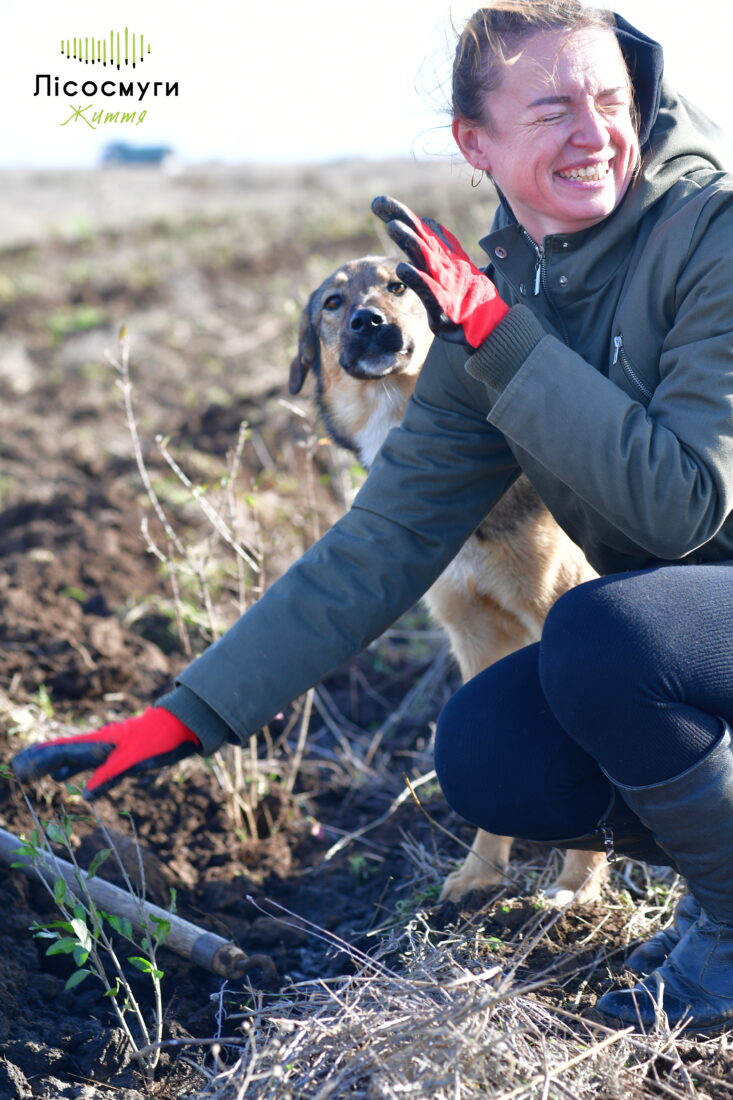
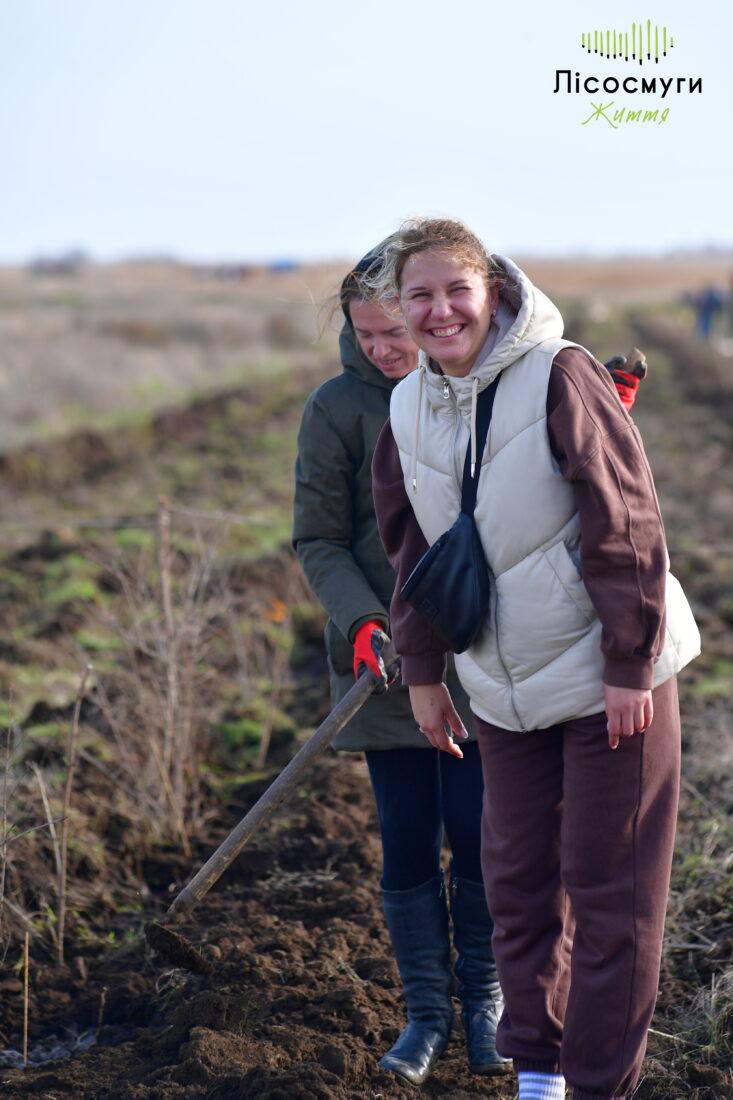
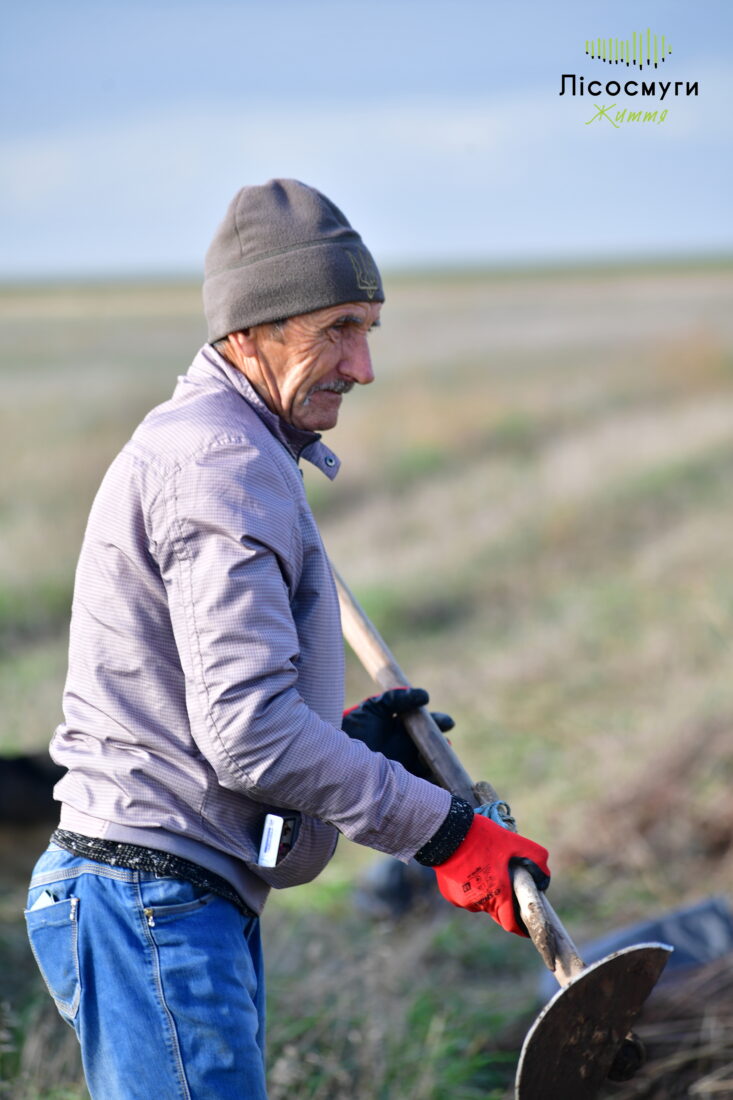
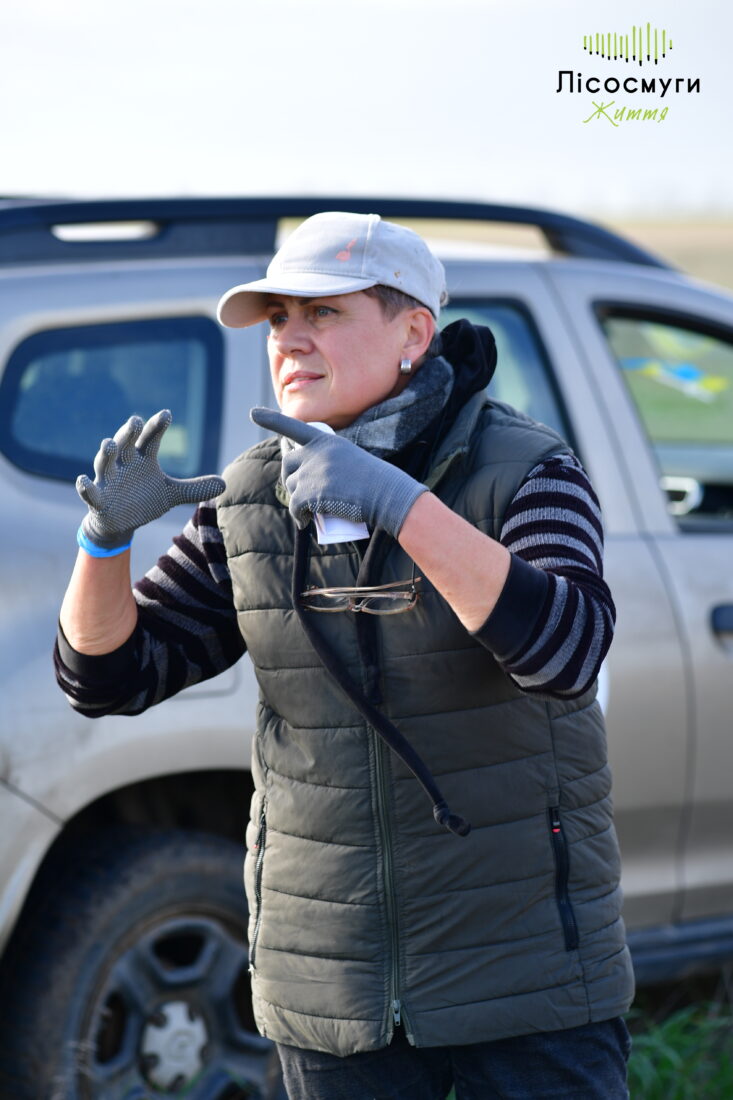
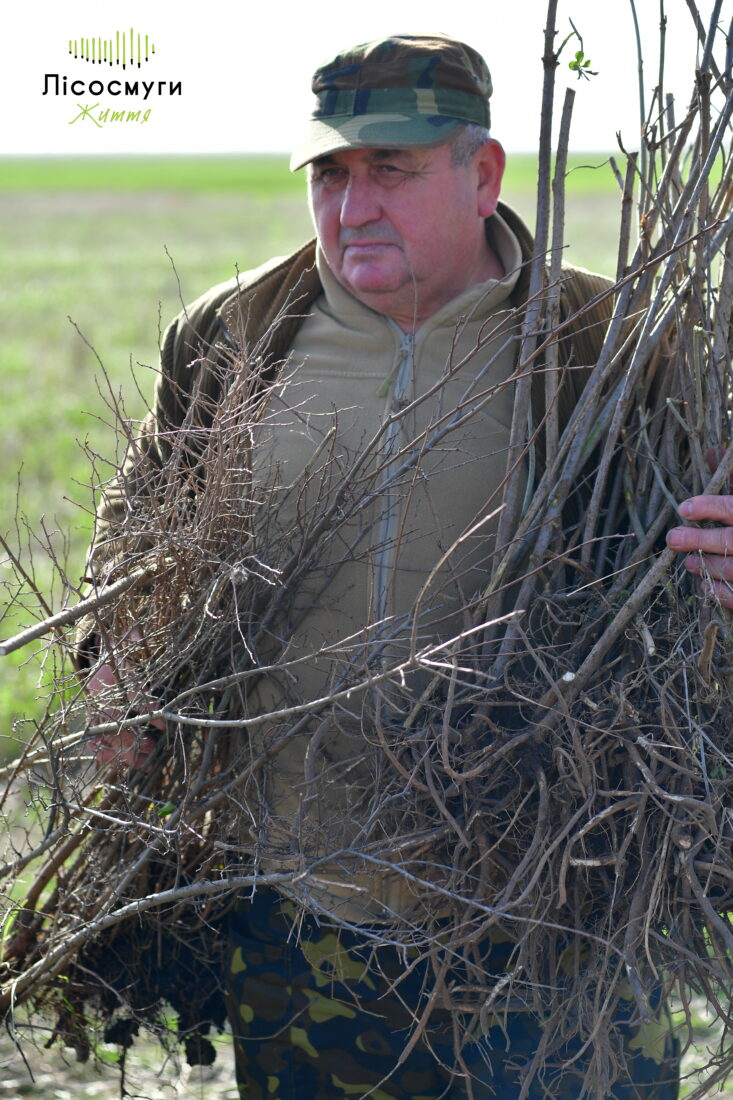
This is the human and deeply emotional side of the project: native land is protected not only by laws and protocols, but by living daily work and the hands of specific people.
From Skarzhynskyi to today’s Forest Belts of Life
The idea of combining steppe, forest and water is not new. As early as the 19th century, Viktor Petrovych Skarzhynskyi established systems of forest belts and artificial forests on his Trykraty estate in Mykolaiv region, showing that even in the arid Kherson Governorate it was possible to grow trees and increase soil fertility without exhausting the land.
Today, as Ukraine moves towards European standards of environmental protection and sustainable agriculture, the Forest Belts of Life project near the Tuzlivski Lymany effectively continues this tradition — now under new climate-change conditions, drawing on modern science, civil society and partnership with farmers.
A European path for sustainable farming
In many EU countries, hedgerows and forest belts are supported as a distinct area of agri-environmental measures. They work simultaneously as:
- means of storing carbon in biomass and soil;
- a way to prevent soil erosion and degradation;
- key elements of biocorridor networks in rural landscapes.
This is the understanding of the role of forest belts that our pilot project is also advancing. It shows that nature protection does not conflict with farmers’ interests. On the contrary, it strengthens the resilience of agricultural businesses to drought, winds and market fluctuations, making farming more predictable over the long term.
The Forest Belts of Life team and partners
The #ForestBeltsOfLife project is implemented by the Peli can live charitable foundation in partnership with NUBiP Ukraine with financial support from #INGBankUkraine
The first demarcation forest belts became possible thanks to cooperation among:
- ING Bank Ukraine
- the charitable foundationPeli can live;
- NUBiP Ukraine
- local residents and farmers who agreed to share part of their land for the common future of the steppe
- volunteers
- the team of Tuzlivski Lymany National Nature Park and its ranger service;
What comes next
The first forest belt is only the beginning.
Still ahead:
- monitoring the success of sapling establishment under the arid conditions of southern Ukraine;
- additional planting of more demanding tree species once the shrub layer creates a favourable microclimate;
- developing standard agreements with land users that can be applied in other regions;
- in spring 2026, work is planned to establish a nursery that will later serve as a donor source for plantings both for the national park’s hedgerow and for local communities.
- scaling the approach to other Park boundaries and steppe areas of Odesa, Mykolaiv and Kherson regions.
The steppe is our cradle and our shared test of maturity. If we learn not only to plough but also to restore, not only to take but also to give back, then the demarcation forest belts near Tuzlivski Lymany National Nature Park will become not an isolated experiment but a new standard for the Ukrainian agricultural landscape.
And every oak, every privet in this living boundary will remind us:our native land begins where we are ready to protect it. for the Ukrainian agricultural landscape.
And every oak, every privet in this living boundary will remind us: our native land begins where we are ready to protect it.