
This is the view of Ruslan Havryliuk, head of the National Ecological Centre of Ukraine. The environmental expert is studying the impact of the destruction of the Kakhovka Hydroelectric Power Plant dam on the environment, as well as the short- and long-term consequences of this horrific crime by the Russian military.
Here is what the scientist told Olena Chernyshova, a journalist with the Odesa environmental organization Green Leaf.
A catastrophe on a global scale
The blowing up of the Kakhovka HPP dam by Russian occupying forces on 6 June 2023 is rightly described as one of the largest disasters involving reservoirs, dams and hydroelectric power plants in terms of deliberate action. In the first days after the tragedy, many people compared this terrorist act with the destruction of the Dnipro HPP by Soviet forces and later by the German occupiers during the Second World War.
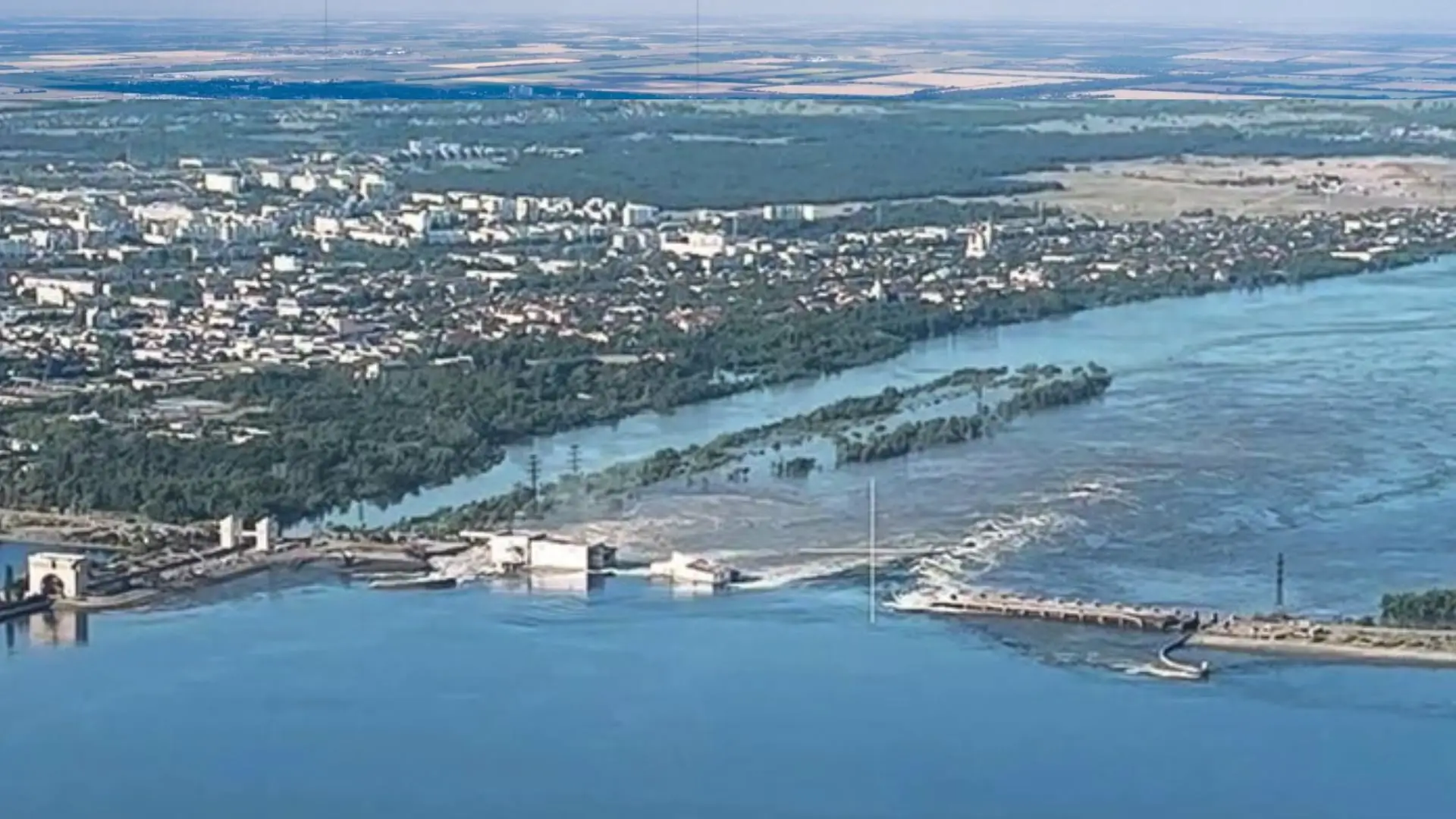
Photo — Kakhovka City Territorial Community/Facebook
We saw some consequences of the Kakhovka disaster immediately; others will become clear and be understood only over time. These include environmental consequences and technological impacts caused by the powerful surge of water, as well as socioeconomic consequences that our country will have to deal with for a long time.
The Kakhovka disaster is a tragedy in two acts. The first act occurred when the Kakhovka Reservoir was built by the Soviet authorities. It was an extremely tragic event for Ukraine and for our natural and cultural heritage.
The second act was the destruction of the dam by the Russian army on 6 June 2023, the draining of the Kakhovka Reservoir and the flooding of the Lower Dnipro region.
Historical background
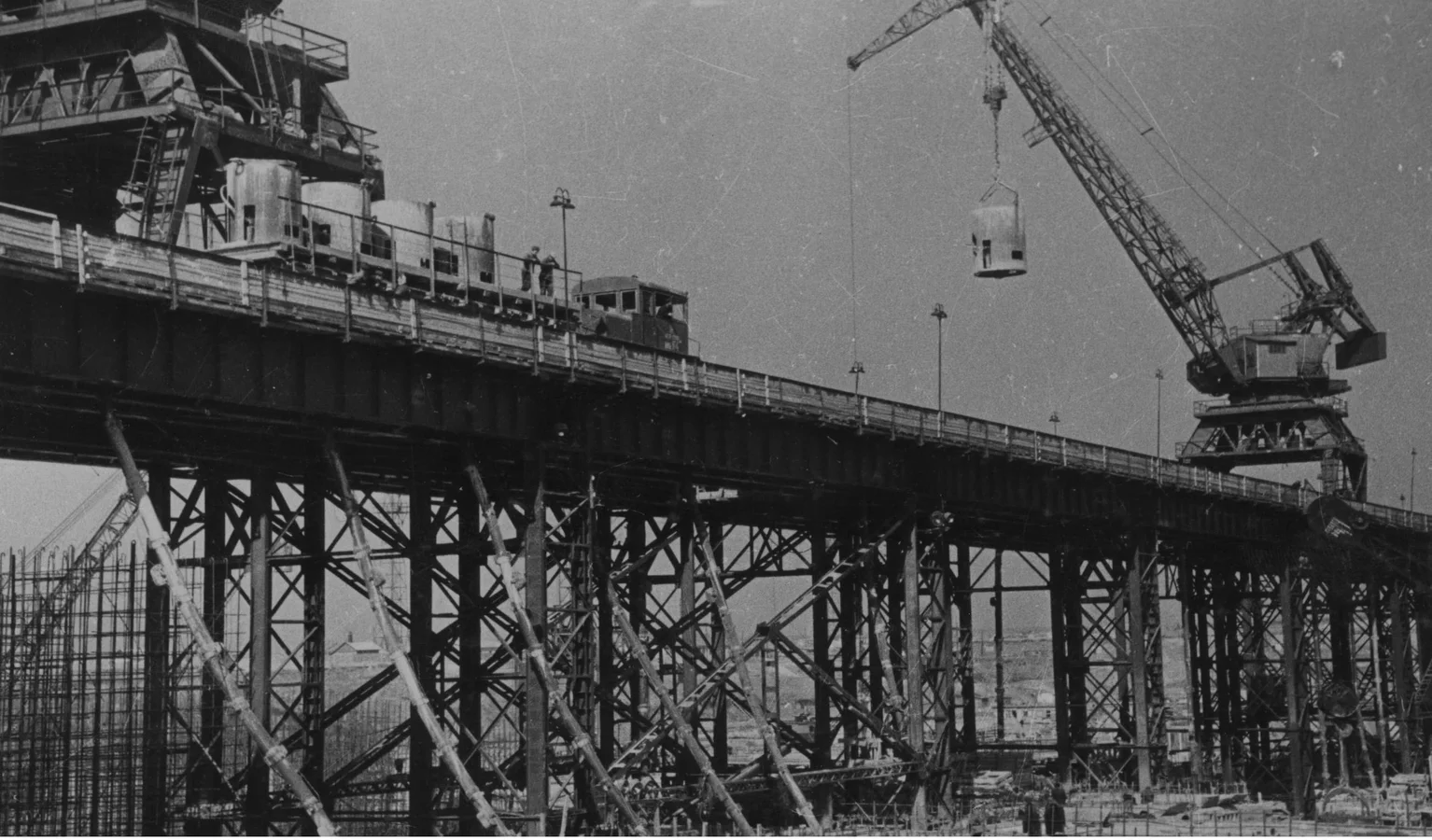
The Kakhovka Reservoir was created as part of Stalin’s “Great Plan for the Transformation of Nature.” On 20 September 1950, the Council of Ministers of the USSR issued a resolution “On the Construction of the Kakhovka Hydroelectric Power Plant on the Dnipro, the South Ukrainian and North Crimean Canals, and the Irrigation of Lands in the Southern Regions of Ukraine and Northern Regions of Crimea.” The reservoir was intended to solve three tasks: electricity generation, irrigation and navigation.
Construction of the artificial sea began the year after the resolution was adopted. The work lasted five years. Excavators, bulldozers, dump trucks, scrapers, hydraulic pumps and graders removed almost 800 million cubic metres of soil. During construction, 2,800 hectares of arable land and 36,000 hectares of meadows and hayfields were flooded and, worst of all, almost one hundred villages with a population of 37,000 people disappeared beneath the water. The historical area known as the Velykyi Luh, where several Zaporizhian Siches had been located, ended up on the reservoir bed. Obviously, residents were not asked whether they wanted to leave their homes. They were simply ordered to relocate to new villages on the reservoir shores.
At about 02:50 on 6 June 2023, Russian occupying forces blew up the Kakhovka HPP dam. The reservoir began losing water rapidly, and evacuations were announced in settlements downstream of the Dnipro in liberated territory on the right bank.
By the evening of 8 June 2023, the water level in the reservoir had fallen to 12.5 m, below the so-called “dead” level of 12.7 m. As of 08:00 on 9 June, the water level continued to fall and had reached 11.74 m. Less than a day later, at 06:00 on 10 June, the water level near Nikopol fell by almost 1.2 m to 10.55 m. As of 12:00 on 11 June, the water level stood at 9.17 m, 18 cm lower than a few hours earlier at 08:00; by then the reservoir had lost 70%, or 13.95 km³, of its water.
By the evening of 11 June 2023, after the loss of 73% of the water — meaning the reservoir volume was then about 5.4 km³ — the existing hydrological gauges at Nikopol and Rozumivka lost hydraulic connection with the Dnipro channel.
The disaster zone included 16,000 people and about 80 populated places, some of which were flooded as a result of the terrorist act.
The large-scale environmental disaster caused by destruction of the dam constitutes an act of ecocide if the action was deliberate. Under international law it is a war crime, because the destruction of dams is directly prohibited even if they are military objectives.
Ruslan Havryliuk emphasizes that the Kakhovka Reservoir played an important role in supplying water resources to southern Ukraine. Over more than 60 years of its existence, a certain ecosystem developed both in the reservoir itself and in the Lower Dnipro. The destruction of the dam in June 2023 abruptly transformed the situation. This was one of the largest reservoirs by surface area, the second largest on the Dnipro and, overall, the largest lowland reservoir. In a matter of days, Kakhovka rapidly lost its water and its water surface. Naturally, the hydrological situation changed. Not only were settlements dependent on water from Kakhovka or from canals supplied by the reservoir left without water; a large part of the irrigated land on both the left and right banks of the Dnipro also lost its water supply.
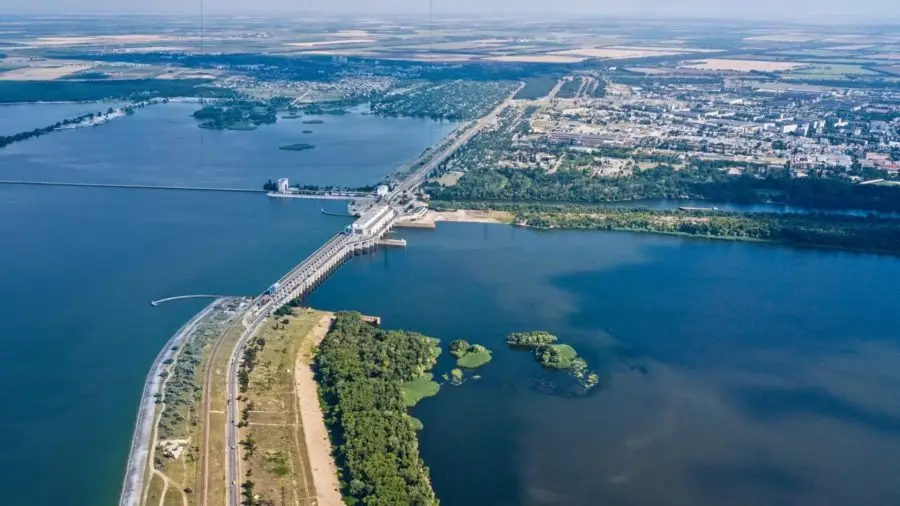
This is change on a global scale. The water balance across a significant area of southern Ukraine has changed. The reservoir no longer has the water level that had remained there for decades. This will lead, and has already begun to lead, to changes in the groundwater regime. Infiltration of surface water into groundwater has decreased substantially. Over time this will cause changes in the regime, quantity and quality of groundwater.
After the Kakhovka HPP dam was destroyed, the Zaporizhzhia Nuclear Power Plant entered a risk zone because of the possibility that the cooling pond for its nuclear reactors could become too shallow. For now, the water level appears to be maintained, but the risks have not disappeared. There are also concerns about a negative impact on the stability of the foundations of the ZNPP structures due to drying of the territory adjacent to the reservoir, including the plant’s industrial sites. Some short-term impacts are obvious, while others may emerge over time. Studying them, however, requires access to this territory. Since a significant part of the left bank of the former Kakhovka Reservoir remains under occupation, there is no possibility of monitoring the situation.
As for the lower reaches of the Dnipro, after the dam was destroyed we saw houses and furniture floating downstream; the surge swept through settlements, especially on the left bank of the Dnipro. A large part of the biodiversity in the Lower Dnipro was effectively destroyed. Even in Mykolaiv, already in the Dnipro-Buh Estuary, the water level rose by more than one metre and coastal areas were flooded.
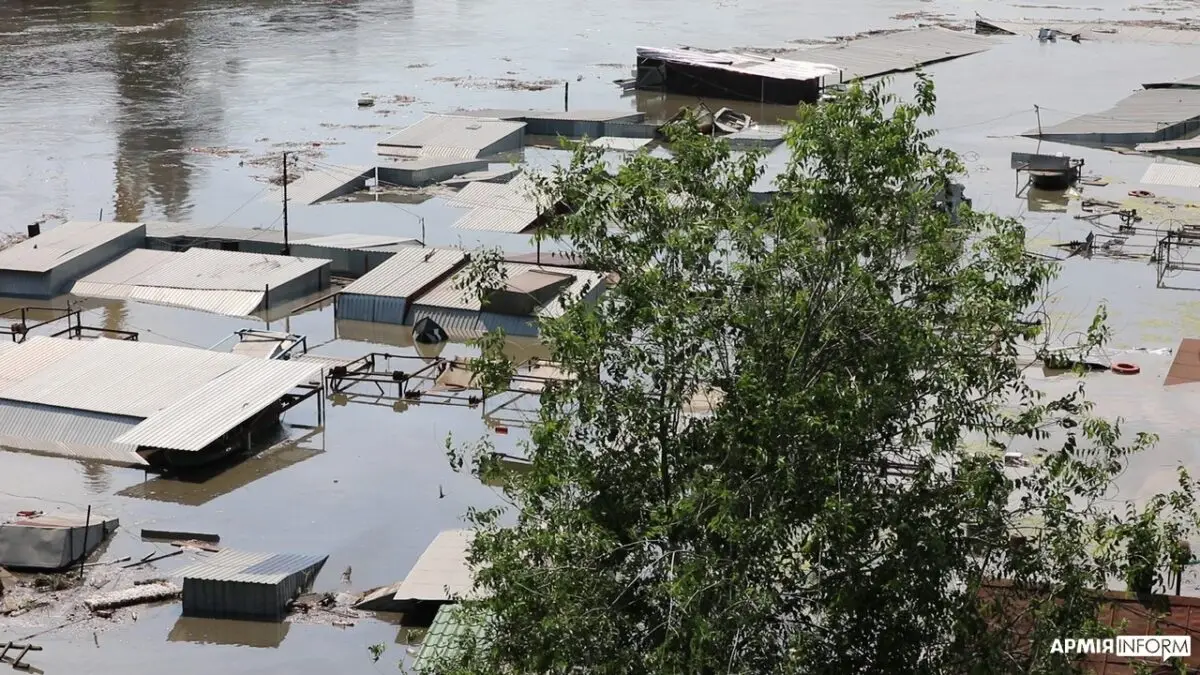
Photo: https://armyinform.com.ua
The rise in water level near Kherson was, according to various data, about five to six metres. Oleshky, a large settlement, was flooded. People sought refuge on rooftops, but not everyone was able to escape this tragedy. Unfortunately, because of the occupation we do not have verified data on deaths on the left bank. Many domestic and wild animals died.
Many industrial facilities were destroyed — industrial enterprises, petrol stations, electrical substations, warehouses storing fertilizers and pesticides. All of this led to severe pollution of water resources in the Dnipro itself, as well as contamination of soils and groundwater.
After the floodwater receded, pollutants remained on the soil surface or may have migrated into groundwater. It is worth remembering that both in the Dnipro valley and throughout southern Ukraine, local residents in villages and dacha settlements use groundwater for drinking and household water supply. This creates a major long-term risk to water quality. It is an extremely troubling consequence of the disaster. If contamination has occurred, there is effectively little that can be done about it. New water-supply sources will have to be found, the water will have to be treated, or people will end up consuming contaminated water, as already happens in many places in Ukraine.
As for surface waters, it should be noted that rivers flowing into the Dnipro were also flooded. The destructive surge travelled upstream along the Inhulets River and flooded its valley. All facilities in the valley were also affected by the water.
Of course, pollution hotspots may have formed as a result of this disaster that we are currently unable to detect, particularly in the flooded zone. If cemeteries or animal burial sites were located in affected areas and were flooded, they may become active sources of environmental contamination.
Surface-water ecosystems are more dynamic and will recover more quickly, whereas soil contamination will remain a very long-term problem. We will not always have the ability to solve it. Objectively, where contamination has occurred, time, access to the territory and technical resources are required to identify pollution hotspots. The same applies to groundwater. Where soil contamination is intense, it is usually accompanied by groundwater contamination. Such pollution will be much harder to overcome than negative changes in surface waters.
Establishing the current situation requires considerable effort. But under current security conditions — the front line effectively runs along the Lower Dnipro — it is not presently possible to determine with certainty all of the potential consequences caused by the destruction of the Kakhovka HPP dam and the draining of the Kakhovka Reservoir.
How the destruction of the Kakhovka dam affected the Black Sea
The environmental expert also addressed the impact of the Kakhovka disaster on the Black Sea. Everything swept away by the destructive surge from Kakhovka was carried into the Black Sea, severely affecting its aquatic ecosystem. We saw the flow carrying buildings and property gradually reach cities in Kherson and Mykolaiv oblasts, then Odesa, and move even toward Romania and Bulgaria. Odesa environmentalists observed very adverse changes in the Black Sea near Odesa.

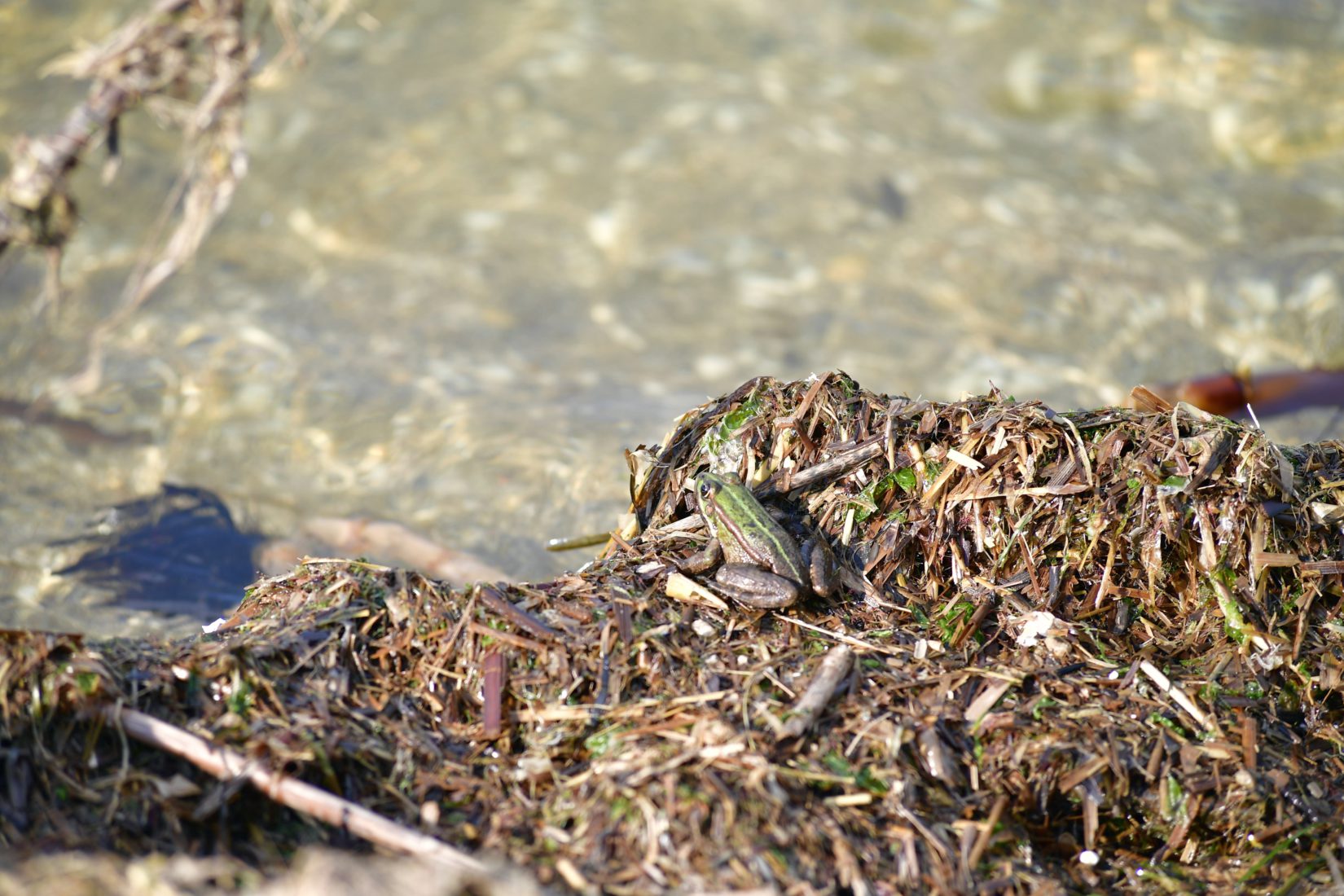
“Floating islands” — masses of reeds held together by roots — washed onto the Black Sea coast near Odesa three days after the Kakhovka disaster. Together with these floating masses, many organisms washed out of the Dnipro Delta reached the shore: frogs, crustaceans, freshwater and terrestrial molluscs and insects, many of which died in seawater. Photo by Vlad Balinskyi.
The Black Sea suffered significantly in the first weeks after the disaster because of freshening, sediment discharge and pollution. Gradually, however, the roughly 20 cubic kilometres of released water were absorbed by the Black Sea, and the sea began recovering fairly quickly.
Life after the Kakhovka tragedy: what comes next?
Nature will gradually recover, Ruslan Havryliuk says. We are already seeing positive developments on the bed of the former reservoir, where biodiversity is recovering quite actively and a forest is forming — unexpectedly quickly even for our botanical specialists.
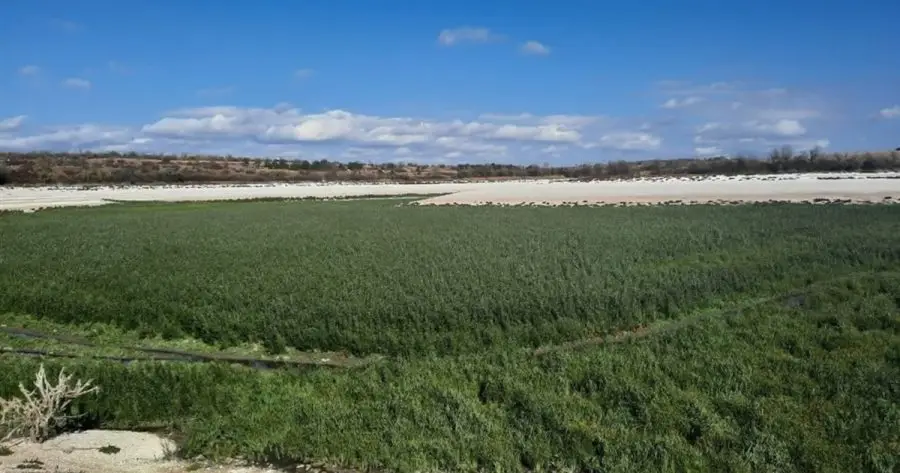
We can also hope that the Lower Dnipro will effectively return to a situation similar to that which existed before the Kakhovka Reservoir. A hydrological regime resembling the one that existed from the early 1930s, when the Dnipro Reservoir and Dnipro HPP were built upstream, until the creation of the Kakhovka Reservoir in the 1950s, may be restored.
Although the Kakhovka Reservoir covered a large area, its average depth was relatively small. As a result, the Kakhovka HPP was among the least efficient hydroelectric plants in terms of electricity generation relative to reservoir area. Today, all of the shallow areas are reviving, biodiversity is recovering there, and even some archaeological artefacts have been found after the waters of the Kakhovka Reservoir receded.
We can hope that this territory will not be flooded again and that a wiser, more rational decision will be made — one that is closer to the needs of the environment and people. As they say, an environmentally friendly approach: a more nature-friendly decision about how this territory should be managed. But the first essential condition is the liberation of Ukraine and the removal of the occupiers.
I think we will find a better solution for this territory than the one implemented by the Soviet authorities. The entire economy of southern Ukraine needs to be rebuilt. Sooner or later this would have had to happen anyway, because the issue of lowering the Kakhovka Reservoir was raised virtually from the beginning of Ukraine’s restored independence. Scientists stressed the need to gradually lower the reservoir level and find ways for the economy to adapt to a new situation. We now find ourselves in these extreme circumstances because the reservoir has already been drained. This is a major challenge for Ukraine and for our economy. Irrigation, for example, must also become more environmentally sustainable. We must move away from old Soviet-style systems developed when water was treated as virtually unlimited. At that time, little attention was paid to the economics of irrigation: enormous amounts of water could be used instead of drip irrigation, which is now already widely used on smaller areas where there is no unlimited access to water.

Photo by Yeva Myronova
We also need to rebuild our approaches to water supply and wastewater management. The Dnipro and the Kakhovka Reservoir were used for discharging industrial and municipal wastewater. Large industrial centres on the shores of the Kakhovka Reservoir — Zaporizhzhia, Nikopol, Marhanets and other major cities — took water from the Dnipro. Large irrigation canals began from the Dnipro in the reservoir section — the North Crimean Canal and the Kakhovka Canal — and they were used not only for irrigation but also to supply water to Melitopol, Berdiansk and other large cities in southern Ukraine.
Obviously, all of this must change. But these changes must be based on principles that are more resilient to the challenges associated with climate change and the growing scarcity of water resources.
Additional information
The terrorist attack on the Kakhovka Reservoir dam was an unprecedented event that will have a substantial and lasting impact on the ecological condition of the Black Sea. Sediments that had accumulated in the Kakhovka Reservoir for almost 70 years were partly transported by the powerful human-induced disturbance into the Lower Dnipro and the Black Sea, and became one of the key components of the disaster’s negative impacts. A major project is currently being implemented by a number of European countries, SUNDANSE, aimed at creating an innovative sediment-management system in the Danube River basin.
The Ukrainian project partners — the National Ecological Centre of Ukraine (NECU) and the Danube Hydrometeorological Observatory — will carry out an important part of the project work in the Ukrainian section of the Danube. In particular, their task is to systematize and synthesize data on the impact of the terrorist attack on the Kakhovka dam on the Black Sea ecosystem through sediment discharge from the reservoir and redistribution within the Black Sea. All available data on the qualitative and quantitative composition of sediments in the Kakhovka Reservoir and their dispersal following the dam’s destruction, contamination of flooded territories and the Black Sea will be synthesized, and the main types of sediment-related impacts, their scale and consequences will be identified.
Prepared for publication by Tetiana Herasymova.