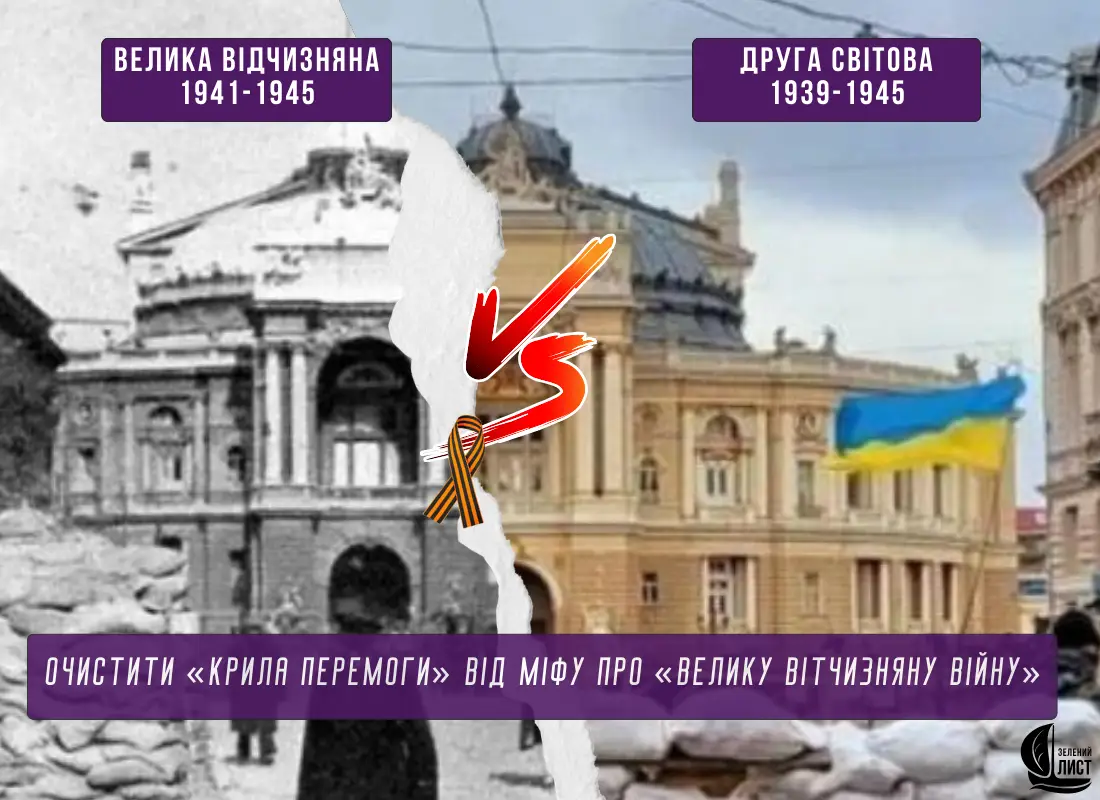
The “Wings of Victory” monument in Odesa symbolizes the Russian narrative of the so-called “Great Patriotic War”. This directly contradicts both the purpose of the memorial itself and Ukrainian law.
The wings of which victory do we see on 10 April Square in Odesa?
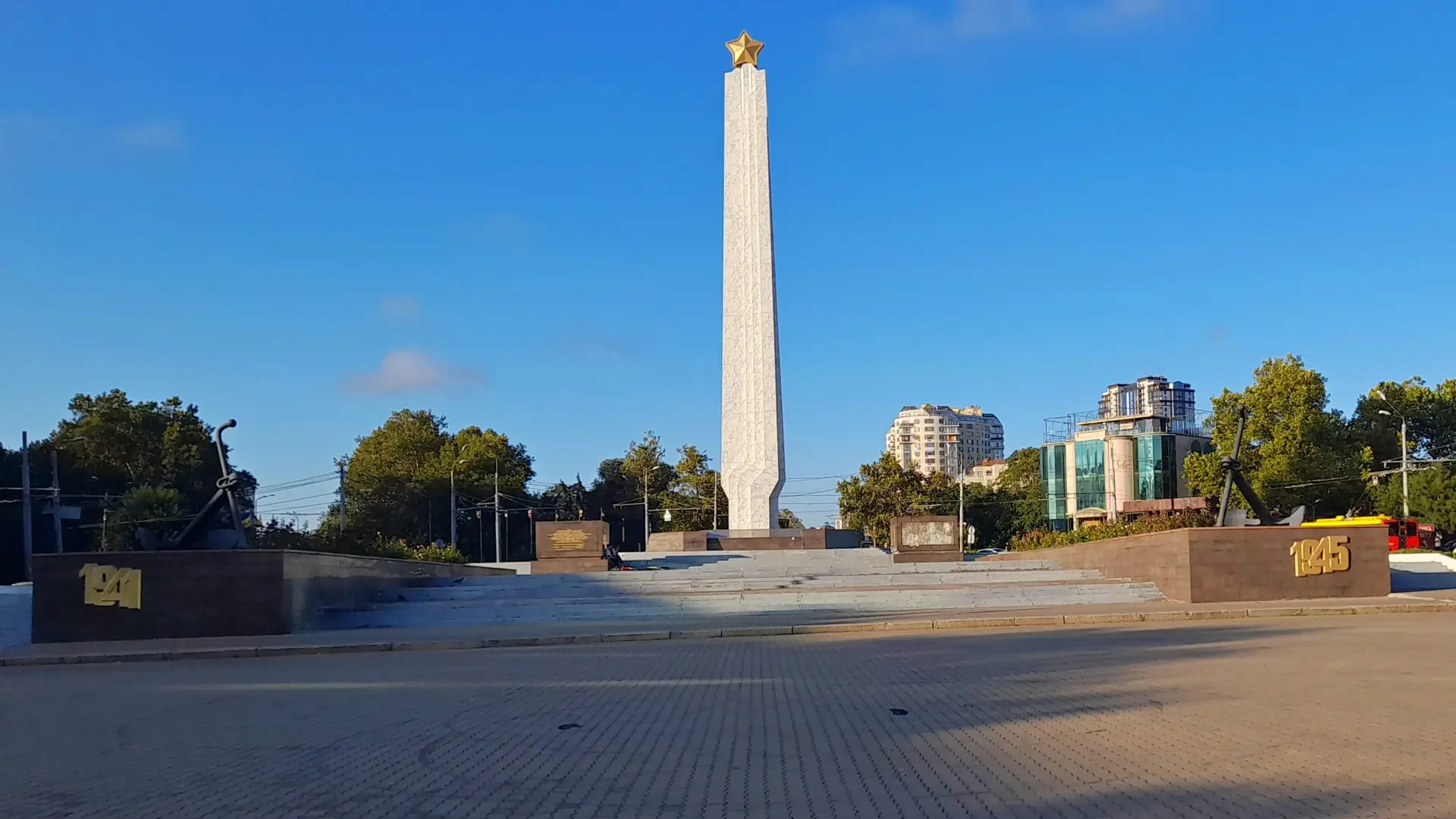
In fact, this memorial, opened in 1984, is dedicated to the fortieth anniversary of the liberation of Odesa from the Romanian-German occupiers. That is why it was erected on 10 April Square, whose name marks the date of the city’s Liberation Day.
Forty years ago, sculptor M. Konyshev and architects V. Myronenko, V. Korohod and V. Shynkarenko embodied in marble the winning design from a competition for the monument, which even before it appeared had acquired the name “Wings of Victory”.
When construction of the memorial was completed and Odesa residents began asking reasonable questions about the name, the following explanations appeared: Nike, the goddess of victory, is winged, so wings are always a symbol of victory. At the same time, the stele resembles a seagull’s wing.
The symbolic wings of the victorious soldiers are also said to carry the star of the Hero City. Indeed, the grey-marble stele on 10 April Square is crowned with a golden star commemorating Odesa’s designation as a “Hero City”. The obelisks also bear the text of the 1965 decree of the Presidium of the Supreme Soviet of the USSR conferring the title “Hero City” on Odesa and commemorate Odesa residents who were Heroes of the Soviet Union.
The following dates are also shown: 1941 – 1945.
Although logically the dates should mark the beginning of the occupation and the liberation of the city, namely 1941 – 1944.
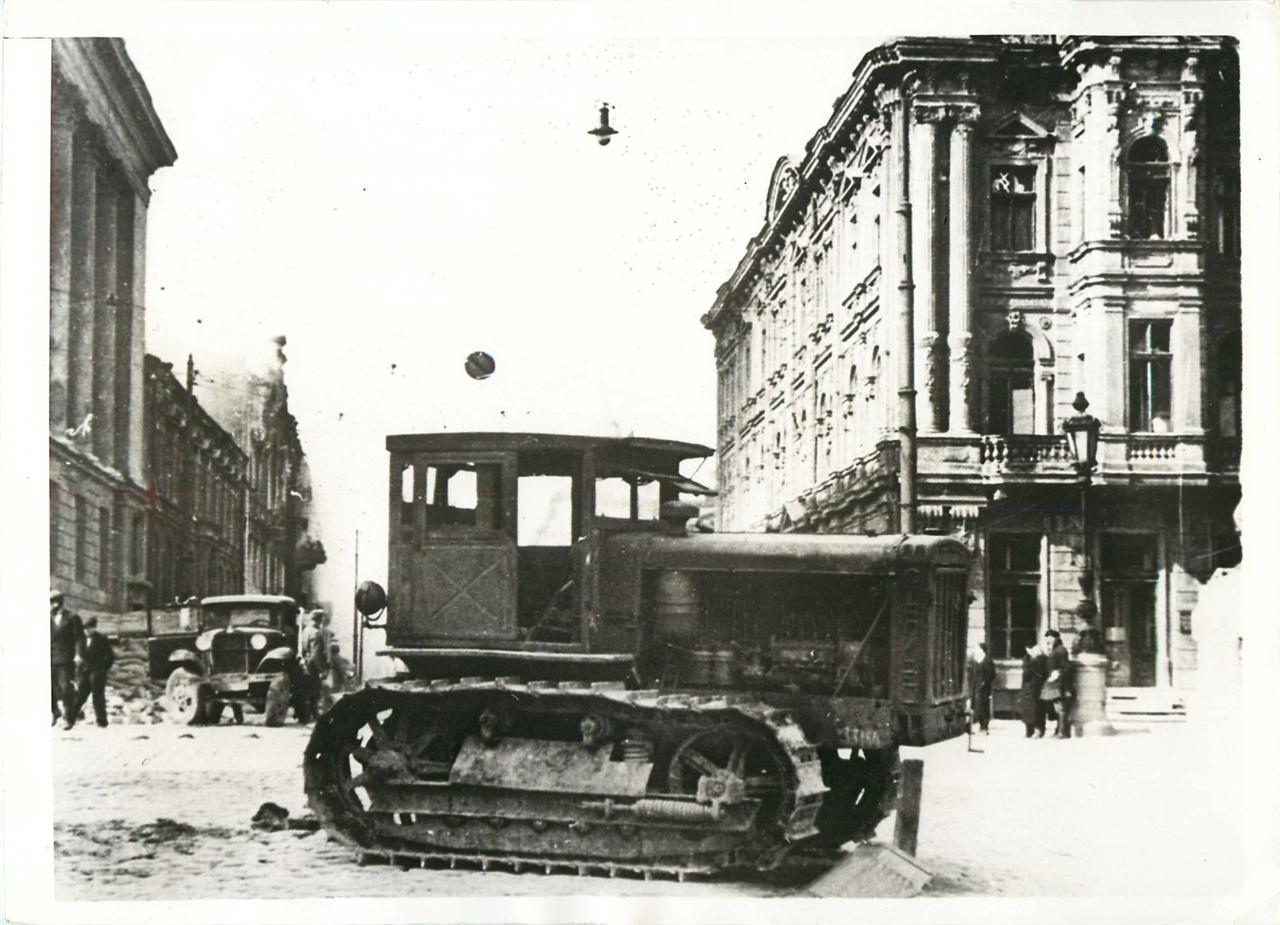
As is known from official historical sources, the Romanian-German occupation of Odesa during the Second World War lasted 907 days. Occupation forces entered Odesa on the morning of 17 October 1941 after more than three months of the heroic defence of the city by the Separate Coastal Army and the Black Sea Fleet.
The occupation of Odesa ended on 10 April 1944. Red Army troops broke into the northern districts of Odesa on the evening of 9 April and, in a night assault with support from partisans, drove the Nazi occupiers from the city by the morning of 10 April.
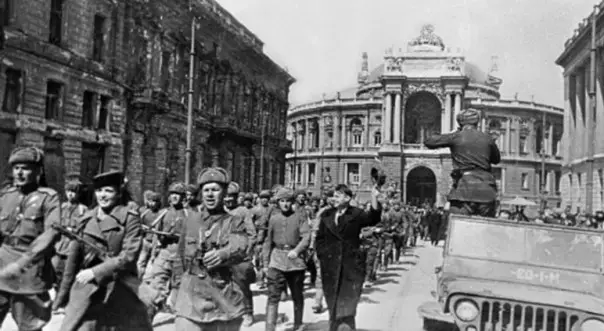
Thus, the historical period “1941–1945” displayed on the memorial has nothing to do either with the purpose of the memorial itself or with Odesa’s history, and instead symbolizes the Russian narrative of the so-called “Great Patriotic War”.
How Hitler and Stalin began the Second World War
On 1 September 1939, the Third Reich and the Slovak Republic began a military operation against the Republic of Poland. In response, Great Britain and the French Republic — followed by countries dependent on them — declared war on the Third Reich on 3 September 1939 in accordance with prior agreements with the Polish government. Thus, a local conflict between Germany and the Republic of Poland developed into a world war.
It is the date 1 September 1939 that is considered the beginning of the Second World War. The largest war in human history ended on 2 September 1945.
Sixty-one countries took part in the Second World War, representing 80% of humanity. More than 110 million soldiers served in the armed forces of the participating countries. According to different estimates, total military and civilian losses during the war amounted to between 50 and 75 million people.
On the eve of the Second World War, Hitler’s Germany and Stalin’s USSR maintained friendly relations.
From 19 August 1939, the German-Soviet Commercial Agreement was in force, under which the Soviet Union was to supply Germany with raw materials in exchange for factory equipment, industrial installations, machinery and machine tools, boats and other means of transport worth a total of 120 million Reichsmarks. This agreement was supplemented and expanded by the trade agreement of February 1940 and the Borders and Commercial Agreement of 1941.
Under these trade agreements, from December 1939 through the end of May 1941 Germany imported petroleum products, grain, cotton, oilseed cake, flax, timber, nickel, manganese ore, chromium ore, phosphates and other goods from the USSR. In practice, the USSR almost completely supplied German industry, including its war industry, with raw materials.
One week before Germany attacked Poland, on 23 August 1939, the Kremlin ceremonially signed the Non-Aggression Pact between Germany and the USSR, better known as the Molotov–Ribbentrop Pact, or the Hitler–Stalin Pact.

Photo source — zbruc.eu
As an annex to the agreement, a secret protocol was signed dividing Soviet and German “spheres of influence” in Poland, Lithuania, Latvia, Estonia, Romania, Finland and elsewhere.
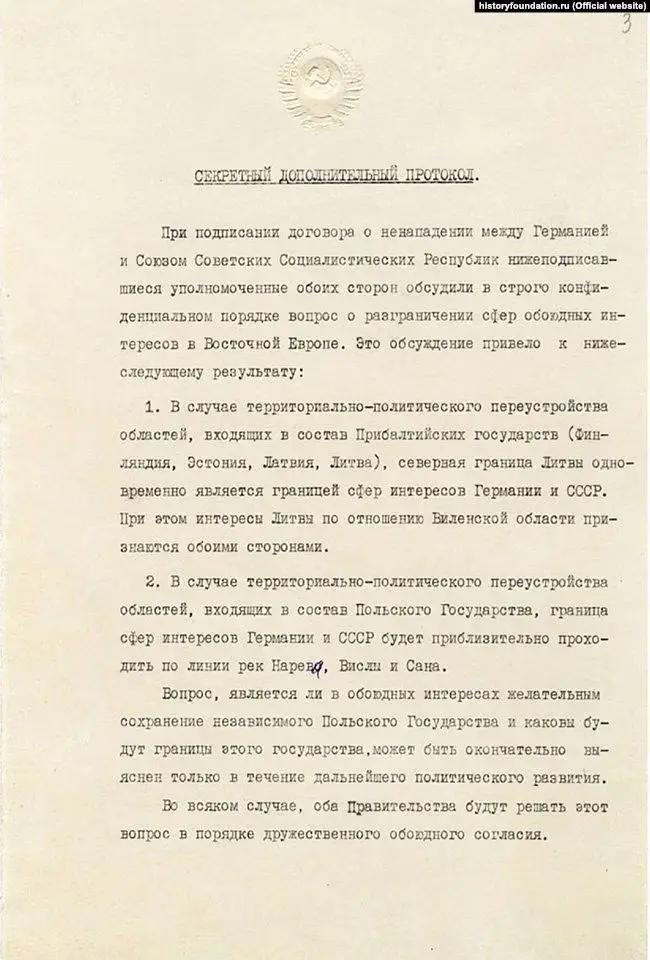
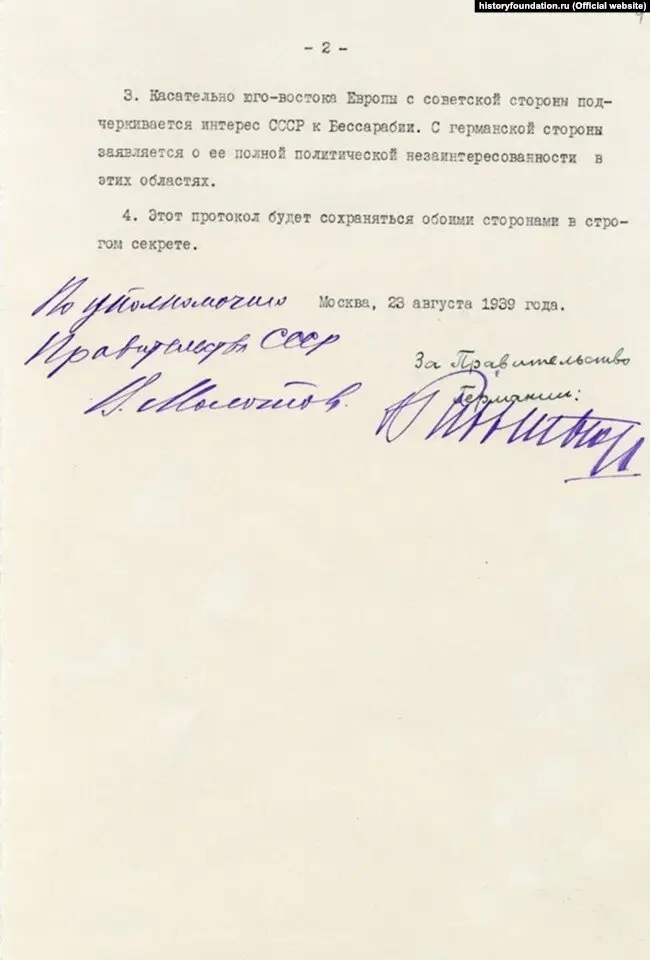
“In the event of territorial and political rearrangements in the areas belonging to the Polish State, the spheres of influence of Germany and the USSR shall be bounded approximately by the line of the rivers Narew, Vistula and San,” the protocol stated. The secret protocol also envisaged including Finland, Estonia, Latvia and Bessarabia within the Soviet sphere of interest. Although Moscow denied the existence of the protocol until 1992, the events of 1939–1940 confirmed that Moscow and Berlin generally adhered to these arrangements. In practice, through this secret protocol Hitler and Stalin divided Europe between themselves, creating a strong precondition for the Second World War.
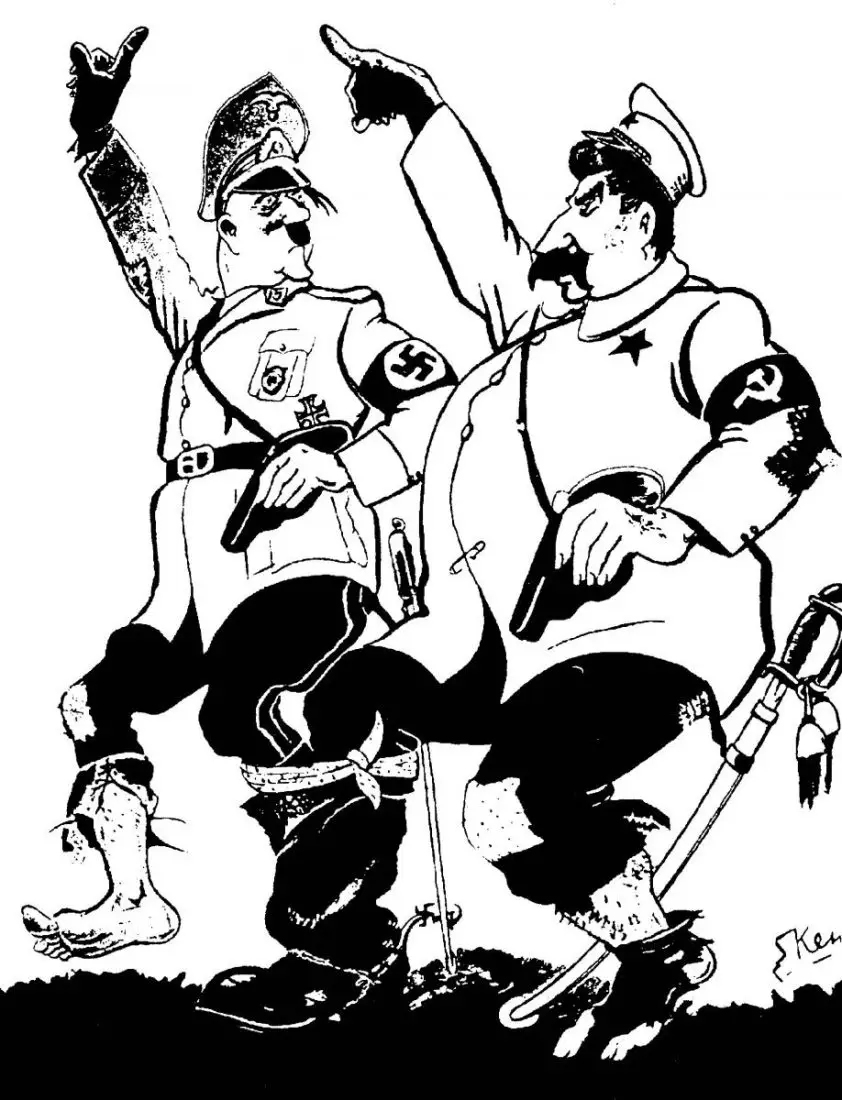
In accordance with its commitments, the USSR attacked Poland on 17 September 1939 without declaring war, while the Polish army was fighting the Nazi invaders. The Soviet attack on Poland helped Nazi forces accelerate the occupation of the country and even went beyond the arrangements by occupying the Polish city of Brest, which under the Pact fell within the Soviet “sphere of influence”. The culmination of these actions was a joint Soviet-Nazi parade of allied troops in occupied Brest on 22 September 1939. A short account can be seen in this video. In the version of history written in Russia, this undeclared war is euphemistically called the “Polish campaign”, while the joint Soviet-Nazi parade is denied altogether.
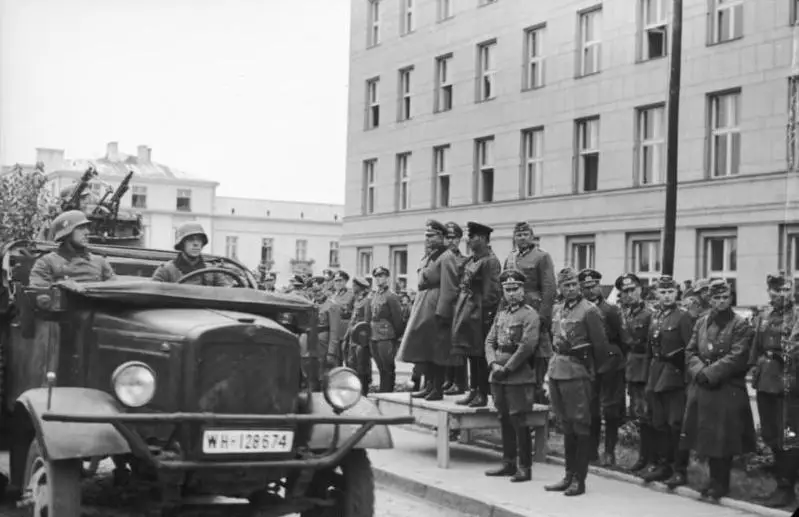
Joint parade of the Wehrmacht and the Red Army in Brest, Poland, 22 September 1939. On the reviewing stand are German General Heinz Guderian and Soviet brigade commander Semyon Krivoshein. Photo source — Ukrinform
On 30 November 1939, a Soviet force of more than half a million invaded Finland. Soviet bombers attacked Finnish cities. The substantial civilian casualties caused by these bombings became grounds for the Soviet Union’s expulsion from the League of Nations. Soviet newspapers, however, reported that there were no civilian casualties in Finland.
The communists had already formed a so-called “People’s Government of Finland”, which on 1 December 1939 announced via Moscow radio the creation of the so-called “Finnish Democratic Republic”. But this produced no further consequences because the Soviet forces failed to occupy Finland.
The Finnish army managed to repel the invaders and prevent the occupation of the entire country. Although the Soviet authorities kept committing new units to battle, Soviet troops were unable to break through the Finnish defences, even though they forced them to retreat. Finland lost about 23,000 soldiers killed or missing. Another thousand civilians were killed in air raids or drowned with merchant vessels. According to more recent research, the USSR lost between 422,000 and 722,000 killed, wounded, frostbitten, missing and captured. Some Soviet divisions, carrying out senseless orders to move “only forward”, entered traps prepared in advance by the Finns and were completely destroyed.
In Soviet propaganda and official Soviet historiography, the war was called an “armed conflict on the border with Finland”, or even a “defensive war of the USSR against aggression by bourgeois Finland”. In later Soviet and contemporary Russian historiography, the war is treated as a separate bilateral local conflict, although democratic countries recognise it as part of the Second World War.
In June–July 1940 the USSR carried out armed aggression against Romania, occupying Bessarabia, Northern Bukovina and the Hertsa region. Because of intervention by the USSR’s ally Nazi Germany, bound to the Soviet Union by the Molotov–Ribbentrop Pact, Romanian troops did not resist this occupation.
In June 1940 the USSR, implementing the Pact, occupied the Baltic states — Estonia, Latvia and Lithuania — which did not free themselves from Soviet occupation until the collapse of the USSR. In Russia this is still presented as the voluntary accession of those countries to the USSR.
Why was the German-Soviet war called the “Great Patriotic War”?
On 22 June 1941, Hitler attacked his ally, the Soviet Union. Some historians argue that this was a preventive action and that plans for a Soviet attack on the Third Reich forced Germany to strike first. Germany simply pre-empted the Soviet Union by attacking first, according to Second World War researcher Viktor Suvorov in his book “Icebreaker”.
The German-Soviet War was an important part of the Eastern European theatre of the Second World War and lasted until 8 May 1945. We should recall that the Second World War ended only five months later, on 2 September 1945, with Japan’s defeat.
But from the first hours of the fighting, the Soviet leadership began using the term “Great Patriotic War”. In this way, they arbitrarily cut a fragment out of the enormous global event of the Second World War and gave it independent significance.
The myth of the “Great Patriotic War” began to be created through speeches by Molotov and Stalin. Its essence was roughly this: Soviet people worked peacefully in the 1930s. An industrial base for a new, happy life in the USSR was being created. Soviet people did not want to conquer anyone and had no intention of fighting anyone. They were happy in their work under the leadership of their wise rulers. “Only the Soviet Union consistently pursued a policy of peace, a policy of organising collective resistance to aggressors and supporting peoples who had fallen victim to aggression,” Soviet newspapers of the time wrote.
By calling the war “patriotic” and defining 22 June 1941 as its starting point, the USSR distanced itself from its complicity in unleashing the Second World War, silenced the signing of the Non-Aggression Pact with Nazi Germany and its participation in the occupation of eastern Poland, the Baltic states, Bessarabia and Northern Bukovina, as well as the war with Finland. In the Soviet mythologised version of the new “patriotic war”, it appears as a just war of liberation by the Soviet people for the freedom and independence of the socialist Motherland against Nazi Germany and its allies.
This concept of a victorious “patriotic” war left outside the frame the causes of Red Army losses and defeats, the tragedy of millions of Soviet prisoners of war and forced labourers, the Holocaust, Nazi occupation and collaboration, miscalculations by the Soviet military command and unjustified human losses, as well as the aggressive nature of the USSR’s war in Europe.
“Never Again” vs “We Can Do It Again”
Throughout the years of Soviet rule, the term “Great Patriotic War” was the foundation of the Soviet version of Second World War history taught in schools and universities and used in scholarly works and art. No one dared question it. During Brezhnev’s rule, official sources and textbooks called it the “Great Patriotic War of the Soviet People, 1941–1945”. In those years, Soviet ideology promoted the narrative that a “new historical community of people — the Soviet people” existed in the USSR, and this idea was pushed into citizens’ subconscious in part through a false version of the war. That is why the “Wings of Victory” memorial in Odesa displays the dates 1941–1945: Odesa sculptors and architects were obliged to follow the official ideology.
Alongside the myth of the “Great Patriotic War”, a myth of the “Great Victory” and Victory Day on 9 May was constructed.
Brief historical background
At 2:41 a.m. on 7 May 1945, the act of Germany’s unconditional surrender was signed in the German city of Reims. On behalf of the Allies, it was signed by General Walter Bedell Smith, General Ivan Susloparov (as the Soviet witness), and General François Sevez (for France). Germany was represented by Admiral Hans-Georg von Friedeburg and General Jodl.
At 22:43 Central European Time on 8 May 1945 (00:43 Moscow time on 9 May), Field Marshal Wilhelm Keitel and representatives of the German Navy, at Stalin’s demand, signed the Act of Germany’s Unconditional Surrender again, marking the end of the German-Soviet War.
In Western historiography, the surrender of the German armed forces is generally associated with the procedure in Reims, while the signing of the surrender act in Berlin is regarded as its ratification.
In the USSR, 9 May was celebrated annually with the wording: in commemoration of the victorious conclusion of the “Great Patriotic War of the Soviet people against the German-fascist invaders”. It was established by a decree of the Presidium of the Supreme Soviet of the USSR of 8 May 1945 as a day of “nationwide celebration”.
In 1948, taking into account the consequences of the war, including the enormous number of disabled people at the time, the holiday was abolished. It was restored in 1965 as a state holiday and non-working day. From then on, the holiday was accompanied by ceremonies: military parades of the Soviet Army and demonstrations on Red Square in Moscow. It was also celebrated in some Warsaw Pact countries.
Since 1991, after the collapse of the USSR, it has been celebrated at state level in a number of post-Soviet countries, including the Russian Federation, Belarus and Kazakhstan.
Victory Day has not been officially celebrated in Ukraine since 2016. Instead, Victory Day over Nazism in the Second World War was introduced and remained a state holiday until 2023. Beginning in 2024, Ukraine annually celebrates Europe Day on 9 May, while on 8 May it honours the victims of the Second World War through the Day of Remembrance and Victory over Nazism in the Second World War of 1939–1945. The date 9 May as Victory Day is also not celebrated in the Baltic states — Estonia, Latvia and Lithuania.
After the Revolution of Dignity and the start of the Russian-Ukrainian war, Ukraine abandoned the use of the St George ribbon during commemorations because in Ukraine it came to be perceived as a clear symbol of the Russian invasion. Instead, the red poppy became the new symbol of remembrance for the dead. The slogan of this day in Ukraine is “Never Again”.

In Russia, by contrast, the aggressive meme “We Can Do It Again” has been popular for many years.

These slogans symbolise the “war of memories” between Ukrainian and Russian societies, which has developed into a real genocidal war by Russia against Ukraine and the Ukrainian people.
At the core of Russian anti-Ukrainian propaganda is the claim that a “fascist junta” came to power in Kyiv through a coup. Russia, meanwhile, as the successor to the USSR, having won the “Great Victory over fascism that brought freedom to all Europe”, supposedly bears a special responsibility for peace in the world and for punishing those who threaten it. At the same time, the contribution of other Soviet republics, including Ukraine, to victory over Nazi Germany is ignored altogether. Moreover, the effort to appropriate the laurels of victory in the Second World War has become a cornerstone of the Russian propaganda machine.
But this does not correspond to historical facts, because Ukraine, like all other countries that participated in the war, paid a terrible price for victory — perhaps one of the highest. Here are just some facts.
More than six million Ukrainians fought in the Red Army during 1941–1945.
From 1942 through the 1950s, the Ukrainian Insurgent Army fought in Ukraine; around 100,000 people passed through its ranks.
Ukraine’s total human losses from the war — including those killed, those who died, concentration-camp victims, deportees, evacuees and those who left together with the Germans — are estimated at 8–10 million lives. The number of Ukrainian victims can be compared with the population of present-day Austria.
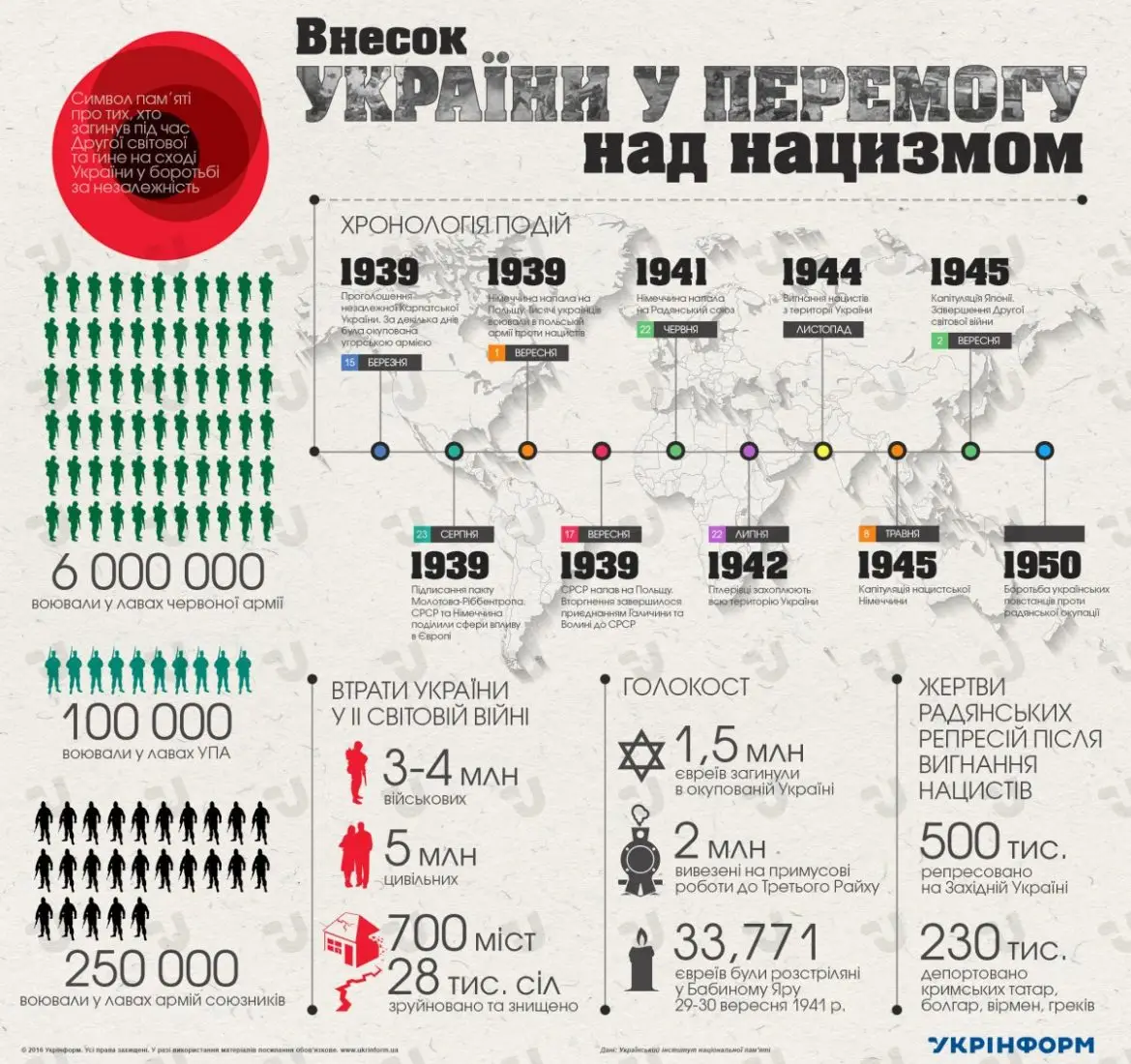
Infographic — Ukrinform
It is no coincidence that the myth of the “Great Patriotic War” ended up at the centre of the conflict of memories between Ukraine and Russia and later of the full-scale war.
From the “Great Victory” to victory cult mania
There is a fundamental difference between attitudes towards the “Great Patriotic War” and the “Great Victory” in Soviet times and in present-day Russia. Soviet leaders viewed the war and victory in it as justification for all the crimes and failures of their own regime. At the same time, however, they did not seek a return to Stalin’s era, much less to the wartime years they themselves had lived through. Their slogan “Peace to the world!” was sincere, and they tried to lead the people towards a “bright future” that was in no way meant to reproduce the horrors of the Stalinist past.
In Putin’s Russia, the idea of the “Great Victory in the Great Patriotic War” has turned into a truly satanic cult. One need only look at the Russian Armed Forces cathedral, where the steps are made from tank armour and icons depicting Soviet commanders hang on the walls. The term “pobedobesie” — victory cult mania — aptly describes what is happening.
“Pobedobesie” is a general term for hypertrophied “victory” hysteria, the cult of “victory” in Putin’s Russia. The cult of the “Great Victory” is a mechanism for creating a modern aggressive Russian identity aimed at restoring and maintaining Russian influence in the post-Soviet space and justifying aggression against the Ukrainian people. At the beginning of the full-scale invasion in 2022, Russian propaganda even tried to promote the idea that the so-called “special military operation” was a new “Great Patriotic War” against Ukrainian “neo-Nazism”. But the narratives of the “Great Patriotic War” did not work. The war against Ukraine did not become a “people’s holy war”. Russian men fled mobilisation en masse in autumn 2022, while those who remained agree to fight either for enormous sums of money or in exchange for release from criminal liability for crimes they committed.
Restore the real history of the Second World War in Ukraine and the history of the occupation of Odesa
“Monday. 10 April 1944. The Soviets have arrived. From today a new page of our life is turning, full of all kinds of surprises… Yesterday we were in mortal danger because we had nowhere to hide; all the residents of the building crowded near the door. Terrible bomb explosions sounded all around our house. The windows rattled from the blasts, doors opened, and literally the entire building shook. It seemed to be Prince Gagarin’s house; we were surrounded by explosions, because a bomb had also been dropped at the corner of Velyka Arnautska Street. They say Soviet aircraft were bombing. It would be interesting to know who was actually bombing and for what purpose, because newspapers always write that military targets were destroyed, while in reality residential buildings are bombed above all.”
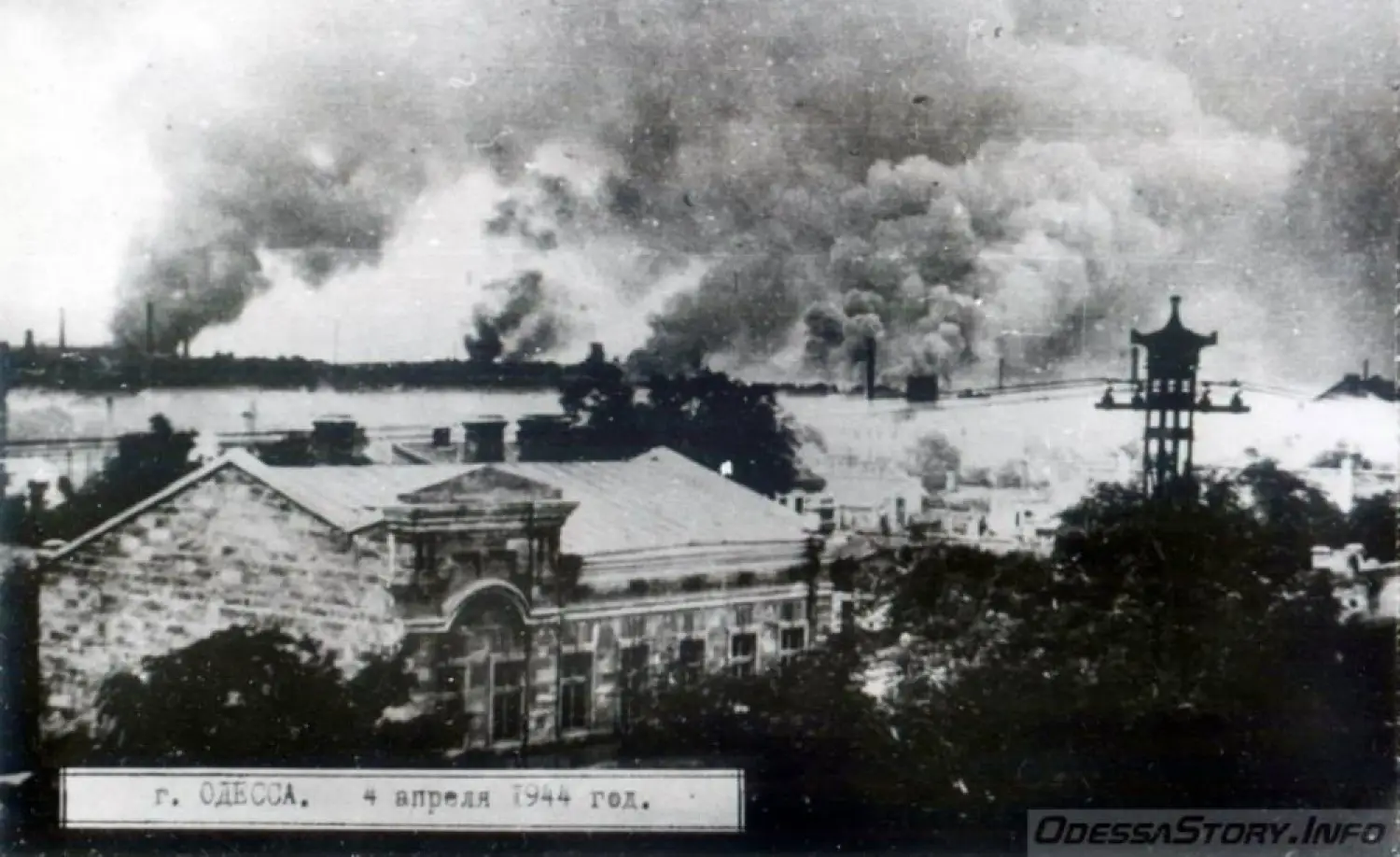
These are lines from the diary of Odesa resident Adrian Orzhekhovskyi, which he kept during the city’s occupation. The document paints a picture of the terrible tragedy that befell a huge city. And this picture differs from the one Soviet propaganda painted about the heroic liberation of the city. It turns out that on 10 April 1944 Soviet troops did not simply march heroically through the city and drive out the occupiers in a night assault, but bombed Odesa for several days, including residential buildings, killing many city residents. It painfully resembles the present-day tactics of “liberating” Mariupol, Sievierodonetsk, Avdiivka and Bakhmut from “Ukrainian Nazis” by Russia’s terrorist army…
The tragic history of Odesa’s 907 days of occupation awaits impartial researchers because it still contains many “blank spots”. For example, only four years ago, thanks to the film “The Tragedy of Arcadia Ravine” (Yurii Rukh, Vladyslav Balinskyi, Oleksandr Surilov, Tymofii Krynytskyi), we learned the terrible secret of a small mound in Odesa’s Victory Park.
As Odesa local historian Oleksandr Surilov established, one of the hills in the park is a mound built over a mass grave. Here, in abandoned limestone mine tunnels, several hundred Odesa residents, mostly Jews, were shot during the last days of the occupation.
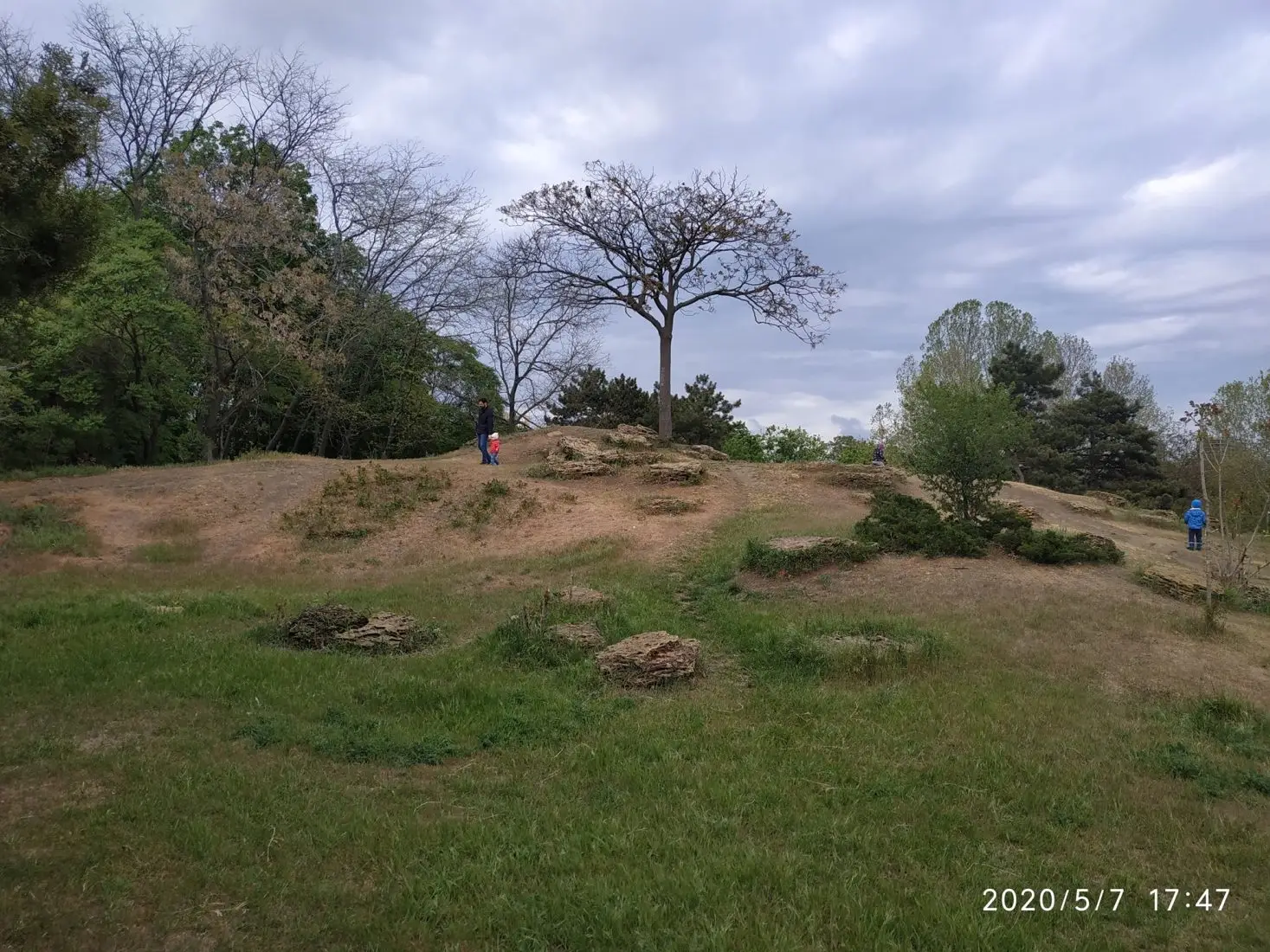
“On the eve of that terrible day, an explosion occurred not far from the future park,” the historian said. “At the corner of Pyrohovska Street and French Boulevard, the occupiers’ telephone exchange was blown up. On 8 April, the day after a fierce roundup, executions began in Arcadia Ravine.”
According to Oleksandr Surilov, the victims were the last hostages whom the occupation authorities had held to intimidate the partisans.
“It was not customary to write about hostages in Soviet times because that would have raised questions about whether partisan actions in Odesa were justified,” the local historian says. “The hostage system existed throughout all the years of occupation. There were small concentration camps in several Odesa school buildings. If partisans killed Romanians, the occupiers immediately selected 100–200 hostages for each one and killed them.”
Ukrainian society is now at a stage when we are reclaiming what is ours: our culture, our language, our history. The real history, not the one that imperial, Soviet and later Rashist propagandists painted for us for decades and even centuries. The real history of the Second World War in Ukraine and Odesa is an important part of this broader panorama. It is much larger and more complex than the invented version of the “Great Patriotic War”.
Filling in these “blank spots” requires not only major intellectual work by historians, writers, journalists and politicians, but also the courage to uncover and show society the truth. We should begin by removing every marker of the false myth of the “Great Patriotic War”, for example by changing the dates on the “Wings of Victory” Memorial. Green Leaf recently sent Odesa City Council an application demanding exactly this.
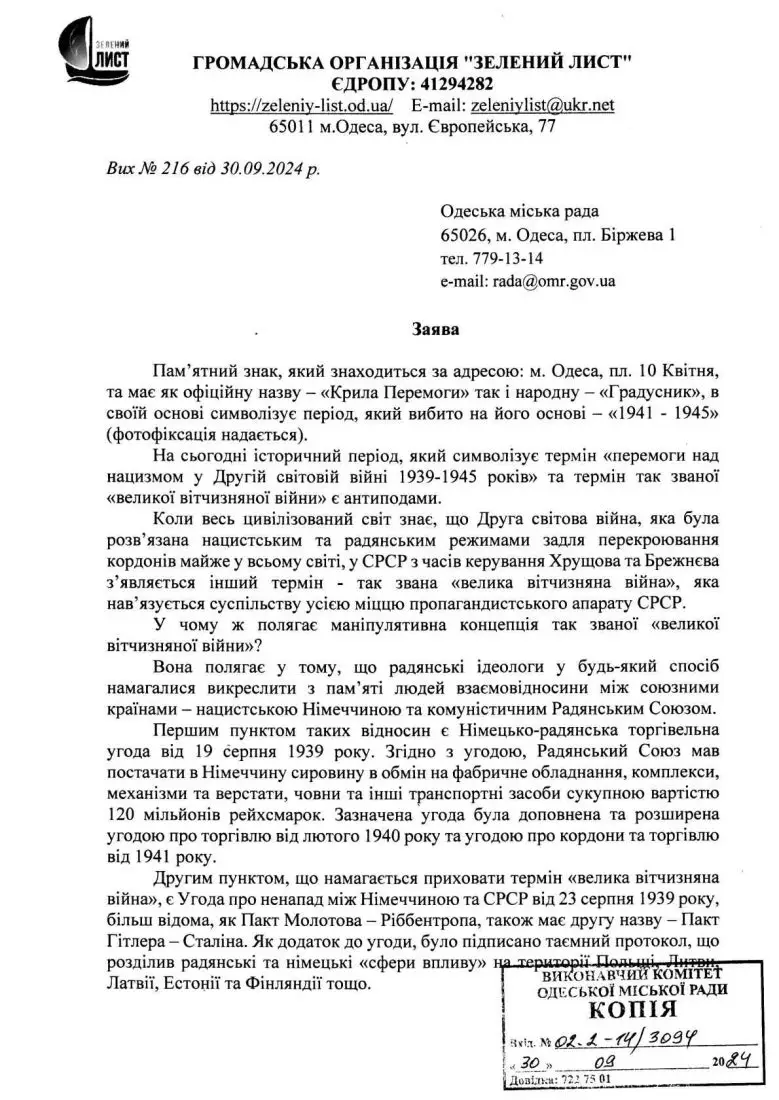
Ukrainian law also requires this.
In 2015, as part of a package of laws aimed at decommunising Ukraine, the Verkhovna Rada repealed the Law “On Perpetuating the Victory in the Great Patriotic War of 1941–1945” and adopted the Law of Ukraine “On Perpetuating the Victory over Nazism in the Second World War of 1939–1945”, which remains in force today.
On 13 July 2023, Kyiv City Council adopted Decision No. 6880/6921 “On Approval of the List of Objects Subject to Removal from the Public Space of the City of Kyiv”, which includes replacing the numerals “1941” with “1939” on certain monuments in accordance with the approved list. And this decision is already gradually being implemented.
The “Wings of Victory” monument in Odesa has another popular name — the Thermometer. This is no coincidence, because Odesa residents know the real price of this Victory and of the city’s liberation — or its recapture by one cannibalistic regime, Stalin’s, from another cannibalistic regime, Hitler’s. It is also no coincidence that civic activists have already removed markers of the communist past from the memorial — the red star and an image of Lenin, the founder of the Bolshevik regime.

Now this work must be completed and the “Wings of Victory” fully decommunised.