
What happened in the Kerch Strait on 15 December 2024 may cause the largest environmental disaster in the Black Sea in recent decades. As a result of the accident involving two Russian tankers, more than 8,000 tonnes of fuel oil may have spilled into the sea. Ukraine’s Ministry of Environmental Protection and Natural Resources estimates the damage to the Black Sea ecosystem caused by the fuel-oil spill from the Russian tanker accident in the Kerch Strait at more than $14 billion.
Sequence of events
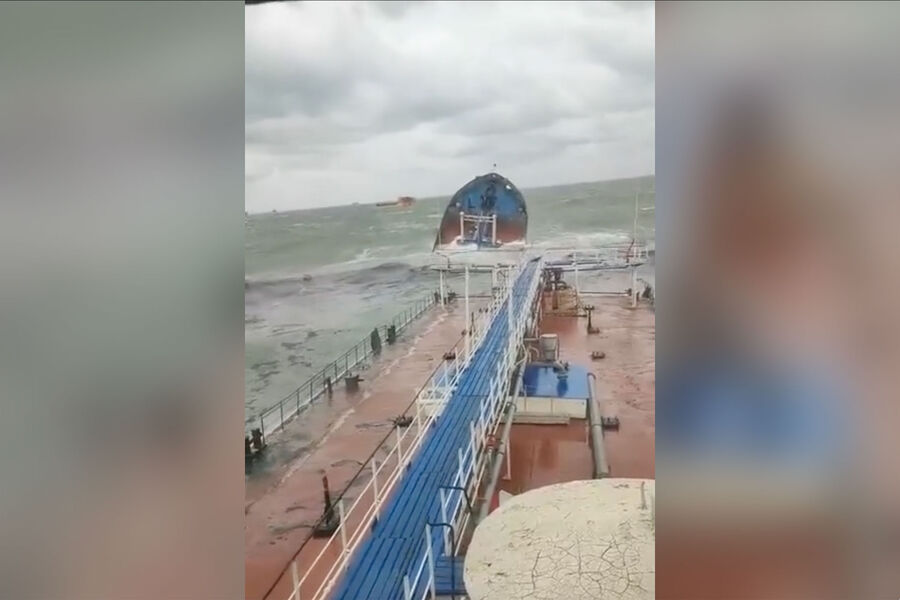
On 15 December in the Black Sea near Cape Takil in the southern part of the Kerch Strait, waves broke apart the tanker Volgoneft-212, which was carrying fuel oil. Nearby, another fuel-oil tanker, Volgoneft-239, also suffered an accident. The vessel also broke under the impact of the waves; its stern drifted toward the shore near Cape Panagia and grounded 80 metres from the coastline.
The emergency occurred in storm conditions, with wind speeds of up to 24 m/s and waves about 3 metres high.
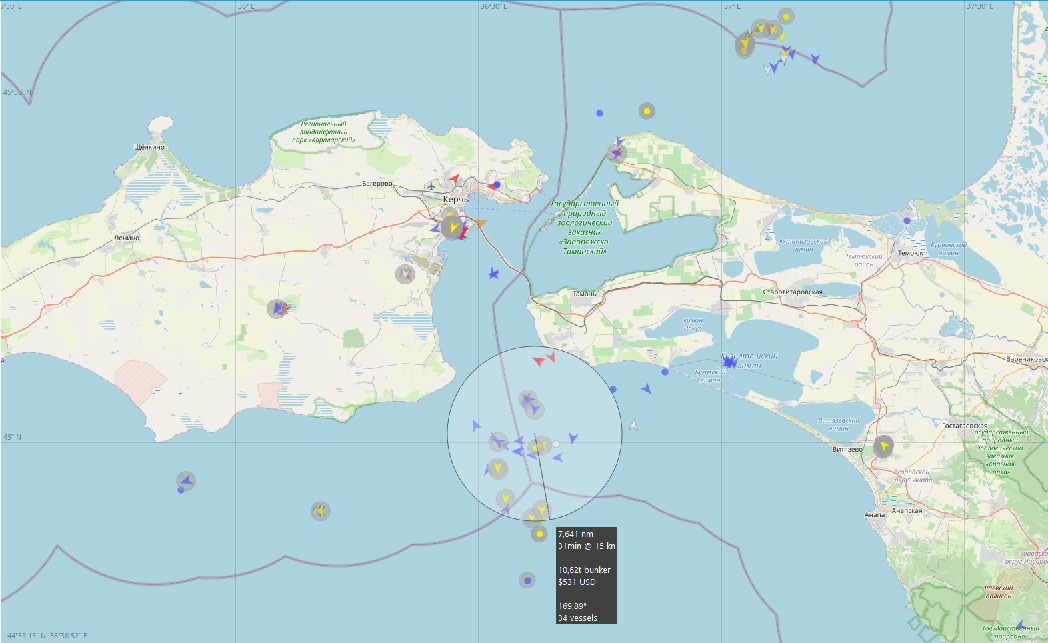
Disaster site opposite the Kerch Strait, Black Sea. Map published on the Facebook page of Andrii Klymenko, project manager at the Institute for Black Sea Strategic Studies and editor-in-chief of the Black Sea News portal
The two vessels were carrying more than 8,000 tonnes of fuel oil in total.
The tankers that were wrecked had been designed as river vessels capable of entering coastal marine waters in calm weather. In winter, they were not supposed to be at sea at all. Volgoneft vessels are river-sea oil tankers. They were the most mass-produced series of tankers of this class in the USSR and modern Russia. The vessels are designed to carry crude oil and petroleum products. Open sources state that Volgoneft-type tankers are large single-deck, twin-screw tankers. They have double sides and bottom, with the engine room and superstructure in the stern.
Volgoneft-212 is 136 metres long and 16 metres wide. Volgoneft-239 is 132 metres long and 17 metres wide.
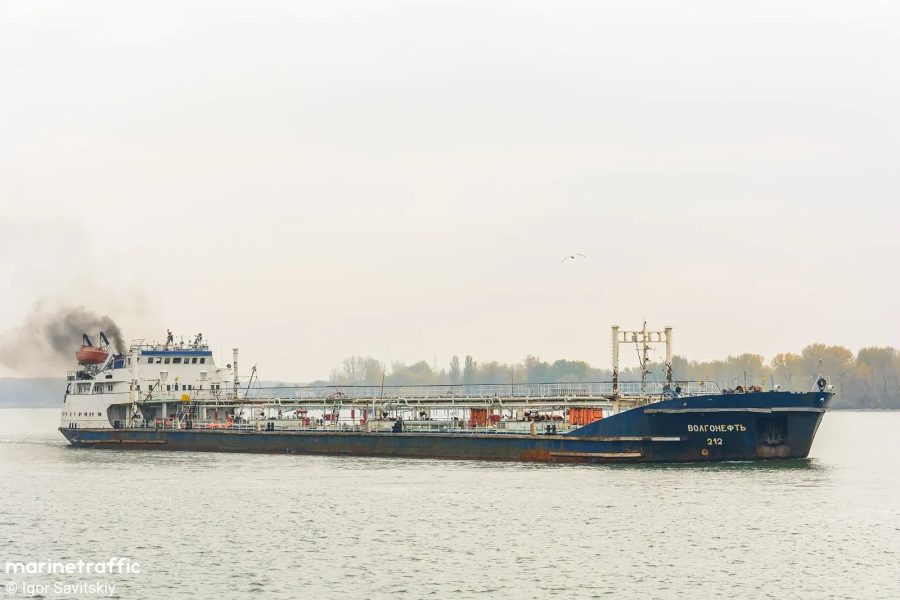
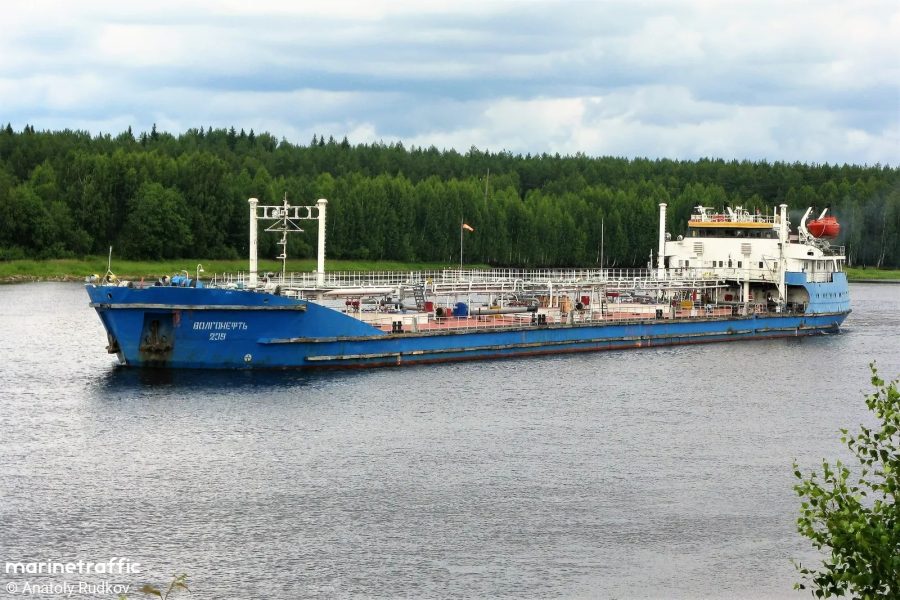
Photo — Andrii Klymenko’s Facebook page
The tankers left the shipyard in 1969 and 1973, but were redesigned for modern use by cutting out their middle sections. The waves struck these welded seams, and the tankers literally broke into two parts.
It is still unknown how much fuel oil entered the seawater. Judging by videos posted on social media by residents of coastal settlements in Krasnodar Krai, a very large amount of petroleum products entered the sea. It is already clear that this is not just an isolated episode. Russia’s destruction of the Kakhovka Hydroelectric Power Plant dam on 6 June 2023 and the draining of the Kakhovka Reservoir caused very serious damage to the ecosystem, and we still do not know all the consequences. But it appears that 15 December 2024 may become the date when the criminal Russian authorities detonated a real ecological bomb in the Black Sea.
Catastrophic consequences for the Black Sea ecosystem
From the first hours, heads of Russian agencies have tried in every possible way to conceal the consequences of the environmental disaster in the Black Sea. Russia’s Federal Agency for Maritime and River Transport states on its official VKontakte page that only a partial petroleum-product spill occurred.
Russian natural resources minister Alexander Kozlov, who flew over the disaster area by helicopter, has also reassured Russians by claiming that some of the fuel oil remains inside the tankers and that no slicks were detected on the sea surface during the flyover.
But the helicopter video was filmed by natural-resources ministry staff in such a way that glare or light refraction from oily slicks cannot be seen. If one looks carefully, however, a wave-damping effect can be observed near the hull of the sunken vessel along the wind vector. This is a large fuel-oil slick leaking from inside the tanker. The remains of Volgoneft-239, which were washed ashore near Cape Panagia, were filmed from the stern in such a way that the absence of the tanker’s bow would not be obvious. How the contents of tanks torn in half could remain inside them is unclear.
Meanwhile, residents of Krasnodar Krai are posting many photos and videos on social media showing large fuel-oil spills along the coast. Residents of Temryuk District have begun finding birds covered in fuel oil on the Black Sea shore.
By the evening of 17 December, the environmental disaster had affected at least 60 km of the Black Sea coast of Krasnodar Krai. Residents of the northern outskirts of Anapa complained of a smell of gas and oil causing vomiting and tears.
On the day of the disaster, Vladyslav Balinskyi, an environmental expert and head of Green Leaf NGO, predicted this development — that after the spill, surface fuel oil would move toward the southern side of the Taman Peninsula, the Bugaz Spit and the city of Anapa in Krasnodar Krai. He reached this conclusion after analysing the geolocation of the accident and data on wind strength and direction.
Balinskyi also compared the current events with a similar disaster that occurred in the Kerch Strait area on 11 November 2007, when the Russian vessel Volgoneft-139 likewise broke in two and sank, spilling fuel oil into the Black Sea. “Russian sources claim that about three thousand tonnes of fuel oil were spilled into the sea as a result of the Volgoneft-139 accident. Russian officials put the damage from the spill at $250 million, although Ukrainian and international environmentalists said the real damage was at least ten times higher! Tens of thousands of birds died in Taman Bay, hundreds of tonnes of aquatic organisms were destroyed, and dozens of kilometres of coastline on both sides of the Kerch Strait were polluted with fuel oil,” the environmental expert recalls.
Today, in his view, the situation is much more serious than in 2007. The amount of fuel oil that may have entered the sea is much greater, the water temperature is much lower (7–10 degrees Celsius), and the distance to the coast in the wind direction is much greater. This means that most of the fuel oil will end up on the bottom in the form of clumps. As the temperature rises, these clumps will come to the surface as an iridescent oily film and will kill seabirds, fish and other marine life.
“This environmental disaster will become another negative and very significant addition to the gradual death of life in the Black Sea, because the fuel-oil spill will have catastrophic consequences for a large part of the marine ecosystem and all living organisms due to the toxic effects of petroleum products,” wrote Ivan Rusiev, head of the research department of Tuzlivski Lymany National Nature Park and Doctor of Biological Sciences, on his Facebook page.
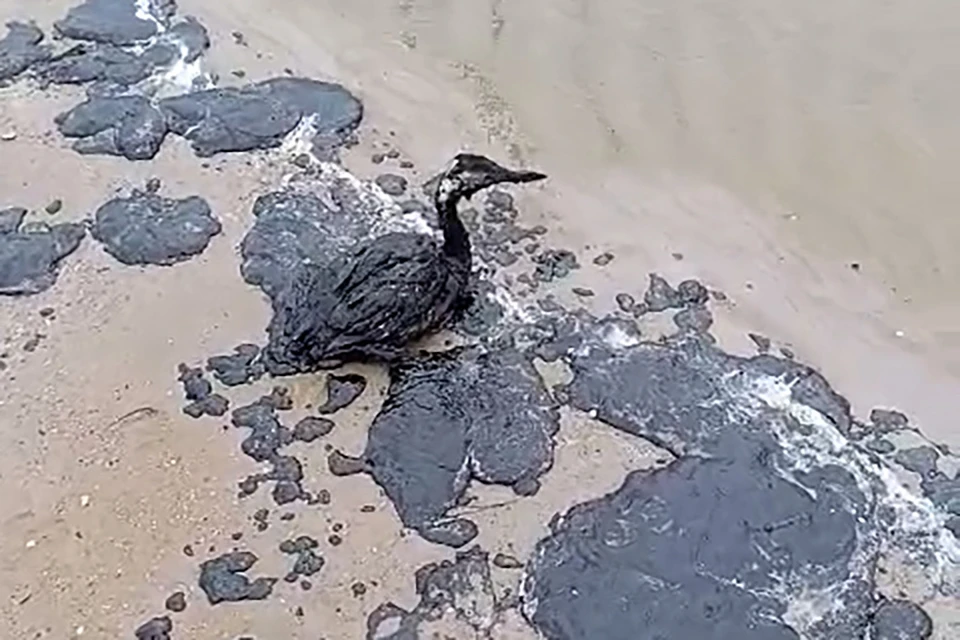
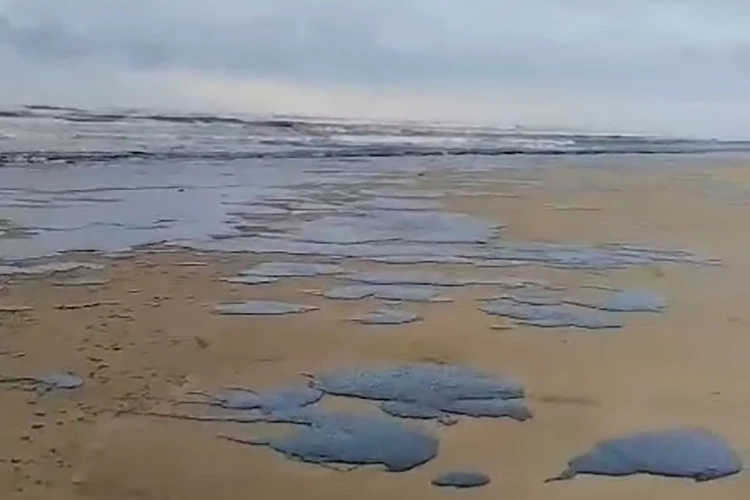
According to information from the Ukrainian Scientific Centre of Ecology of the Sea (UkrSCES) provided to Ukraine’s Ministry of Environmental Protection, the fuel-oil spill will have catastrophic consequences for the marine ecosystem, including the death of plankton; poisoning of fish, seabirds and other living organisms through the toxic effects of petroleum products; pollution of bottom sediments and coastal areas that are habitats for many species of marine flora and fauna; and disruption of food chains, leading to long-term changes in the region’s biodiversity. Some affected species may require decades to recover.
Does the fuel oil threaten Ukraine’s Black Sea coast?
The Ministry of Environmental Protection and UkrSCES have now modelled the further path of petroleum products in the Black Sea. The modelling showed that the fuel-oil slick would remain within the coastal zone of Krasnodar Krai because the pollution had become persistent.
However, already the day after the accident, on 16 December 2024, fuel oil was washed ashore on the Sea of Azov at the temporarily occupied resort settlement of Kyrylivka in Zaporizhzhia Oblast.
A video on the Supernova+ Telegram channel shows the shoreline heavily strewn with dark fragments resembling stones. The author of the video sets fire with a torch to what the sea washed ashore, and the “stones” turn into a dark liquid that burns.
Such a striking difference between the forms of pollution — slicks on the surface and “stones” on the shore — may be surprising. At first glance, it is also unclear how petroleum products from essentially the same source could end up so far apart. Balinskyi explains this by the fact that the water temperature in the shallow Sea of Azov is now significantly lower — by more than 5°C — than in the Black Sea. During the first hours after the accident, a powerful southerly wind was directed straight toward the Kerch Strait.
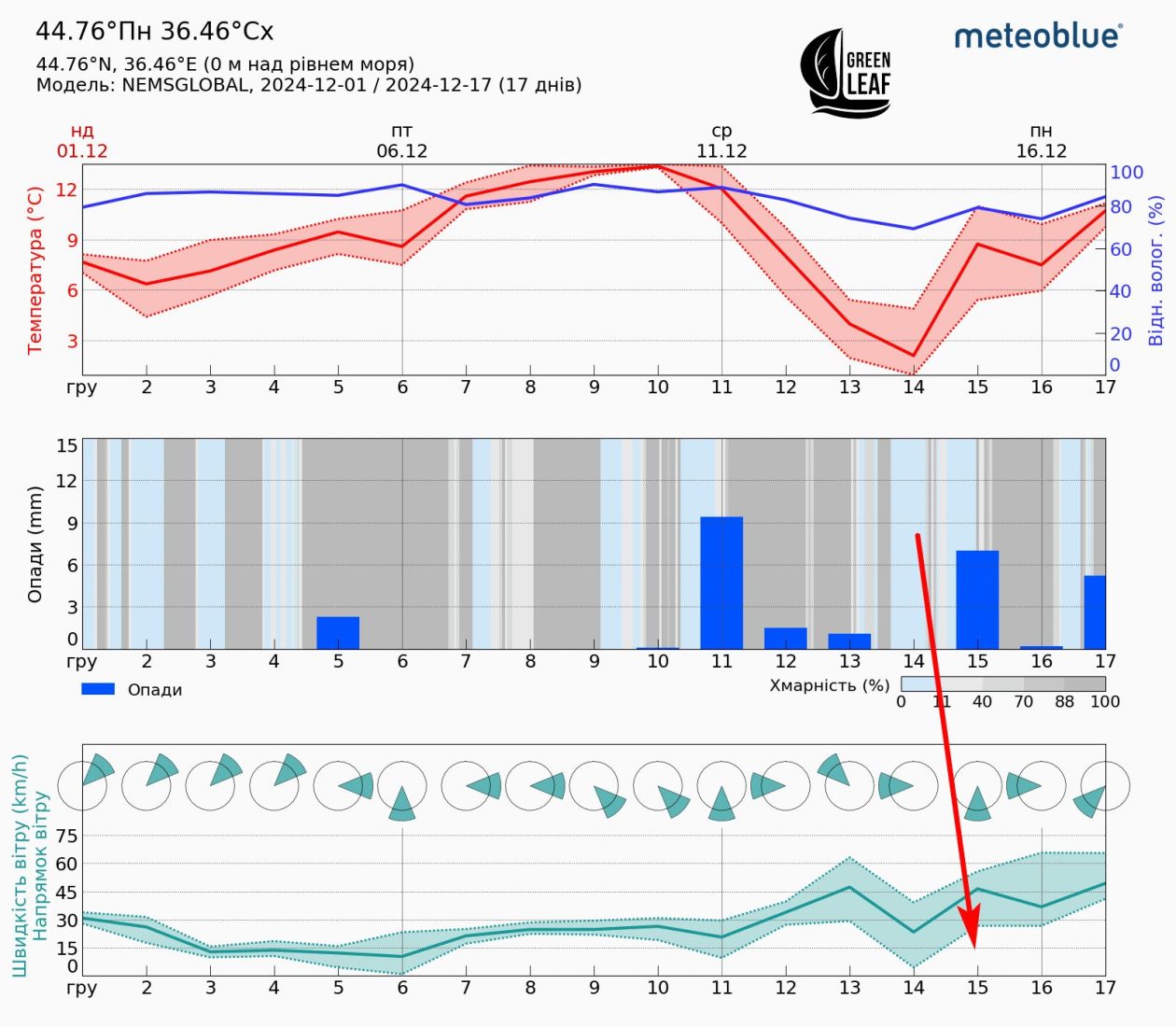
During the first hours of the accident, some of the surface fuel oil in the form of massive slicks was driven into the Kerch Strait. The fuel oil then moved with the wind across the Sea of Azov. Large slicks broke into smaller ones and, as they cooled, solidified while retaining positive or neutral buoyancy. This explains the nature of the “fuel-oil stones” in Kyrylivka. How much fuel oil sank to the bottom remains unknown. There is also very little information about other signs of pollution along the Azov coast. It is obvious that such signs exist and, at the latest, will become apparent once the water temperature rises.
It is very bad that the Russian occupiers took no action to secure the halves of the sunken Volgoneft-212. A change in wind direction during the night of 18 to 19 December may cause the tanker hulls to change position and lead to additional pollution of the water area. In that case, fuel-oil slicks will move with the wind vector toward the Sea of Azov and toward the eastern and southern coasts of the Kerch Peninsula.
Evidence that fuel oil reached the shore of the occupied Sea of Azov may be a comment under Ivan Rusiev’s post by Dmytro Volovyk, an employee of Pryazovskyi National Nature Park, which lies along the Sea of Azov coast: “A petroleum-product slick reached the coast of the Sea of Azov, covering more than 27 km of shoreline (up to 3 m wide). Fuel-oil residues in the form of solidified fragments covered the shoreline, while the slick on the water surface spread over a large area that has not yet been assessed”.