
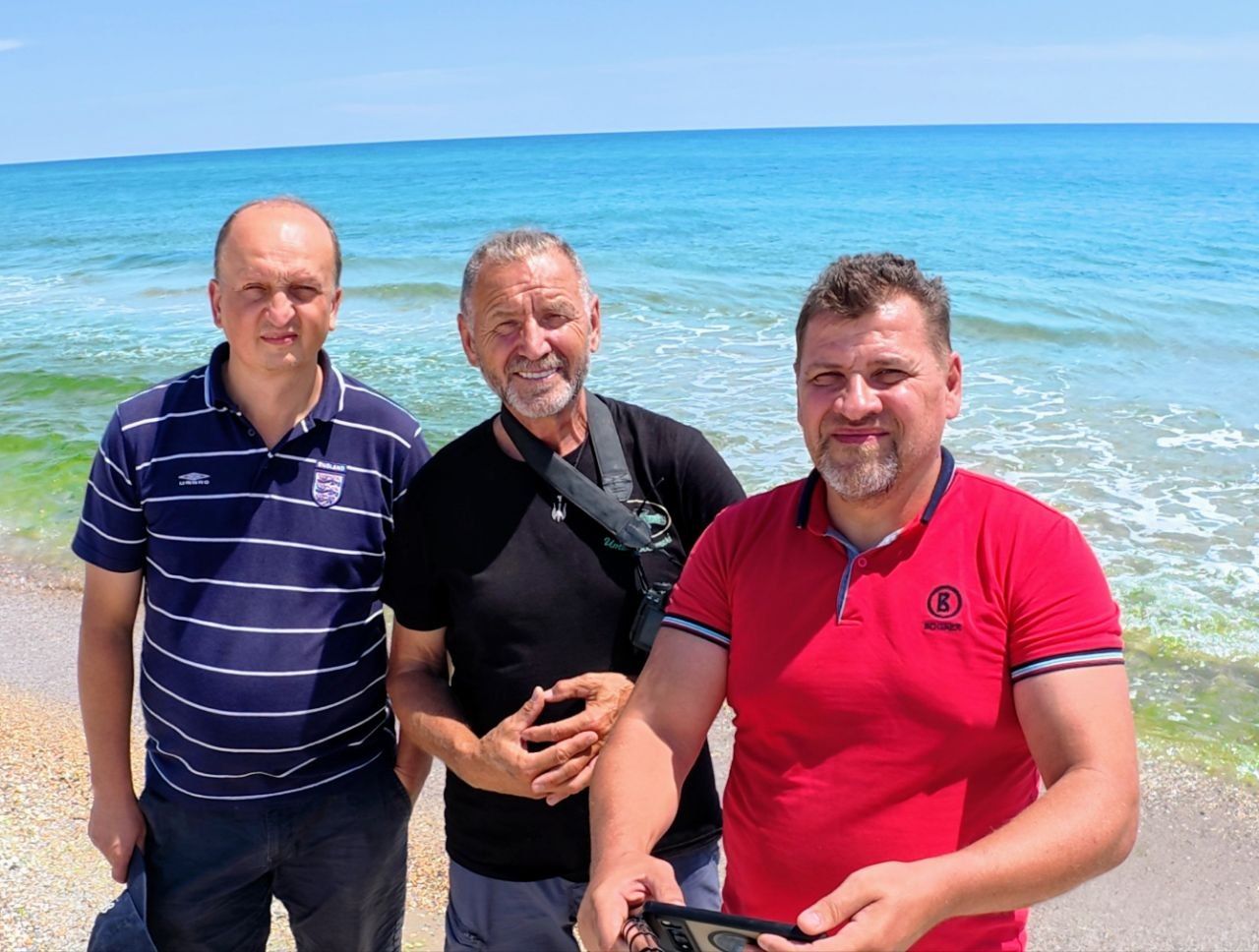
The international SUNDANSE project team is studying war impacts on the Black Sea coast in Tuzly Lagoons National Nature Park.
The expedition combined ecological monitoring with documentation of the effects of Russia’s military aggression on marine ecosystems.
Three specialists took part in the field research:
- Vladyslav Balinsky — head of the Odesa branch of the National Ecological Centre of Ukraine and a research scientist at Tuzly Lagoons National Nature Park;
- Ruslan Havryliuk — head of the National Ecological Centre of Ukraine and deputy director of the Institute of Geological Sciences of the National Academy of Sciences of Ukraine;
- Ivan Rusev — head of the Research Department of Tuzly Lagoons National Nature Park.
War impacts on the Black Sea coast
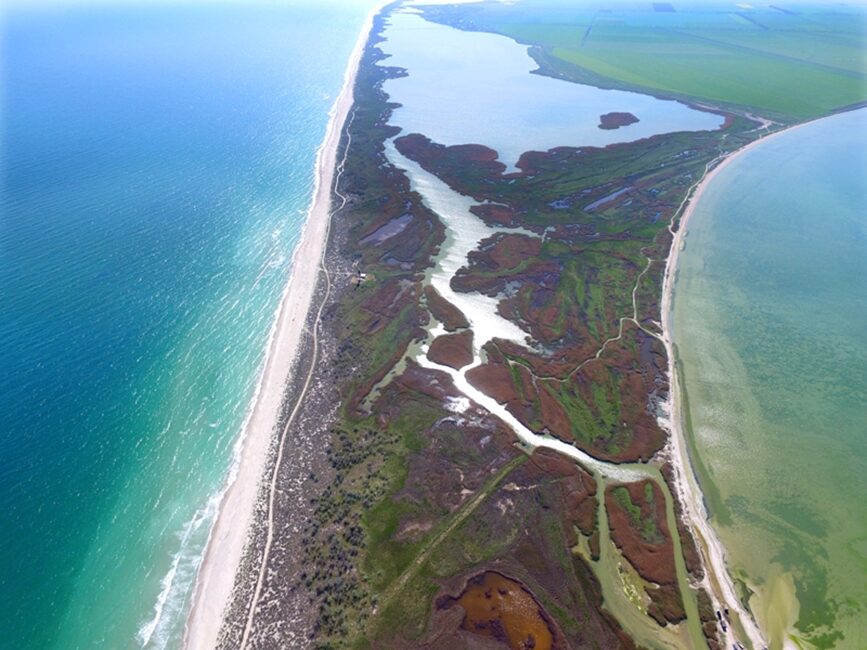
The sandy barrier separates the Tuzly Lagoons system from the Black Sea. It is the largest remaining natural section of Ukraine’s marine coast. Today, the area is increasingly affected by the war.
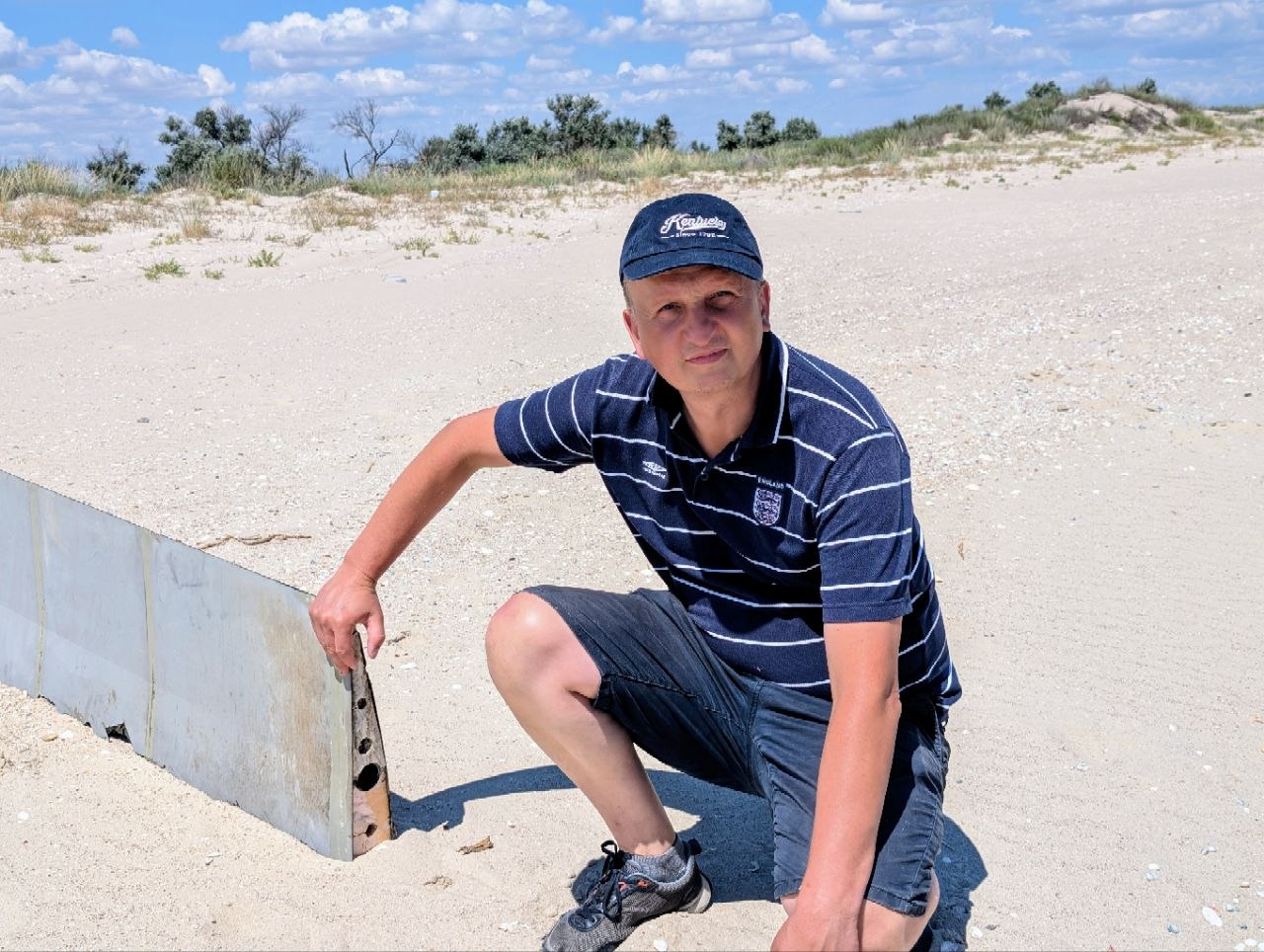
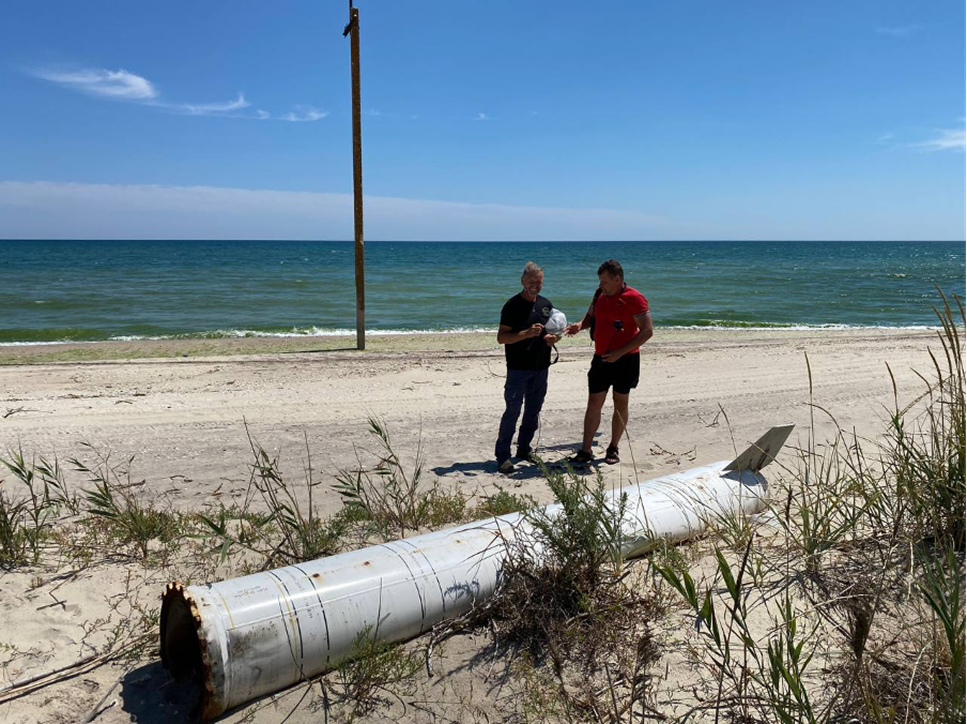
During the expedition, researchers found fragments of Russian aerial vehicles. They also recorded new deaths of Black Sea cetaceans and discovered heavy fuel oil on the shore. The pollutant continues to wash ashore after the December 2024 tanker accident near the Kerch Strait.
During the survey, the team documented:
- debris from Russian aerial vehicles on the sandy barrier;
- fresh heavy fuel oil clumps and older fragments partly covered by sand;
- new deaths of Black Sea cetaceans.
Heavy fuel oil pollution persists after the tanker accident
One of the expedition’s main tasks was to search for new signs of heavy fuel oil pollution. Ruslan Havryliuk conducts this research within the international OIL-TRACE Black Sea project.
Its full title is Remote and Field Monitoring of Oil Pollution Dynamics in the Kerch Strait and the Tuzly Lagoons Region. The project is implemented with support from the German Federal Environmental Foundation (Deutsche Bundesstiftung Umwelt, DBU).
The field survey showed that the sea is still bringing new heavy fuel oil fragments ashore more than a year and a half after the accident.
Researchers found fresh clumps lying directly on the sand. Older fragments were already partly covered by sand deposits. This indicates that the pollutant continues to move with marine currents and periodically returns to the coast.
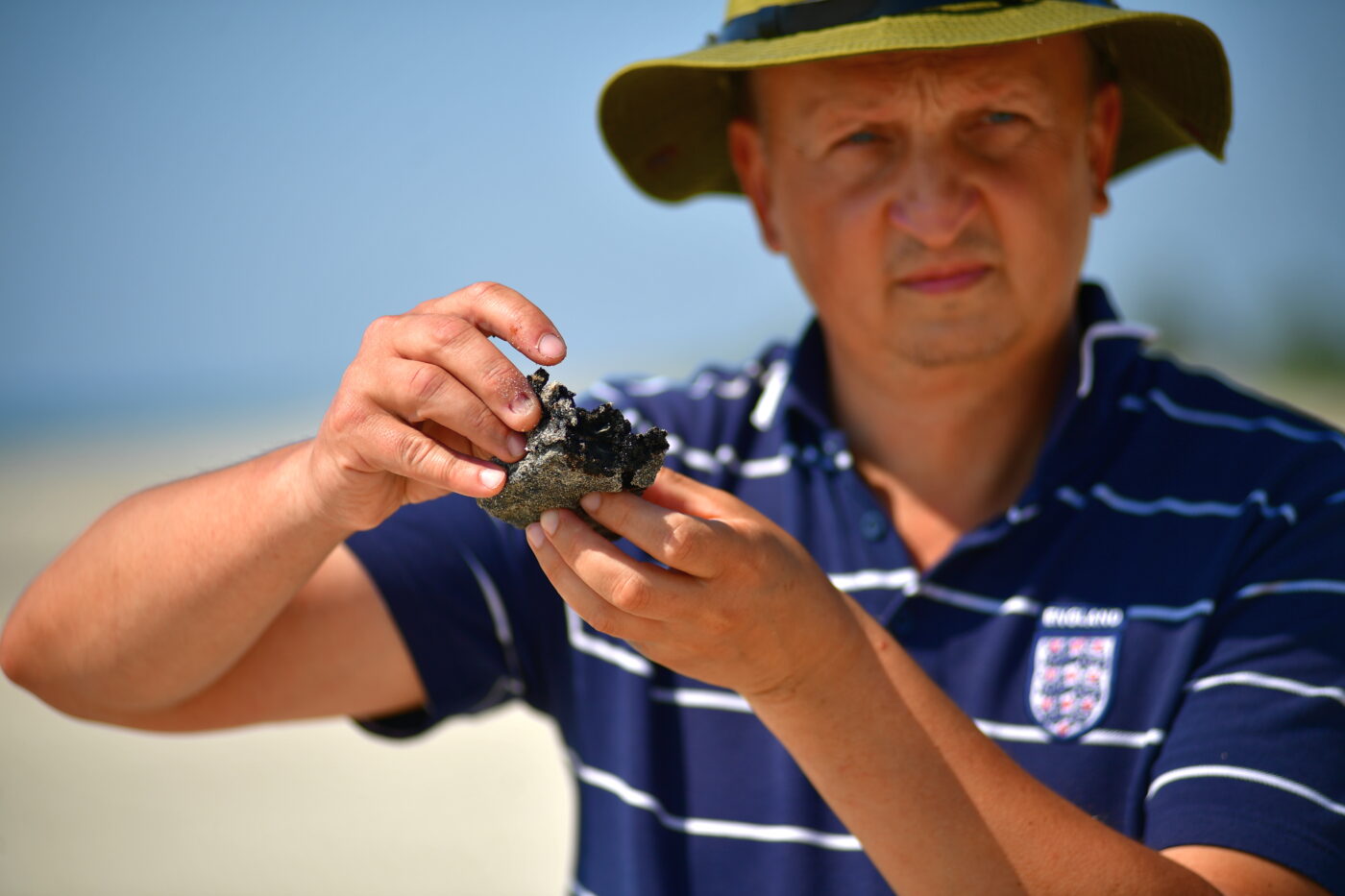
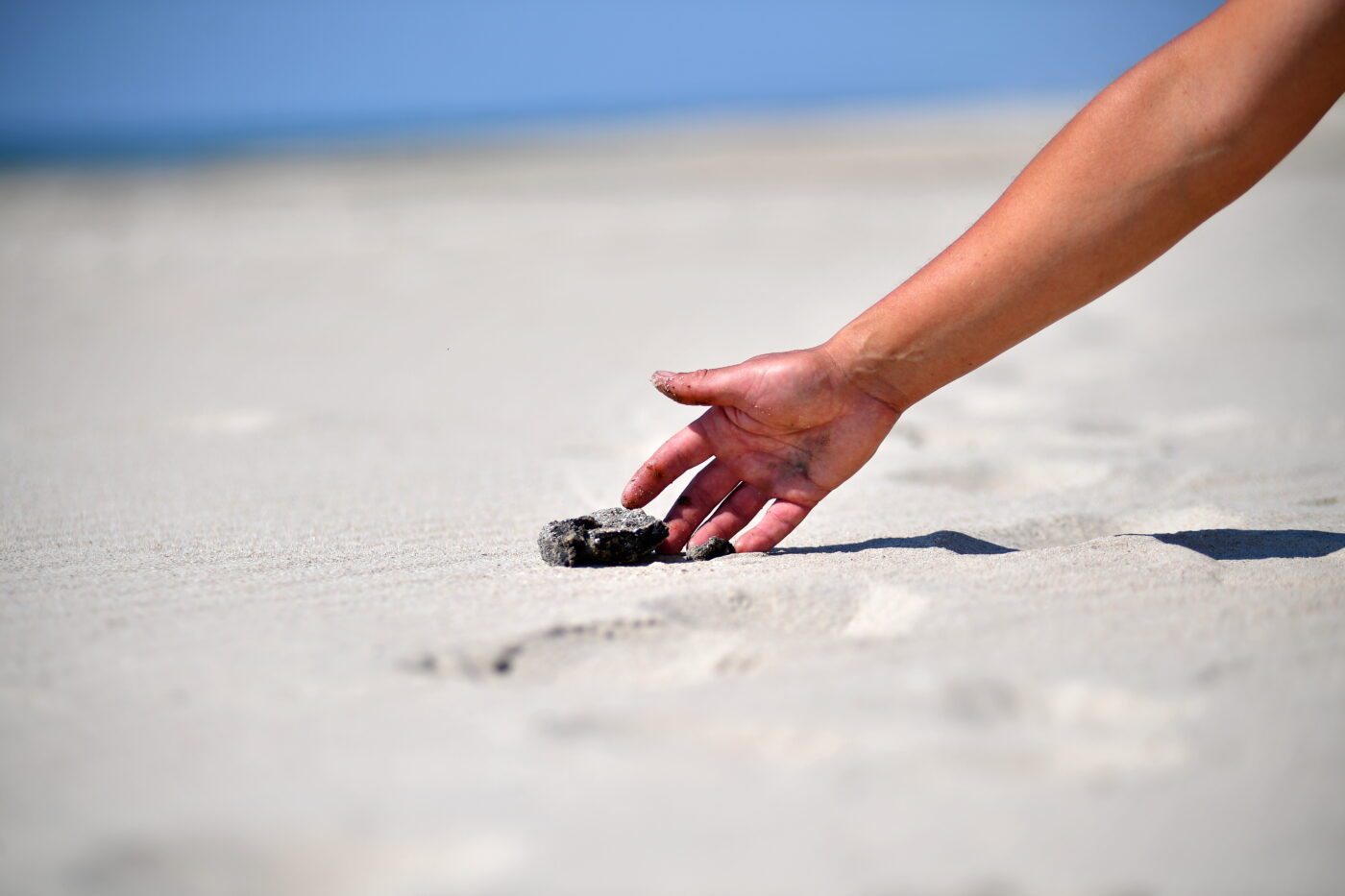
Heavy fuel oil fragments washed onto the coast of Tuzly Lagoons National Nature Park after the Russian tanker accident. Photo: Vladyslav Balinsky
How heavy fuel oil moves through the marine environment
According to Ruslan Havryliuk, satellite monitoring and field verification made it possible to trace the movement of the pollution. After the accident, heavy fuel oil migrated at least 600 kilometres along Ukraine’s Black Sea coast.
Much of the pollutant is not on the water surface. It can remain in the water column and bottom sediments. During strong storms, it may re-enter the water and contaminate the marine environment again.
The consequences are therefore not short-lived. They may persist for many years.
The spread of pollution into valuable protected areas of the north-western Black Sea is a particular concern. These areas include Tuzly Lagoons National Nature Park, adjacent protected waters and the Danube Biosphere Reserve.
Heavy fuel oil contaminates sediments and harms coastal ecosystems. It disrupts beach microbial communities and creates additional risks for birds and other marine wildlife.
Field research also verifies satellite observations directly on the ground. Combining the two methods helps researchers trace the pollution and build a scientific evidence base for documenting environmental damage caused by Russia’s aggression.
The number of dead Black Sea cetaceans continues to rise
The expedition also continued monitoring marine mammal deaths. The new findings indicate that the situation is deteriorating further.
According to Ivan Rusev, head of the Park’s Research Department, 12 more dead Black Sea harbour porpoises (Phocoena phocoena relicta) were found in the park between 3 and 8 July.
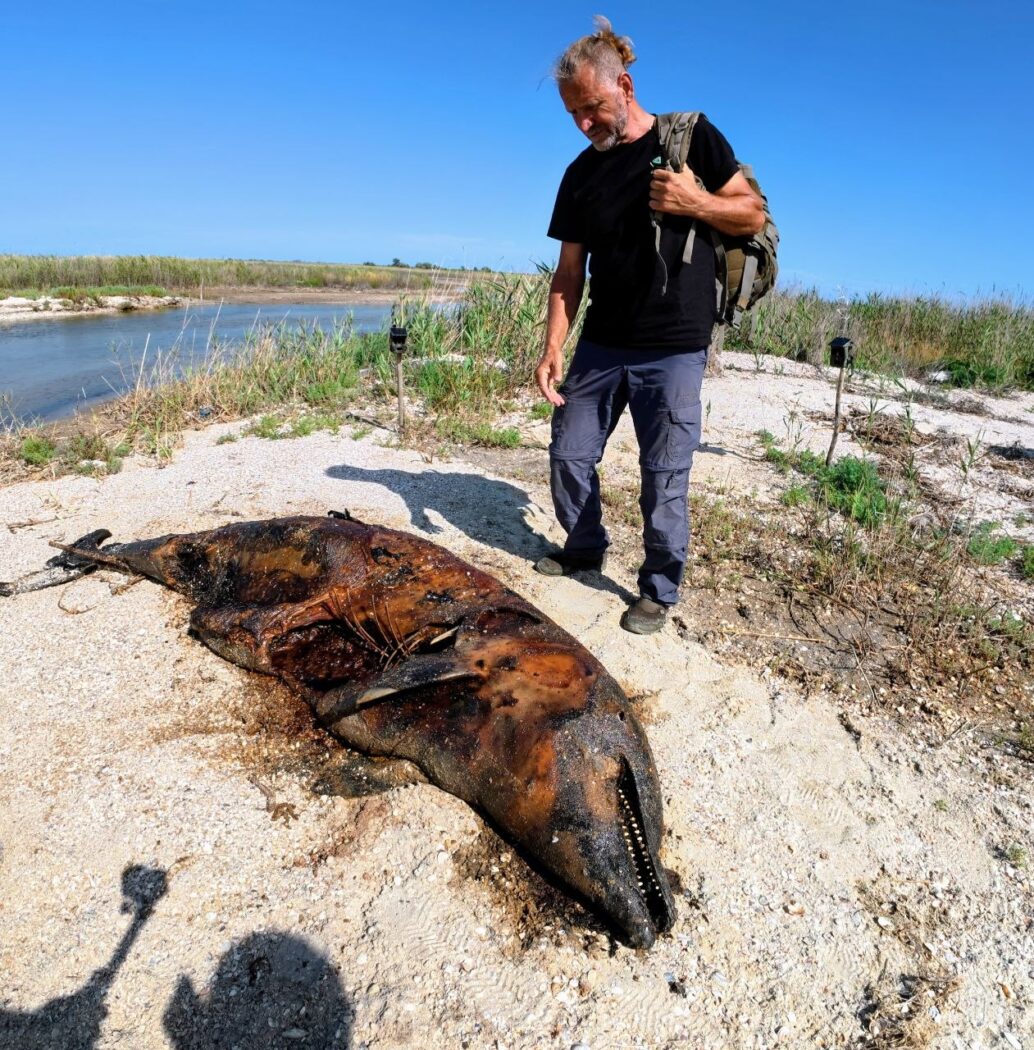
From late May to early July 2026, 74 dead Black Sea cetaceans were officially recorded in the park.
The Black Sea harbour porpoise is listed as Endangered (EN) on the IUCN Red List.
Researchers stress that official figures show only a small part of the real losses. They estimate that about 95% of dead cetaceans never reach the shore.
Bodies that wash ashore may be carried back to sea by waves. Jackals can also drag them into dense coastal vegetation before scientists or border guards document the findings.
Expert estimates cited in the field report suggest that tens of thousands of Black Sea cetaceans may have died during the first half of 2026. Total losses since the start of Russia’s full-scale invasion may exceed 100,000 animals.
Field data for international research projects
The survey was coordinated with the international SUNDANSE project. One of its tasks is to study the long-term environmental consequences of the destruction of the Kakhovka Hydroelectric Power Plant for the Black Sea.
The project systematises data on sediments released from the former Kakhovka Reservoir. Researchers study their composition, movement and effects on marine ecosystems.
They also analyse coastal pollution, changes in benthic ecosystems and the accumulation of hazardous substances in the marine environment.
Field surveys help assess war impacts on the Black Sea coast in a comprehensive way. Records of heavy fuel oil pollution, cetacean deaths and other wartime damage complement satellite monitoring. Together, these data support an evidence base on the environmental consequences of Russia’s aggression against Ukraine.
Data from the expedition are used in both SUNDANSE and OIL-TRACE Black Sea. This connects sediment transport research with documentation of long-term oil pollution and its effects on marine ecosystems.
Author: Tetiana Herasymova
An earlier version of this material was also published by the National Ecological Centre of Ukraine.

The monitoring was carried out with support from the Deutsche Bundesstiftung Umwelt (DBU, German Federal Environmental Foundation) under its programme supporting Ukrainian researchers and environmental professionals. The publication’s content, interpretation of data and conclusions are the responsibility of the authors and do not necessarily reflect the position of DBU.