

Forestry chief faces suspicion: how law enforcement and environmentalists joined forces
The news that O. M. Savchenko, head of the Ananiv Forestry Enterprise, had been notified of suspicion under Article 365(3) of Ukraine’s Criminal Code was long awaited byZelenyi Lyst .
Damage from illegal logging in Odesa Oblast’s Kuialnytskyi National Nature Park reached 79 million hryvnias from just one incident documented by the State Bureau of Investigation. There are other episodes of logging carried out under the scheme introduced by the Ananiv Forestry Enterprise of the state enterprise Forests of Ukraine.
As reported by the Office of the Prosecutor General, the scheme involved illegally issuing logging permits for felling on land belonging to protected natural areas. Clearly, this is unlikely to be the last notice of suspicion in this investigation. But I want to tell you about something else.
This investigation is remarkable not only for the enormous damage inflicted on nature. It is unique in the synergy between law enforcement, scientists and civil society representatives outraged by such ecocide.
For the Zelenyi Lyst civic organisation, the story began in late winter 2023, when former forester and environmental activist Yurii Nezhyvyi called me. With pain in his voice, he began describing the destruction of a unique oak forest, planted in the time of Count Potocki, in the village of Severynivka.
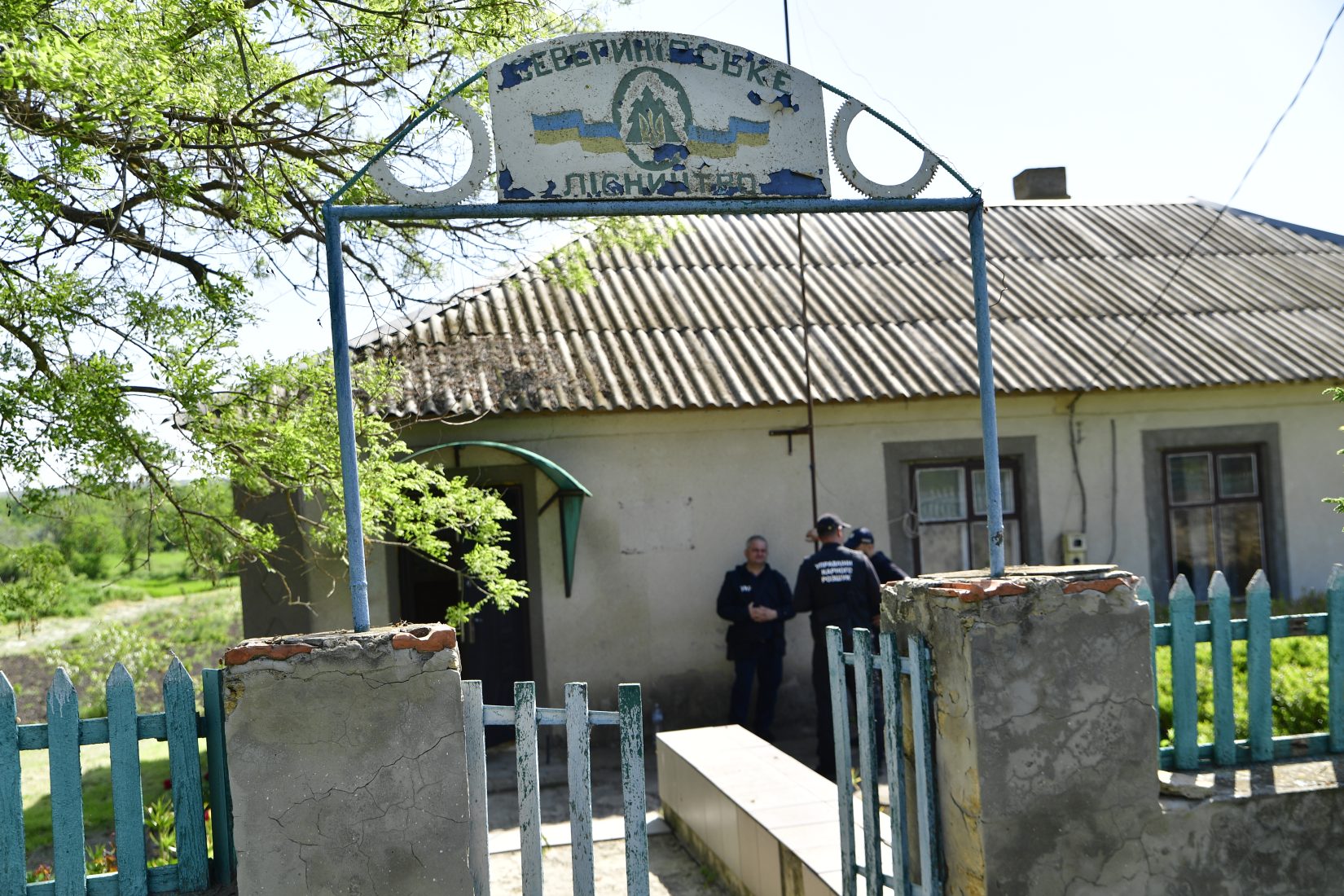
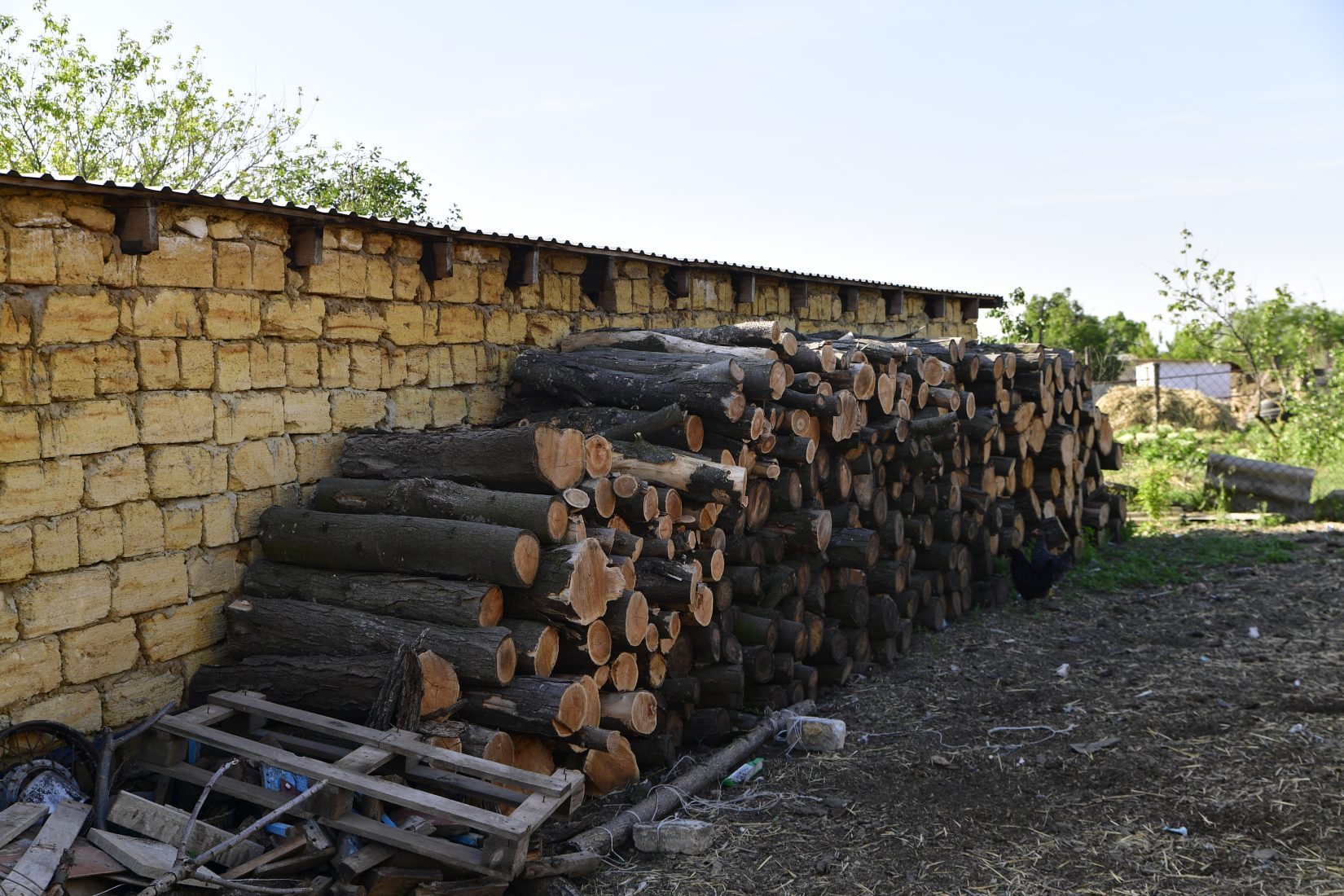
The felling was taking place on an industrial scale, and not for the first year. The foresters had logging permits in hand and feared nothing. They selected the healthiest and most beautiful 200-year-old giant oaks.
Imagine our surprise when we retrieved the map from the project to establish Kuialnytskyi National Nature Park and discovered that trees were being felled in the unique Nyzhnii Lis (‘Lower Forest’) tract, which lies within the park’s boundaries.
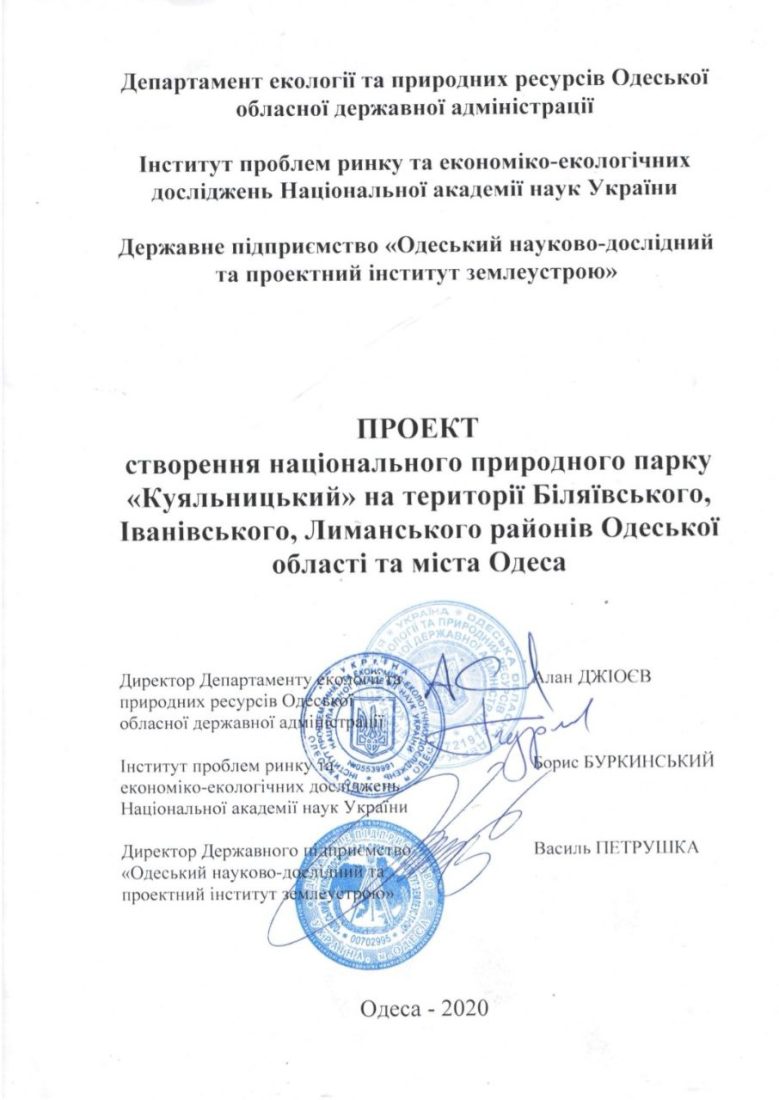
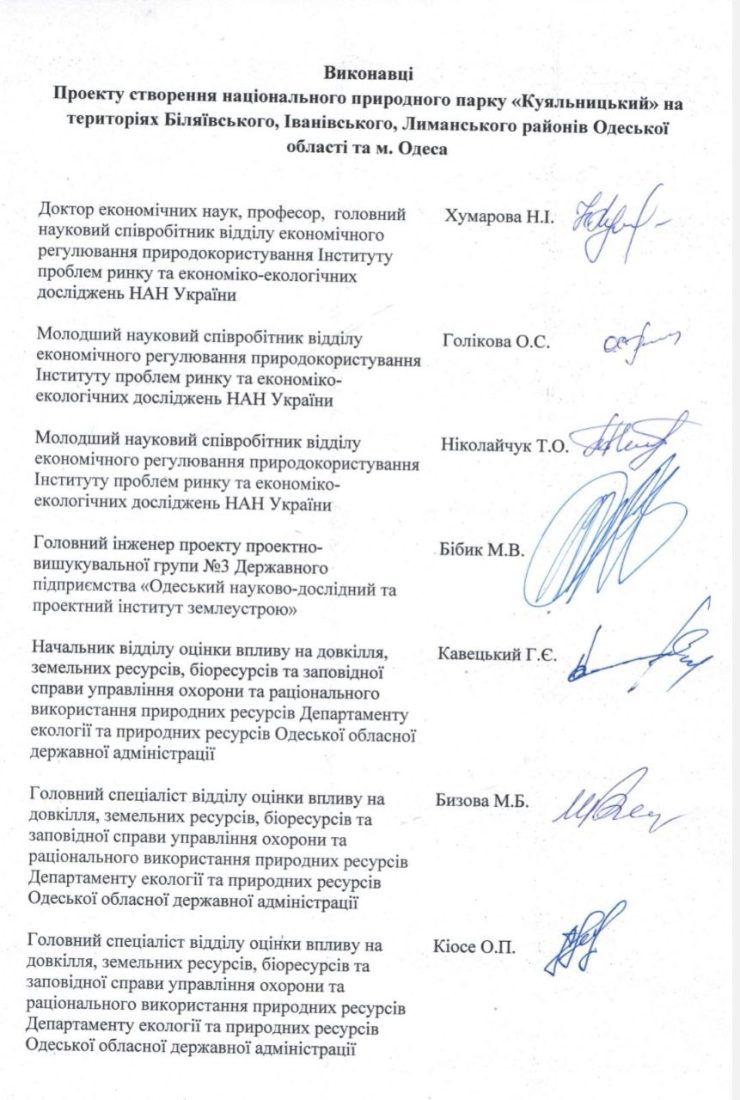

For decades, environmental activists and scientists fought to establish Kuialnytskyi National Nature Park. Doctor of Biological Sciences I. T. Rusev, Candidate of Biological Sciences O. M. Popova and the team at Tuzlivski Lymany National Nature Park played a major role in developing its scientific justification and project documentation. The Zelenyi Lyst team also took an active part in this work. The approval and signing of the documents happened practically before our eyes.
Protection at the regional level: Pavlo Bulanovych
I can therefore say with complete confidence that such brazen ecocide became possible only through the personal involvement of Pavlo Bulanovych, then director of the Ecology Department of the Odesa Regional State Administration, in collusion with V. I. Domikan, then head of the Odesa Regional Forestry and Hunting Administration. It is telling that for many years Bulanovych could be found online under the tag “Pasha 500”. Moreover, he was removed from office under lustration legislation back in 2015, only to reappear later in senior positions. Did anyone really expect Pasha to live on his salary? And in two years as head of the regional Ecology Department, Pasha caused plenty of damage: providing cover for development schemes in protected natural areas, land fraud and organised poaching, including illegal logging. Even the removal of the beautiful blue spruces in front of the regional administration building in 2021 was justified by Bulanovych together with Domikan on Hrynevetskyi’s orders — and that was the least harmful of it. I would very much like former officials to be held accountable before the law in our country, and certainly not to reappear later with their ill-gotten gains ‘somewhere in a ministry’.
Assisting the investigation
After consulting Iryna Vykhrystiuk and Ivan Rusev, we immediately contacted Oleh Steshenko, a police officer in the Criminal Investigation Department who has experience uncovering such crimes. It was one of those rare occasions when, after we had made contact, it was not us constantly chasing the investigators for updates; instead, they were chasing us.
My first visit to the Nyzhnii Lis tract was simply astonishing. I had never seen such tall and beautiful woodland in Odesa Oblast. There is nothing else like it here. Every giant oak seemed carefully selected. Huge ash trees, acacias. An incredible and fascinating forest.
Just imagine: it lies at the very head of the Kuialnyk Estuary, on the floodplain of the Velykyi Kuialnyk River upstream of its entry into the estuary. Today, the Velykyi Kuialnyk has dried up along much of its course. Wheat is grown on its floodplain, and its lower reach has disappeared underground. High groundwater levels and moisture created conditions here for woodland growth that are unique and uncharacteristic of our steppe zone.


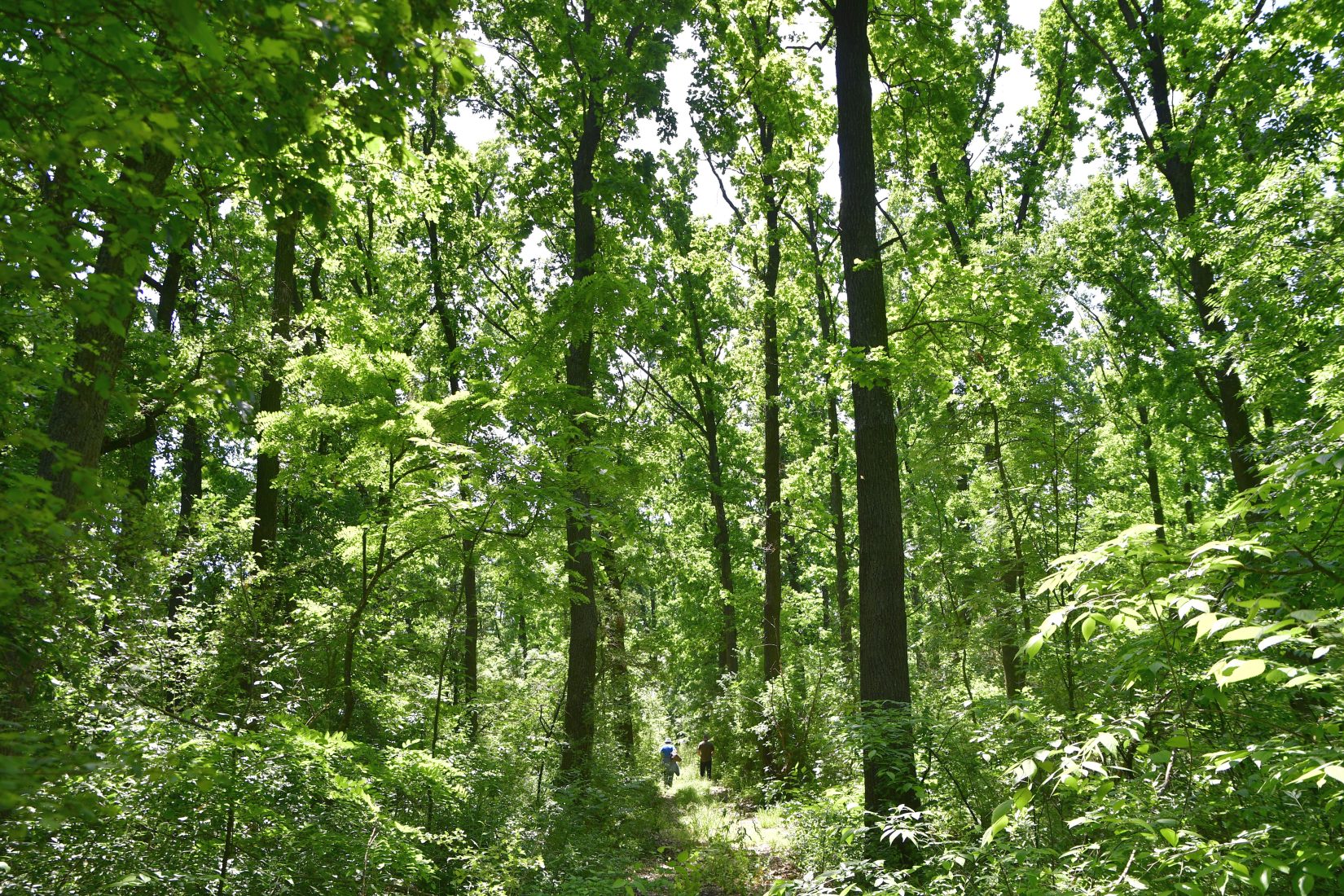



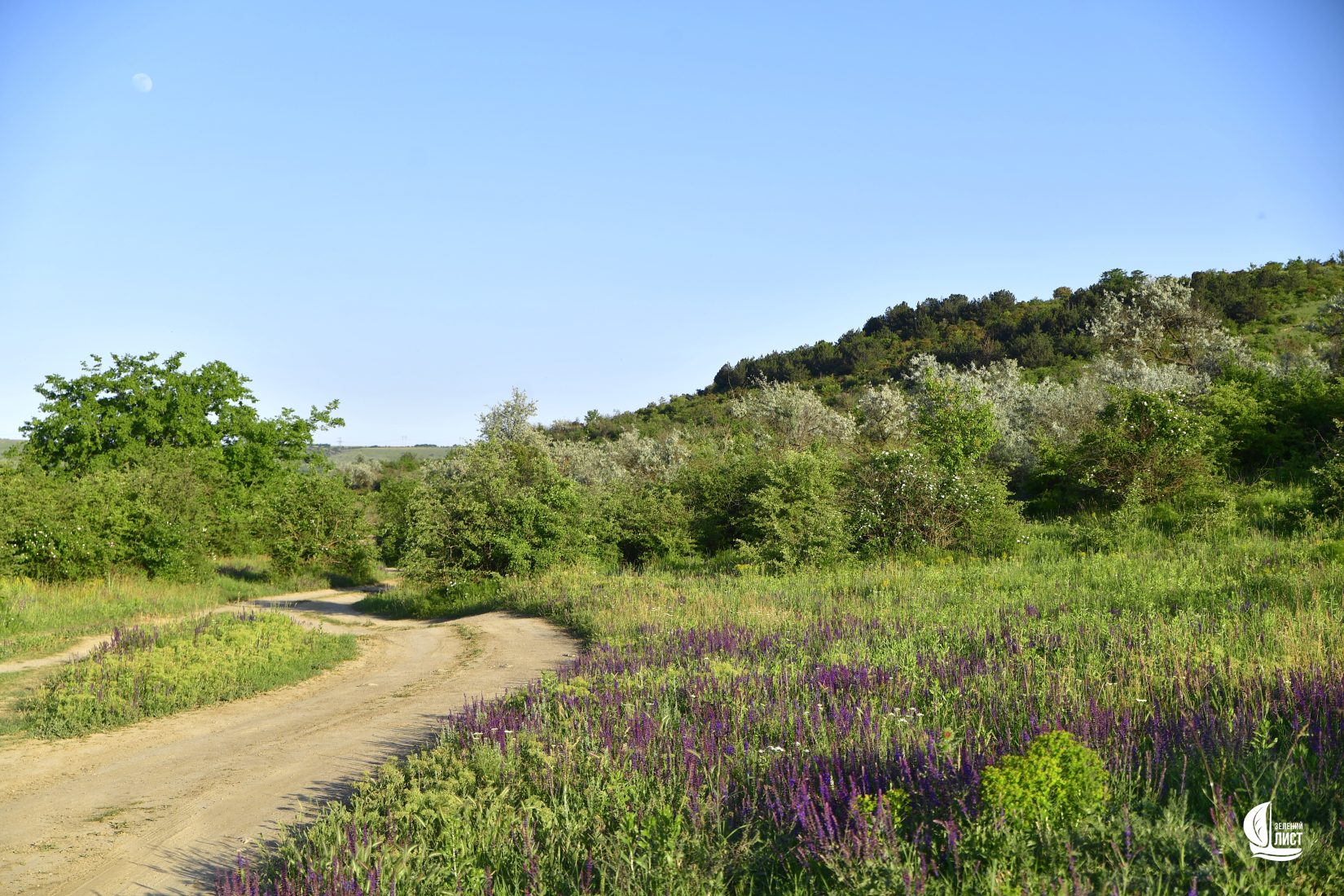


But this landscape has another value beyond its aesthetics and biodiversity. We must also consider the forest’s water-management and anti-erosion functions, and its role in maintaining the Kuialnyk Estuary’s water balance. Of course, such a small stretch of woodland relative to the river’s length cannot save the situation on its own, but without it the estuary’s degradation would accelerate significantly. Indeed, its value and biodiversity are precisely why the Nyzhnii Lis tract was included in Kuialnytskyi National Nature Park, whose establishment was approved by the President on 1 January 2022.
The sheer brazenness of the destruction of this unique forest — by officials who receive salaries to protect it, no less — strongly motivated both us and law enforcement. The logging continued even as investigative activities were under way, which significantly accelerated the investigation.
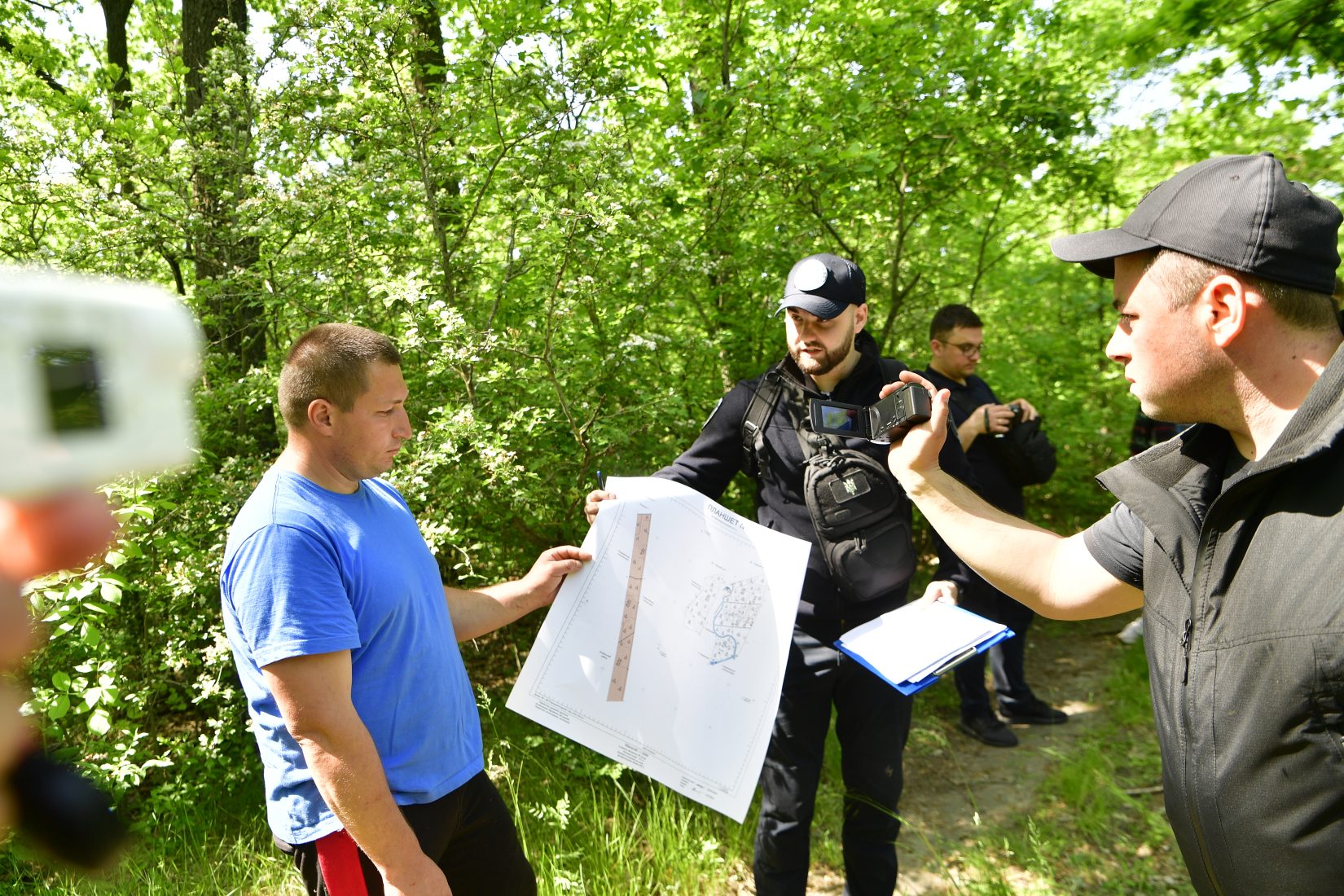
The stage in which I personally took a direct part gave me a deep tan well before summer arrived. I could not now tell you how many times we travelled to Severynivka, or how many dozens of kilometres we trudged through the forest with the investigative team looking for stumps. Every stump was georeferenced and photographed; its dimensions, tree species and approximate date of felling were recorded. The Environmental Prosecutor’s Office brought in biology specialists, including Olena Popova, a botanist at Odesa Mechnikov National University. Investigators from the State Bureau of Investigation standardised the data-collection spreadsheet, while environmental inspectors and criminal investigators streamlined the search for stumps and their photographic documentation.
By the end of this stage, our team had become a first-rate team for investigating environmental crimes. Every member, including the attesting witnesses, could identify the species of a felled tree with their eyes closed. Olena Popova and I completed our work as consulting biologists in two weeks. But we also saw the prolonged, meticulous work carried out by investigators and prosecutors from the specialised environmental prosecutor’s office.
One of Zelenyi Lyst’s missions is to help develop successful practice in investigating environmental crimes of this kind and proving them in court. I am confident that those responsible will be punished in this case.
Vladyslav Balinskyi, environmentalist and head of the Zelenyi Lyst civic organisation

During the full-scale war, Odesa court renovation contractor buys €905,000 property. Why are residents protesting?
For three weeks, protests have been taking place in Odesa over the misuse of budget funds. Residents are demanding that taxpayers’ money — a large share of which, incidentally, comes from service personnel registered in the city — be directed to the needs of the front.
The public outcry began after the announcement of a tender to restore the Kyivskyi District Court at a cost of more than 106 million hryvnias from the budget.


Despite the protests, the Odesa authorities signed a contract to repair the court. They are now trying to justify themselves by pointing out that, while they are funding expensive work far from the front, they are also sending a little money to the military.
Meanwhile, during the full-scale war, the owner of the company contracted to renovate Odesa’s Kyivskyi District Court signed a deal to buy property worth 905,000 euros. The money is going to a Czech company managed by someone originally from Russia.
The civic organisation Zelenyi Lyst investigated the details.
The story of the protests
It all began when the city’s Capital Construction Department, headed for many years by Borys Panov, announced a tender for the reconstruction of the Kyivskyi District Court for 106.2 million hryvnias.
The department announced the procurement on 8 August. This angered Odesa residents because, at the time, there was a critical shortage of drones, tourniquets and other equipment at the front. Expensive, non-essential repairs in the rear could wait until the full-scale war was over.
Well-known Odesa volunteer and founder of the Monsters Corporation Charitable Foundation Kateryna Nozhevnikova said that if the court renovation tender was not cancelled, she would stage a one-person picket outside City Hall. Hundreds of Odesa residents backed her idea and began regularly attending protests, demanding that the lion’s share of the money go to the Armed Forces of Ukraine rather than repair works away from the front.
Moreover, last week the protests spread to other Ukrainian cities.

Protests in Kyiv. Photo from the internet
But this did not stop the Odesa authorities. The agreement to restore Odesa’s Kyivskyi District Court was signed on 5 September.
The city’s Capital Construction Department did not hold an open tender to select the most advantageous bid and save public funds. Instead, it awarded the multimillion-hryvnia contract to the sole bidder, Odesholovpostach Private Joint-Stock Company, which regularly receives taxpayers’ money through similar agreements.
Trying to polish his image
With the Odesa protests attracting broad support across Ukraine, Odesa Mayor Hennadii Trukhanov “went on the counterattack”.
On 27 August, for instance, Deputy Mayor Oleksandr Filatov said in a comment that supposedly only 10 million hryvnias, rather than the full 106 million, would now be allocated to the court. Nevertheless, the contract was signed for 106 million. Most likely, the balance will be paid to the contractor next year. The declared deadline for completing the work is 31 December 2024.
Hennadii Trukhanov is also trying hard to show that the city does not spend money only on court and road repairs, but also supports those defending Ukraine. Yet his attempt to improve his image is going rather badly.

For example, on 20 September, Andrii Tantsiura, a hospital volunteer, wrote on Facebook about Hennadii Trukhanov’s visit to a military hospital. He reported that the city would allocate 16 million hryvnias in public funds to renovate the hospital’s admissions department and the volunteers’ room. It is unclear, however, why money should be spent on renovating the volunteers’ room instead of going directly to wounded defenders. Trukhanov also promised to provide five million hryvnias of taxpayers’ money to purchase medicines. He also supposedly said that the hospital’s bomb shelter had already been renovated at the city budget’s expense. Tantsiura did not say how much that cost.
Yet the disparity in the funding is striking: it turns out that 106 million hryvnias is being allocated to repair the court, and only 21 million to wounded service personnel. The contract for work on the court has already been signed, while Trukhanov has merely promised the hospital renovations and medicine purchases.
Following the protests, Odesa’s Executive Committee, chaired by Trukhanov, also urgently adopted a decision allocating 102 million hryvnias to purchase drones and monoculars for the military. But Odesa City Council members still have to approve the decision at a session scheduled for 27 September. When these essential supplies will actually be purchased and handed over to the military remains entirely unknown.
If the city authorities had cancelled the court renovation procurement, they could have allocated another 106 million hryvnias to the military. But Trukhanov apparently has no intention of listening to the city’s residents, although it is precisely service personnel who generate enormous revenues for Odesa’s budgetthrough their registration at military units stationed in our city.
Let us also remember that the Kyivskyi District Court has for several years been hearing one of the most high-profile and tragic cases: the fire at the children’s camp Viktoriia. A major factor in the fire was the construction of the camp’s accommodation blocks with serious breaches of building regulations and fire safety requirements. It was Panov’s department, let us recall, that commissioned these buildings with budget funds and accepted them into service.
Incidentally, the contractor involved then received declarations from officials both for the commencement and the completion of construction work just one day apart.

Declaration of works at the Viktoriia camp
And this did not alarm Odesa’s Capital Construction Department in the slightest. It accepted the unsafe facility into service. Just a few months later, a fire claimed the lives of three little girls.
And who will restore theOdesa court?
Another interesting question is who received the multimillion-hryvnia public contract from city officials. The company Odesholovpostach was registered in 1998. Its authorised capital amounts to just 162,000 hryvnias.
Since 2015, the company has regularly won public contracts, signing agreements worth more than 630 million hryvnias in total. The year 2023 set a record: it signed agreements worth almost 180 million hryvnias of public funds.
In 2017, the company came to the attention of law enforcement. According to the investigation, Odesholovpostach signed a contract with Odesa’s Municipal Economy Department to carry out emergency works in a residential building. But it did not complete all the work, even though it received the money after city officials signed the acceptance certificate. The case apparently stalled and never reached court. Meanwhile, Odesholovpostach only increased the number of public contracts it secured from the Odesa authorities.
A certain Oleksandr Fridman is listed as the owner of Odesholovpostach.
Now, during the full-scale war, he is attempting through the courts to exert pressure on a Czech company with which he signed an agreement to acquire property measuring more than 5,000 square metres.
Fridman signed the agreement on 6 October 2022 for more than 32 million hryvnias, or 905,000 euros. By then the bloody war had already been raging for more than seven months. Under the agreement, Fridman transferred 50,000 euros to the Czech company. But the company is now supposedly no longer responding to him. That is why he went to court.
The company in question is Bugaz invest s.r.o. Its name suggests that this supposedly Czech company may have non-Czech roots. And the case over 905,000 euros is being heard — (un)surprisingly — by Odesa’s Kyivskyi District Court, the very court that Fridman’s company is due to renovate at Odesa taxpayers’ expense.
Bugaz invest s.r.o. is listed as a founder of three Ukrainian limited liability companies: BC Park, Soiuz-Neptun-Enerhiia and Odesa Neptune Plant.

YouControl screenshot
The latter two companies are registered at 28 Borovskoho Street in an industrial zone. The address of Park Business Centre, however, is 92a Koroliova Street.


It appears that Oleksandr Fridman, a favoured recipient of public contracts from Odesa officials, bought part of this building.
As for the Czech-or-not-Czech company, according to data from the analytical system, YouControl, Bugaz invest s.r.o. belongs to Prague resident Svitlana Melnikova, who may be of Russian origin.

The companyBugaz invest s.r.o. was registered in Prague in 2018. It specialises in wholesale trade, weekend accommodation, real estate transactions and other activities. Another notable detail is that the company’s director is a certain Maksym Biliavskyi. Judging by his profile on LinkedIn, Biliavskyi moved to the Czech Republic back in 2003. At the time, he appears to have worked for the Russian company Gaz Invest, including translating from Czech into Russian.
To sum up, business involving Odesa’s budget evidently pays its beneficiaries substantial dividends, which they invest, among other things, in property registered in their own names. And all of this is taking place during a bloody full-scale war, while volunteers are forced to collect donations little by little to provide defenders at the front with everything they need. So what exactly are Odesa residents protesting about?


Supreme Court finds Prymorske boundary expansion unlawful, halting the seizure of Tuzlivski Lymany parkland
The Administrative Cassation Court within the Supreme Court upheld the ruling of the appellate administrative court declaring unlawful the decision of the Tatarbunary District Council of Odesa Oblast to expand the boundaries of the village of Prymorske at the expense of land belonging to Tuzlivski Lymany National Nature Park.
Read More
Commercial Cassation Court confirms: Chornomorska Perlyna must return Black Sea beach land to Tuzlivski Lymany National Park
As we reported, on 16 May this year the South-Western Commercial Court of Appeal terminated a lease concluded back in 2010 between the Tatarbunary District State Administration and Chornomorska Perlyna Private Joint-Stock Company, covering a 1.3-hectare plot located at the first kilometre of the Black Sea sand spit, within Tuzlivski Lymany National Nature Park. This dismantles the entire scheme for the unlawful seizure of one of the most valuable plots on the Black Sea coast, which well-known Odesa businessman Valentyn Mohylnikov had been developing for years.
Read More
Where should Odesa residents shelter during air raid alerts?
The question of shelters in Odesa remains urgent, even after a year and a half of full-scale war.
At the start of Russia’s full-scale invasion of Ukraine, Odesa City Council published information on its website about shelters with capacity for 50,000 people. Where the rest of the residents of a city of a million should shelter from missile strikes and kamikaze drones, however, remains unclear.
The civic organisation Zelenyi Lyst investigated Odesa’s shelters.
Did the Odesa authorities fail to agree on shelters?
In June 2023, we received several responses to information requests from government bodies. We wanted to know who was responsible for calculating the city’s shelter requirements and who approved that calculation. The different institutions gave contradictory answers.
For example, Odesa City Council’s Department of Municipal Security said that “the executive bodies and structural divisions of Odesa City Council determine the needs of the city’s civil protection shelter facilities within their powers, in cooperation with the Odesa District State (Military) Administration”.
At the same time, the Odesa District State (Military) Administration reported that “…no requests or proposals from Odesa City Council or its executive bodies concerning the assessment of the need for civil protection shelters for the population of Odesa had been received by the Odesa District Military Administration”.
Decree of the President of Ukraine No. 353/2023 of 26 June 2023 enacted the decision of the National Security and Defence Council of Ukraine of 23 June 2023, “On the Results of Rapid Inspections of Civil Protection Shelter Facilities and Addressing Problems in Sheltering the Population”. Work to ensure the readiness of shelter facilities in Odesa was deemed unsatisfactory.
In early July 2023, Zelenyi Lyst received another reply from Odesa City Council’s Department of Municipal Security, stating that the city had shelters (bomb shelters) for 127,000 people — one in every eight residents. Where everyone else should shelter remained unknown.
Unable to reconcile the local authorities’ answers, we sent an appeal to the President of Ukraine.
They respond only when instructed from above
As early as 15 July 2023, following our appeal to the President, the Odesa City Council website published news that 20 mobile teams had been formed in Odesa to inspect premises for use as shelters. As we can see, our information requests and appeal to the President partially achieved their aim: the Odesa authorities noticed the shelter problems and finally responded.
On 21 August, the Odesa Regional Military Administration informed Zelenyi Lyst that shelters for 200,000 city residents were now ready. Facilities for another 50,000 people were due to enter service soon.
Against this backdrop, Operational Command South warned that Russia planned to intensify its tactics of combined strikes in autumn and winter, further targeting critical infrastructure. Meeting the shelter needs of just a quarter of the city’s civilian population is a welcome development, but it is not enough.
There are also the safety classification, accessibility, quality of facilities and self-sufficiency of shelters, which we do not analyse in this article. But we suspect that all is not well on those fronts either.
Another area of work is providing information to children and the city’s civilian population as a whole. This is the responsibility of the local authorities, which, unfortunately, still do not act without public scrutiny or instructions from above.

How much has Odesa spent on Ukraine’s Defence Forces?
Late on 31 August, a post appeared on the city’s mayor’s page
stating that the city had already allocated 897 million hryvnias to Ukraine’s Defence Forces. The money had supposedly been allocated under two municipal targeted programmes.

Trust, but verify!
Let us try to establish where this figure came from and which municipal
programmes were involved. An analysis of their contents suggests the mayor was referring to
the following:
1The municipal targeted programme to support the development of territorial
defence units and volunteer formations of the Odesa territorial community for
2022–2025.
2.The municipal targeted programme “Safe City of Odesa” for 2020–2024.
It is worth noting that these programmes are absent from the city’s official
website. However, we can find them through decisions amending them during the full-scale invasion.
Under the first municipal programme, all expenditure falls under the programme
expenditure classification code 8240 “Territorial defence measures and activities”. We
will subsequently use the expenditure figures under this code. In
2022, these expenditures were distributed among nine chief spending units; in 2023, among six.
Under the second programme, expenditure is recorded under three programme
expenditure classification codes for the chief spending unit, the Department of Municipal Security
of Odesa City Council:
1. 8120 Measures to organise water rescue services.
2. 8230 Other public order and security measures..
3. 9800 A subsidy from the local budget to the state budget for
implementation of regional socioeconomic development programmes.
As you might expect, the code 8120 does not cover expenditure on Ukraine’s Defence
Forces. There is also reason to doubt that such expenditure is covered by the code 8230, especially since in 2022
the programme provided financing under this code of
10.6 million hryvnias, and in 2023, 11 million hryvnias. This leaves only the code
9800.
Let us bring together the figures for these codes in a table, using data
both from the state system openbudget.gov.uaand from amendments to
the city budget decisions made twice during August, in thousands of hryvnias:

We can see that, in total, during 2022 and the first seven months of 2023, actual
expenditure on Ukraine’s Defence Forces amounted to 380 million hryvnias. Whether another 517 million hryvnias was actually spent in August, as the mayor claims, or whether he has confused something,
we will not be able to establish before 25 September, when
the Treasury’s reports on the execution of local budgets for January–August 2023
will be ready. We shall wait.

Chronicle of Russia’s war crimes against Ukraine’s environment: Odesa Oblast, August 2023
Russia’s attacks on Odesa Oblast’s ports continue its campaign of grain terror. Russia is using terror to compete for international wheat markets. As of 23 August 2023, Minister for Communities, Territories and Infrastructure Development Oleksandr Kubrakov said this was the eighth attack on port infrastructure since Russia withdrew from the Grain Initiative. In total, 270,000 tonnes of grain had been destroyed in a month of attacks on the ports.
We are collecting information about the Russian Federation’s crimes against nature in Odesa and Odesa Oblast during the war: environmental pollution from explosions and damage to infrastructure, contamination of air, water and soil with toxic substances, destruction of ecosystems in protected natural areas and internationally significant conservation areas, and more. We will update this information daily, so please send any facts you know to the following address:zeleniy.list1@gmal.com
Read More