
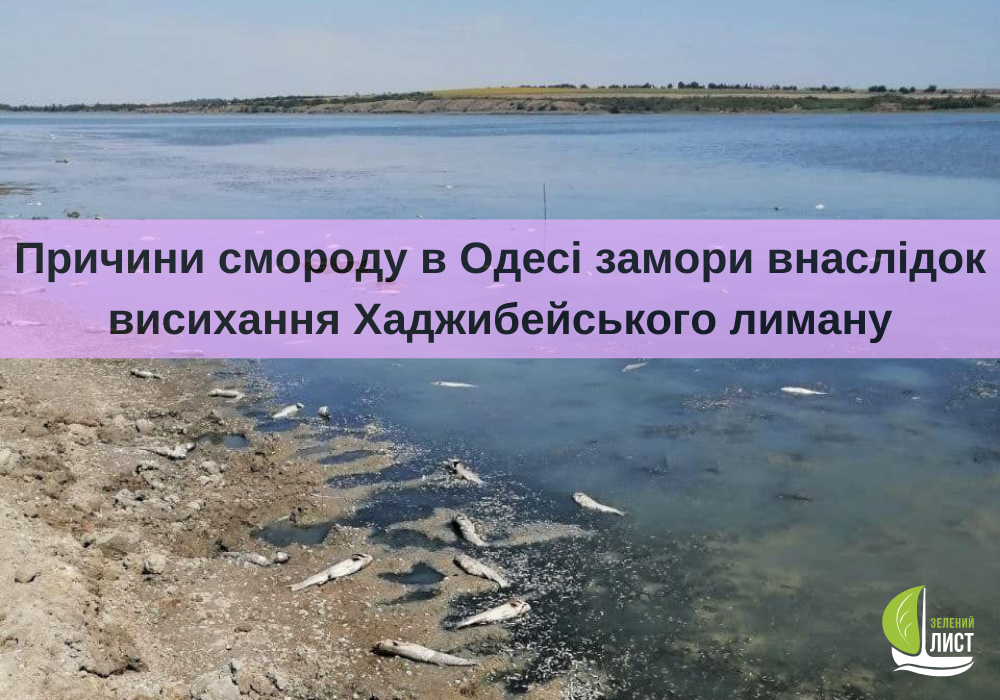
In July this year, Odesa residents began complaining en masse about a terrible stench. The smell becomes particularly strong at night, when the nocturnal sea breeze begins to blow from land toward the sea. At the same time, mass fish kills were observed throughout July in the Khadzhibey Estuary. Inspectors of the Odesa Fish Protection Patrol repeatedly recorded this unfortunate phenomenon. Following their report, the State Environmental Inspectorate of the South-Western District checked the condition of the water in the estuary and found that the concentration of ammonium nitrogen exceeded the maximum permissible level by 66 times.
How are these phenomena connected — the stench in the air, polluted water, and fish kills in the Khadzhibey Estuary near Odesa? What do the deep-water outfall and the state of the marine environment in Odesa Bay have to do with it?
Polluted water in Khadzhibey is not a new phenomenon. Fish kills in the estuary also occur in summer almost every year. Odesa residents have likewise smelled the stench in previous years, also in July and August. In other words, these are symptoms of some process. Which one?
Pollution and shallowing of the Khadzhibey Estuary
Let us recall that from the early 1960s until March 2022, sewage effluent from SBO “Pivnichna” was periodically discharged into the Khadzhibey Estuary. This caused pollution, but at the same time served as an additional source of water for the estuary.
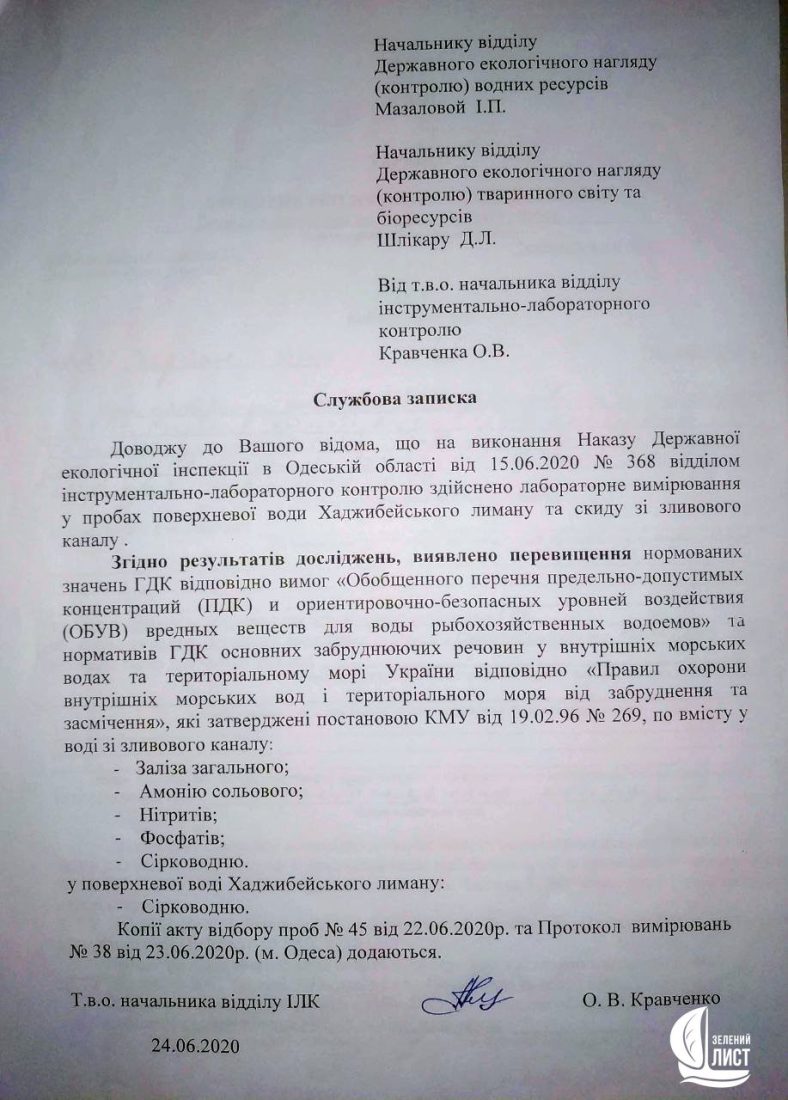
From 22 June 2020 to 30 June 2020, the State Environmental Inspectorate of the South-Western District, following a request by the Green Leaf NGO, took water samples at the point where effluent from SBO “Pivnichna” was discharged into the Khadzhibey Estuary. Laboratory measurements recorded exceedances of maximum permissible concentrations (MPCs) for many pollutants.
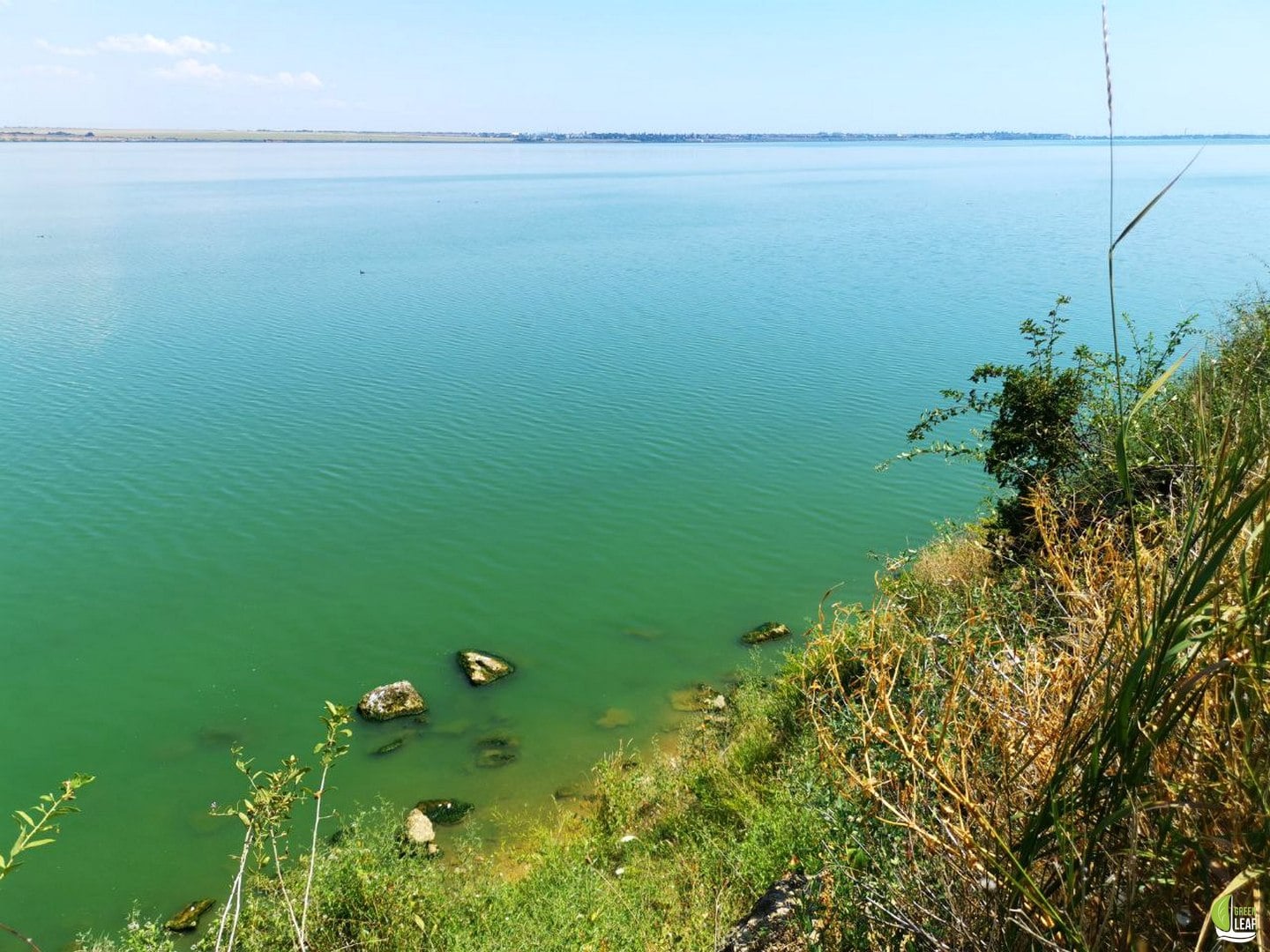
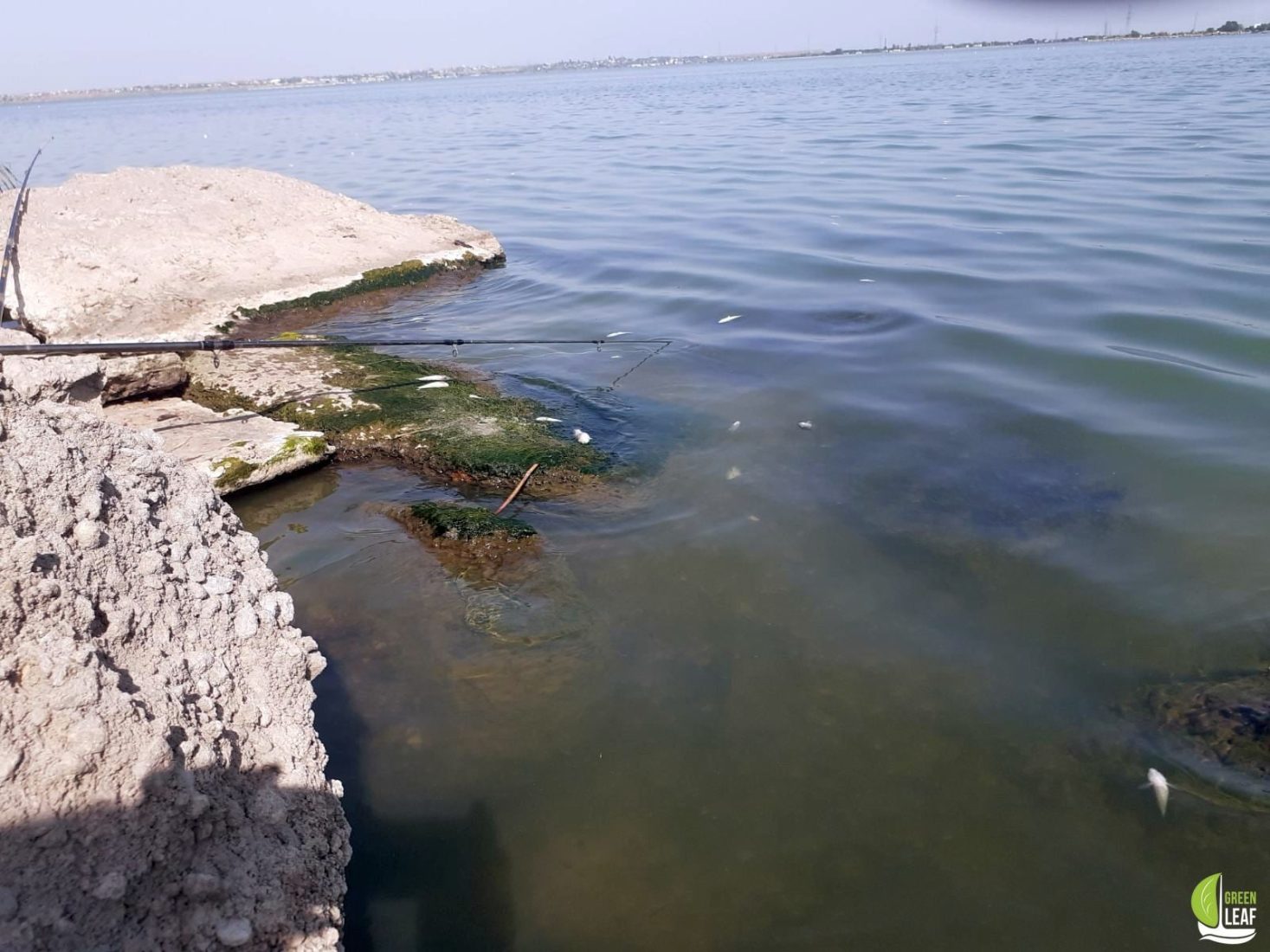
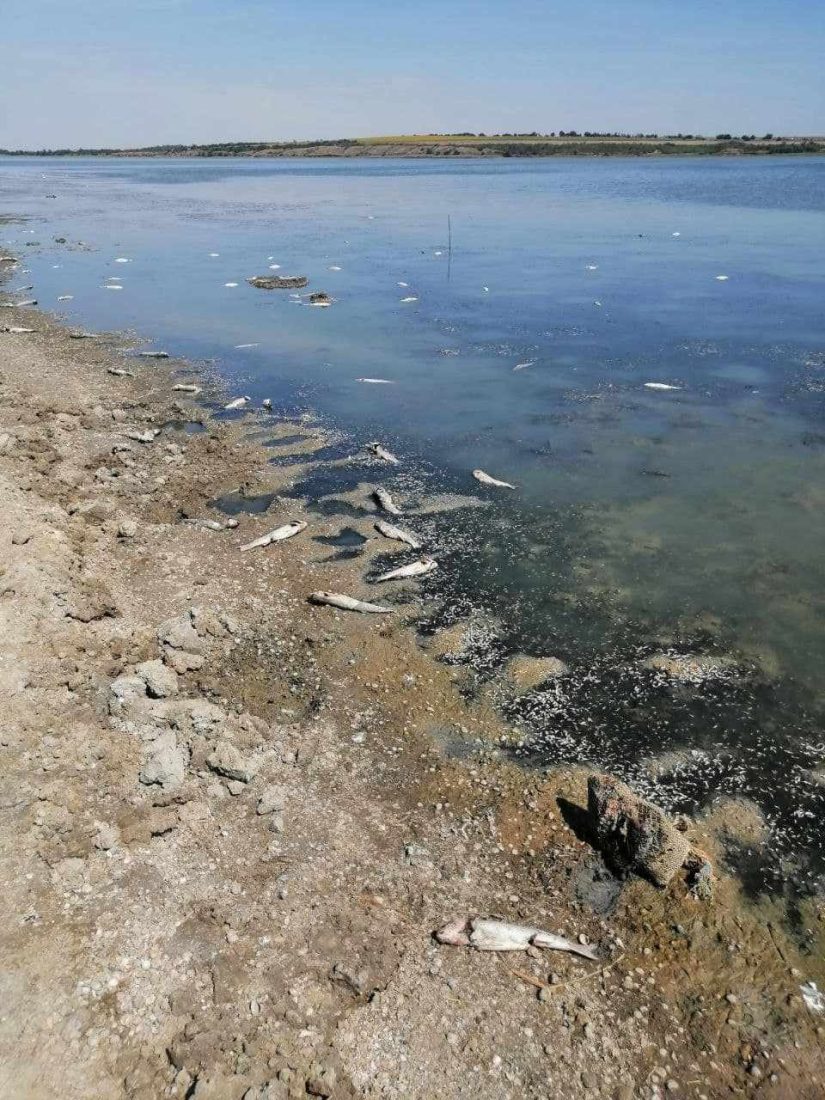
Algal bloom in the Khadzhibey Estuary near NATI; fish kill in the Khadzhibey Estuary, Nerubaiske village, July 2021. Photo: Vladyslav Balinskyi.
For example, ammonium nitrogen concentrations in samples taken near the outlet head of SBO “Pivnichna” on 30 June 2020 exceeded the MPC by dozens of times. In fact, the sample values corresponded to the concentration of urea in untreated sewage. On other dates, pollutant levels also exceeded MPCs, although not as dramatically.
The quality of wastewater treatment in Odesa no longer meets modern requirements
The reason is that the wastewater-treatment process line at SBO “Pivnichna” is significantly outdated and requires modernization. The quality of wastewater treatment no longer meets modern requirements. I do not think I would be far wrong in saying that most of the time the effluent discharged into Khadzhibey in summer and into the Black Sea near Luzanivka in winter had been treated only to remove solid matter. In other words, it essentially flowed straight from toilets.
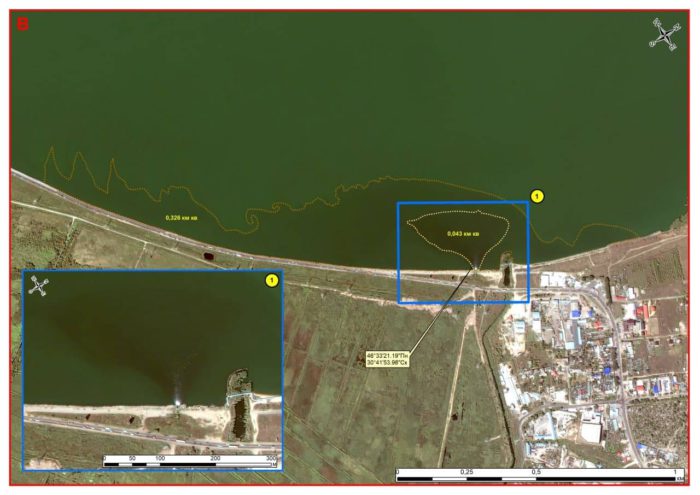
Pollution of the surface waters of the Khadzhibey Estuary by SBO “Pivnichna”
Since the 1960s, municipal sewage effluent from SBO “Pivnichna” was directed either to the Khadzhibey Estuary (in winter) or to Odesa Bay near Luzanivka Beach during the autumn-winter period. The following data come from the State Environmental Inspectorate for Environmental Protection of the North-Western Black Sea Region in its response to parliamentary inquiry No. 3128/2 of 28 October 2009.
Wastewater discharged into Odesa Bay during 2008, with a total volume of 25,147,000 cubic metres during the autumn-winter period, contained:
– 258 tonnes of heavy metals;
– 265 tonnes of BOD5 (readily oxidizable organic pollutants);
– 150 tonnes of ammonium nitrogen.
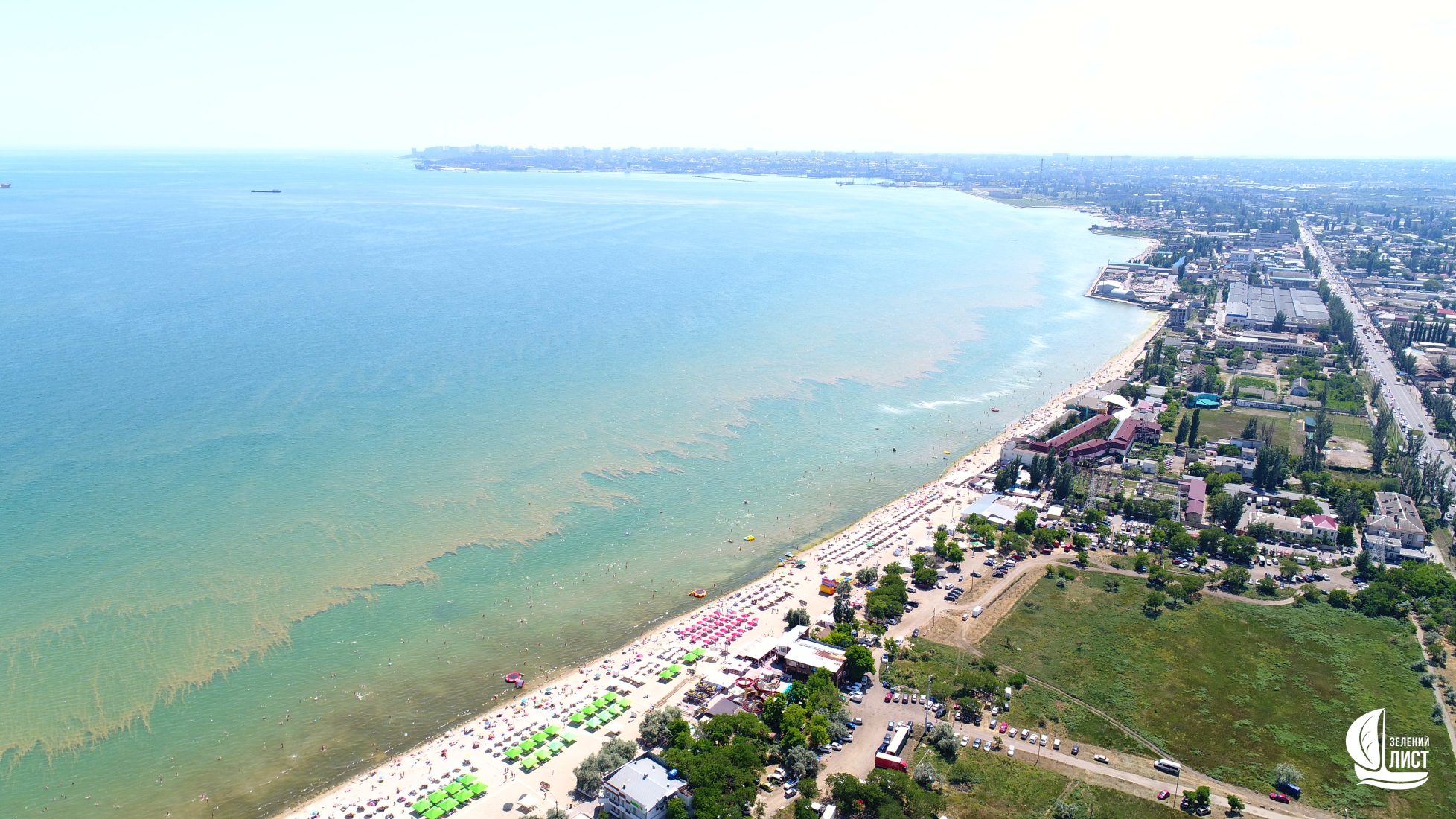
Because the Khadzhibey Estuary is a closed water body, the long-term input of pollutants has led to the accumulation of toxic bottom muds with high levels of organic matter and nutrients. The freshening and pollution caused by Odesa’s sewage system also strongly affect the ecological condition of shallow Odesa Bay.
That is why specialists reached an unequivocal conclusion in their reports:
““To improve the ecological condition of the coastal waters of the Odesa area in the north-western Black Sea region, the treatment facilities of SBO ‘Pivnichna’ and ‘Pivdenna’ must be reconstructed and new technologies introduced to improve wastewater-treatment quality” (O. Yu. Sapko, Yu. S. Tuchkovenko, Doctor of Geographical Sciences, ODEKU, “Trends in Changes in Anthropogenic Pressure on Coastal Zones”).
Artificial replenishment of the Khadzhibey Estuary
However, anthropogenic pollution is only one part of the Khadzhibey Estuary’s problems. Until the beginning of the twentieth century, the estuary existed as a classic saline Black Sea liman. The natural freshwater runoff from the Malyi Kuialnyk and Svyna rivers became insufficient to maintain the estuary’s freshwater balance at least 250 years ago. Only anthropogenic sources — discharges from filtration fields and, from the early 1960s, from SBO “Pivnichna” — gradually freshened the estuary and raised its level. More recently, rapid climate change has doubled the annual water-balance deficit of the Khadzhibey Estuary compared with the period before 1990, from 20.1 to 41.0 million m3 per year. At the same time, over the last decade, rising water prices for consumers significantly reduced the volume discharged from SBO “Pivnichna”, from 84.9 million m3 per year in 2005 to 54.8 million m3 per year in 2014–2015 (Bulletin of Odesa State Environmental University, 2017, No. 21).
Decision of the head of the Regional Military Administration as a cause of the shallowing of the Khadzhibey Estuary
As Green Leaf previously noted in the article “Deep-Water Outfall” — a corrupt legacy of the Yanukovych era, since March 2022, pursuant to a decision by head of the Regional Military Administration Maksym Marchenko, sewage effluent from SBO “Pivnichna” has been sent in full through the deep-water outfall into Odesa Bay. During the last two years, after replenishment of the Khadzhibey Estuary with water from SBO “Pivnichna” was stopped, we have observed the estuary drying out faster than respected scientists at Odesa Environmental University had predicted. This trend will accelerate. The rate at which the estuary dries is also affected by the dynamics of climate change, which ecologists could hardly have imagined even in their boldest forecasts ten years ago.
In December 2023, the State Environmental Inspectorate of the South-Western District, deeply concerned about the drying of Khadzhibey, even created a special commission. It inspected the upper reaches and dam of the Khadzhibey Estuary and recorded a decline in the water level from Yehorivka village to Paliivka village.
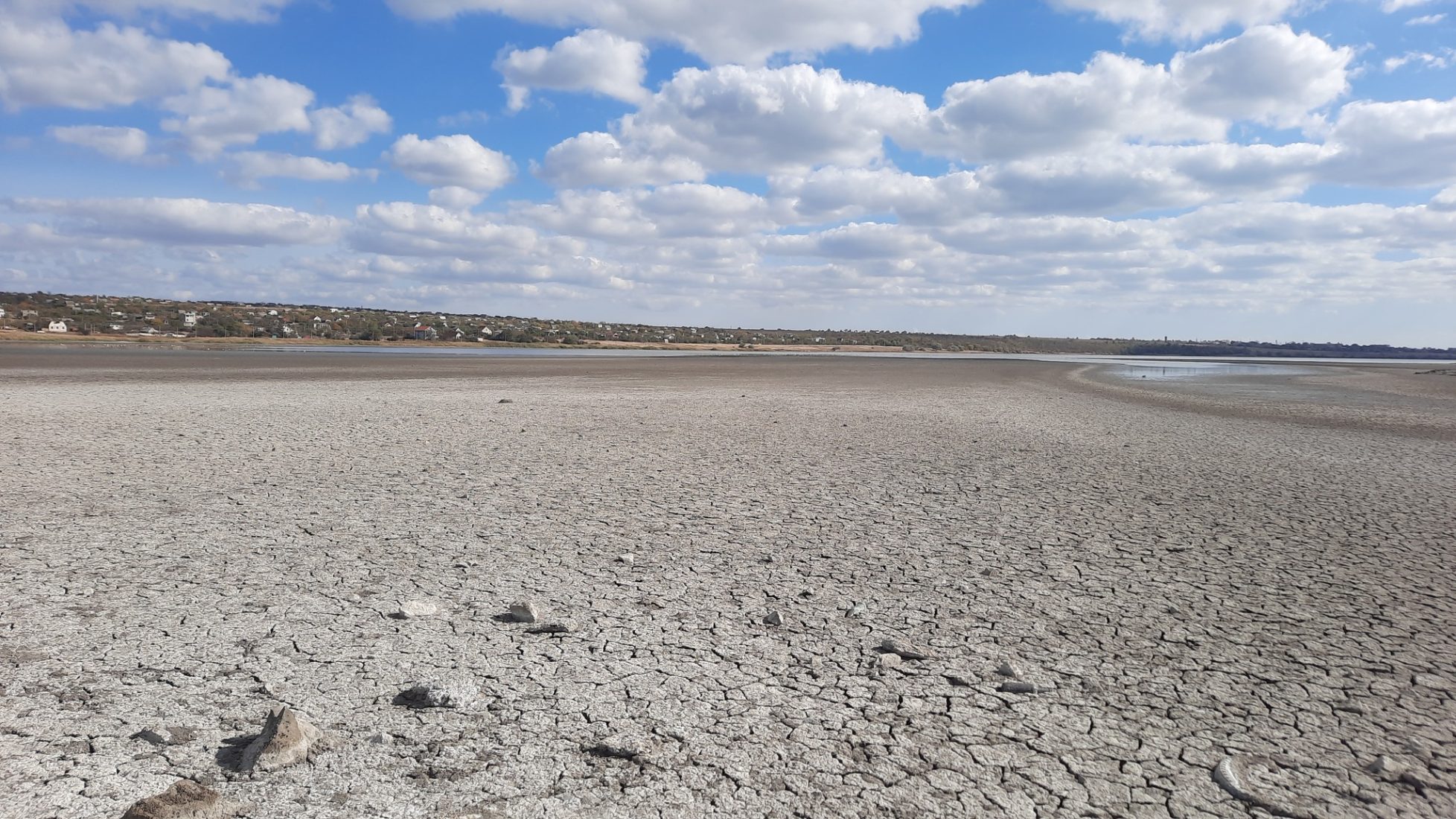
Photo: State Environmental Inspectorate of the South-Western District
Apparently, the Inspectorate had not seen Maksym Marchenko’s Order No. 63-A-2022 of 4 March 2022 and Order No. 7 of the Infoksvodokanal branch of Infoks LLC, also dated 4 March 2022, “On the discharge of domestic wastewater from SBO ‘Pivnichna’ into the Black Sea and termination of wastewater discharge into Khadzhibey”. To correct this situation and help the State Environmental Inspectorate of the South-Western District “find” the reason for the sharp decline in the Khadzhibey Estuary’s water level, we once again publish a copy of the memorandum from Infoks LLC submitted in response to a ruling of the Prymorskyi District Court.

If everything is left as it is, in the coming years we will see the water level in Khadzhibey rise slightly during autumn and winter, but less and less each year. In summer, the estuary will dry out, and the stench and fish kills will recur.
What causes the stench in Odesa
In brief, the process works as follows. As the water level falls during the summer heat, evaporation intensifies in the shallowest parts of the estuary. This increases the concentration of nutrients — substances most actively involved in the life processes of aquatic organisms, including mineral compounds of nitrogen, phosphorus, silicon, iron and others — as well as pollutants that entered the estuary earlier as a result of human activity. Shallow lagoons form in which nutrient-rich mud, greatly exceeds the amount of water. This triggers anaerobic decomposition.
High temperatures accelerate biological processes. During decomposition, dissolved oxygen in the water is finally depleted and a mass die-off begins. When this occurs underwater, aquatic organisms also die, but little of the smell reaches the air. When large areas of the bottom are exposed, the organic content of the mud — hundreds or thousands of tonnes — becomes involved in the die-off and decomposition process. The odour spreads freely and is carried by the wind over long distances. Decomposing dead fish and organic matter release hydrogen sulfide, methane, mercaptans (thiols) and other foul-smelling gases. Wind from the direction of the estuary, including the night breeze, can carry the unpleasant odour across large areas of the city.
It is clear that the problem of the Khadzhibey Estuary must be addressed urgently. Can its condition be improved? Yes — if restoring the estuary and improving seawater quality in Odesa Bay are approached comprehensively.
What kind of seawater do Odesa residents and visitors swim in?
What happens to the seawater near the Odesa coast when domestic wastewater from SBO “Pivnichna” is discharged into the Black Sea?
To answer this, we need to describe the main hydrometeorological processes that determine the direction and dynamics of the physical distribution of pollutants and freshening factors within the semi-enclosed volume of Odesa Bay.
Let us turn to the scientific literature. But first, several important terms from hydrophysics.
Thermocline or temperature-jump layer (zone) — the boundary and transition zone between two vertical water layers with different temperatures.
Halocline — a water layer in which salinity changes rapidly with depth.
Advection of seawater — horizontal and vertical movement of water. Depending on physical and geographical conditions, seawater advection is caused by thermohaline and mechanical factors.
Upwelling — the rise of deep water into upper layers. It most often occurs under offshore winds in coastal areas, where directed winds and currents raise water from depths of 100–300 m.
Thermohaline circulation is part of large-scale ocean circulation driven by differences in water density caused by freshwater and heat fluxes. The term “thermohaline” combines two components: “thermo”, meaning temperature, and “haline”, meaning salinity. Together these two factors determine seawater density.
There is indeed an international practice of discharging treated wastewater beyond the shelf break or at depths well below the thermocline. In this way, bottom relief or hydrophysical factors such as the thermocline and halocline isolate the wastewater from mixing with the biologically productive surface layer and remove it from active trophic processes.
Wastewater from the “Deep-Water Outfall” can mix with the waters of Odesa Bay
Odesa Bay, like the entire north-western Black Sea region, is a shallow shelf area with corresponding depths and seabed topography. Depths suitable for the classic approach of deep-water wastewater discharge lie almost one hundred kilometres from the Odesa coast. As for the so-called Main Black Sea Current, it too lies farther offshore than the four kilometres provided for by the “Deep-Water Outfall” project.
As many authors have shown, the wind regime has the decisive influence on the hydrological characteristics of Odesa Bay (Ye. I. Hazetov, V. I. Medinets, L. N. Repitin). According to the results of wind-regime monitoring in Odesa Bay in 2016–2017, the following was established:
- “the wind regime in Odesa Bay in 2016–2017 differed significantly from that of the preceding 100 years: the frequency of north-easterly and south-westerly winds increased, intensifying water advection from the mouth of the Dnipro-Buh Estuary and the upwelling of deep waters from the north-western Black Sea region;
- seasonality in the formation of the thermo- and halocline during spring-summer warming and autumn-winter cooling in Odesa Bay in 2016–2017 was disrupted under certain meteorological conditions; in July-August 2016 and 2017, stable vertical density stratification was recorded in the coastal zone of Odesa Bay and could have caused hypoxia in near-bottom marine layers;
- average monthly surface-water temperatures in 2016–2017 exceeded the long-term values for Odesa for 1915–2011 by 0.3–0.4°C in February and October and by up to 3.4°C in April and July.”
In other words, depending on meteorological conditions, wastewater from the “Deep-Water Outfall” can mix with the waters of Odesa Bay and circulate along Odesa’s beaches.
Odesa Bay is extremely vulnerable because of climate change and Russian aggression
The study also confirmed the growing negative influence from the Dnipro-Buh Estuary, which, against the background of rising surface temperatures, makes Odesa Bay extremely ecologically vulnerable! Recall how Russia’s destruction of the Kakhovka Dam on 6 June 2023 led to a series of consequences that directly or indirectly affected the capacity of the Odesa Bay biocenosis for self-purification.
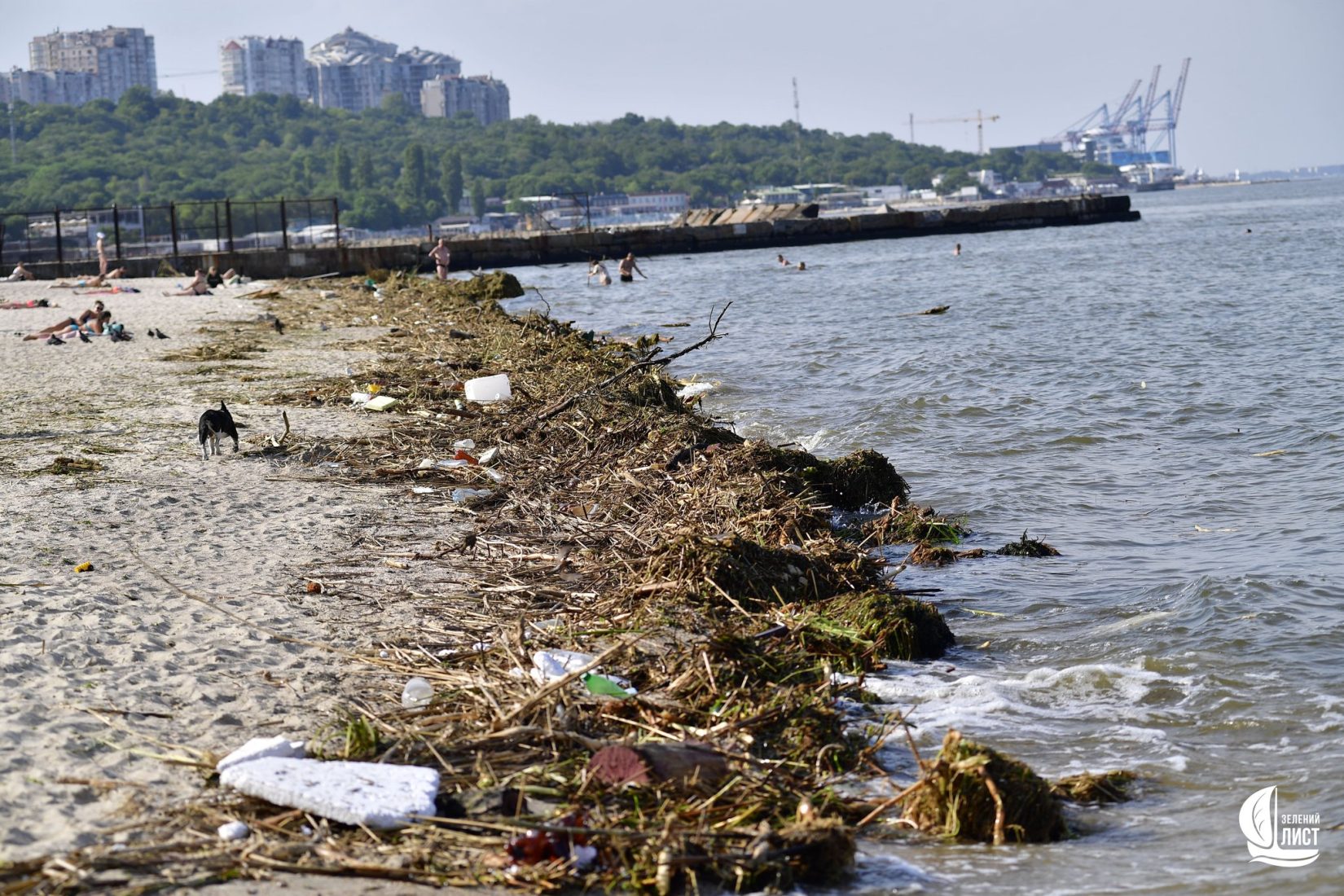
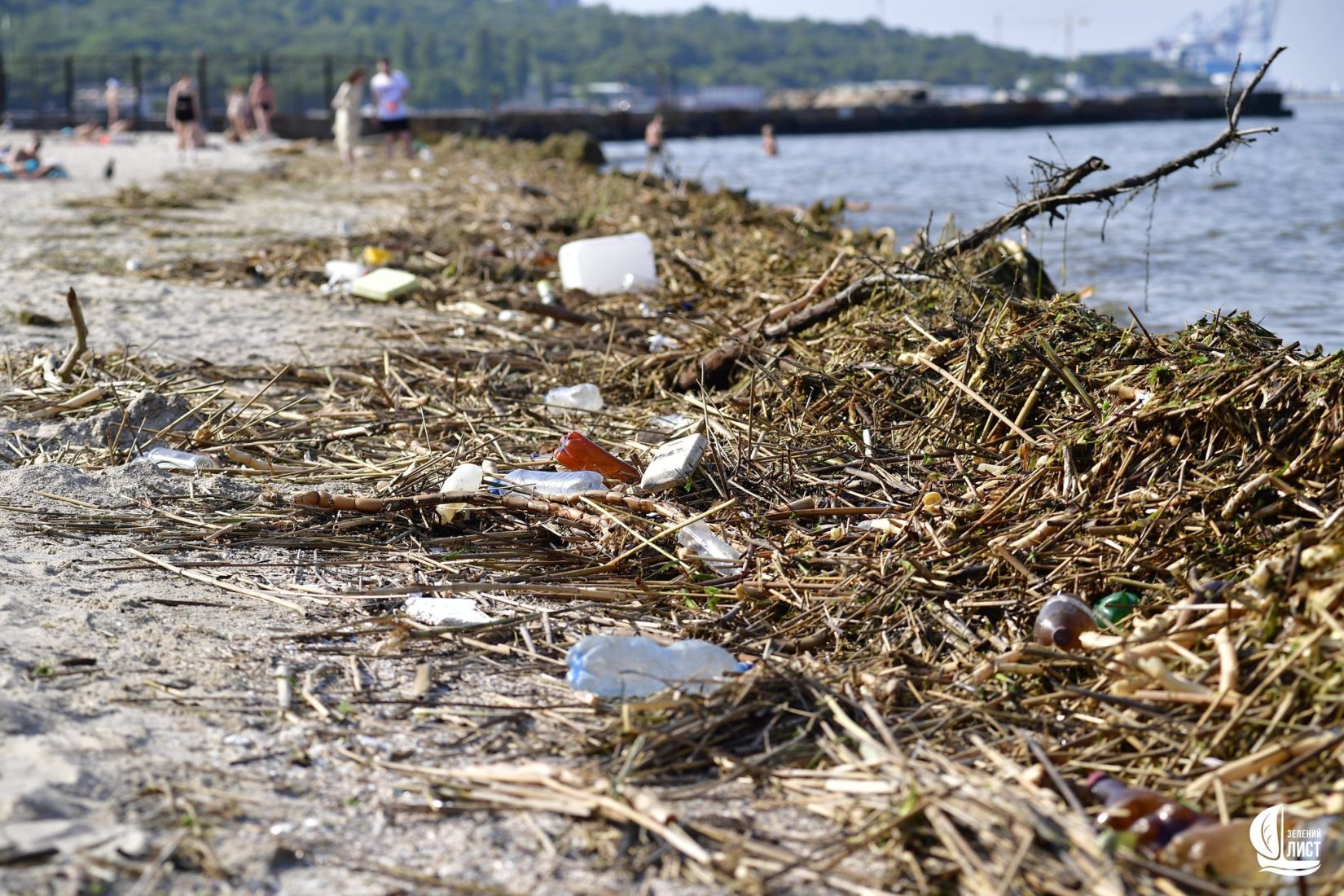
Odesa, Sobachyi Beach, 11 June 2023. Photo: Vladyslav Balinskyi
These include the mass mortality of filter-feeding mussels and the accumulation of large quantities of pollutants on the bottom of the Dnipro-Buh Estuary. But it must look strange to our international partners when, against the backdrop of investigative actions by the Specialized Environmental Prosecutor’s Office in Odesa Oblast concerning Russia’s ecocide, we overlook the industrial discharge into Odesa Bay during summer of wastewater that is, at the very least, of poor quality.
Scale of anthropogenic pressure on Odesa Bay
Let us estimate the scale of anthropogenic pressure. The design capacity of the “Deep-Water Outfall” project is 146 million m3 , or 0.146 km3 of wastewater per year. Odesa Bay covers 38 km² and has an average depth of 9 metres. Thus, the total volume of the bay is 0.342 km3. As we can see, in just over two years, SBO “Pivnichna” could notionally fill the entire volume of Odesa Bay with wastewater.
And this does not yet take into account so-called emergency storm-sewer outlets with unauthorized connections; groundwater from drainage tunnels; untreated sewage from Kryzhanivka; street runoff from the entire Peresyp district, where there is no storm-sewer system; the contribution of SBO “Pivdenna”, the ports, and other sources. I invite readers to answer for themselves what kind of seawater Odesa residents and visitors are swimming in.
Consequences of wastewater discharge into Odesa Bay
It should also be noted that the hydrological regime of Odesa Bay as a whole forms in a shallow, semi-enclosed water area where seawater mixes with runoff from the Dnipro, Southern Buh and Dniester rivers under the influence of wind-driven currents (E. I. Hazetov, V. I. Medinets, 2018). In other words, the powerful freshening and pollution influence of the large rivers must also be taken into account.
Can several pollution factors combine under particular weather conditions and reinforce one another? Monitoring results show that they can. It is no coincidence that the renowned marine biologist and Academician of the National Academy of Sciences of Ukraine Yuvenalii Petrovych Zaitsev also spoke out against the “Deep-Water Outfall” project: “Four kilometres from the shore is no distance at all; the first onshore wind will bring the waste back to the coast.”
All the consequences and risks associated with the year-round inflow of wastewater into Odesa Bay since March 2022 are a separate, extensive subject. For now, to describe them, we will provide only several important terms.
Environmental terms
Bioaccumulation – a term describing the ability of heavy-metal ions and a number of other pollutants to accumulate in human and animal organs and tissues.
Eutrophication – enrichment of water bodies with nutrients, accompanied by increased biological productivity. The main chemical elements contributing to eutrophication are phosphorus and nitrogen. Unbalanced eutrophication can cause explosive algal growth (water blooms) and the appearance of cyanobacteria that release toxins during blooms — alkaloids and low-molecular-weight peptides capable of poisoning people and animals — and can also cause oxygen depletion and the death of fish and other animals.
Harmful algal blooms (HABs) – algal blooms that harm other organisms through the production of natural toxins, mechanical damage, or other mechanisms. HABs are often associated with large-scale marine mortality events and various cases of shellfish poisoning.
Hypoxia-related die-off, or fish kill — the death of fish and other aquatic animals because of reduced dissolved oxygen in the water and/or the presence of toxic substances.
Biological pollution – the introduction into water bodies, with wastewater, of various microorganisms, plants and animals — viruses, bacteria, fungi, worms — that were not previously present there. Many are pathogenic to humans, animals and plants. Common diseases include cholera, dysentery and hepatitis.
Deterioration of the sanitary and epidemiological situation
In the coming years, we will record an increased likelihood of fish kills and toxic blooms and a deterioration of the sanitary and epidemiological condition of seawater in Odesa Bay.
Nature responds to increasing anthropogenic pressure through species loss and the decline of ecosystems’ self-purification capacity. Halyna Terenko, an algologist at the Ukrainian Scientific Center of Ecology of the Sea (UkrSCES), has repeatedly spoken about the increasing intensity of toxic blooms in Odesa Bay and the associated risks. Halyna Minicheva, Doctor of Biological Sciences, algologist and head of the Institute of Marine Biology of the National Academy of Sciences of Ukraine, has also repeatedly warned about the nature and risks of large-scale die-offs such as the one that occurred off the Odesa coast in 2010.
However, despite these risks, ecologists aligned with the Odesa Regional Military Administration continue, according to the article, to sign off on what it describes as overtly corrupt schemes, hoping to receive crumbs from the table in the form of monitoring, design and/or clean-up programmes. The Prymorskyi District Court of Odesa may write in every decision that the “Deep-Water Outfall” project performs its environmental functions, but this does not change what the article characterizes as the fundamentally anti-environmental and corrupt nature of the scheme.
How can seawater quality near Odesa be improved and Khadzhibey restored? Ecologists’ recommendations
Even at the beginning of the development of the “Deep-Water Outfall” project, ecologists wrote in their studies that effluent from SBO “Pivnichna” and SBO “Pivdenna” should be viewed not as sewage waste that must simply be disposed of, but as a source of technical freshwater.
We live in a water-scarce region, and even then it was clear that Odesa would face freshwater shortages. The freshwater Khadzhibey Estuary has existed since the beginning of the last century thanks to anthropogenic water replenishment, and since the 1960s this has included effluent from SBO “Pivnichna”.
Scientists warned that untreated wastewater must not simply be poured thoughtlessly into the sea: it should be treated and used as technical water for the needs of the Odesa agglomeration. They pointed out that the Dniester is a highly unreliable water source, so drinking water must be conserved, while technical water should be used for municipal needs and climate adaptation — watering vegetation, filling ponds, replenishing Khadzhibey and, after additional treatment, the Kuialnyk Estuary.
However, regional and city officials ignored all these proposals. On the contrary, the article argues that environmental problems were used to advance corrupt projects.
Instead of monitoring and regulating the estuary’s water level through its water source, the discharge of effluent from SBO “Pivnichna” into Khadzhibey was delayed, according to the article, in order to speculate about the threat of flooding Odesa and carry out repeated “reinforcement” of the dam. All previous expenditures since 2006 are listed here. Now that wastewater is being discharged only into the sea, it is clearly visible that the water level in the estuary is falling rapidly.
How the Odesa Regional Military Administration addresses these environmental problems
The Regional Comprehensive Environmental Protection Programme for Odesa Oblast for 2024–2028, which we have repeatedly written about, devotes considerable space to the problems of the Khadzhibey Estuary. But how do the regional authorities propose to solve them? It is no longer even funny. Although the descriptive section of the programme says that pollution of the Khadzhibey Estuary is a serious problem for Odesa Oblast, it does not say a word about the fact that the estuary’s level directly depends on effluent from SBO “Pivnichna” or that this wastewater needs to be treated. As before, money is allocated to the same dam repairs and to reducing — yes, reducing — the water level in the estuary.
Item 4.1.6: UAH 30 million for yet another repair of the Khadzhibey Estuary dam. Again the company “Rostdorstroy”, so favoured by officials!
Item 3.2.3: reconstruction of the discharge canal from the Khadzhibey Estuary to SPS-25 in Odesa, across the irrigation fields, for UAH 238 million. Apparently for the expansion of the “Dry Port”, owned by the private company Euroterminal LLC, as a connection to the controversial project described in the article as corrupt“Deep-Water Outfall”.
Items 4.2.8–4.2.14: the programmes provide an extraordinarily large sum — more than UAH 860 million — for design work, restoration of the river channel, improvement of the hydrological state of the Kuialnyk River channel, and scientific studies and a working design for replenishing the Kuialnyk Estuary with polluted water from the Khadzhibey Estuary.
First, the Kuialnyk Estuary has the status of a resort of national significance, and discharging even conditionally treated Khadzhibey water into it is categorically prohibited. Second, since 1 January 2022 the Kuialnyk Estuary, its coastal protection strips and some forest areas have had national nature park status; therefore, carrying out any large-scale works within its boundaries without taking into account the goals and objectives of the national park is inappropriate and dangerous for biodiversity and natural ecosystems, especially if polluted water from the Khadzhibey Estuary is used. Third, how can Kuialnyk be replenished with water from Khadzhibey when Khadzhibey itself is drying out?
Conclusions
First of all, SBO “Pivnichna” must be modernized, with additional equipment installed to treat the wastewater and produce clean technical water.
SBO “Pivnichna” discharges up to 60 million m3 of water into the sea each year. Of this, 30–40 million m3 per year would be entirely sufficient to maintain the water level in Khadzhibey. The remaining water, but only after additional reverse-osmosis treatment, could be directed to the Kuialnyk Estuary.
SBO “Pivdenna”, located in Odesa’s Kyivskyi District, also requires reconstruction. Its treated effluent would be sufficient for watering urban greenery and replenishing the city’s ponds.
Instead of repeatedly spending enormous public funds on projects that will achieve nothing and may instead harm the environment, authorities should listen to specialists and address the region’s serious environmental problems with their assistance. Russia’s military aggression, ecocide and rapid climate change leave the vulnerable Odesa region no time to waste.
Vladyslav Balinskyi chemist, biologist, editor-in-chief of the Green Leaf newspaper.