

Chronicle of Russia’s War Crimes Against Ukraine’s Environment: Odesa Oblast, March 2024
Two years after the start of the hot phase of the war, Russian forces shifted to a new tactic — terrorizing civilians in order to create a humanitarian catastrophe. In Odesa and Odesa Oblast, this tactic manifested itself in March 2024, which became one of the most terrible months in the history of Ukraine’s struggle against the Russian invaders. Daily drone and missile terror, large-scale attacks with mass civilian deaths, including small children. A new double-strike tactic was tested: first a target is hit, then firefighters and medics who arrive to rescue the injured and extinguish the fire. The first major strike on an energy facility was against the Dnipro Hydroelectric Power Plant.
We collect facts about Russia’s crimes against the environment of Odesa and Odesa Oblast during the war: environmental pollution caused by explosions and damage to infrastructure, contamination of air, water and soil with toxic substances, destruction of ecosystems in protected areas and internationally important conservation sites, and more. We will update the information daily, so please send any facts known to you to: zeleniy.list1@gmal.com
Read More

Why Did Odesa Authorities Hide UAH 1.1 Billion?
The February 21 session of Odesa City Council left many questions unanswered, especially regarding the distribution of budget balances from previous periods. Green Leaf examined the issue in detail.
Figures for undistributed budget balances
The city ended the 2023 budget year with large balances in City Council accounts, which according to the city office of the State Treasury amounted to UAH 1,537,806,632.66.
It should be noted that these budget-balance figures are reflected exclusively in the State Treasury Service report on execution of Odesa’s budget, or can be obtained by submitting a request to the Treasury, because this information is not shown in the city budget decision for the current year.
Of these funds, UAH 2,000,000 of the general fund constitutes the working balance of budget funds — the amount that cannot be spent.
All other funds, under Article 72 of the Budget Code of Ukraine, both in the general and special budget funds, may be used to cover the budget deficit by amending the local budget decision.
However, by its February 21 session decision, the city authorities used only UAH 418,097,530 to cover the budget deficit. As for the rest of the money, the city authorities, as usual, pretended that it did not exist.
If all figures are compiled in a table separating the general and special funds, the result is as follows:
| Indicators | General fund | Special fund | Total |
| Budget balance at the end of 2023 | 1 435 194 254,56 | 102 612 378,10 | 1 537 806 632,66 |
| Working balance of budget funds in 2024 | 2 000 000,00 | 2 000 000,00 | |
| Budget balance excluding the working balance as of January 1, 2024 (funds that may be directed to expenditure financing) | 1 433 194 254,56 | 102 612 378,10 | 1 535 806 632,66 |
| Budget balances used by the decision of February 21, 2024 | 340 152 330,00 | 77 945 200,00 | 418 097 530,00 |
| Unused budget balance | 1 093 041 924,56 | 24 667 178,10 | 1 117 709 102,66 |
Conclusion
These actions by the city authorities may indicate the following:
1. The unwillingness of Odesa City Council to fully fund the Armed Forces of Ukraine and the city’s territorial defense.
2. From the perspective of the Odesa City Council leadership, an absence of problems in the city that require municipal budget funding.
3. By creating a UAH 1.1 billion “stash,” the Odesa City Council leadership will later be able to use these funds to finance projects exclusively for “connected persons.”

Chronicle of Russia’s War Crimes Against Ukraine’s Environment: Odesa Oblast, February 2024
Two years of Russia’s full-scale invasion: continued missile and drone terror, killings of residents of the region, destruction of housing and civilian infrastructure.
We collect facts about Russia’s crimes against the environment of Odesa and Odesa Oblast during the war: environmental pollution caused by explosions and damage to infrastructure, contamination of air, water and soil with toxic substances, destruction of ecosystems in protected areas and internationally important conservation sites, and more. We will update the information daily, so please send any facts known to you to: zeleniy.list1@gmal.com
Read More
Green Leaf Investigation Conducted with Moldova’s TV8 Wins First Place in Competition
The Association of Environmental and Ecotourism Journalists of Moldova (AJMTEM) awarded first place to the cross-border investigation into the impact of the Transnistrian thermal power plant on Ukraine’s environment, “Hostages of the Moldavskaya GRES.” The investigation was conducted by journalists from Green Leaf NGO together with their Moldovan colleagues from TV8 with support from Journalismfund Europe.
President of the Republic of Moldova Maia Sandu was among those who attended the award ceremony.
From the award ceremony. Photo from the internet
The investigation examines the impact of the Moldavskaya GRES power plant operating in the territory of the unrecognized Transnistrian region. It is the largest power plant in Europe.
At the same time, Ukrainian villages suffer from the operation of the power plant in the so-called PMR: Lymanske and Kuchurhan face the threat of flooding, while Hradenytsi suffers from untreated toxic waste. The area of contaminated land on Ukrainian territory is about 130 hectares.
In addition, Ukrainian communities are forced to spend budget funds continuously, in effect supporting the technical operating cycle of the Moldavskaya GRES.
At the same time, Moldova is dependent on the operation of the thermal power plant in Transnistria for its energy supply. De facto, this means dependence on the separatist regime in the so-called PMR, backed by Kremlin leaders. The Moldavskaya GRES is owned by a Russian company headed by sanctioned businessman Boris Kovalchuk, a close associate of Russian President Vladimir Putin.
For a time, the Moldavskaya GRES even exported electricity to the EU, bypassing sanctions through the registration of a company in Chișinău.
Thus, while the Moldavskaya GRES earns money and fills the budget of unrecognized Transnistria, Ukraine is left with environmental problems, and Moldova remains critically dependent on the separatists and their Kremlin patrons.
Odesa Budget: What Is Being Prepared for the February 21 Session?
The Odesa City Council session scheduled for February 21 raises far too many questions, especially regarding amendments to the city budget. Green Leaf examined the issue in detail.
What financial resources does the city have available for distribution?
At present, the city has the ability to distribute more than UAH 3 billion in financial resources. This amount consists of:
1. Balances from previous periods totaling UAH 1,537.8 million. If UAH 2 million in working cash balance is excluded, the city can distribute UAH 1,535.8 million.
2. The reserve fund, which at the beginning of the year amounted to UAH 1,645.4 million, but was reduced by UAH 92.9 million — to UAH 1,552.5 million — by Odesa City Council Decision No. 1773-VIII of January 17, 2024. Under the Budget Code, the reserve fund is formed to cover unforeseen expenditures that are not permanent and could not have been anticipated when the draft budget was prepared. However, as Green Leaf previously noted, the Odesa authorities do not use the reserve fund for its intended purpose.
What is proposed to be changed in the city budget
On the city’s official website, in the section “Draft City Council Decisions”, there is only a draft decision on amendments to the city budget, published on February 7 and 9.
If these changes are presented in table form, they look as follows:

More extensive changes to the draft are introduced by Amendment No. 1 of the Standing Commission on Planning, Budget and Finance. But there is no point looking for it on the official website. Although the amendment was sent to deputies on the afternoon of Friday, February 16, it was still absent from the city’s official website on Friday evening. Thanks to information sources in Odesa City Council and the assistance of Iryna Hryb, Green Leaf obtained the document.
An analysis of the proposed amendment gives us the following:
1. The city’s revenue receives UAH 18,255,108 from the regional budget from the unused balance of the education subvention carried over at the beginning of the budget period.
2. UAH 3,504,586 is allocated from balances of previous periods to finance expenditures.
3. The expenditure side, broken down by chief spending units, is as follows:

The figures reveal nothing fundamentally new. They include multimedia equipment for schools, financed both from the subvention and co-financing from the city budget, as well as office equipment for executive bodies. There are also expenditures to close out contracts concluded in previous years for major repairs of Shota Rustaveli Street and the passage from Zhytomyrska Street to Ovidiopolska Road. And all of this is financed mainly by reducing the reserve fund.
The only unclear point is why the draft budget contains no proposal from any city council deputy on distributing the deputies’ fund. It is also unknown whether any such proposals were submitted by deputies at all.
In summary
Looking at the proposed draft amendments to the city budget, it is hard to escape the feeling that either the city authorities are completely incompetent or the city authorities themselves consider Odesa residents fools.
With about UAH 2.8 billion still undistributed, it is difficult to believe that the UAH 337.2 million included in the budget under budget program 2218240 for purchasing equipment and durable goods for volunteer formations and military units of the Territorial Defense Forces of the Armed Forces of Ukraine — most of which, though not all, can be transferred to the Armed Forces — is an adequate contribution to the fight against Russian aggression.
This is despite protesters demanding every week that the city authorities direct funds specifically toward the immediate needs of Armed Forces personnel defending Ukraine at the front.
Another possible scenario is that part of the money is being held back to finance projects opposed by the public, or that additional financing has to be found because of negligence by local officials.
Green Leaf has already written about problematic unfunded city projects, including uncertainty over what sources will be used to replace the UAH 191 million returned to the state budget because of negligence by the Capital Construction Department or the still-uncancelled contract for reconstruction of the Kyiv District Court building, which became the trigger for the “Money for the Armed Forces” civic protests across the country.
In any event, Green Leaf will continue to monitor the city’s budget process closely.

Will Odesa City Council Fund Reconstruction of the Kyiv District Court Building in 2024?
Odesa authorities’ attempt to spend UAH 106 million on renovating the former kindergarten building that now houses the Kyiv District Court of Odesa led to the start of the civic protests “Money for the Armed Forces” in Odesa. The demands addressed to local self-government bodies — stop non-priority spending and direct local-budget funds to support the Armed Forces of Ukraine — immediately spread across the country. Odesa City Council deputies, not on their first attempt, managed to cancel UAH 12 million planned in the city’s 2023 budget and redirect the funds from the court renovation to more urgent needs.
On November 26, 2023, Odesa City Council deputy Petro Obukhov stated directly: “The Odesa City Council Budget Commission has finally voted to cancel funding for renovation of the Kyiv District Court. This is exactly why people came out to protest. We spoke at council sessions, but they did not want to hear us. Now the year is coming to an end, and the UAH 12 million allocated for this year can no longer be spent, so this UAH 12 million is being cancelled, and we will continue directing it to support the Armed Forces of Ukraine. No one will renovate this court next year. Next Wednesday we will formalize this at the session.”
The contract remains in force
Green Leaf decided to check the objective state of affairs as of today. The first thing that stands out is that the contract “Reconstruction of the building with an extension of additional premises, located at 3-B Varnenska Street, Odesa” remains in force. It appears that Odesa’s leadership never intended to stop the reconstruction. On December 7, 2023 — after statements that the funding had supposedly been cancelled — Additional Agreement No. 2 was signed.
The official ground for signing this additional agreement is stated as “improving the quality of the subject of procurement, provided that such improvement does not increase the amount specified in the procurement contract.” Cases in which essential contract terms may be amended are described in paragraph three of part five of Article 41 of the Law of Ukraine “On Public Procurement.” The law clearly states that quality is defined under the international ISO standard as the totality of characteristics of an object — activity or process, product, service, etc. — relating to its ability to satisfy established or anticipated needs.
The current Additional Agreement No. 2 does not touch Section II of the contract, “Quality of Work,” at all. It changes Section III, “Contract Price,” Appendix No. 2, “Work Performance Schedule,” and Appendix No. 3, “Work Financing Plan.” Under the circumstances, this looks highly manipulative. All work and budget expenditures are shifted to 2024.
For objectivity, we note that the current city budget contains no expenditure to finance this reconstruction contract. But then why all these additional agreements, you may ask. It is clearly a game, but it is interesting to see exactly how Hennadii Leonidovych intends to thread the needle on this issue.
Threading the needle
Because the contract for reconstruction of the former kindergarten building at 3-B Varnenska Street in Odesa, which now houses the Kyiv District Court of Odesa, remains valid, the Odesa authorities together with the contractor still have several mechanisms for implementing the contract. At present we see three main scenarios:
Scenario 1 — the reconstruction contract is terminated. This would satisfy the public, but clearly not Trukhanov, Chvankin, or Oleksandr Fridman, owner of PrJSC Odesholovpostach — a favorite of Odesa officials for budget-funded contracts — whom Green Leaf has already written about.
Scenario 2 — Odesa City Council votes to amend the budget so that UAH 106,134,345 is allocated from the budget to fulfill the contract. This would be stepping on the same rake again. Moreover, the public already remembers the deputies who previously refused to support amendments proposed by their colleagues to cancel the allocation of UAH 10 million for renovation of the Kyiv District Court.
Scenario 3 — repayment of accounts payable. Under this option, the contractor performs the work in 2024 but does not receive payment that year. In later years, either the city itself recognizes and repays the debt while placing the blame solely on the contractor, or the contractor goes to court and the court sides with the contractor because the contractor fulfilled the agreement while the city failed to pay for the work.
In any event, Green Leaf will continue to monitor this issue closely. Especially since volunteers did not believe Trukhanov either and, for the fifth month in a row, continue to gather outside Odesa City Hall every week at 10:00.

UAH 191 Million Worth of Negligence by Odesa’s Capital Construction Department
Green Leaf has already written that funds allocated to Odesa as a subvention under Cabinet of Ministers Order No. 534-r of June 16, 2023 were used during the war to dig up the city from one end to the other — from Bahrytskoho Street via Fontanska Road–Akademichna–Frantsuzkyi Boulevard–to Haharina Avenue. In total, UAH 340 million of UAH 475 million was directed to construction of a new branch of trunk water-supply networks for a high-rise commercial development. In other words, this part of the project was purely development-oriented from the outset. Many city residents had many questions about the priority of such work during a bloody war. Why is excavation being carried out hastily, without organizing detours, accounting for vehicle traffic, or considering the historic value of the cobblestone surface of Frantsuzkyi Boulevard? Why, in the end, should this work be financed from the state budget? Another UAH 135 million was directed to construction of a kindergarten at Pestelia Lane in Odesa and major repairs to Building G for the cardiology department of Municipal Non-Profit Enterprise City Clinical Hospital No. 11 at Akademika Vorobiova Street in Odesa. The city budget allocated part of the funds as co-financing.
In general, Green Leaf is very interested in the principle by which the state allocated a subvention to Odesa during wartime for an openly commercial project. A commercial road-construction corporation associated with Trukhanov and Angert is using public funds to expand the customer base of the commercial enterprise Infox LLC, owned by Mykola Zlochevskyi, including for the development of new sites for commercial high-rise construction. The formally social component of this subvention was provided by the kindergarten construction project and the cardiology renovation — apparently as cover.
Funds returned to the state budget
However, there is a serious problem. According to the Unified Web Portal for the Use of Public Funds, by the end of 2023 none of the listed facilities had been fully financed. The status of the contracts can be seen at the following links: 1. Construction of trunk water-supply networks: Phase 1; Phase 2; Phase 3; Phase 4 2. Construction of a kindergarten at 4 Pestelia Lane, Odesa 3. Major repairs to Building G for the cardiology department of Municipal Non-Profit Enterprise City Clinical Hospital No. 11 at 5 Akademika Vorobiova Street, Odesa
As it turned out, the city authorities, represented by the Capital Construction Department, failed to use the allocated funds, and at the end of 2023 more than UAH 191 million was returned to the state budget. The response of the Odesa City Council Finance Department to Green Leaf’s information request is shown below.
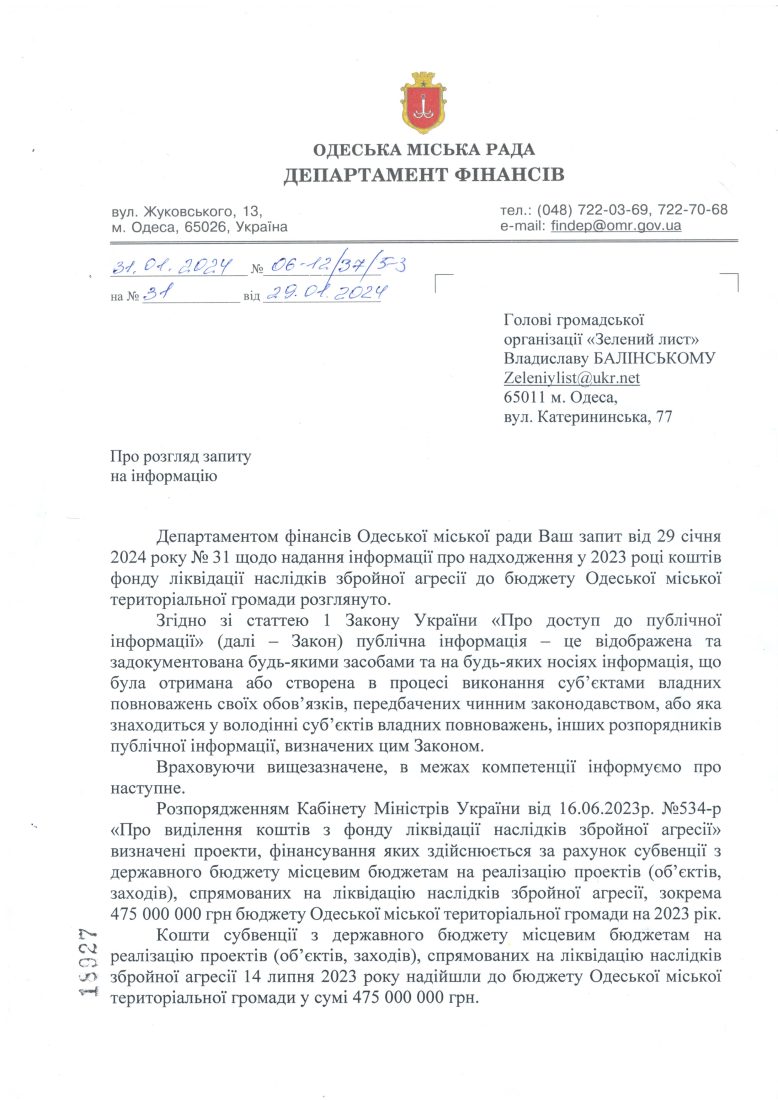
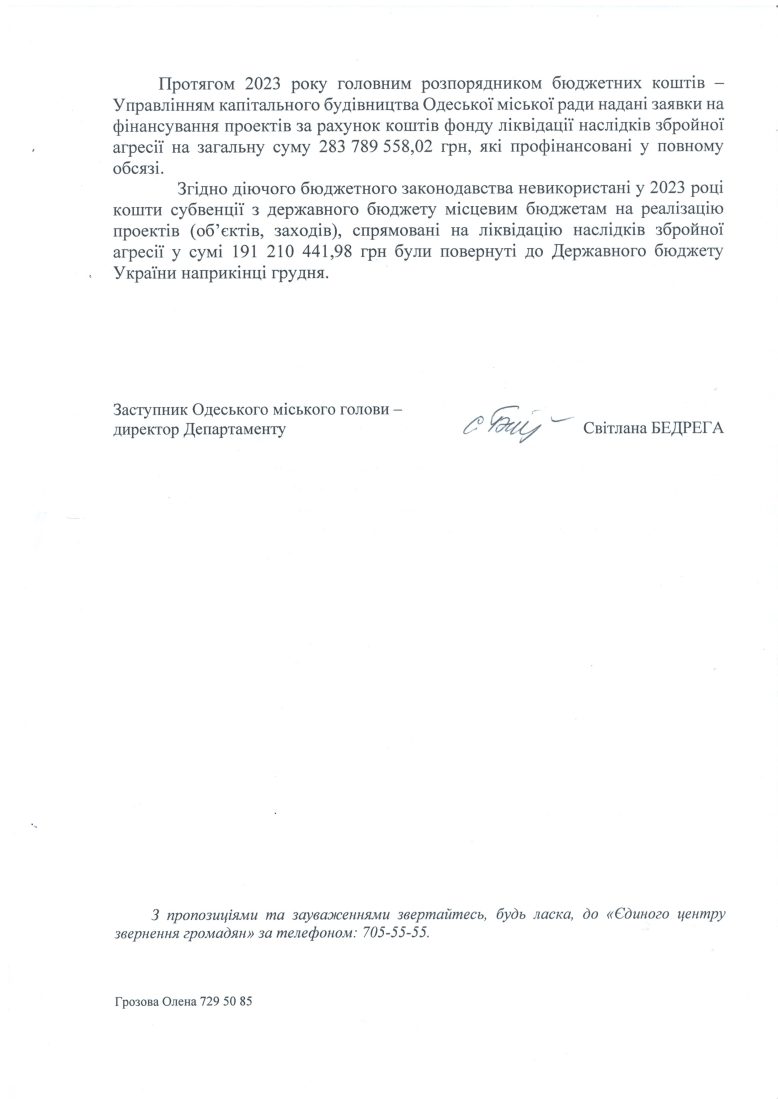
This raises a number of questions:1. Will officials be held responsible for negligence that resulted in unused funds being returned to the state budget?2. From what sources will financing of these projects continue in 2024 to replace the more than UAH 191 million that was lost? 3. How will engineering protection of the historic cobblestone roadway of Frantsuzkyi Boulevard be organized during the works? How will conservation be arranged if funding is unavailable?
In any event, Green Leaf will keep monitoring this issue. First, many questions remain for those who decided to allocate the funds “from above.” Second, it will be interesting to see how far Hennadii Leonidovych can stretch after the arrangements were cancelled. And third, trenches on Frantsuzkyi Boulevard during the autumn-winter period without drainage or conservation measures are already an offense in themselves.

Chronicle of Russia’s War Crimes Against Ukraine’s Environment: Odesa Oblast, January 2024
In the first month of 2024, the Russian army’s terror of Odesa continued. Russian forces practised the accuracy of missile and drone strikes on residential buildings and civilians.
We collect facts about the Russian Federation’s crimes against nature in Odesa and Odesa Oblast during the war: environmental pollution caused by explosions and damage to infrastructure, contamination of air, water and soil with toxic substances, destruction of ecosystems in protected areas and internationally important conservation areas, and more. We will update the information daily, so please send any facts you know to: zeleniy.list1@gmal.com
Read more: Chronicle of Russia’s War Crimes Against Ukraine’s Environment: Odesa Oblast, January 202408.01.2024
At night, the Southern Defence Forces, using their air-defence units, shot down all eight enemy Shahed-131/136 drones that the Russians launched from the Black Sea toward Odesa Oblast and Mykolaiv Oblast.
Seven UAVs were destroyed over Odesa Oblast by air defenders from Air Command South, the Navy’s combined-force grouping and mobile fire groups, as well as other components of the Defence Forces; another one was destroyed over Mykolaiv Oblast.
Debris from one of the downed UAVs fell in an open area of Odesa district and caused a fire. The blaze was quickly extinguished. There was no destruction and no one was injured.
17.01.2024
At night, the Russian army attacked Odesa with drones. Eleven drones were shot down over the region. Most of them fell into the water, but debris from several struck civilian facilities. Three people were injured.
This was reported by the Southern Defence Forces, the Odesa Regional Military Administration and the city council.
As a result of the Russian attack, heating networks were damaged and 58 buildings in Odesa were left without heating. In total, the overnight attack on Odesa damaged 10 buildings, 124 apartments, more than 200 windows and 94 balconies, the city council reported. The buildings have gas, water and electricity. Heating is unavailable because a heating main and a heat chamber were damaged.

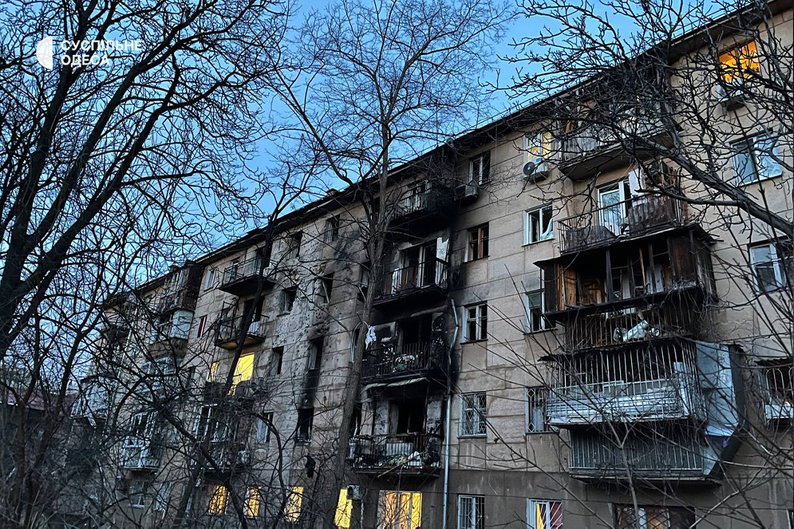
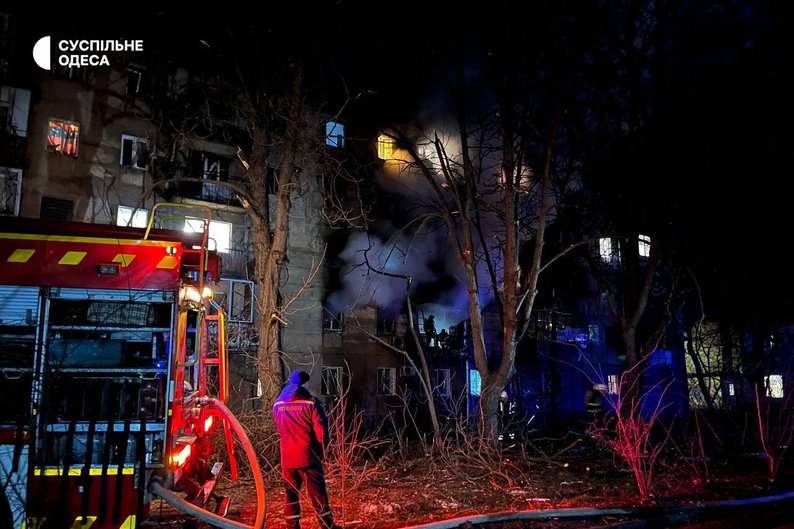
After the overnight drone attack on 17 January, the Russian army attacked Odesa Oblast with Oniks missiles before dawn, and strikes were recorded.
This was reported by the Southern Defence Forces of Ukraine.
The missiles struck agricultural land and an agricultural enterprise in Odesa and Bilhorod-Dnistrovskyi districts.

24.01.2024
On the evening of 24 January, air-raid sirens sounded in Odesa Oblast, followed by explosions. The enemy attacked the southern regions in two waves with Shahed-131/136 UAVs.
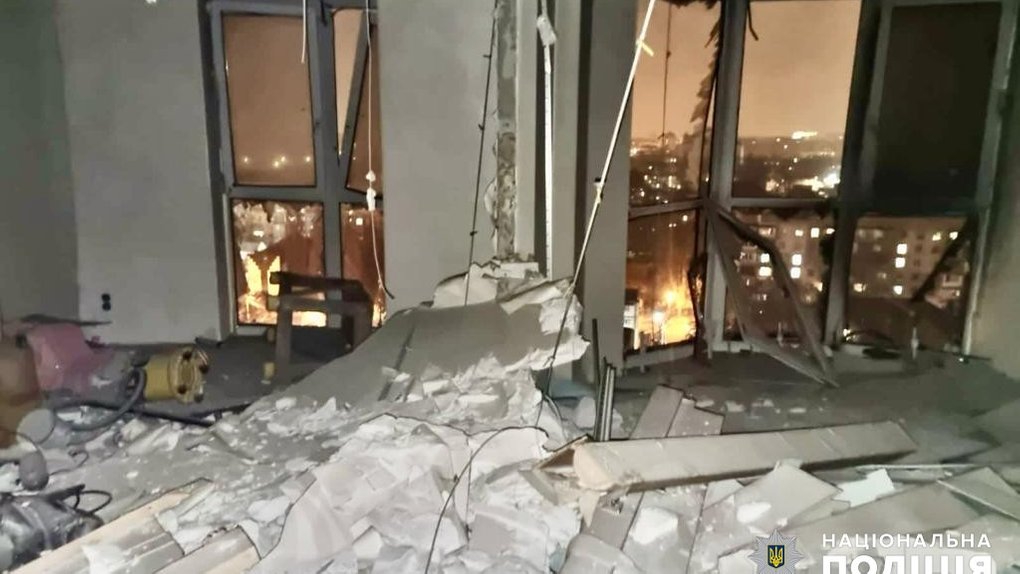
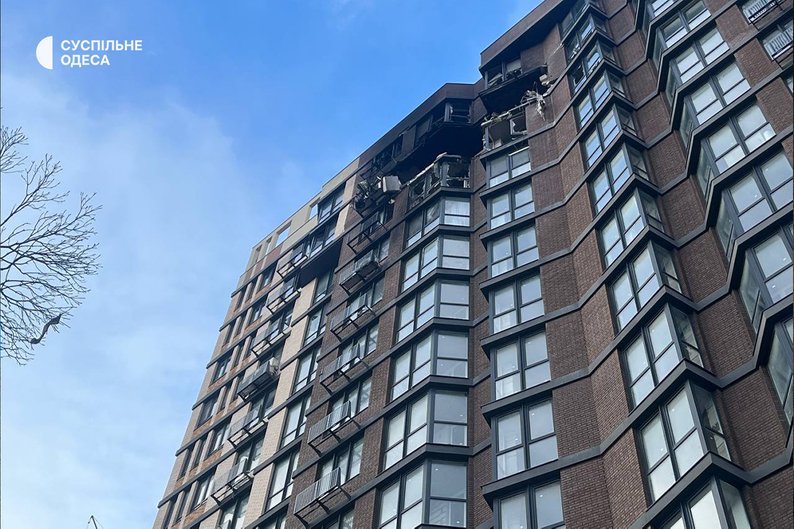
According to the Southern Defence Forces, air defence units shot down ten UAVs over the region. One of the downed drones struck a partially occupied newly built high-rise in Odesa’s Khadzhibeyskyi district and caused a fire. Several apartments were damaged; one person suffered burns and was hospitalised.
Another intercepted drone pierced the roof of a two-storey residential building in the city’s Prymorskyi district. Another UAV fell in the same residential neighbourhood, next to an apartment building damaged in the previous attack. The blast wave shattered windows in buildings, completely burned out a car parked in the courtyard and damaged several others. Four people were injured and received assistance at the scene. Rescuers freed one of the injured people from the rubble.
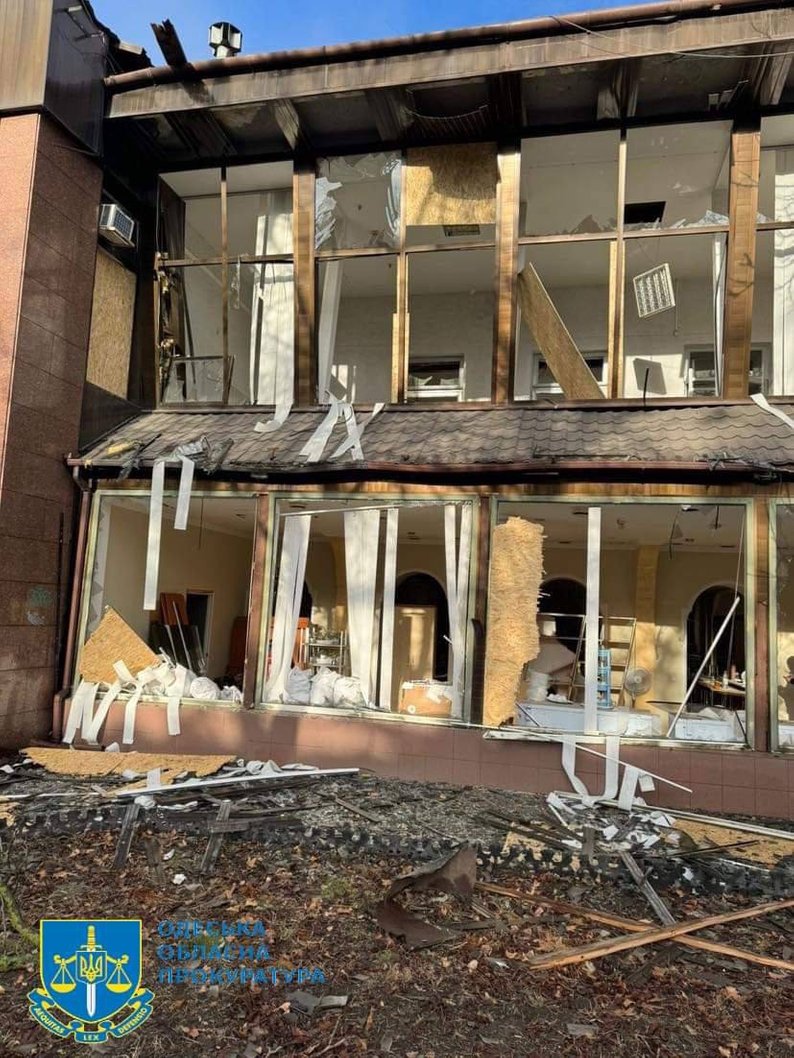
A warehouse at a furniture factory in Odesa’s industrial district was also hit. A man who was cycling nearby was injured by fragments of various objects and thrown to the ground by the blast wave. He received medical assistance.
As a result of the overnight Russian attack, 177 apartments were damaged in two districts of Odesa.

“Deep-Water Outlet” — a Corrupt Legacy of the Yanukovych Era
On 29 December 2023, the Prymorskyi District Court of Odesa, sitting as a panel, fully acquitted seven participants in the “Tarpan scheme” connected with the Deep-Water Outlet project , just before New Year, so to speak (case No. 522/10665/19, which Green Leaf has already covered). And what an acquittal it was — with honours! The reasoning cites numerous procedural violations by the prosecution, and purely formally this alone would have been entirely sufficient for Odesa’s judiciary to acquit all the defendants on all charges. But the court went further and, in a separate ruling effectively acted as a PR agent for the Deep-Water Outlet project. This is so unusual that I would like to quote it:
“No expert examination of the value of the facility was carried out in the criminal proceedings. During consideration of the criminal proceedings it was established that the tender value of the construction project was UAH 585,000,044.00, while the company undertook to perform all works envisaged by the project for a lower amount — UAH 575,450,910.00. The cost of similar projects implemented by foreign companies is: in Korea — USD 1.1 billion, in the United Kingdom — GBP 100 million, in Spain — EUR 110 million.
The court also established that the Deep-Water Outlet facility is in proper condition, is functioning, is being used for its intended purpose and performs its safe and environmental function. Thus, after the Russian Federation’s full-scale invasion of Ukraine, pursuant to an order of the Odesa Regional Military Administration, all wastewater (sewage) from Odesa has been discharged through the Deep-Water Outlet into the Black Sea from March 2022 to the present day.”

But a question arises: did the court engage international experts? If not, what does the cost of something in Korea have to do with how the budget was spent in Odesa? The court stated that the Deep-Water Outlet is in proper condition and performs its safe and environmental function. Were environmental, sanitary-epidemiological and hydrological expert assessments also carried out? It turns out our judges are now experts, underwater engineers, environmental specialists and PR people all at once.
The Deep-Water Outlet case has entered the annals of corruption. Yet even 14 years after implementation began, it continues to attract ever more corruption schemes and scandals. Moreover, as can be seen from the text of this same extraordinary ruling, the deep-water outlet has already been operating at full capacity since the beginning of the full-scale war, which is additionally confirmed by a corresponding memorandum from Infox LLC!

The Deep-Water Outlet is an ordinary money-siphoning scheme that by definition could not solve either Odesa’s social or environmental problems. The project does not solve the problem of wastewater treatment in the Peresypskyi and Central districts. Discharging water with a high nutrient content into Odesa Bay during the summer will inevitably worsen the environmental and sanitary-epidemiological situation on Odesa’s coast and contribute to the shallowing of the Khadzhibey Estuary. Odesa’s need for technical water will only grow because of climate change, and the city will soon return to implementing a water-reuse project. Using the Deep-Water Outlet for emergency drainage is far too expensive. This is a waste of public funds. I will try to demonstrate to you the futility of this project.
Working well? Dad, I’m trying! (C)
The approvals and cost estimate for the Deep-Water Outlet project were endorsed at the highest level: Order of the Cabinet of Ministers of Ukraine of 15 December 2010 No. 2255-r “On approval of the project ‘Priority construction works for a wastewater disposal system from the Pivnichna biological treatment station in Odesa at the Deep-Water Outlet facility’.”

It is likely that the arrangements concerning this project also included an informal component (a certain percentage as a kickback, for example). In any event, Yanukovych kept the Deep-Water Outlet project under his personal control. And after it was established that the cost of materials and works had been inflated from UAH 402 million to UAH 575 million, project financing was not halted. Details of the first audit by the State Financial Inspectorate, exposing the “Tarpan affair” in figures and actions, are well described in Tetiana Chornovol’s blog on Ukrainska Pravda of 28 July 2014. I will quote one passage from that article:
“Incidentally, the materials of the above-mentioned audit were transferred to the Main Directorate for Combating Corruption and Organised Crime of the Security Service of Ukraine on 27 March 2012, No. 15-06-36-17/3154. At the time the audit was carried out, the state’s funds could have been fully preserved, because final settlement with Tarpan’s structures had not yet been made.
However, Azarov’s Cabinet of Ministers decided otherwise. During the Maidan, on 25 December 2013 (oh, that was the very day they were trying to kill me), a resolution was adopted N928 ‘On the redistribution of certain state-budget expenditures allocated to the Ministry of Finance for 2013 and amendments to certain acts of the Cabinet of Ministers of Ukraine’. Pursuant to this resolution, UAH 197 million was allocated to the sewer-construction contractor.”
I hope no one will argue with me that under the time of “Professor” Yanukovych, just as now, conducting an environmental expert assessment was a formality, especially when projects involving the country’s top officials were concerned? Let me remind you that the “Dry Port”, or Euroterminal LLC, belongs to old criminal associates of Odesa mayor Hennadii Trukhanov (read: an international criminal group) and officially occupies 42 hectares of filtration fields. During implementation of the Deep-Water Outlet project in 2011, Yanukovych, by his instruction, transferred cargo flows in southern Ukraine to the private enterprise Euroterminal. The Southern Customs post was moved here from Odesa Sea Port.

From then on, all imports entering through Odesa were cleared through customs only at the privately owned Euroterminal. My point is that Yanukovych was “investing” public money in the development of an enterprise that was supposed to generate income, including for his own pocket. And like a true “business manager”, he of course understood that modernising the Pivnichna biological treatment station required serious investment, additional infrastructure and, most importantly, land. Development of the Dry Port also required land, and this is where Tarpan and his Deep-Water Outlet project came in handy.
UAH 575 million in public funds with a kickback, minimum space and time required — as they say, the choice was obvious. In other words, no one heard or listened to environmentalists at the time. A public environmental expert assessment, supported at the time by 28 NGOs and scientists, received no response. Many were persuaded by arguments about the technological risk of failure of the Khadzhibey Estuary dam. Some hid behind the claim that it was supposedly much safer to discharge wastewater year-round and four kilometres from the shore than only in winter at a distance of 350 metres, as had been done in previous decades. Yet no one except the public was interested in whether four kilometres was enough in the shallow conditions of Odesa Bay to prevent wastewater from being driven back to shore by the wind; how these discharges would affect the environment under climate change; and where the city would obtain water for economic needs and to replenish the Khadzhibey and Kuialnyk estuaries.
Be that as it may, back in 2009 the environmental and epidemiological assessments were approved without public hearings or media publicity. The environmental conclusion “Environmental Impact Assessment” was prepared by Bild-Pro LLC (licence AB No. 369577), a company belonging to Odesa Regional Council deputy Vadym Teplytskyi. It was approved with the wording: “The final impact on the natural environment during the construction period and during operation is assessed as acceptable and is accepted.” The conclusion of the sanitary-epidemiological expert assessment concerning construction of the deep-water discharge of wastewater and sewage from Odesa’s Pivnichna biological treatment station, was also prepared by Bild-Pro LLC (the deputy turned out to be a professional in every field; he has now been acquitted too, so one can turn to him again) and was approved by the chief state sanitary doctor of Odesa Oblast, L. H. Zasypko. Conclusion No. 275 of 2 April 2009.
A pipe into the sea and development of the irrigation fields instead of modernising Odesa’s treatment facilities
Let me remind you that the essence of the Deep-Water Outlet project was to take treated sewage effluent from the Pivnichna biological treatment station to what was considered a safe distance from the shore.

And this is where the contradictions begin. To speak about the safety and environmental soundness of this project, a number of indicators and values need to be considered. First, the approach itself. Does no one question the fact that we are talking about discharging 146 million cubic metres of sewage and stormwater into the natural environment each year while not discussing treatment methods and quality, or the total amount of pollutants in that volume? We do not discuss how these pollutants will spread within the relatively confined space of Odesa Bay, affect aquatic organisms, affect the marine environment’s ability to self-purify, affect the epidemiological situation, or affect the city’s recreational potential.
Let us examine it. The concept for this project was developed as far back as 1986. Older people still remember the ugly Soviet principle, “Nature is not a temple but a workshop, and man is a worker in it” (I. S. Turgenev). In those days of the absurd so-called socialist realism, no consideration was given to the value of water resources, future climate change or the catastrophic decline in the water levels of major rivers. Wastewater quality, however, was monitored quite strictly. Land resources were also ignored. In Soviet times, the irrigation fields attracted no development interest, and until the mid-1990s the biological treatment station operated at full capacity.
It could be seen visually that at least until the 2000s most of the settling ponds on the irrigation fields were filled. In the photo below they are on the right and extend up to the container yard of Euroterminal LLC. At present — in 2020 and for many years before it — the settling ponds have been dry.
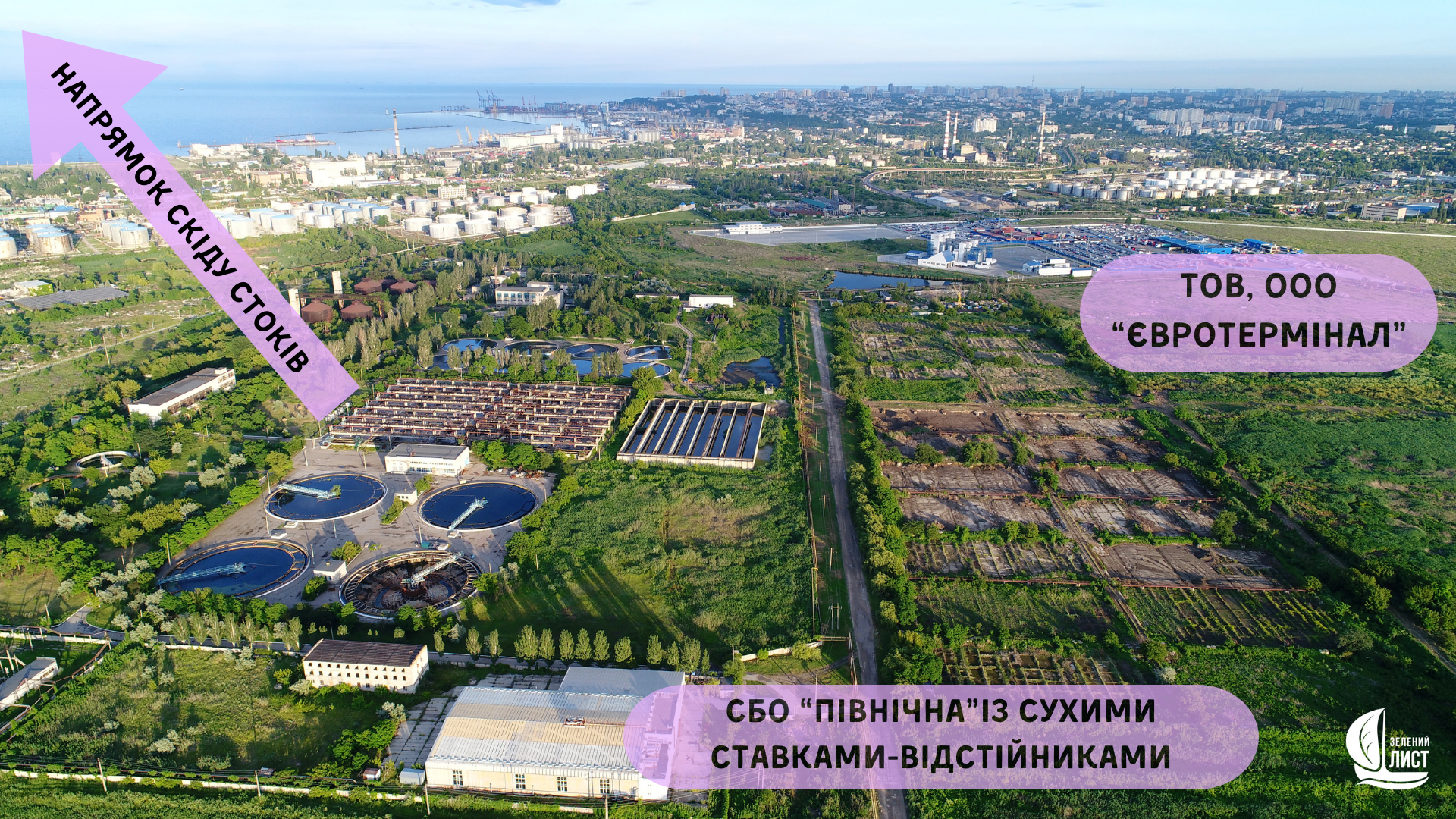
Pivnichna biological treatment station with dry settling ponds. Photo: 06.2020, Vladyslav Balinskyi
That is, even when the technological process was disrupted (insufficient aeration, failure to remove activated sludge on time, and so on), water could previously be purified naturally because of the large active surface area of the ponds. Then, in 2005, the so-called Dry Port appeared, and the irrigation fields began to be drained and filled with construction waste.
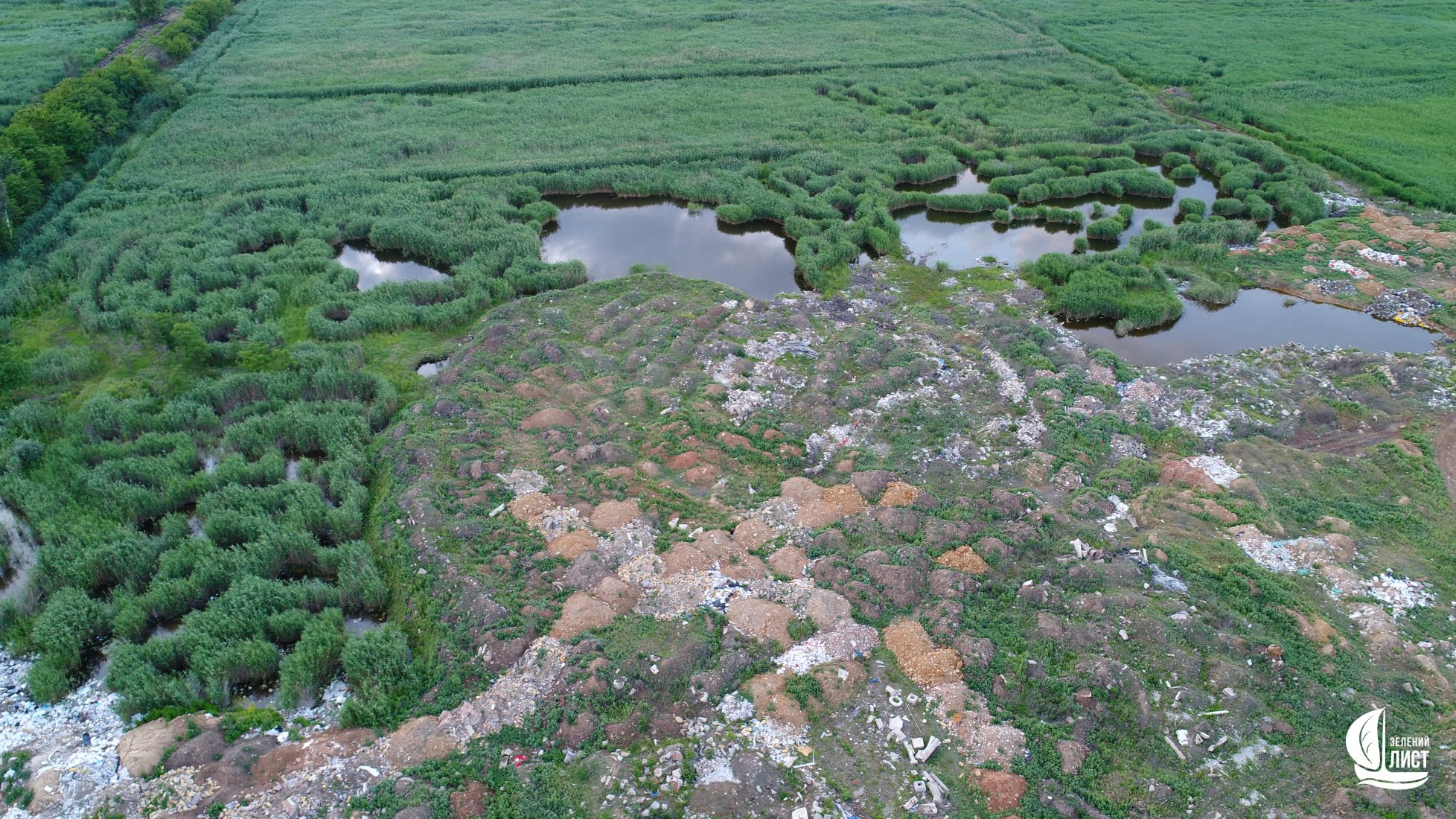
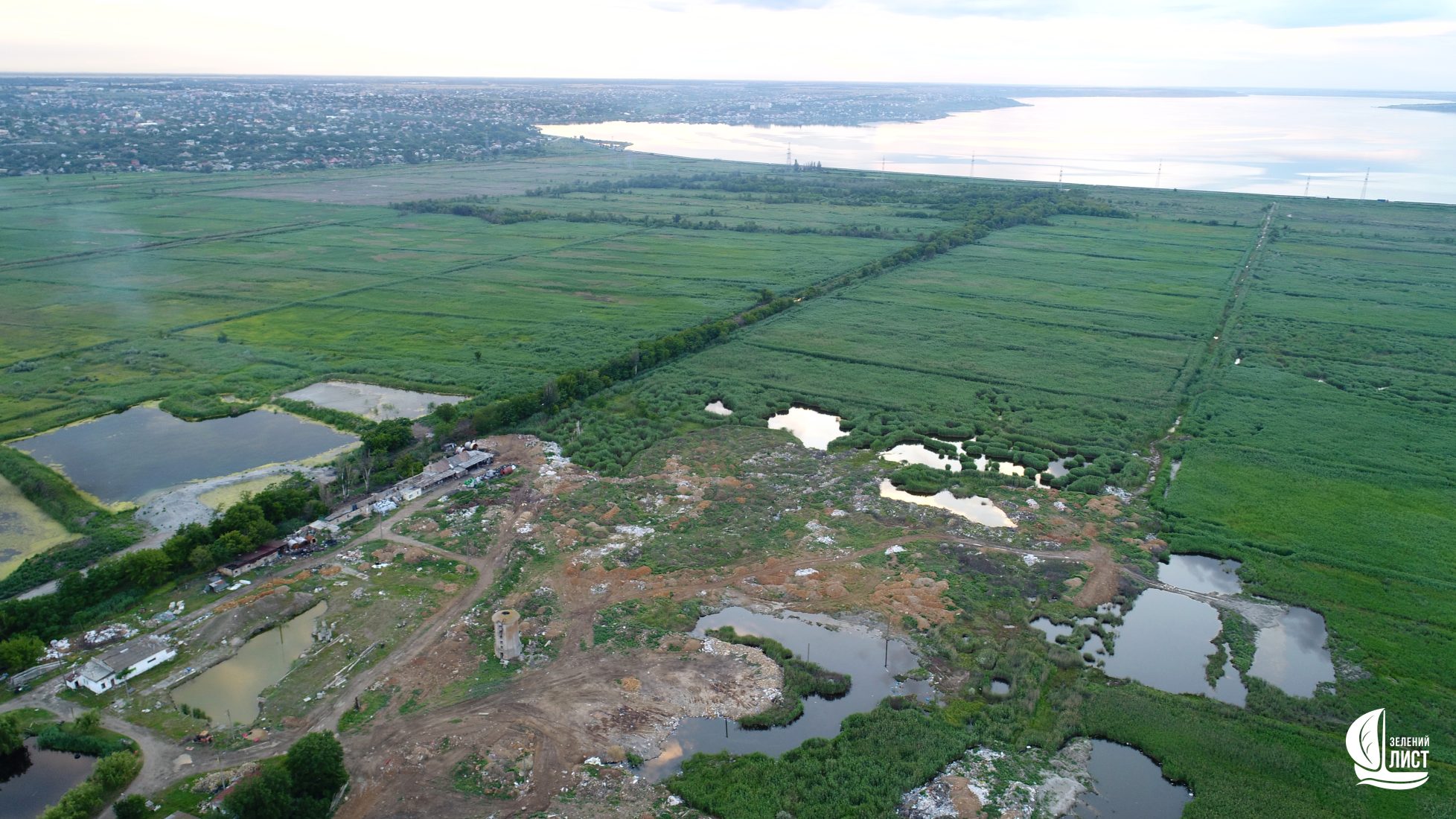
Backfilling of filtration fields in Odesa. Photo: 06.2020, Vladyslav Balinskyi
The private enterprise of Odesa’s new criminal masters needs ever more land. Because the country’s top officials sided at the time with the corporate interests of Odesa’s “international criminal group“, while no one listened to environmental activists, instead of investing in the modernisation of biological treatment stations and obtaining a sustainable source of technical water, they chose the simple option: discharge who-knows-what to who-knows-where. Still, I propose that we work out what exactly we are discharging and where; how freshwater input and pollution affect the environmentally vulnerable Odesa Bay; and what consequences this will have. To be continued. Vladyslav Balinskyi, chemist, biologist, editor-in-chief of the Green Leaf newspaper.