
Supplying Service Members: Responses by MPs and Authorities to the Analytical Note
“The first and most important principle in achieving the objectives of war is to exert, from the outset, the utmost effort with all forces available, until they are completely exhausted.”
— von Clausewitz, On War, 1832
Introduction
An analytical note ‘On the problems of supplying service members with everything they need and ways to address them’
was prepared in response to a deep systemic crisis that, despite the third year of the full-scale war, remains unresolved. The issue is not only shortages of clothing and technical supplies, but the absence of effective mechanisms that would ensure systematic and efficient coverage of the needs of the Armed Forces of Ukraine at the level of state policy.
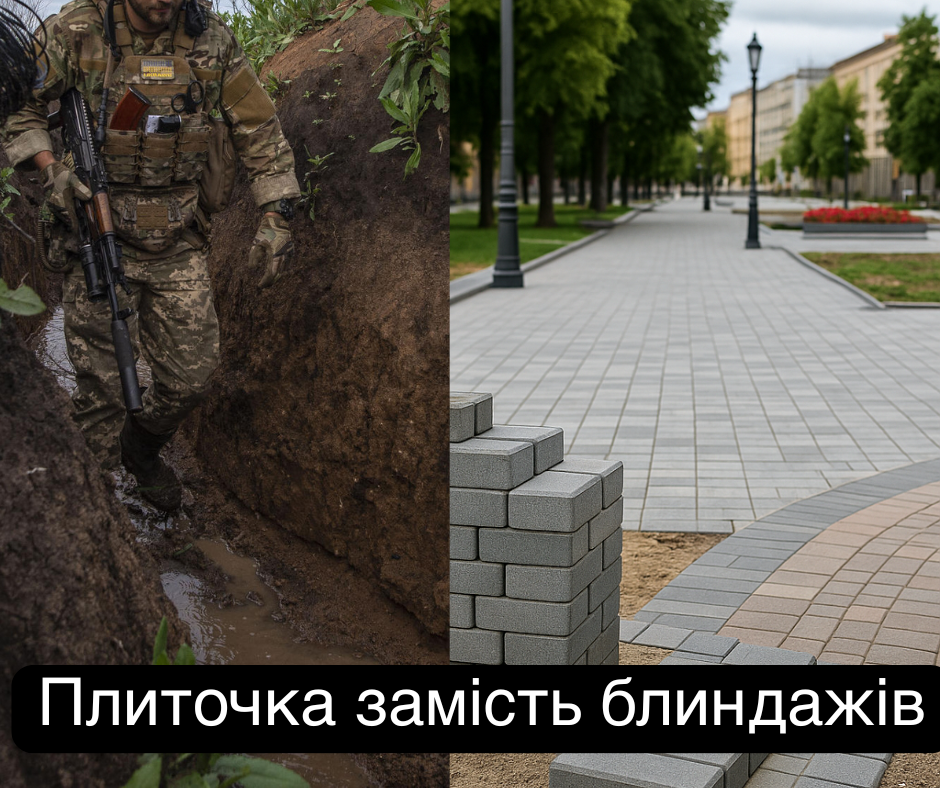
This document, prepared as a civic initiative with the participation of volunteers, service members and experts, is not merely a critical analysis of the situation but also a concrete roadmap for addressing the problems. Particular attention is paid to the possibility of using local-budget resources, which, despite declared autonomy, are often spent on secondary needs during wartime.
The note contains proposals for changing property-accounting mechanisms, cooperation with volunteers, and the creation of special local defence funds. It presents a comprehensive vision requiring not only political will but also coordinated cooperation among all branches of government.
For this reason, in early December 2024 the document was officially sent to all members of the Verkhovna Rada of Ukraine (except representatives of pro-Russian political forces), as well as to key state institutions: the Office of the President, the Cabinet of Ministers of Ukraine, and the Ministries of Defence and Finance.
This article records the response to that initiative, because actions rather than replies are the indicator of whether the state mechanism is ready to act under critical wartime circumstances.
Responses from members of parliament
General overview:
- about 15 MPs did not receive the letter for technical reasons (full mailboxes);
- some MPs provided written replies;
- some took action without replying (by sending appeals).
Public actions by individual MPs:
- Mariana Bezuhla, Larysa Bilozir — appeal to the Ministry of Defence;
- Olha Vasylevska-Smahliuk — appeals to the Ministry of Defence and Ministry of Finance;
- Oleksii Honcharenko — information taken into consideration;
- Oleksandr Horobets — appeal to the Verkhovna Rada Committee on National Security;
- Viktoriia Kinzburska — will take the proposals into account in her work;
- Olena Kryvoruchkina — appeals to a number of state authorities; responses forwarded to the National Security and Defence Council;
- Ivan Krulko — appeal to the Prime Minister;
- Maslov, Natalukha, Skorokhod, Sovsun, Tarasenko, Fris, Cherniev, Shpak, Yuzhanina, Yurchenko — took the note into account in their work.
Additionally:
- Anton Yatsenko — mentioned in the Ministry of Defence response;
- Oleksii Leonov — response provided by the Odesa City Council.
Response from state authorities
- National Security Committee: appeal to the Cabinet of Ministers;
- Committee on State Administration: also forwarded it to the Cabinet of Ministers;
- Office of the President: redirected it to the Cabinet of Ministers;
- Medical Forces of the Armed Forces of Ukraine: general support for the idea;
- Ministry of Defence and Armed Forces logistics: confirmed that reforms were under way but acknowledged problems with volunteer assistance;
- Association of Ukrainian Cities: focused on the issue of community revenues;
- National Security and Defence Council: redirected it to the Cabinet of Ministers;
- Ministry of Finance: indicated that the initiatives conflicted with current legislation;
- Cabinet of Ministers: forwarded our appeal to the Ministry of Defence. No replies were received to letters from other authorities, including those that directly asked for Green Leaf to be informed.
Summary
Invitation to discussion
We recognise that supplying the army is not solely the responsibility of the state or parliament. It is a moral challenge for society as a whole. While some give their lives and health on the front line, others should not allow themselves the luxury of standing aside — especially when billions of hryvnias accumulate in community budgets that could be spent on strengthening defence.
We therefore call for a balanced, evidence-based discussion of the proposed mechanisms. This is not about slogans — it is about responsibility. Open dialogue among the public, authorities and the military is the only path to fair and effective use of resources during wartime.
The note was perceived as a serious and professional document and prompted a response from some members of parliament and individual ministries. However, the absence of clear coordination at the level of the Cabinet of Ministers and the Ministry of Finance indicates that a systematic state policy on this issue has still not been formed.
Conclusion: combining the efforts of local budgets and volunteer structures within state policy could not only reduce losses in the Armed Forces of Ukraine but also lower social tension in communities. Instead, we have a situation in which, rather than urgently supplying military units, the state allows communities to spend billions on decorative projects in the rear.