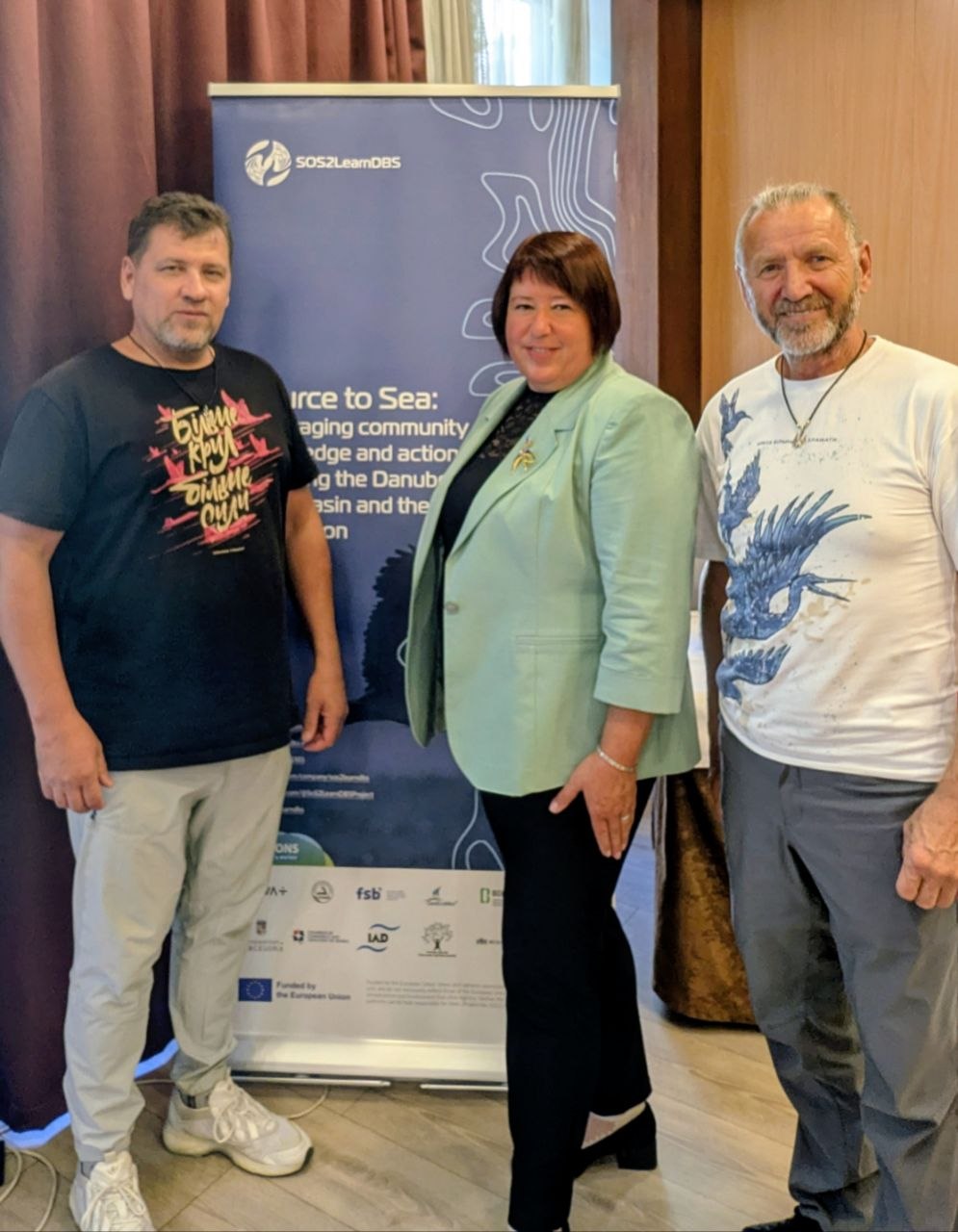
On 1 October 2026, the first meeting of participants in projects funded under the European SoS2LearnDBS initiative took place in Budapest. The new Ukrainian project TuzlyResilience was presented at the meeting. Over 30 months, it will work to strengthen the resilience of the coastline of Tuzly Lagoons National Nature Park and neighbouring communities.
The SoS2LearnDBS project is funded by the European Union.
What Does TuzlyResilience Involve?
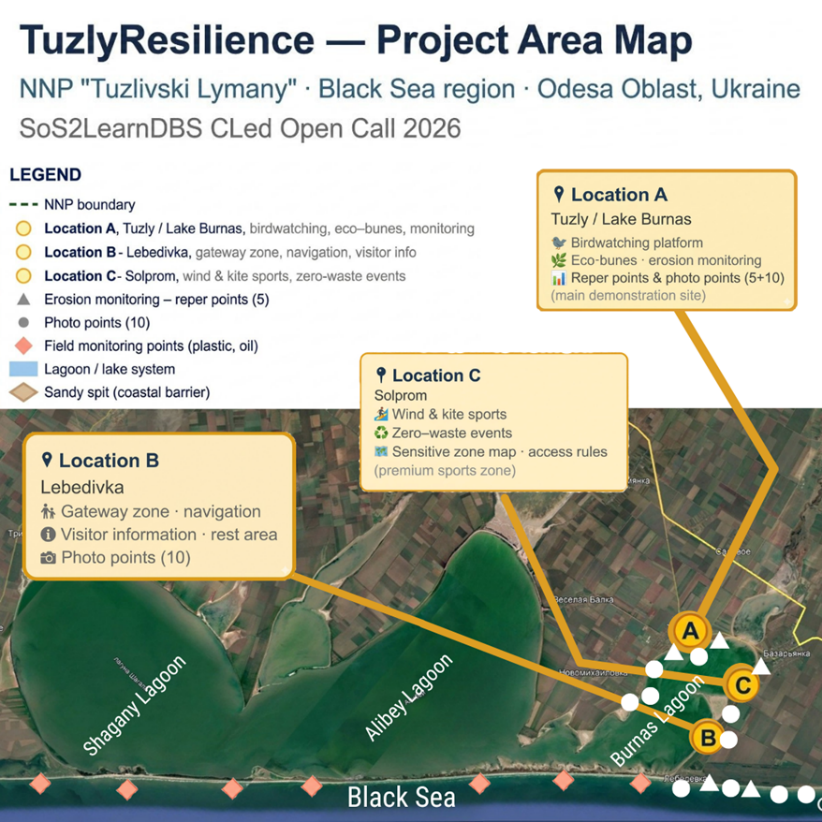
The project combines monitoring of coastal processes, nature-based protection against erosion, pollution prevention, managed recreation and active participation of local communities in decision-making. Specifically, a monitoring system comprising five reference points and ten photographic monitoring points will be established; eco-groynes will be tested at priority erosion sites; and a ‘Clean Season’ system and an oil pollution response protocol will be introduced. At three pilot locations — in the Tuzly/Lake Burnas, Lebedivka and Solprom areas — approaches to recreation compatible with nature conservation will be demonstrated.
A distinctive feature of TuzlyResilience is that the community becomes not merely a participant, but a co-creator of solutions. Local residents will take part in monitoring the condition of the coast, nature conservation measures and defining the rules for using the pilot recreational sites.
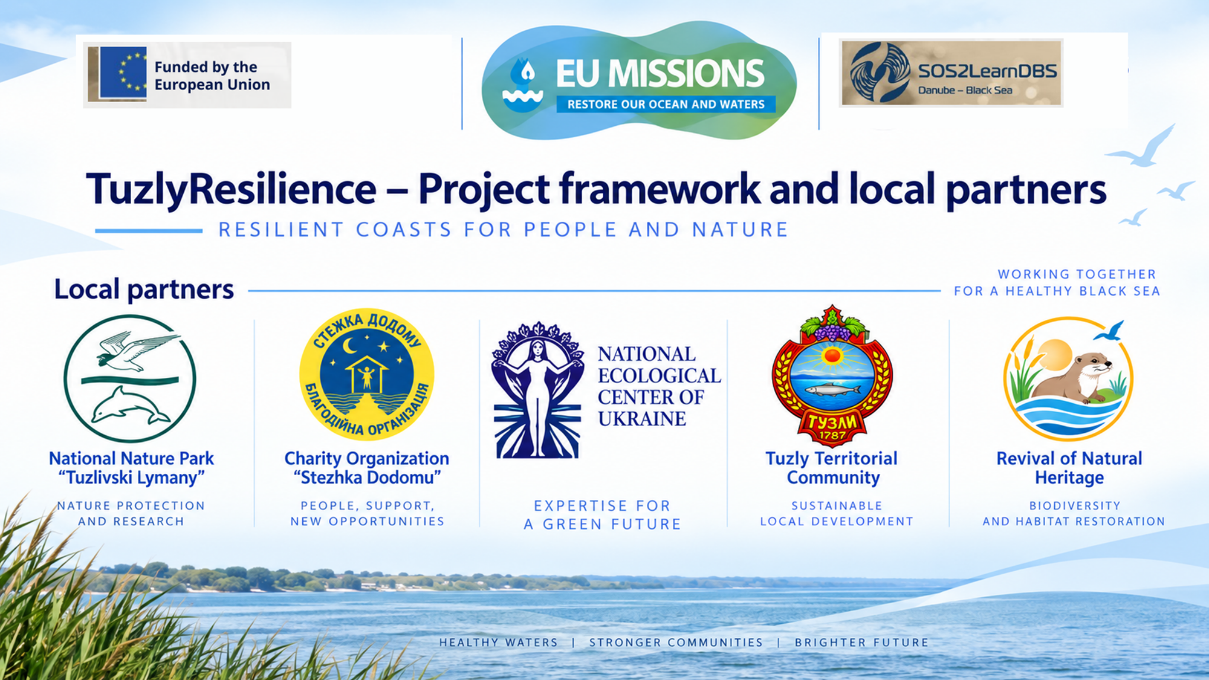
The project is implemented by a consortium of five Ukrainian organisations led by the National Ecological Centre of Ukraine (NECU): Tuzly Lagoons National Nature Park, the NGO Revival of Natural Heritage, the Stezhka Dodomu Charitable Foundation and the Finance Department of Tuzly Village Council.
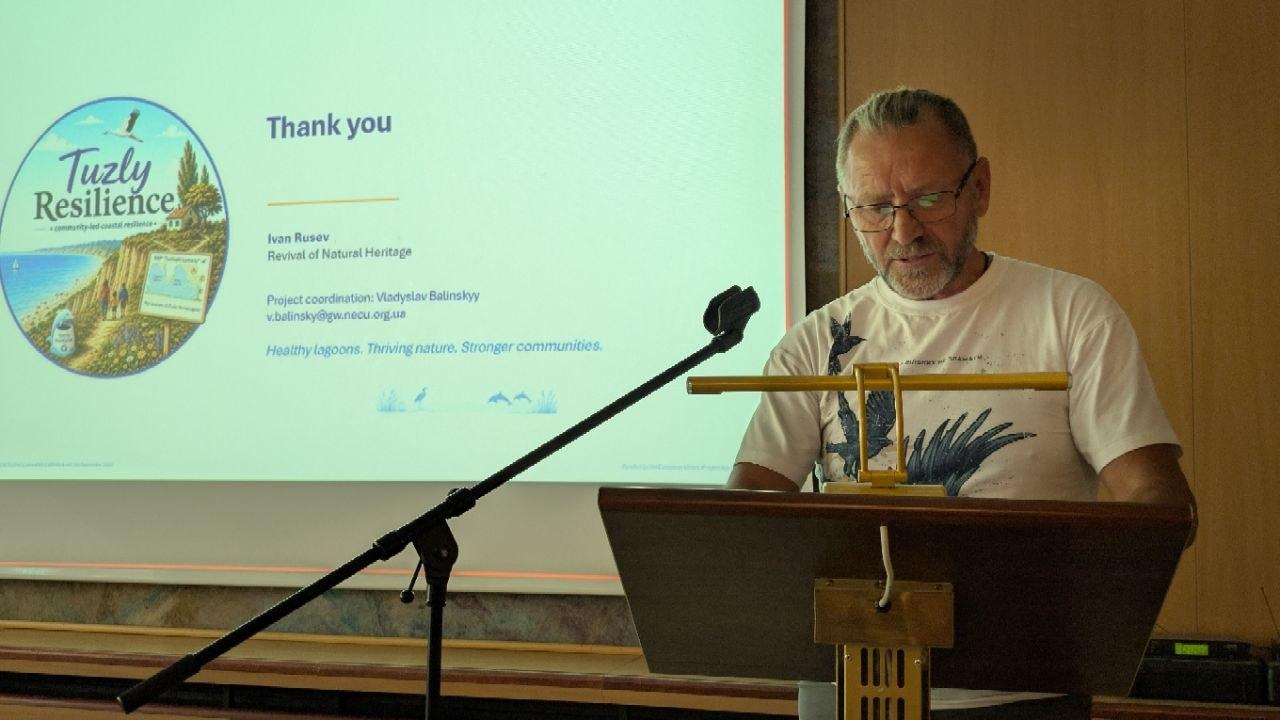
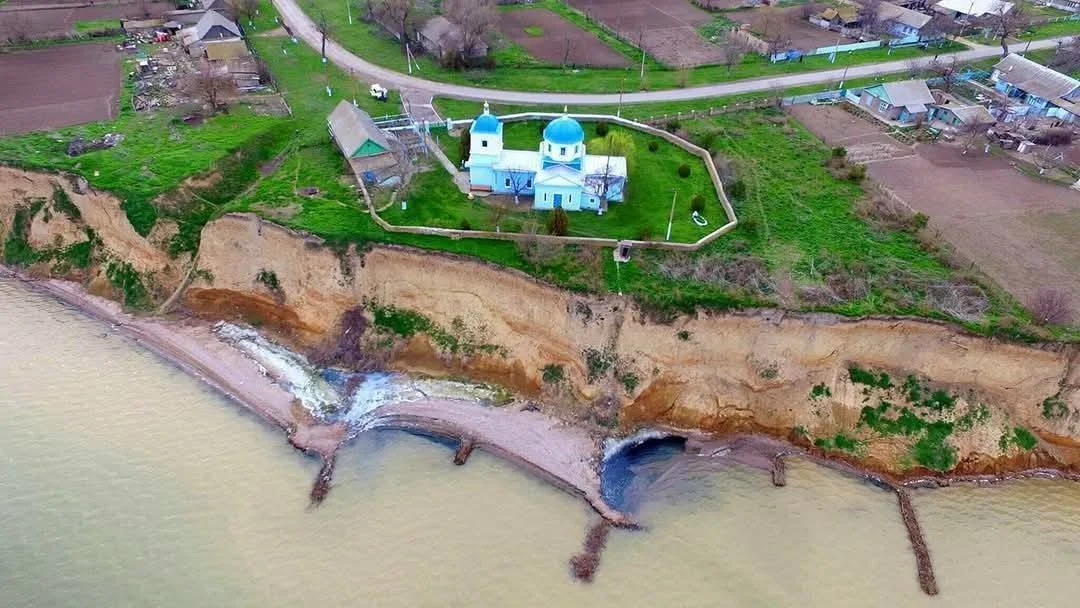
The project was presented by Ivan Rusev, head of the NGO Revival of Natural Heritage. He emphasised that the Tuzly Lagoons are a unique lagoon ecosystem with high biodiversity, important for birds, including pelicans and greater flamingos. At the same time, the area faces coastal erosion, marine litter and a need for safer, more responsible recreational use of the natural environment.
The TuzlyResilience approach follows a sequence: baseline data → joint decision → pilot action → reassessment → replication. Thus, the project is intended not only to implement individual nature conservation measures, but also to develop a replicable model of coastal management that can be applied in other areas.
During the first six months, the plan includes launching the project and implementing safety measures, organising access to the area, establishing baseline monitoring points, jointly designing eco-groynes, holding the ‘Clean Season’ initiative and carrying out the first analysis of the results.
SoS2LearnDBS: How Danube and Black Sea Communities Are Becoming Participants in the Restoration of Aquatic Ecosystems
TuzlyResilience is implemented within the SoS2LearnDBS project (Source to Sea: Leveraging Community Knowledge and Action for Restoring the Danube River Basin and the Black Sea Region), which aims to restore aquatic ecosystems in the Danube River Basin and Black Sea Region with the involvement of local communities. The project’s total budget is €12.5 million. SoS2LearnDBS is funded by the European Union under Horizon Europe and is linked to the EU Mission ‘Restore Our Ocean and Waters’.
The Danube is one of Europe’s major river systems and affects the condition of the Black Sea. Along with water from its basin, pollutants from agriculture, cities and industry reach the sea. This creates transboundary environmental problems and affects aquatic ecosystems and biodiversity.
For this reason, SoS2LearnDBS regards the Danube Basin and the Black Sea as an interconnected system — from the river’s headwaters to the seacoast.
The central idea of SoS2LearnDBS is that restoring aquatic ecosystems requires more than scientific research and technical solutions. People and organisations who live and work in these areas every day also play an important role.
The project therefore helps communities acquire knowledge and skills for working with aquatic ecosystems; participate in identifying environmental problems and priorities; jointly develop and implement practical solutions; obtain financial and technical support; assess the results of their actions; and share successful solutions with other areas.
In this way, the community is regarded not only as a recipient of information or a participant in consultations, but as one of the agents of restoration.
This is particularly important for the Black Sea Region, because environmental problems do not stop at administrative boundaries. The condition of river basins, deltas, lagoons and coastal areas is interconnected, while the effectiveness of many conservation measures depends on the involvement of local communities and authorities.
That is why SoS2LearnDBS aims to create not isolated, disconnected pilot projects, but a network of local actions that can be tested, improved, shared and integrated into long-term strategies for restoring aquatic ecosystems.
One of the key instruments of SoS2LearnDBS is cascade funding (Financial Support to Third Parties, FSTP). Open calls provide financial and technical support to local initiatives in which communities and organisations themselves participate in identifying environmental problems and in developing and implementing solutions. This system supports Community-Led Actions (CLed) — practical projects led by local participants — as well as Transition Agendas (TAg), roadmaps for long-term changes in aquatic ecosystem management.
SoS2LearnDBS began in September 2025. Its first phase focused on launching the project and preparing and holding calls for local initiatives. In 2026, following selection and the signing of agreements, implementation of Community-Led Actions — practical projects including Ukraine’s TuzlyResilience — began.
