
Vladyslav Balinskyy · biologist, head of the Green Leaf NGO
On 21 August 2026, Moscow announced that it had pumped heavy fuel oil out of three sunken sections of the tankers Volgoneft-212 and Volgoneft-239. The announcement was repeated on 25 September, this time with a claim that the affected waters had been cleaned up. Then, on 9 October, donald trump announced an agreement on supplies of russian diesel fuel and a temporary easing of the relevant sanctions restrictions. These events are connected by more than their proximity on the calendar. What we are seeing is an attempt to turn an environmental disaster, whose effects remain visible from space, into a story of a “problem successfully resolved”.
I have been investigating this accident since December 2024. On satellite images acquired even after the announcements in August and September, I can still see extensive surface plumes originating near the same submerged objects. The time series available to me shows no clear break in the pattern, either during the purported final stage of the operation or afterwards. That is why I regard the campaign of announcements about a “complete cleanup” as an informational simulation of an environmental result. And the strongest argument here comes from the russian authorities’ own experience: when they genuinely pumped out fuel oil in 2025, they themselves showed exactly how it was done.
1. Two “pumping operations” — and two entirely different ways of reporting them
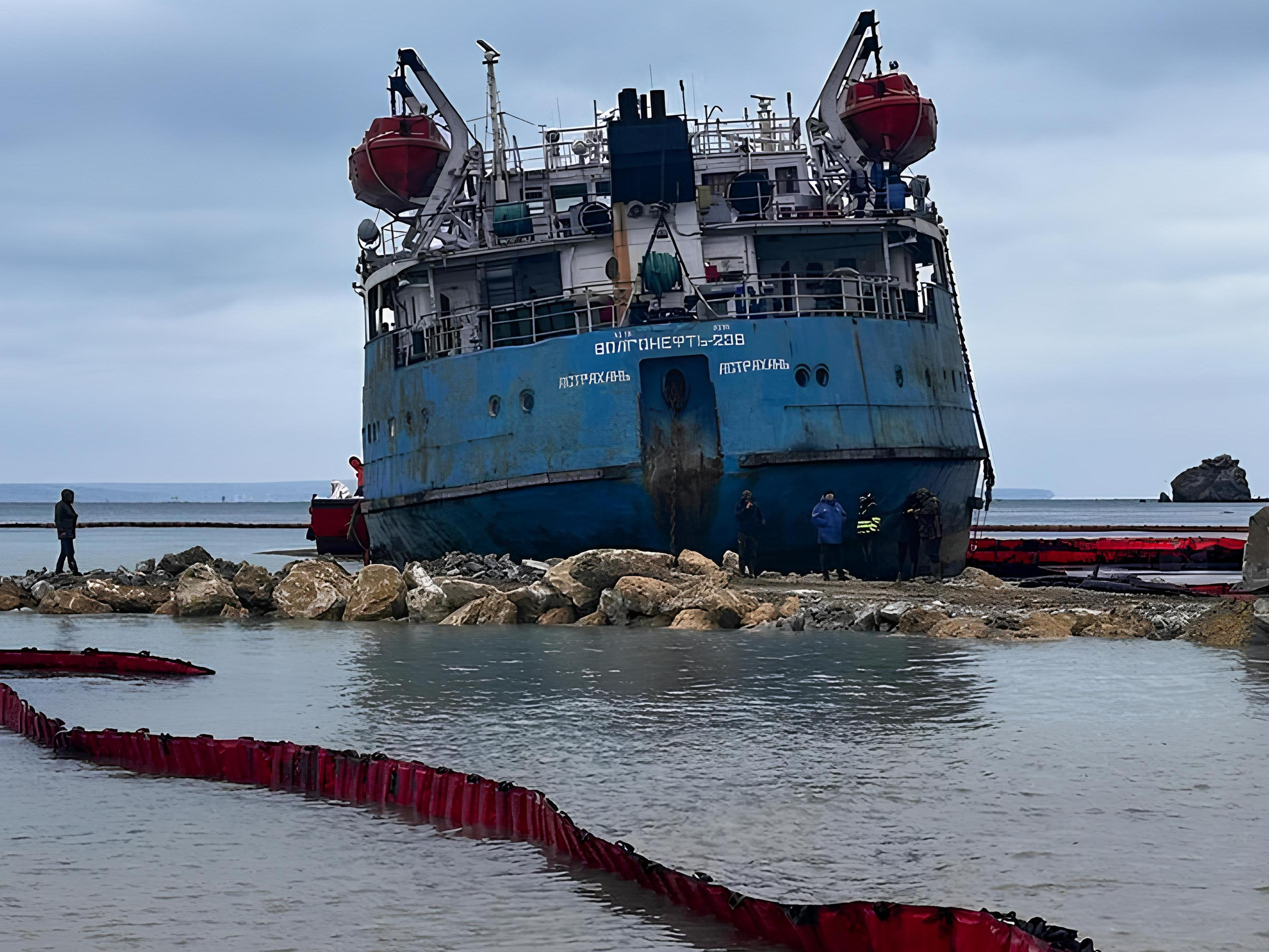
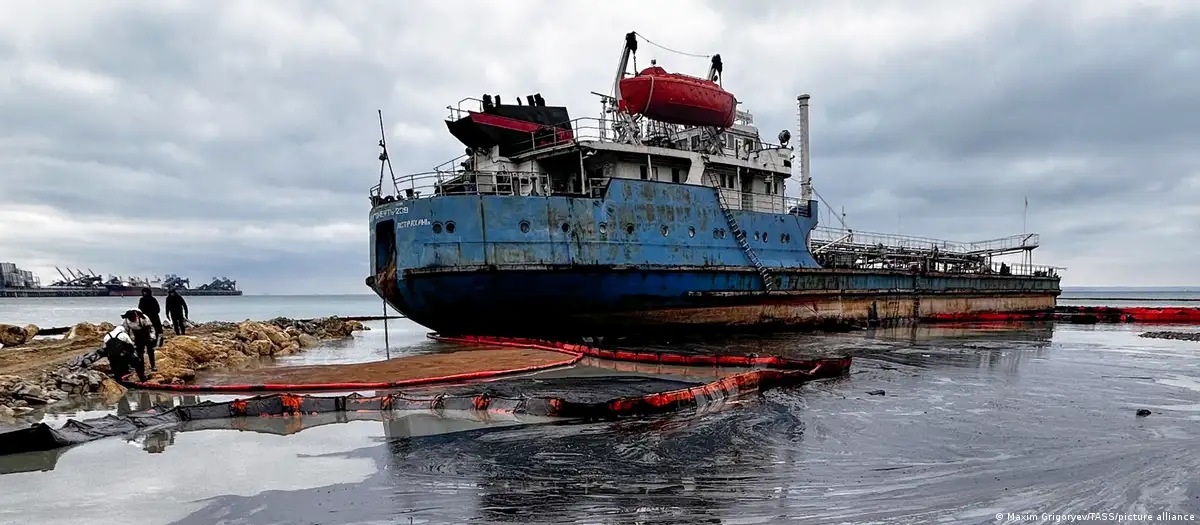
In January 2025, the stern section of Volgoneft-239 lay grounded in shallow water near Cape Panagia. It was an enormous wreck, visible from shore, with fuel oil in four tanks. A protective embankment and access road were built around the hull. The vessel’s equipment was restored. To make the viscous fuel oil pumpable, it was heated to approximately +45°C using the ship’s systems and steam supply. The fuel was then transported away in heated, sealed bitumen tankers. Photographs, videos, technical details of the operation and daily interim figures were made public.
On 20 January, the first 70 m³ were reported; on 22 January, 727 tonnes; on 23 January, more than 1,100 tonnes; and on 24 January, approximately 1,300 tonnes. According to the final report on dismantling the wreck, more than 1,400 tonnes of fuel oil and other fuel had been pumped out before the hull was cut up, its compartments had been cleaned, and dismantling was completed in March 2025. All this can be checked against the sequence of public reports and photographs. This was not an abstract statement that “a special commission confirmed it”: the technology, the object, the quantity and the outcome were materially documented.
Now compare that with the three sections lying on the seabed at a depth of about 20 metres. In March 2025, russia’s Ministry of Transport published a plan involving three heavy protective cofferdams, sealing the wrecks, pumping out fuel oil beneath the enclosures and subsequently raising the sections. Preparatory work and removal of superstructures were reported later as well. As recently as March 2026, according to RBC, the russian government still estimated that roughly 2,000 tonnes remained in the bow section of Volgoneft-212 alone. The scale of the operation was therefore well understood, and the engineering challenge was far more complex than at Cape Panagia.
So what was reported on 21 August and 25 September 2026? “Pumping completed”; “commission confirmed”. But where is the video of the actual underwater operation? Where are the figures for the fuel oil truly recovered, its transport and its ultimate disposal or use? Photographs of preparations for installing cofferdams do not prove that pumping was completed. Why did authorities who readily reported virtually every bitumen tanker in 2025 now confine themselves to a declaration?
There is also a financial dimension. The stern section could be enclosed by an embankment, heated using its own systems, and its product pumped into land transport and sold. An underwater operation requires heavy isolation structures, diving and offshore work, different engineering and different budgets. Who commissioned and financed it? Where are the acceptance certificates, actual quantities of recovered fuel oil and documents tracing what happened to it? These are elementary questions that an operation of this scale ought to answer.
2. Where did thousands of tonnes go — and why have the plumes not disappeared?
Together, the two tankers were carrying about 8,450 tonnes of heavy fuel oil. According to estimates by the International Oil Pollution Compensation Funds (IOPC Funds), as much as 5,000 tonnes entered the sea during the accident. More than 1,400 tonnes were subsequently pumped out of the stern section of Volgoneft-239, which had grounded in the shallows near Cape Panagia. Yet a full accounting of the fuel oil remaining in the sunken sections and already released into the marine environment has still not been made public.
The consequences of the disaster did not end with the initial spill. A substantial amount of heavy fuel oil settled on the seabed and accumulated in coastal sediments, forming reservoirs of secondary contamination. Under the influence of storms and currents, these deposits can once again release fuel oil into the water and transport it onto the shore. Repeated strandings were observed around Anapa, Vityazevo and the Bugaz Spit. Lumps of fuel oil were found even along the coast of Tuzly Lagoons National Nature Park, more than 600 km from the accident site. Field surveys in 2026 found both fresh fragments and older residues beneath a layer of sand. Thus, contamination continues to manifest itself far beyond the disaster area, despite official claims that the problem has been “eliminated”.
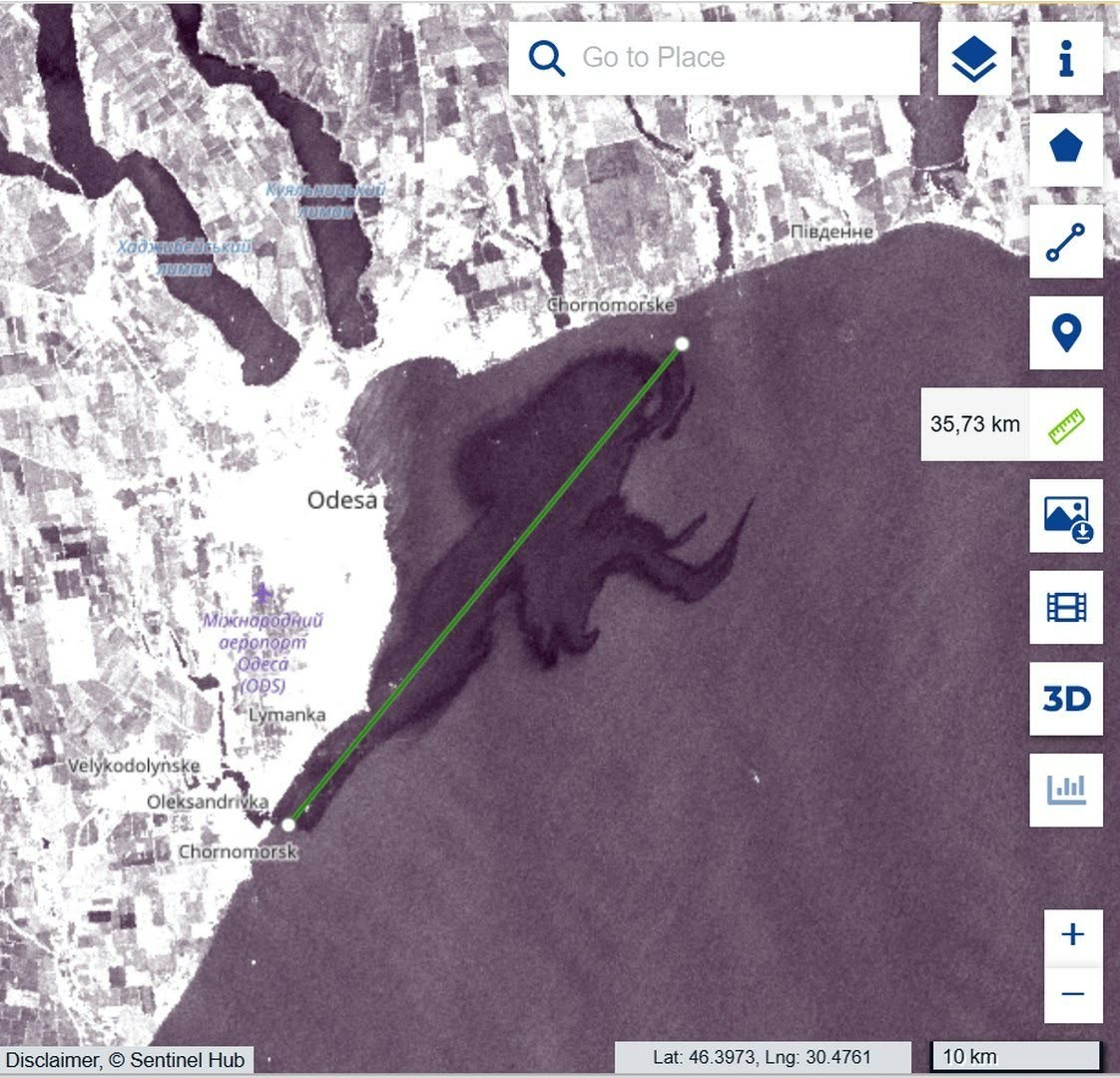
From December 2024 to 21 October 2026, we accumulated hundreds of archived satellite scenes. Throughout this period, extensive plumes have repeatedly appeared, with their initial sections located near the same sunken tanker fragments. This continuous series of observations makes it possible to compare conditions in the area before and after the purported “pumping operation”.
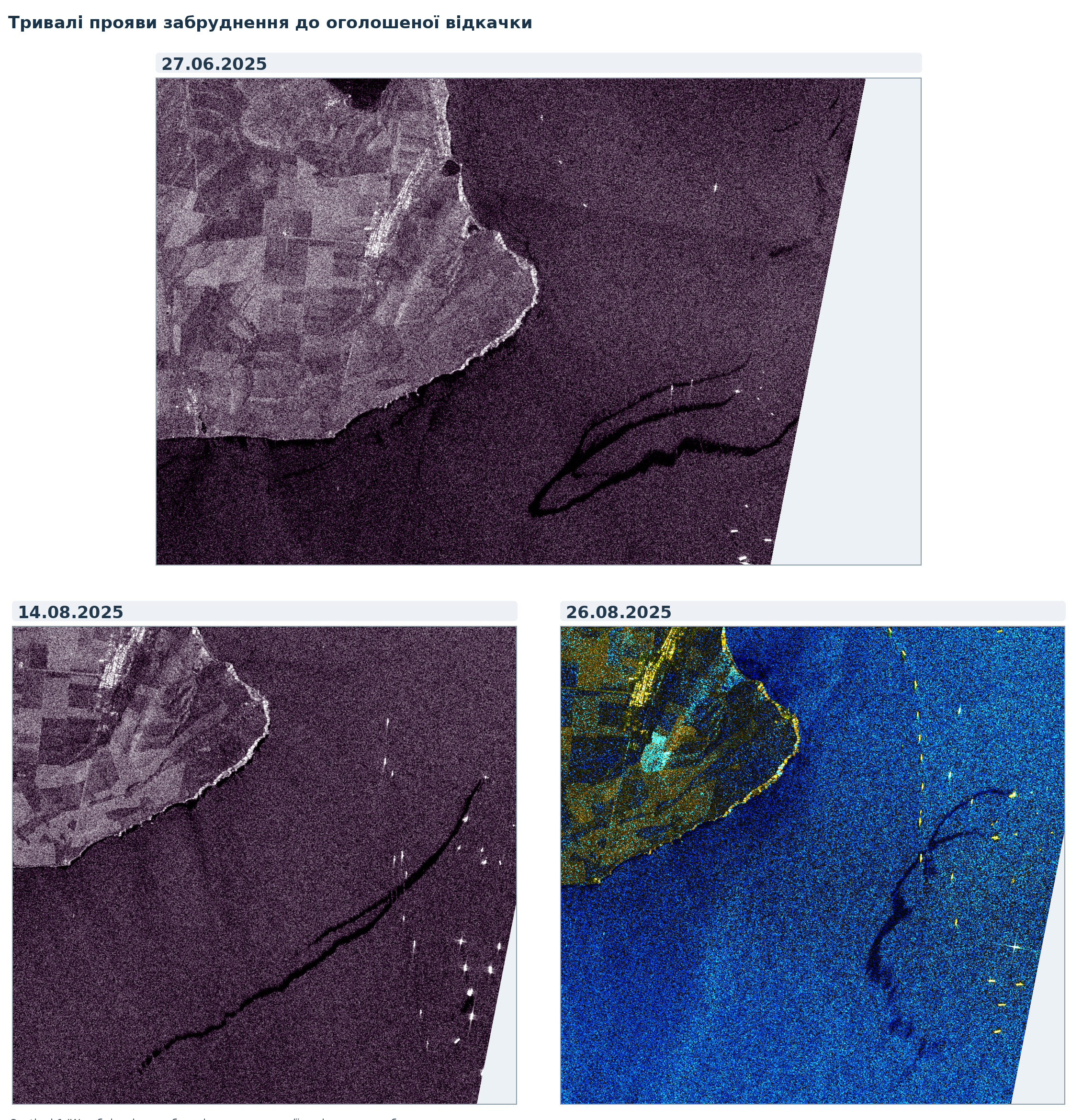
For comparison, let us look at three representative images from 2025, before completion of the underwater pumping was announced.
Sentinel-1 radar images dated 5, 9 and 21 October 2026 — all after the official announcements that pumping had been completed — again show extensive dark, plume-like structures near the locations of the sunken wreck sections. Compared with previous months, I see no appreciable reduction in the intensity of these signatures or shift in the places where they form. To me, this is evidence that the public messaging about “cleaned-up waters” does not match the observed picture of persistent contamination.
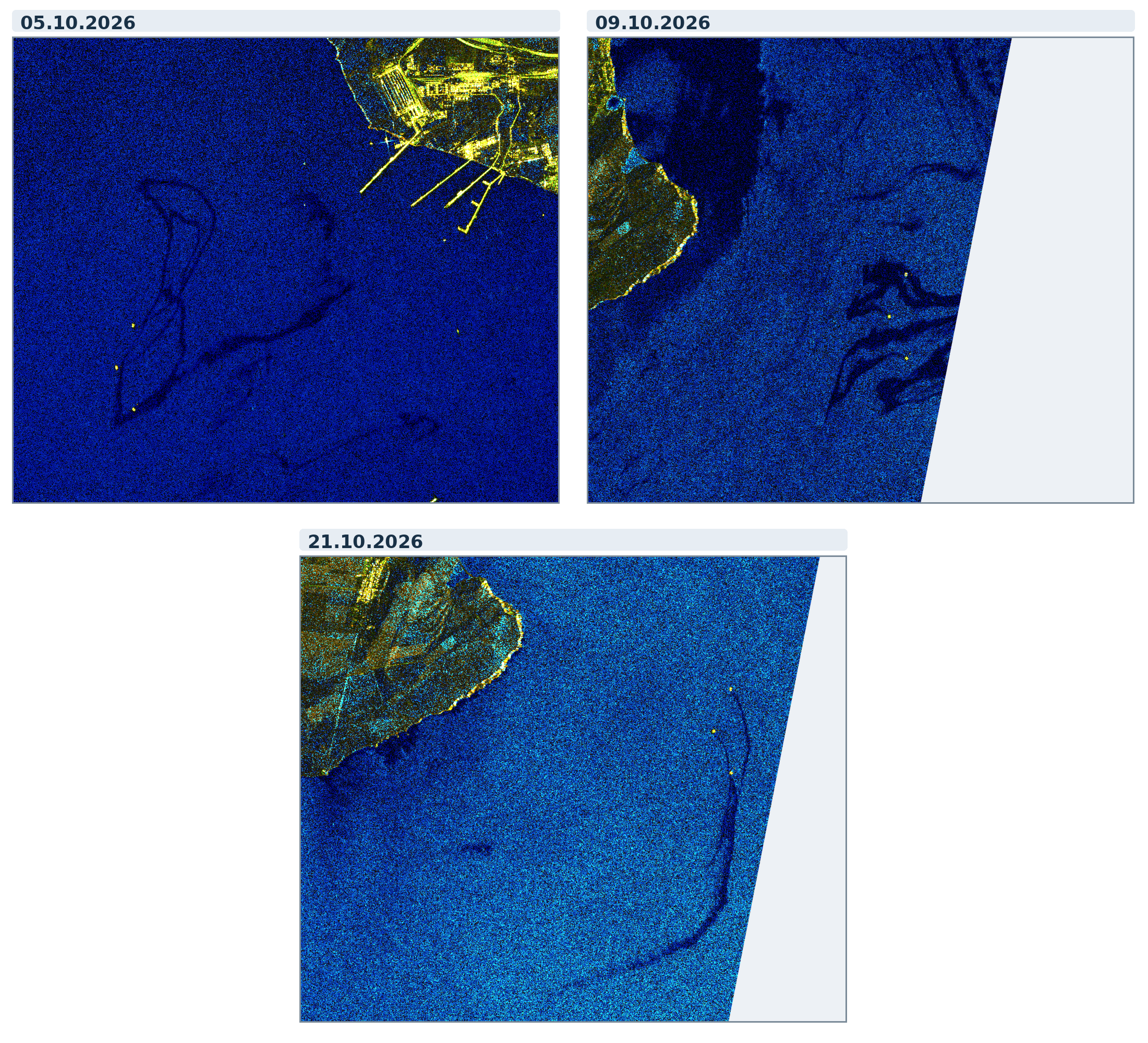
For me, this is the central contradiction. If the submerged tanks really were completely emptied, why do plumes keep appearing near the same objects? If some of the signatures result from the secondary release of fuel oil that previously settled on the seabed, on what grounds were the waters declared “cleaned up”? In either case, a press release cannot substitute for actual results from marine monitoring.
3. Why announce victory now? August, September, October
More than twenty months passed between the accident on 15 December 2024 and the first announcement that underwater pumping had been completed. On 21 August 2026, completion of the work was announced; on 25 September, the outcome was repeated and the affected waters were declared clean. On 9 October, the US president announced an agreement on russian diesel supplies and temporary sanctions relief. On 15 October, Reuters reported that exports had resumed and that a tanker carrying 40,000 tonnes of diesel, loaded at the Baltic port of Primorsk, was heading to Morocco.
This sequence warrants political scrutiny. russian petroleum products are returning to international markets, the russian authorities are demonstrating an ability to supply them, and it is precisely at this time that one of the most serious heavy-fuel-oil disasters in recent years is declared resolved. We do not have a direct document proving that the dates of specific press releases were coordinated with the diesel negotiations. But the coincidence of an environmental “success” with the restart of fuel trade is sufficiently advantageous to the Kremlin to raise the question of a deliberately planned information campaign.
This is where my main argument emerges: the unproven cleanup of the sea has become a convenient element in the image of “normal”, managed russian fuel trade. I see no meaningful environmental improvement in my satellite time series, and the final press releases contain no transparent technical account comparable to the operation at Cape Panagia. Therefore, until actual recovered volumes, an engineering report and independent monitoring results are made public, I regard the official “environmental victory” as an imitation rather than an established fact of cleanup.
4. The problem goes beyond Kerch — and did not begin with the war
The Volgoneft accident was not the result of Ukrainian strikes. Similarly, on 11 November 2007, Volgoneft-139 broke apart in a storm in the Kerch Strait: around 1,300 tonnes of heavy fuel oil entered the sea, and tens of thousands of birds were affected. These accidents are associated with the hazardous use of river–sea-class vessels, their technical condition and risky operating practices. We have examined the warnings issued by naval architect Gennady Yegorov and the accident record of Volgoneft-class tankers in detail in Green Leaf.
Moreover, the Kerch–Taman hub is only the central link in a wider network. Novorossiysk, Tuapse, Taman, Port Kavkaz and the transport routes serving them form a major Black Sea fuel-logistics system; Rostov, Azov, Taganrog and the occupied ports of the Sea of Azov are connected to the wider system of maritime and river transport. They serve different functions and not all are oil-loading ports. Nevertheless, accidents, transshipments and weak oversight spread risks far beyond their immediate locations. A particular hazard is the bidirectional, shifting exchange of water through the Kerch Strait and the subsequent transport of contamination by currents in the Azov and Black seas.
Military strikes may add acute accident risks, but they did not create the underlying problem of an unsafe tanker fleet.
Shadow shipping arrangements, complex ownership chains, inadequate insurance, ship-to-ship transfers and technically deteriorated hulls are dangerous even in the absence of strikes. It is this systemic risk, which has already materialised repeatedly in the Azov–Black Sea basin, that russian fuel trade is now carrying into the Baltic Sea.
5. The Baltic Sea: risks that cross borders
Primorsk, Ust-Luga and other Baltic-facing ports operate on the shores of a semi-enclosed sea characterised by restricted water exchange, seasonal ice, intensive shipping and particularly sensitive coastal and benthic habitats. According to Reuters, shipments of petroleum products from russian Baltic ports increased by 32.7% in August 2026 compared with July, while shipments via Black Sea and Sea of Azov ports fell by 25.3%. This indicates a shift in the structure of trade flows, although it does not mean that each cargo was literally transferred from south to north.
Here lies the second important strand of this story. In the Azov–Black Sea basin, we can already see the consequences of a hazardous transport system: ageing and technically problematic vessels, opaque operators, transshipments, prolonged spills and reservoirs of recurring contamination. Our satellite monitoring cannot capture every incident across such an immense area, but even the documented signatures demonstrate that these are not merely hypothetical risks. What is being transferred to the Baltic is not any one accident, nor necessarily the same vessels, but the fuel-logistics model itself — and with it, a threat to the entire region.
Researchers have already assessed the scale of that threat. According to a study by Sabine Knapp and colleagues published in Marine Pollution Bulletin, modelled oil-pollution risk exposure from oil tankers in the Gulf of Finland increased by approximately 133% between 2023 and 2024 alone. Vessels on the shadow-fleet watchlist account for 54% of estimated risk in the Gulf, compared with a global average of 16.4%. Assuming the underlying conditions remain unchanged, the researchers project further growth in that risk of approximately 2.7% per month. These are estimates of potential accident consequences, not quantities of oil already spilled. Nevertheless, the scale of the increase shows the price that this trade could exact on the Baltic Sea.
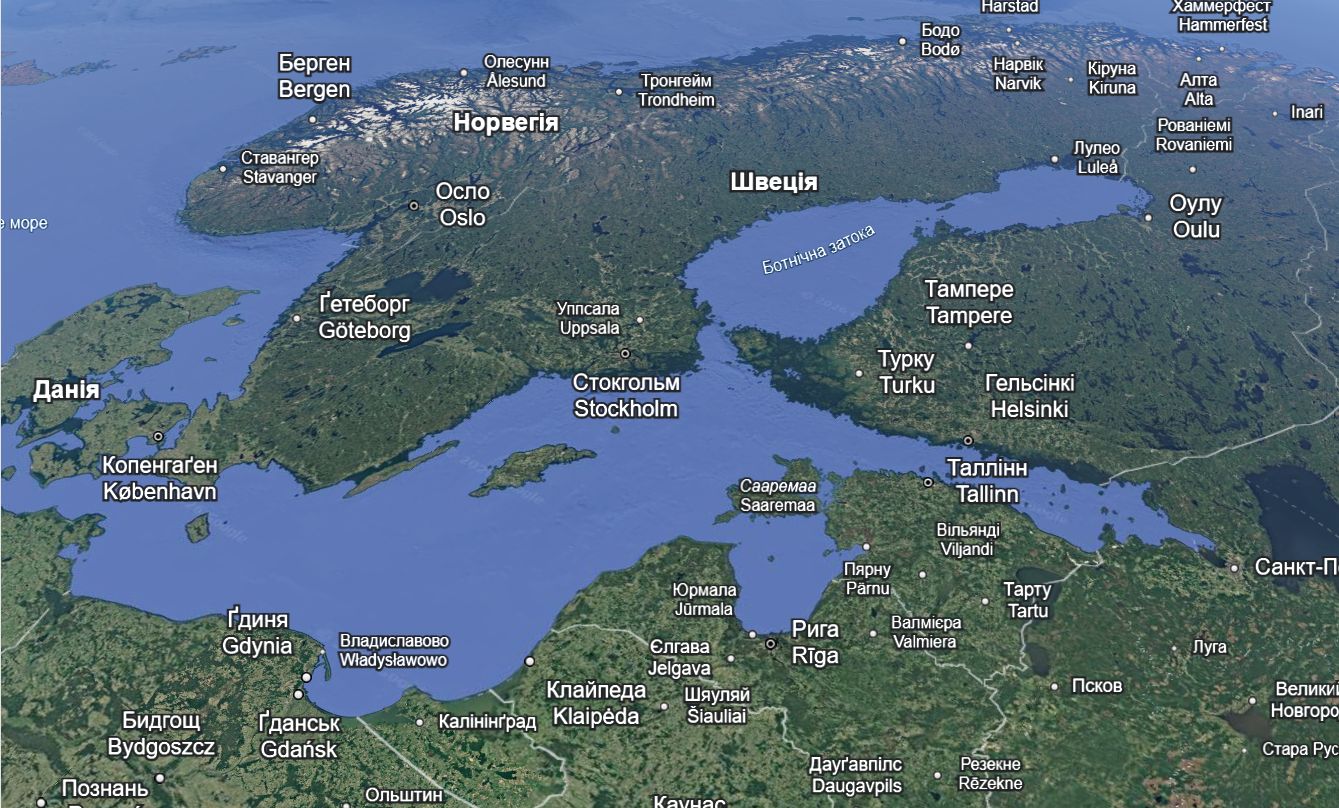
In the Gulf of Finland, a major spill means far more than a slick temporarily visible on the sea surface. Relevant processes include dispersion, sorption onto suspended particles, accumulation of petroleum products in bottom sediments, secondary remobilisation and long-term effects on benthic communities and trophic networks. If the shipowner, operator, insurer and ultimate beneficial owner are opaque, the question of who will pay for cleanup, ecosystem restoration and long-term monitoring becomes no less important than the accident risk itself.
Natural conditions only compound the danger. The Baltic Sea is shallow and almost enclosed; according to HELCOM, complete water exchange with the North Sea takes approximately 30 years. A major accident here would therefore threaten not only the waters of a port but also the coastlines and marine ecosystems of numerous countries — Finland, Estonia, Latvia, Lithuania, Poland, Sweden, Germany and Denmark. Petroleum products transported by currents may accumulate in bottom sediments and coastal habitats, only to be released into the water again later. Restoring such ecosystems is vastly more difficult than removing a visible slick from the surface.
Conclusion: Fuel deals without environmental accountability
The story of the announced fuel-oil “pumping operation” in the Kerch Strait matters not only as an example of information manipulation. It shows how an unresolved environmental problem can be pushed off the political agenda by declaring it “eliminated” at the very moment international trade in russian fuel is resuming. Neither the recurring plumes in the Black Sea nor the systemic risks of tanker operations disappear as a result.
The Kremlin’s repeated references to the so-called “spirit of Anchorage” signalled a desire for broader political agreements with the United States, while the October diesel agreement demonstrated a very concrete economic interest. Yet public presentations of these arrangements leave out environmental consequences, the technical condition of vessels and the safety of European coastal states. Where verification and accountability are needed, the russian side offers announcements of “environmental victories”. Some reap the benefits of trade, while others — above all the countries of the Baltic region — may bear the risk of pollution lasting for years. We will continue to monitor the consequences in the Black Sea and show why a repetition of this scenario in the Baltic would be dangerous. Europe needs to assess the environmental cost of fuel agreements before the next disaster, not after it.
Materials and sources
Field observations of heavy fuel oil in Odesa region:
- ↗ “Fuel Oil on the Barrier Spit” (2025)
- ↗ Field investigations in Tuzly Lagoons National Nature Park (2026)
- ↗ Warnings by G. Yegorov
Public documentation of the stern section of Volgoneft-239, January–March 2025:
- ↗ 20 January: Heating technology and bitumen tankers
- ↗ 22 January: 727 tonnes
- ↗ 24 January: 1,300 tonnes, russian Ministry of Transport
- ↗ 7 March: Dismantling and more than 1,400 tonnes
Sunken sections, 2025–2026:
- ↗ russian Ministry of Transport: Three cofferdams and stages of work
- ↗ RBC, 27 March 2026: Around 2,000 tonnes in the bow section
- ↗ 21 August: Announcement of pumping completion
- ↗ 25 September: Repeated claim of pumping completion
Quantities and international assessment:
Diesel agreement and shipping:
- ↗ Reuters, 9 October: Diesel agreement
- ↗ Reuters, 15 October: Tanker from Primorsk
- ↗ Reuters, 17 September: Shipments by sea basin
Scientific and hydrological assessments:
Map of environmental consequences:
Political context: