
On 2 February, the world marks World Wetlands Day, which aims to raise awareness of unique ecosystems that provide a range of environmental, economic and social services. Under the Ramsar Convention, wetlands include all marshes and waterlogged areas, as well as fresh, brackish or salt-water bodies no more than six metres deep at low tide. The Convention obliges states to designate wetlands of international importance within their territories and to promote the conservation of wetlands and waterbirds by establishing nature reserves.
The date on which this Convention was signed — 2 February 1971 in the Iranian city of Ramsar — is observed as World Wetlands Day.
Ukraine has 50 wetlands of international importance, eight of which are located in Odesa Oblast: Lakes Kuhurlui, Kartal and Sasyk; the Kiliia mouth; the Shahany–Alibei–Burnas lake system; the Dniester–Turunchuk interfluve; the northern part of the Dniester Liman; and the Tylihul Liman. These areas are covered by and protected under the Ramsar Convention ratified by Ukraine.
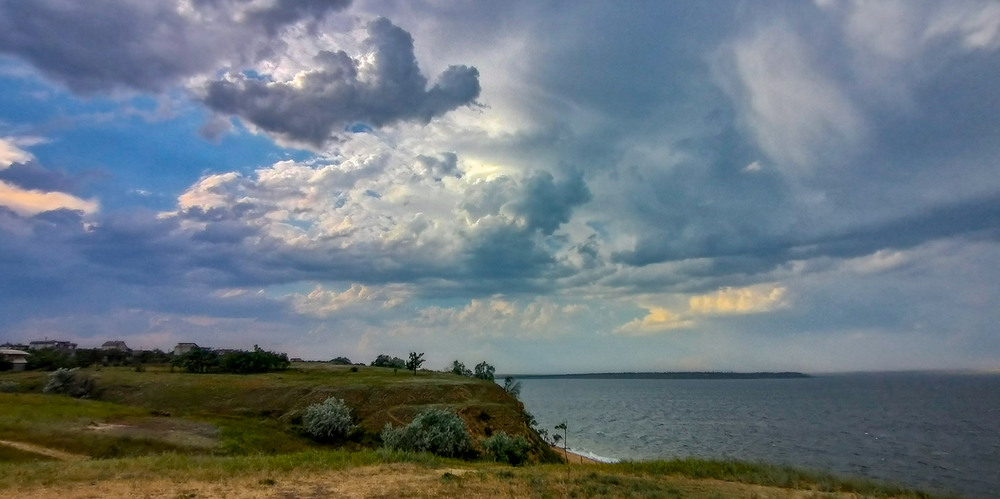
Why are wetlands important?
It is no exaggeration to say that wetlands are a source of life for people and wildlife. According to approximate estimates, freshwater wetlands provide habitat for more than 40% of species on the planet, including 12% of all animal species. Wetlands function as the Earth’s filters, purifying water in various ways. They are systems without which life is impossible, but they are very vulnerable and require special management regimes. That is why many such areas are included within various protected natural areas.
For example, these include peat forest bogs and river floodplains in the Nyzhnodniprovskyi and Nyzhnodnistrovskyi national nature parks, as well as lake systems such as Burnas, Shahany and Alibei within Tuzlivski Lymany National Nature Park, parts of the Black Sea, including Dzharylhach and Karkinit bays (Dzharylhatskyi National Nature Park), as well as sand spits adjoining salt lakes, such as those on the Kinburn Peninsula (Biloberezhzhia Sviatoslava National Nature Park, Black Sea Biosphere Reserve, Kinburn Spit Regional Landscape Park, Yahorlyk Bay wetlands).
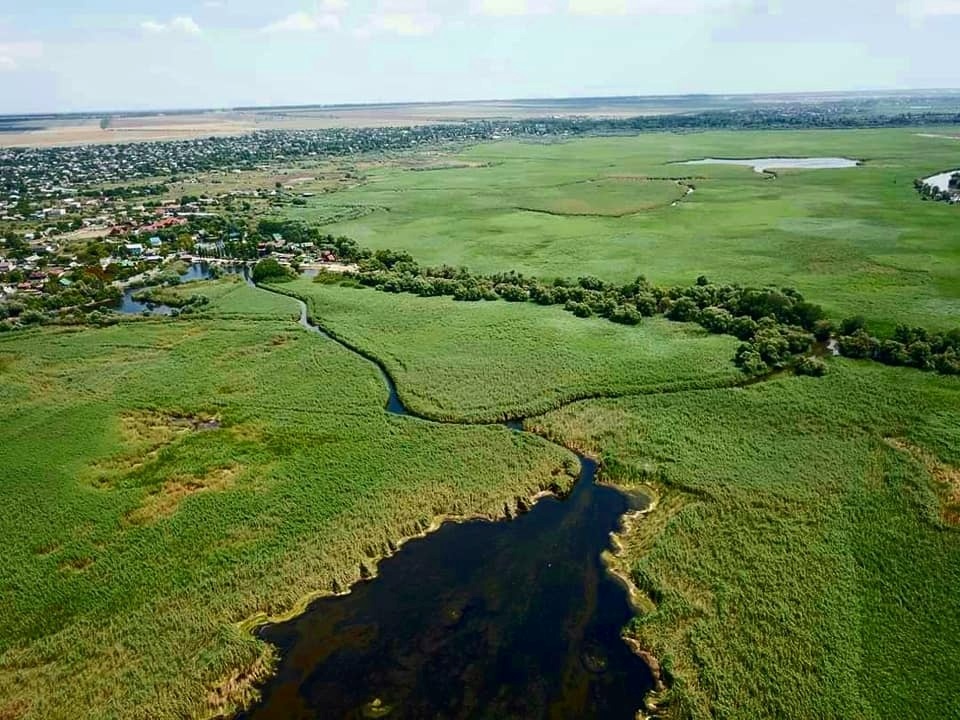
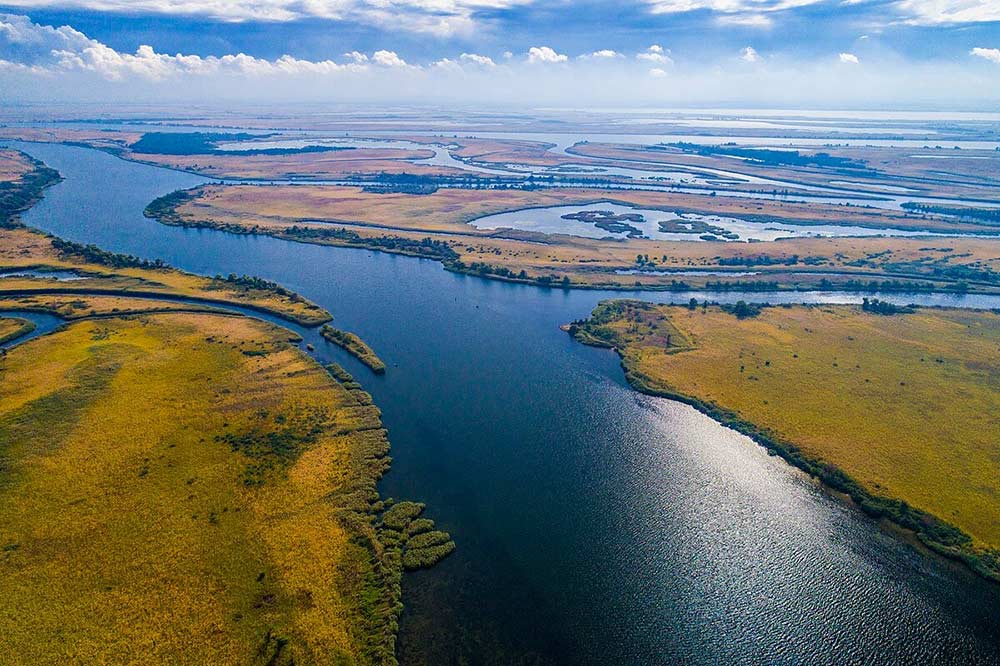
Photo — Oleh Marchuk
Impact of the war on wetlands
According to chemist and biologist Vladyslav Balinskyi, head of Green Leaf NGO, the full-scale invasion has had a very negative impact on ecosystems that play a critical role in preserving biodiversity and ecological balance.
First and foremost, habitats for different species are being destroyed and degraded. Where habitats remain, individual animal and plant species may recover. Species recovery becomes impossible in areas affected by fires and explosions that destroy the surface layer of turf soil, because the conditions will no longer correspond to the natural environment.
Wetlands often require human involvement for their conservation, including the adjustment of engineering protection structures that maintain the water balance. Maintaining water-supply regimes during occupation and military operations usually becomes impossible. Without active intervention, irreversible consequences may arise, leading to the destruction of wetlands. Specific examples include the occupied Karkinit and Dzharylhach bays.
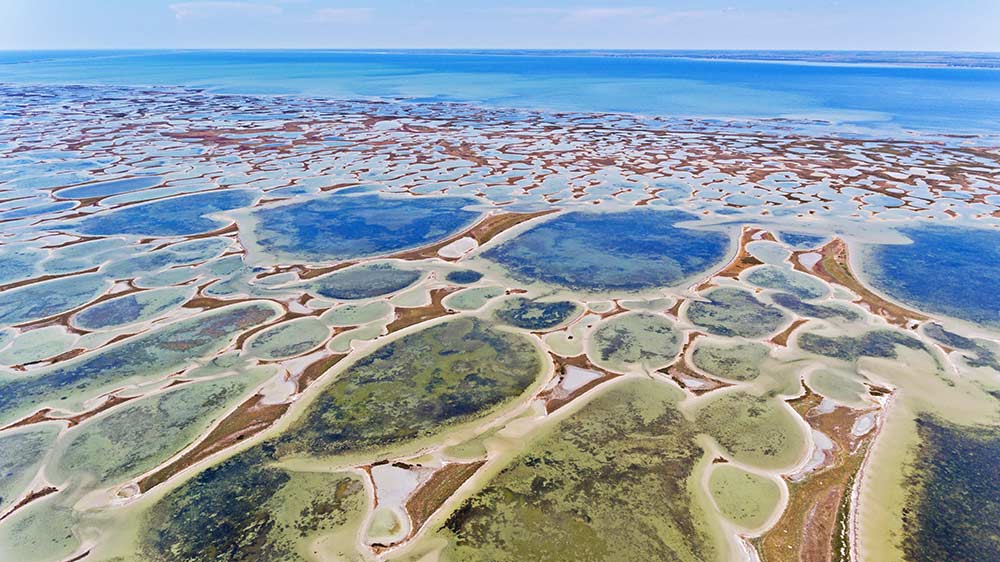
— coastal lagoons on Dzharylhach Island
(Dzharylhatskyi National Nature Park).
Photo — Vadym Yunyk.
According to the environmental expert, there is information that military structures are being built on the Dzharylhach Peninsula to allow heavy equipment to enter. This, in turn, has a negative impact on the protected area, damaging it and destroying the species that live there.
The Kakhovka tragedy
We can also mention the destruction of wetlands in the lower Dnipro after the destruction of the Kakhovka Hydroelectric Power Plant by Russian forces, which changed the water-balance regime. A large number of animals died and entire populations disappeared. Vladyslav Balinskyi took part in documenting the consequences of this horrific terrorist act and created an interactive map of the consequences. He described how Odesa residents rescued newt species listed in the Red Data Book — the Danube crested newt and the northern crested newt — that reached the Odesa Oblast coast after the Kakhovka Reservoir was emptied. The animals were sent to Odesa Zoo and later released into their natural habitat in the Danube River.

in Tuzlivski Lymany National Nature Park in June 2023. Photo by Ivan Rusiev.
The Kakhovka tragedy seriously affected wetlands because the wave of fresh water generated by the destruction of the dam and emptying of the reservoir swept across vast areas at the beginning of summer, during the bird nesting season. This led to the deaths of tens of thousands of birds living in the ecosystem. The wave washed away not only nests but entire islands together with animals, which in turn destroyed a stable wetland system. The freshwater pulse that washed everything into the sea also affected Karkinit Bay and even reached Tuzlivski Lymany National Nature Park.
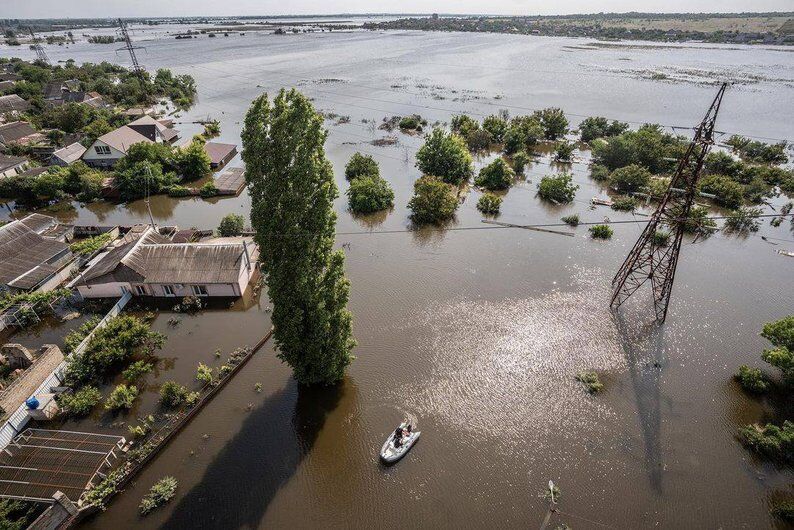
Photo — Roman Mrochko/Telegram
Fuel-oil spill into the Black Sea
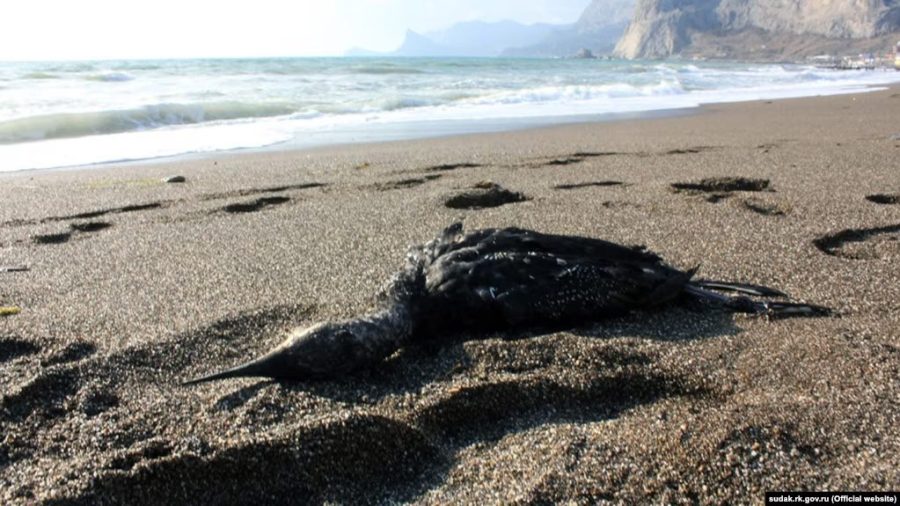
Photo from the website of the city of Sudak.
The fuel-oil spill is another telling case: more than five thousand tonnes of fuel oil were released into the marine environment. According to Balinskyi, when shoreline pollution was recorded south of Yevpatoriia, it was already clear that the fuel oil would spread farther. Vladyslav notes that Karkinit and Dzharylhach bays were most likely also seriously affected by the pollutant. The consequences are still to be established, but it is already clear that they are very serious. At the end of January, the first cases of fuel oil reaching the Odesa Oblast coast were recorded. the first cases of fuel oil reaching the Odesa Oblast coast.
Author: Anastasiia Tsymbal, a fourth-year student at the Faculty of Journalism of Vasyl Stus Donetsk National University