

Dictionary of WINDS — Characteristics of Winds and Wind Systems
Introduction
Wind is one of the most important characteristics of weather and climate. Wind causes the movement and mixing of air and transports impurities suspended in it. Wind promotes the exchange of heat, moisture and energy between the underlying surface and the atmosphere, and also transports enormous air masses within the general circulation of the atmosphere.
Read MorePreserving Life in the Danube: The Power of Sediment Monitoring
The Power of Sediment Monitoring

The SUNDANSE project aims to protect wildlife along the Danube by restoring the river’s sediment balance — while also providing a floating campus for advanced research.
The Danube River, which for centuries has been a lifeline for people and wildlife, has been substantially altered by human activity since the late 1800s. Dam construction, agriculture and navigation, combined with climate change, have disrupted the natural sediment balance, increasing flood and navigation risks and causing damage to ecosystems.
The SUNDANSE project, which is part of the Ocean and Waters Mission, aims to restore that balance by assessing and improving sediment management along the Danube, from Vienna to the Black Sea. It will develop a Sediment Management Manual, create forecasting tools, improve monitoring infrastructure, test solutions and engage stakeholders. To maximise the impact of the project’s innovations and results, SUNDANSE will assess the applicability of its solutions in other EU regions and river basins and develop comprehensive business plans, innovative business models, market strategies and exploitation roadmaps.
These measures are crucial not only for reducing risks but also for protecting and restoring freshwater ecosystems. SUNDANSE’s alignment with the Ocean and Waters Mission target of restoring 25,000 km of free-flowing rivers by 2030 underlines the project’s importance within broader EU efforts to tackle environmental degradation. The project directly supports the Water Framework Directive, which focuses on restoring water bodies to achieve good ecological status, preventing further deterioration and contributing to the EU Biodiversity Strategy for 2030 by stepping up efforts to preserve the natural functions of rivers.
Monitoring Sediments, Preserving Life in the Water
Changes in sediments can disrupt the habitats of different species. Aquatic life, including fish and invertebrates, depends on specific sediment conditions for spawning and feeding. Altering these conditions can lead to biodiversity loss and ecosystem degradation, threatening the health and survival of species. As Professor Lucian Georgescu, coordinator of the SUNDANSE project and manager of the REXDAN Research Centre at “Dunarea de Jos” University of Galați (UDJG), explains, “The quality of the biota — all living systems in the Danube — directly depends on the sediment.”
The project will monitor sediment quality and quantity in three different use cases located in three EU countries, including the presence of macroinvertebrates. “There are hundreds of macroinvertebrate species that are often difficult to see, but they are ideal indicators of the health of an aquatic ecosystem and the impact of human activity,” he adds.
If extreme erosion or extreme sedimentation is detected, the project will identify the causes, assess the impacts and propose nature-based solutions to improve the sediment balance. This will include an inventory linking specific types of pollution to their effects on biota.
A Floating Campus Advancing Danube Research
The SUNDANSE project will study the Danube using the advanced REXDAN research vessel . Owned by the project coordinator, UDJG, REXDAN is Europe’s newest and most advanced research vessel, equipped with seminar rooms, laboratories and facilities for researchers.
“We will invite experts and scientists to collaborate, directly contributing to the protection of aquatic ecosystems. With this vessel, we are creating a mobile academic campus,” says Georgescu.
During the project, REXDAN will visit participating countries, including Serbia, Bulgaria and Austria. Students from local universities will be invited to attend seminars on board and conduct research in the vessel’s laboratories. This approach promotes open science, enabling students to take an active role in conserving and restoring the Danube.
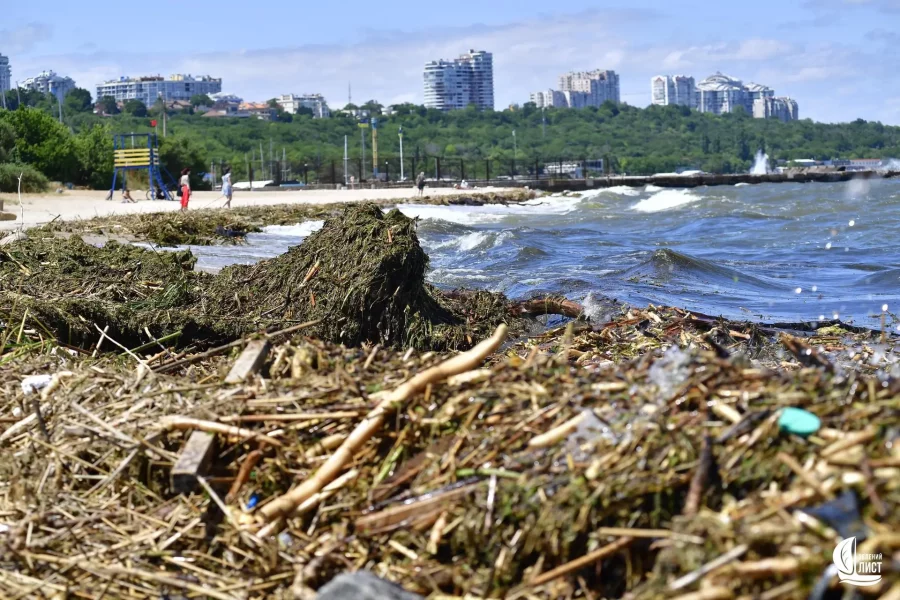

Threats and Challenges to the Black Sea in the Wake of the Kakhovka Tragedy
On 6 June 2023, the Russian occupiers carried out one of the largest terrorist attacks on Ukrainian territory — they blew up the dam of the Kakhovka Hydroelectric Power Plant. Ukrainian officials regard the destruction as ecocide and a war crime. Even now, almost a year and a half after the tragedy, it is impossible to fully assess all the consequences of the disaster. The destruction of the dam, which caused extensive flooding and the draining of the Kakhovka Reservoir, in addition to human casualties and material damage, caused a humanitarian and technological disaster, destroyed landscapes, altered ecosystems, polluted aquifers, and littered coastlines and water bodies.
Perhaps decades from now our descendants will call the Kakhovka disaster and its impact on the environment and the state of the Black Sea a second Chornobyl.
Read More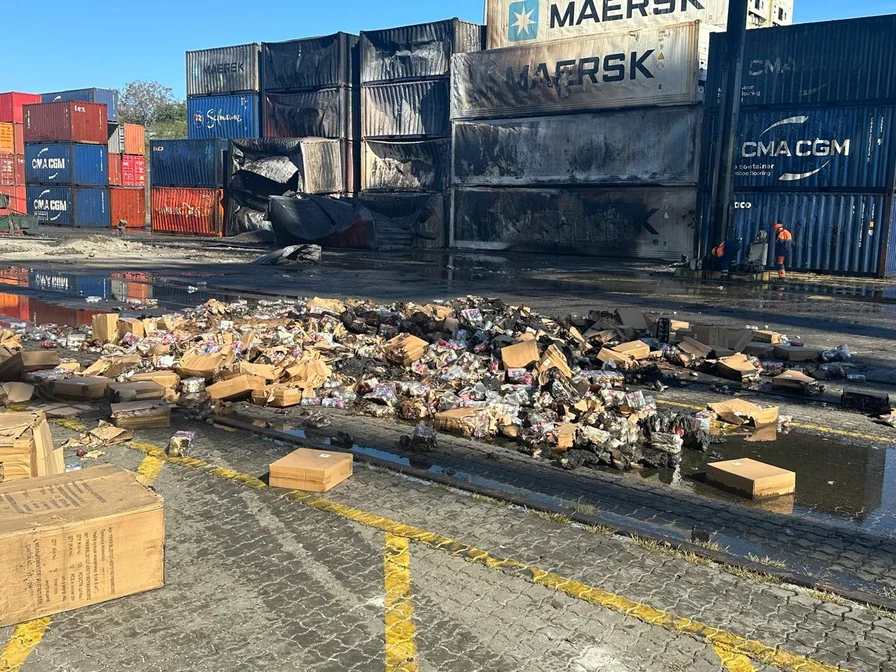
Chronicle of Russia’s War Crimes Against Ukraine’s Environment: Odesa Oblast, October 2024
In October, the occupiers continued terrorizing residents of Odesa and Odesa Oblast. In particular, there were more than ten attacks on port and other infrastructure in Odesa Oblast involved in the operation of Ukraine’s grain corridor, and many port workers were killed or injured. A new tactic also emerged — attacks on foreign civilian vessels calling at the ports of Greater Odesa. In this way, the occupiers are trying to make operation of the Ukrainian maritime corridor impossible.
We collect facts about the Russian Federation’s crimes against nature in Odesa and Odesa Oblast during the war: environmental pollution caused by explosions and damage to infrastructure, contamination of air, water and soil with toxic substances, destruction of ecosystems in protected natural areas and conservation areas of international importance, and more. The information will be updated daily, so please send any facts known to you to: zeleniy.list1@gmal.com
Read More
Life After the Kakhovka Disaster: A Major Challenge for Rebuilding Southern Ukraine on Environmentally Friendly Terms
This is the view of Ruslan Havryliuk, head of the National Ecological Centre of Ukraine. The environmental expert is studying the impact of the destruction of the Kakhovka Hydroelectric Power Plant dam on the environment, as well as the short- and long-term consequences of this horrific crime by the Russian military.
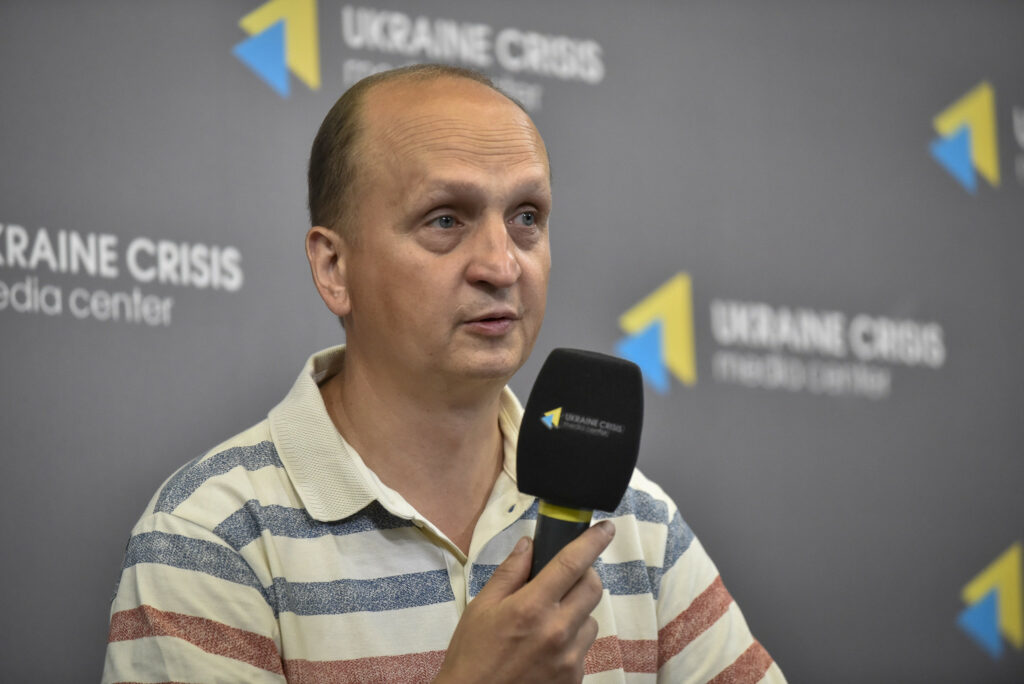
Here is what the scientist told Olena Chernyshova, a journalist with the Odesa environmental organization Green Leaf.
Read More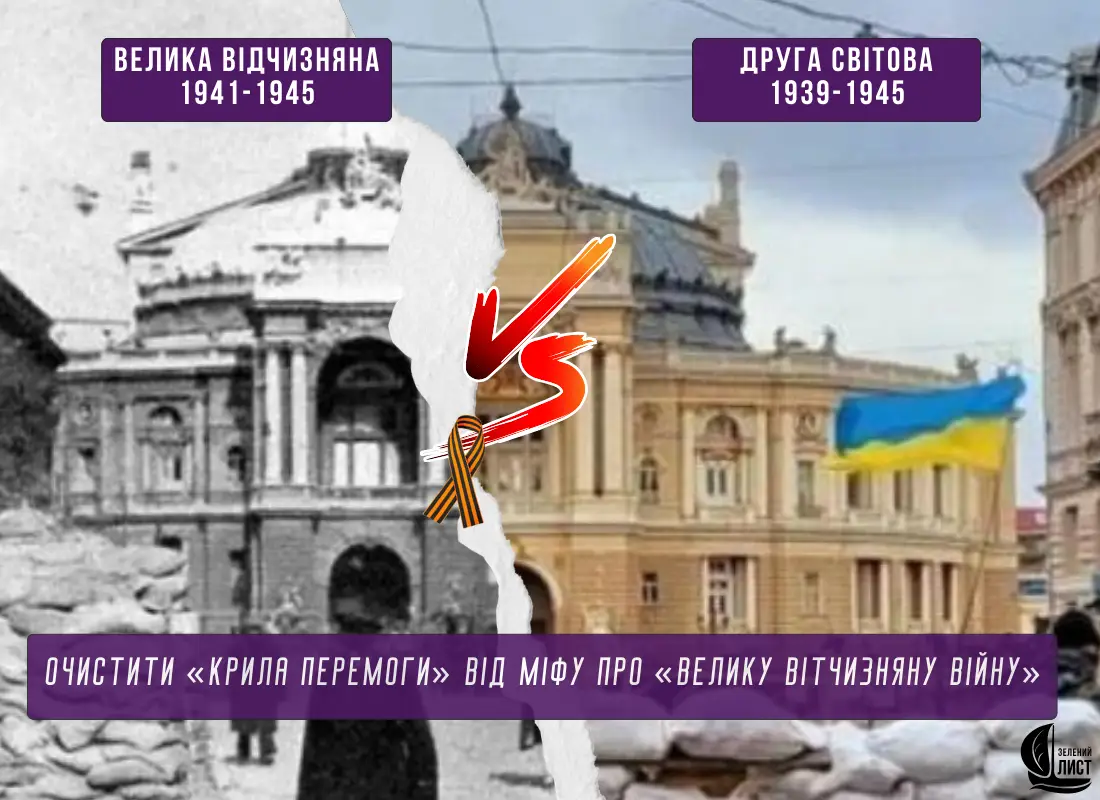
Remove the “Great Patriotic War” Myth from Odesa’s “Wings of Victory” Memorial
The “Wings of Victory” monument in Odesa symbolizes the Russian narrative of the so-called “Great Patriotic War”. This directly contradicts both the purpose of the memorial itself and Ukrainian law.
Read More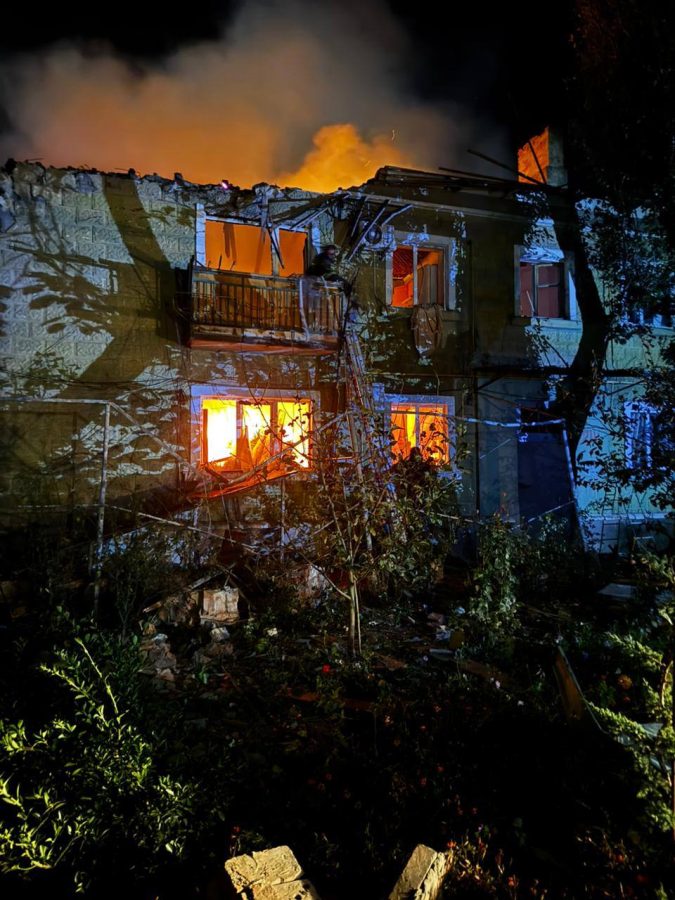
Chronicle of Russia’s War Crimes Against Ukraine’s Environment: Odesa Oblast, September 2024
What happened in Odesa region in September 2024 can be described as terror against the civilian population. Failing to achieve success on the front line and unable to retake the part of Kursk Oblast captured by the Armed Forces of Ukraine, the Russian army is taking revenge on residents of Ukrainian cities and villages, including in Odesa Oblast.
We collect facts about the Russian Federation’s crimes against nature in Odesa and Odesa Oblast during the war: environmental pollution caused by explosions and damage to infrastructure, contamination of air, water and soil with toxic substances, destruction of ecosystems in protected natural areas and conservation areas of international importance, and more. The information will be updated daily, so please send any facts known to you to: zeleniy.list1@gmal.com
Read More
What Is Wrong with Decommunization in Odesa
Today, against the backdrop of the Odesa local authorities’ overt sabotage of the Law of Ukraine “On the Condemnation and Prohibition of Propaganda of Russian Imperial Policy in Ukraine and the Decolonization of Toponymy,” a threatening situation has also developed regarding compliance with the Law of Ukraine “On the Condemnation of the Communist and National Socialist (Nazi) Totalitarian Regimes in Ukraine and the Prohibition of Propaganda of Their Symbols,” which entered into force back on 21 May 2015.
In our view, this is connected with the mayor’s position. From 2014 right up to the beginning of the full-scale invasion, Hennadii Leonidovych played the card of Odesa’s pro-Russian separatism in his domestic political struggle. His position shifted depending on the foreign-policy landscape and the situation at the front: from “The people in Crimea made their choice” in an interview with Green Leaf journalist Vira Zaporozhets on 10 May 2014 to “I am worried by the growth of hatred of all things Russian” in an interview with The New York Times, 18 June 2022.
One litmus test of the consequences of this kind of “concern” on Trukhanov’s part is the effort to preserve symbols of Soviet rule and imperial toponymy. Even though the Historical and Toponymic Commission, at its meeting on 18 December 2023 (Minutes No. 7.2-2023), decided to recommend removing the image of the Order of Lenin from the Wings of Victory Memorial, that decision is simply being ignored.
On 2 September 2024, an appeal was sent to the mayor of Odesa by Odesa City Council deputy Maryna Boiko as well. However, the editorial office received no response to that letter.
On 7 September 2024, Serhii Hutsaliuk also stated that the Odesa city authorities were sabotaging implementation of the decommunization law..
This state of affairs in Odesa is also connected with the position of the police
When necessary, the police simply “do not see” blatant violations of these laws and are in no hurry to enforce their provisions.
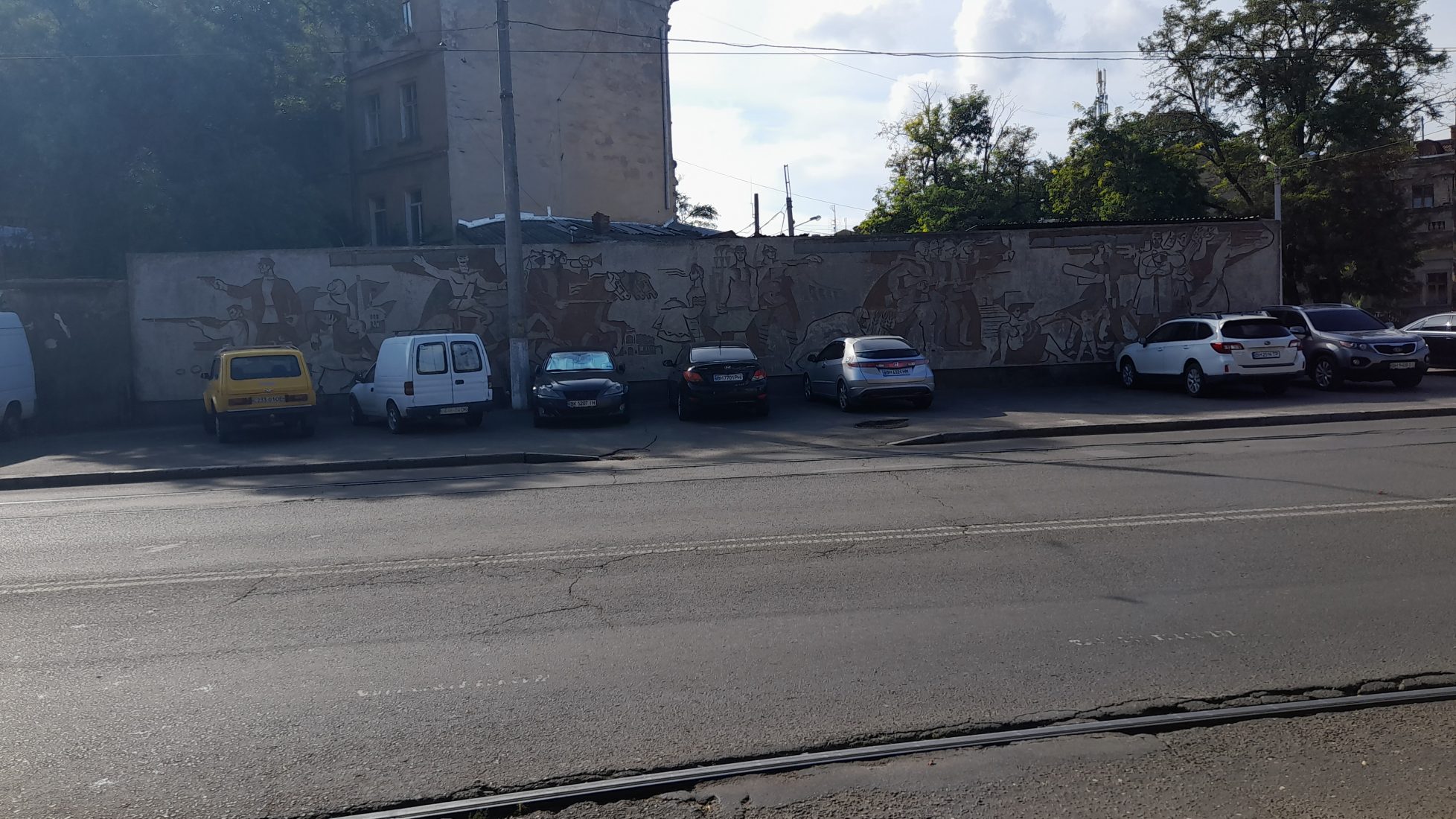
On 20 September, Green Leaf appealed to Police Department No. 3, opposite which the bas-relief “Fighters for Soviet Power in Odesa” still stands. It was erected in honour of revolutionaries who died during the January uprising — the armed revolt of 1918 organized by the Bolshevik Party against the Ukrainian Central Rada and the Ukrainian People’s Republic during the advance of Bolshevik troops. As a result of the uprising, the city came under Bolshevik control and the lawful authorities in Odesa were overthrown.
Green Leaf also appealed to the Main Directorate of the National Police in Odesa Oblast regarding a memorial plaque to Komsomol members and Communists that still remains on the building at 44 Preobrazhenska Street.
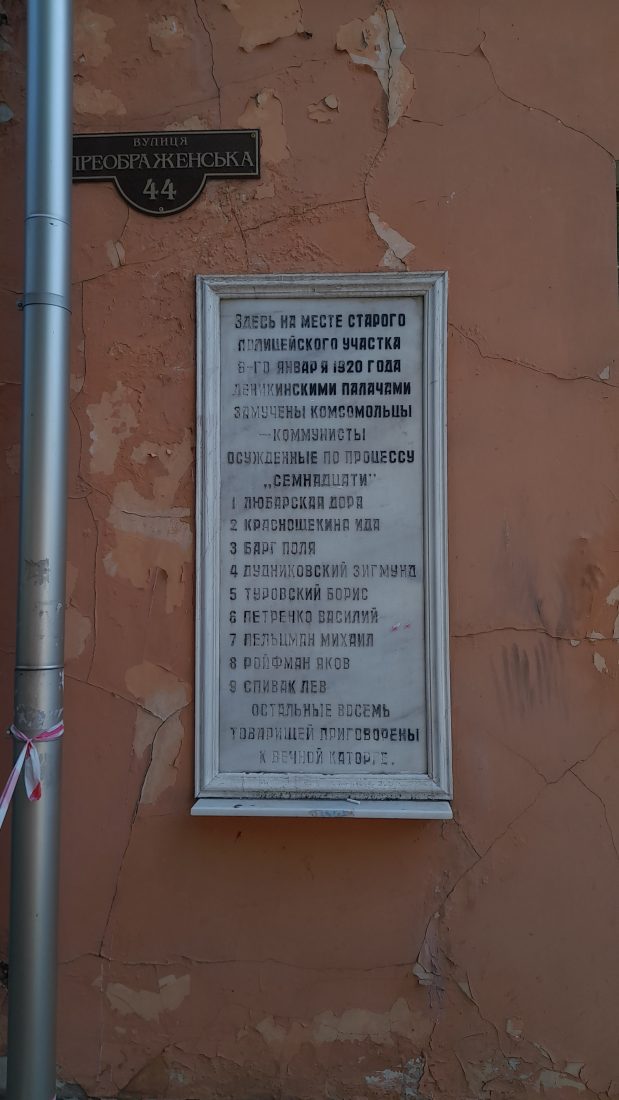
Both symbols of Soviet rule fall within the scope of the Law. Yet the police are not only in no hurry to enforce the Law; on the contrary, their presence appears to protect symbols of the era of the Soviet occupation of Odesa.
At the same time, the police intervene when civic activists try to fulfil the requirements of the Law themselves, but can think of nothing better than drawing up reports under Article 173 of the Code of Ukraine on Administrative Offences (petty hooliganism).
So we end up with a Law adopted, among other things, to safeguard human and civil rights and freedoms and to outlaw symbols of the Soviet era; we have the police duty to protect human rights and freedoms; and we have the reality in which the city authorities and the police do not want to comply with the requirements of a Law adopted almost ten years ago.
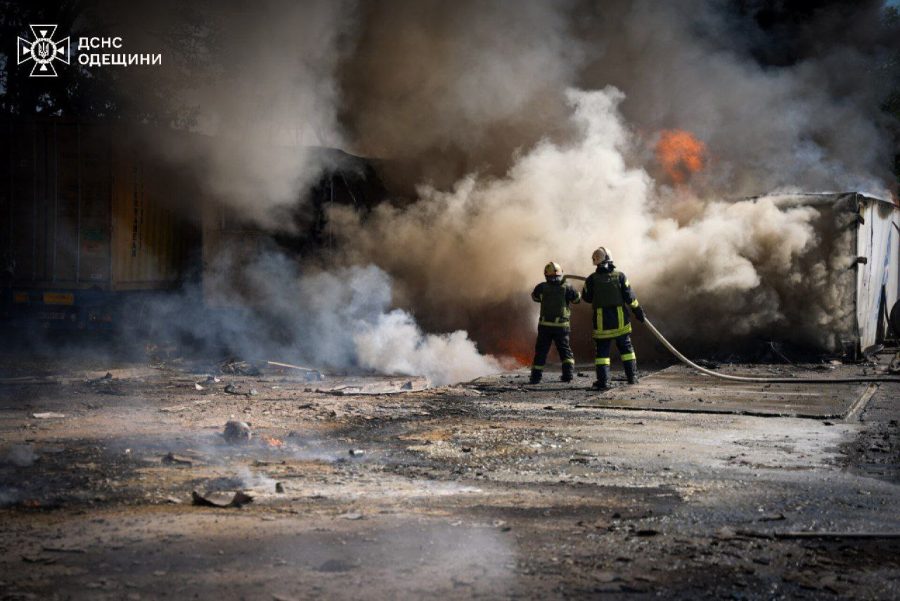
Chronicle of Russia’s War Crimes Against Ukraine’s Environment: Odesa Oblast, August 2024
On the eve of Ukraine’s Independence Day, we were repeatedly warned about a possible massive combined Russian attack. But instead of 24 August, the Russian occupiers committed another crime on 26 August. The targets of the strike, which used various means of attack, were energy infrastructure and other civilian facilities. In total, Russian terrorists launched 127 missiles of various types and 109 Shahed-136 kamikaze drones at Ukraine. Fifteen regions, including Odesa Oblast, were affected by Russia’s attacks.
We collect facts about the Russian Federation’s crimes against nature in Odesa and Odesa Oblast during the war: environmental pollution caused by explosions and damage to infrastructure, contamination of air, water and soil with toxic substances, destruction of ecosystems in protected natural areas and conservation areas of international importance, and more. The information will be updated daily, so please send any facts known to you to: zeleniy.list1@gmal.com
Read More