
Water and Climate · Danube · Interview
For southern Ukraine, low water on the Danube is not a distant European anomaly. Ports, municipal water supplies, the Danube lakes and the resilience of the entire region to droughts and floods all depend on the river.
This summer, water levels on the middle Danube fell by about two metres, while discharge on some stretches dropped three- to fourfold. Ruslan Havryliuk explains why heat is only part of the story, how decades of regulation have changed the river, and why the consequences now extend far beyond navigation.
Editor’s note. For Zeleniy Lyst, the material has been adapted with a different editorial presentation: the introduction, section leads, subheading structure and transitions between thematic blocks have been changed. The factual basis and Ruslan Havryliuk’s argumentation have been preserved.
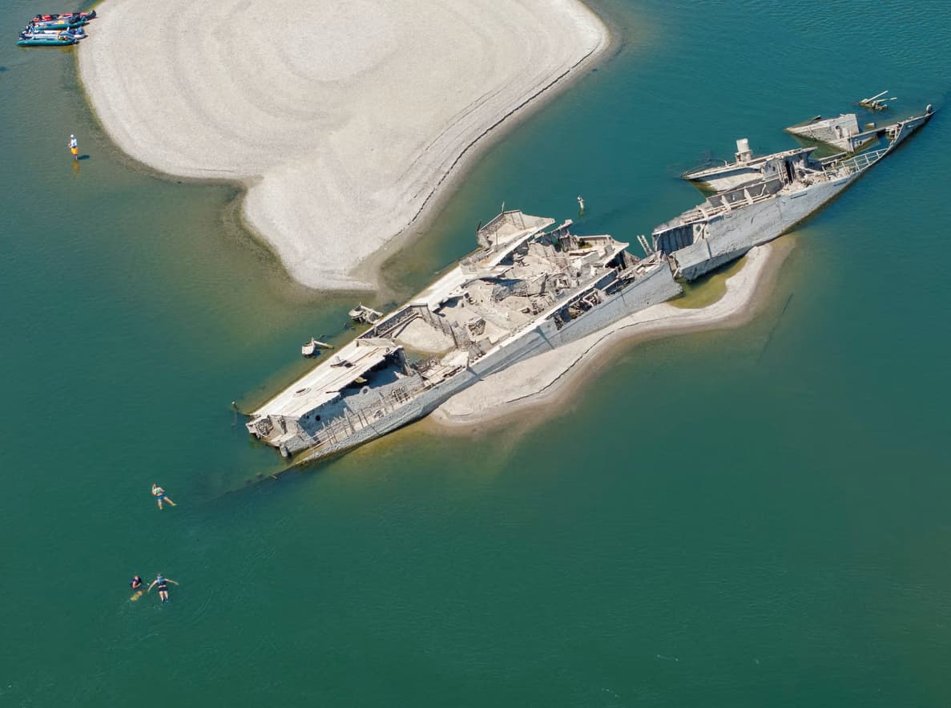
Low water on the Danube can easily become a striking story about exposed banks and submerged artefacts. For Europe’s water system, however, the more important question is how much water levels and discharge have changed and what that means for infrastructure, ecosystems and the cities that depend on the river.
The Danube below normal: what the observations show
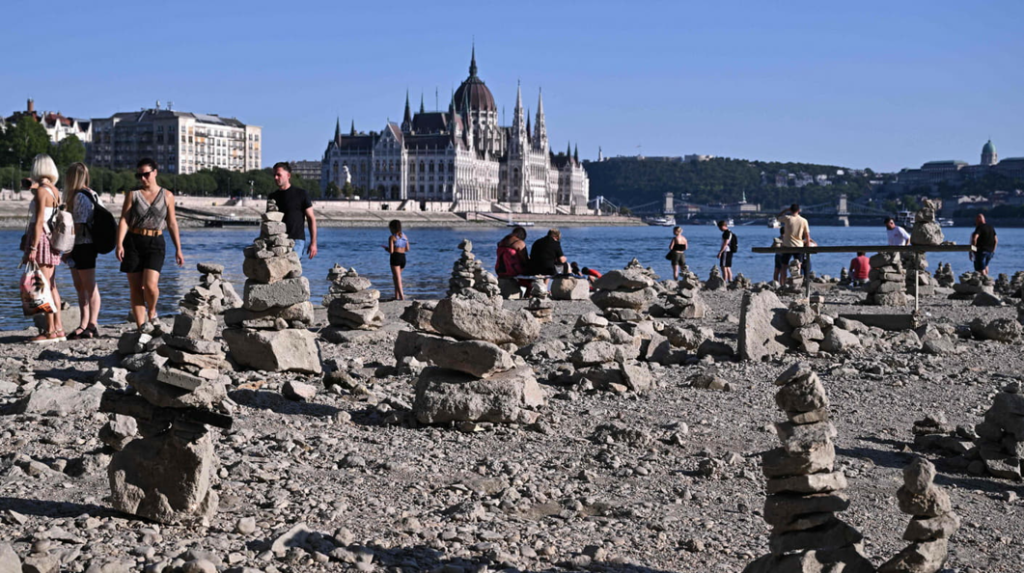
The Danube has become one of the main stories of recent weeks, although the warning signs were already there: extreme heat spread across Europe at the beginning of summer, including the Danube basin. The problem is not limited to this river. The same pattern is being observed on the Rhine, which flows into the North Sea, where one monitoring station recorded the lowest water level in the entire measurement record dating back to 1880.
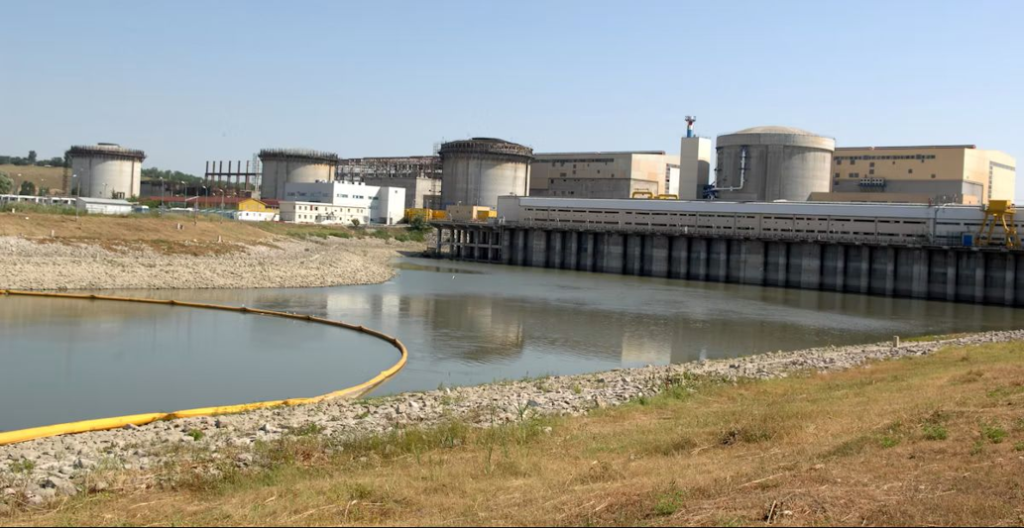
No comparable absolute record has yet been officially declared for the Danube, but falling levels and discharge have already had a substantial impact on navigation and energy. This is critical for Hungary and Romania, whose nuclear power plants are located directly on the Danube and depend on its water availability.
Measurements, not impressions
These are confirmed data. All countries in the Danube basin, including Ukraine, exchange hydrological observations through the open DanubeHIS portal, where changes in water level, temperature and discharge can be tracked over recent years.
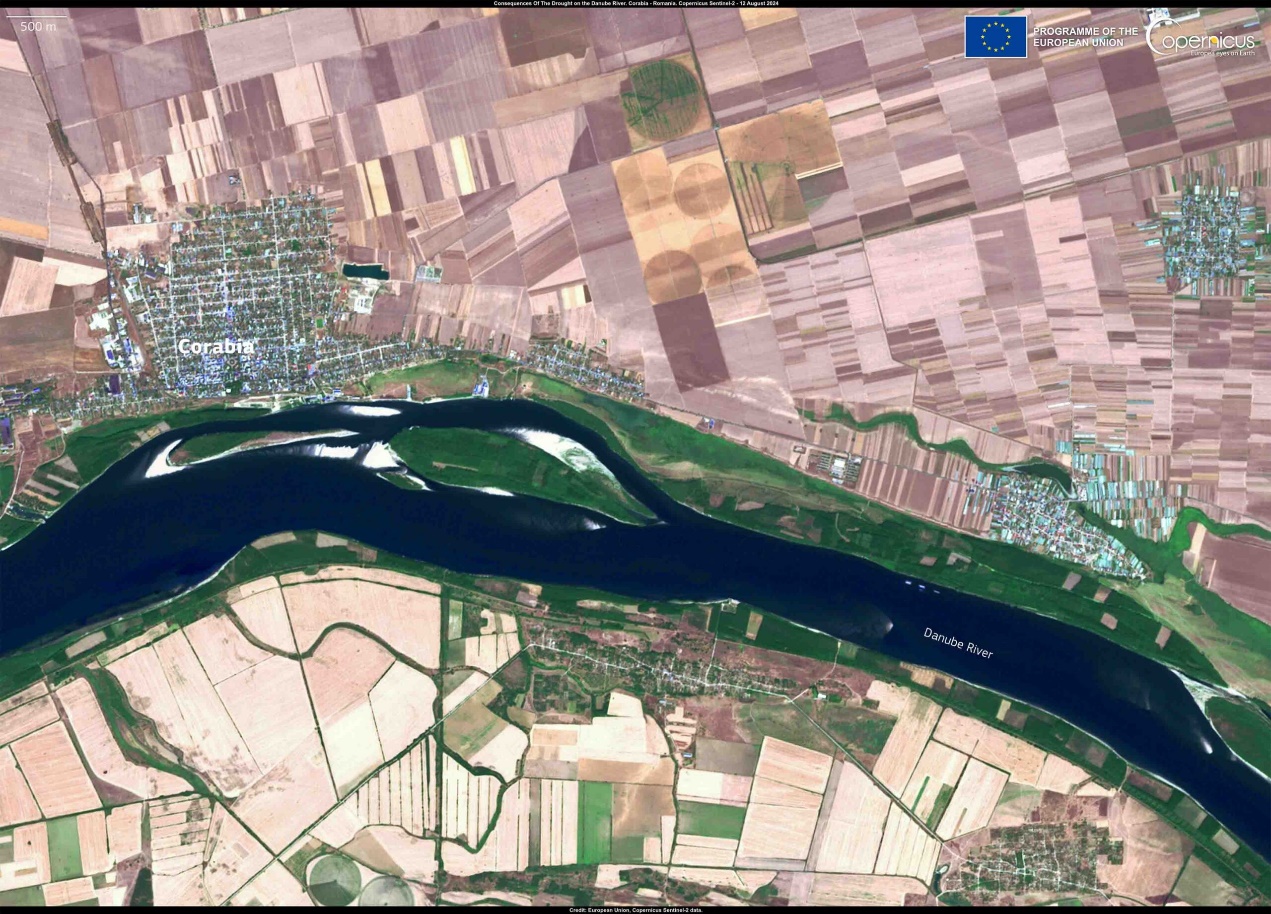
The analysis shows that on the middle Danube, near Budapest, Belgrade and Novi Sad, the water level fell by about two metres. At the large transboundary Iron Gates reservoir on the Romanian-Serbian border, the level is regulated and changed by only a few centimetres because it is a managed system. Downstream, however, conditions deteriorate again: near Romania’s Cernavodă nuclear power plant, discharge is about 1,500 m³/s — extremely low. After the Siret and Prut rivers, which originate in the Ukrainian Carpathians, enter the Danube, discharge rises to around 2,000 m³/s. In spring it reached 8,000 m³/s, while the normal value is about 6,000 m³/s. That is a three- to fourfold reduction.
Because of this, the Romanian government is resorting to blasting rock and sinking old vessels to redirect the flow into a single channel. In Romania, the river divides into several branches, and one of them contains the Cernavodă nuclear power plant and the head of the Danube–Black Sea Canal. The aim is to raise the water level by just four centimetres, and even that requires enormous effort.
The current crisis is layered onto a long history of engineering intervention in the river. To understand why low water so quickly becomes a systemic problem, it is important to look not only at the weather but also at how people have altered the mechanisms by which water is stored and moved through the landscape.
A river reshaped by people for decades
Before dams and reservoirs were built, the Danube was a free-flowing river that carried enormous amounts of sediment into the Black Sea. This is what allowed the unique Danube Delta to form and expand over roughly the past 150 years. Today, it is a protected area on both the Ukrainian and Romanian sides.
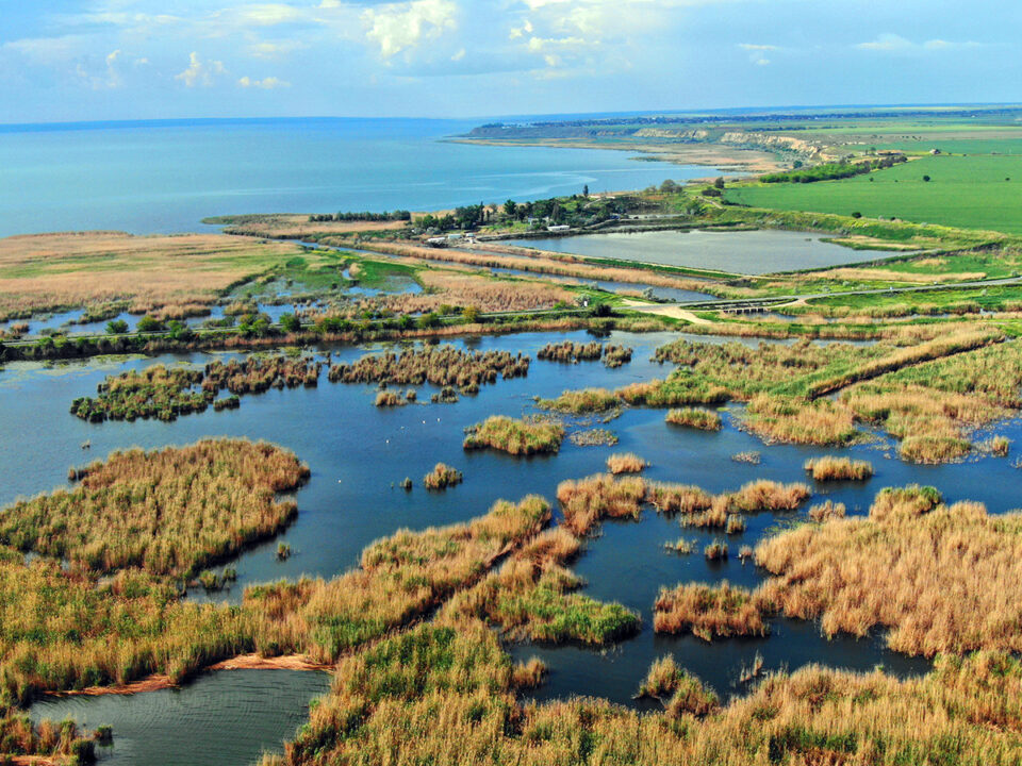
Historically, the Danube has been a multipurpose artery for the countries of the region. It flows through or along the borders of ten countries, while its entire basin covers 19 states and more than 800,000 km² — an area larger than Ukraine. More than 80 million people live in the basin. For Ukraine, the Danube ports now play a critical role in trade and the economy under conditions of Russian aggression.
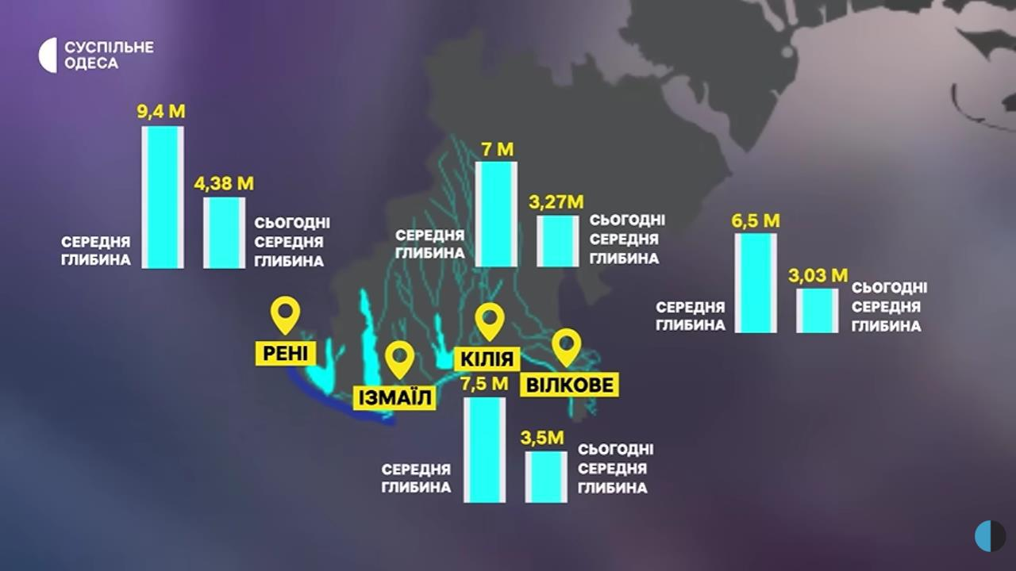
The groundwater component is equally important. Riverbank water intakes in the Danube valley, located tens to hundreds of metres from the river, supply drinking water to four European capitals on the Danube. For Vienna, the Danube is a backup source; for Belgrade, Budapest and Bratislava, it is a key source. The same applies in Ukraine: the largest Ukrainian cities on the Danube, Izmail and Reni, use this type of water-supply system, while Vylkove and Kiliia take water directly from the river.
For Ukraine, this discussion is especially practical. The Danube and the Dniester are tied to urban water supplies, port operations, lakes and wetlands in Odesa Oblast. A European hydrological anomaly therefore very quickly becomes a local water-security issue.
The Ukrainian dimension: the Danube, the Dniester and water for cities
The situation on the Dniester is no less critical. A large part of its basin lies in Ukraine; the river then passes through Moldova, which depends on Dniester water for more than half of its needs, before returning to Ukraine. Dniester water is what supplies Odesa’s water supply. When Mykolaiv’s Dnipro-based water supply was destroyed during the occupation of Kherson Oblast, volunteers brought water to the city from the Dniester.
Releases from the Dniester reservoir are currently being reduced on a regular basis, with the joint Ukrainian-Moldovan intergovernmental commission reviewing them almost every week. The headwaters of both the Danube system, through the Prut, Siret and Tysa, and the Dniester lie in the Ukrainian Carpathians, so both basins are experiencing a similar decline in water availability. This is a systemic rather than a local problem.
Heat triggers the crisis but does not fully explain it
The abnormal heat of mid- and late June, when temperatures in Western Europe reached 40°C and above, affected not only the traditionally hot southern countries but also northern France and southern Germany — the Black Forest region where the Danube begins. But this is only one factor in a long-term trend: droughts are becoming more frequent and more severe, and episodes like the current one are recurring ever more often — once roughly a decade in the past, now several times within a decade.
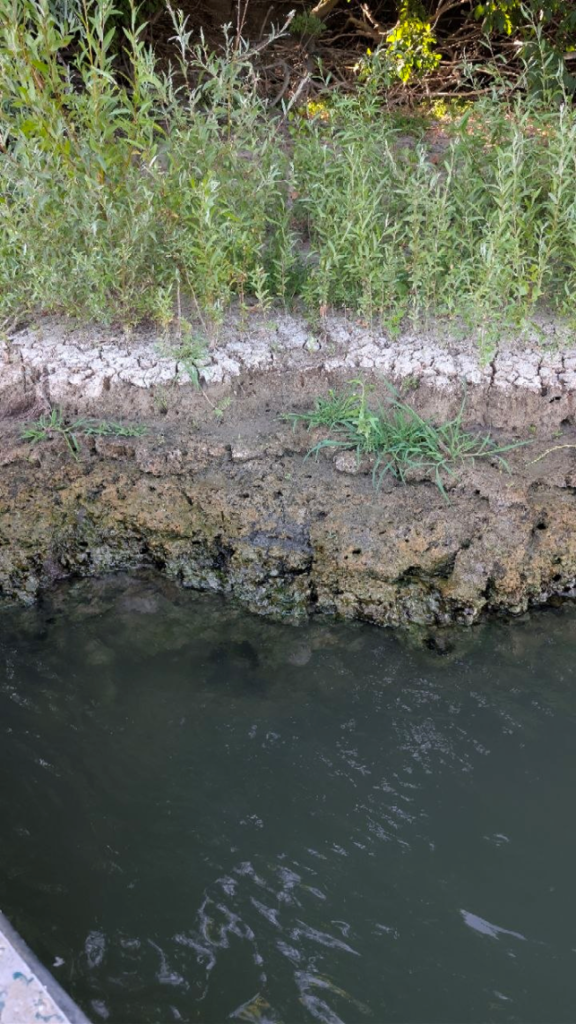
The reason is the declining ability of landscapes to retain water: small rivers disappear, groundwater levels fall, wetlands are lost and mountain forests are cut. A clear example is the Danube lakes, including Yalpuh, Ukraine’s largest freshwater lake. They no longer receive enough inflow from small rivers and now effectively depend on artificial replenishment with Danube water.
Agriculture also plays a role. Crops such as sunflower and maize require large amounts of moisture, so together with its harvest Ukraine is effectively exporting water as well. The government is currently trying to expand irrigation, but this does not solve the shortage and only increases pressure on water resources. The Kakhovka reservoir is another revealing example: agriculture was unprepared for the new conditions of restricted access to water. Large open water bodies also lose significant volumes through evaporation, which intensifies as temperatures rise.
Why rain does not restore the water balance
Rainfall will improve the situation but will not solve the underlying problem. The capacity of soils and the geological environment to retain moisture is declining because of mountain deforestation, the loss of wetlands and falling groundwater levels. As a result, the Danube now depends far more directly on precipitation than on the natural reserve that once maintained a stable minimum flow.
When rain falls, the water runs off rapidly across the surface and disappears just as quickly. The natural “buffer” that once fed the river between rainfall events is no longer there. It is the same process that dries out peatlands in Ukraine’s Polissia, eventually contributing to peat fires and smoke over Kyiv.
Low water stops being solely an environmental issue when infrastructure designed for a different hydrological regime begins to lose its safety margin.
When low water becomes an infrastructure risk
The clearest example is the nuclear power plants in Romania and Hungary, built 40–50 years ago on the assumption that Danube levels would remain stable. Unlike Ukrainian nuclear plants, they do not have cooling ponds: reactor cooling is once-through, directly from the river. Now, as water levels fall, the cooling-water intake pumps become exposed, creating a serious challenge whose consequences are difficult to predict.
Giving rivers back their freedom: what deregulation means
This is probably a matter of decades. Ukraine had long discussed gradually lowering the level of the Kakhovka reservoir, but in the end it happened instantly and catastrophically when Russian forces blew up the dam. About 18 km³ of water was released into the Black Sea in a short period, causing serious damage to the marine ecosystem.
Deregulation should begin with small steps: small rivers and abandoned hydraulic structures that no longer serve any economic function. At the same time, wetlands in river headwaters should be restored. Europe’s beaver population is a revealing example: once reduced to a handful of refuges, it has now recovered across the continent and naturally recreates wetland landscapes, retaining water wherever the animals build dams.
The European Union has officially adopted a course toward restoring free-flowing rivers: the goal is to restore 25,000 kilometres of free-flowing river stretches by 2030, while the EU Nature Restoration Law provides for the recovery of both terrestrial and aquatic ecosystems.
On the Danube itself, debate continues around the Iron Gates hydropower complex, the only structure on the river’s main channel comparable to Ukraine’s DniproHES. The dam traps sediment and silt, negatively affecting the lower Danube ecosystem, increasing erosion and reducing biodiversity while also decreasing the reservoir’s useful capacity. Fish passages are also being discussed, because any dam fragments a river ecosystem, as can be seen on the Southern Bug above and below the Oleksandrivka dam, or on the Dnipro, where reservoirs have replaced a river ecosystem with a lake-like one.
Further downstream, the problem is no longer measured only in centimetres of water level. Slower water dilutes pollution less effectively, changes conditions for benthic ecosystems and affects the quality of the water cities receive.
The lower Danube: slower flow, poorer water quality
The ecosystems of the lower Danube suffer most. The fact that water levels in the Ukrainian section have not yet fallen sharply is explained by its proximity to the Black Sea, but that also means seawater is being drawn upstream. A similar process is already clearly visible on the Southern Bug and the Dnipro, where a wedge of saline water is moving farther inland and increasing river salinity. Because the Danube’s discharge is much greater than the Dnipro’s, this has not yet been observed there, but the mechanism is possible in principle.
Lower flow velocity and discharge directly worsen water quality: the slower the current, the less effectively the river cleans itself and the less pollution is diluted. This is supported by studies of bottom sediments in the Iron Gates reservoir, where pollution from upstream has accumulated for decades, as well as by Ukrainian research on microplastics in lower-Danube sediments.
This directly affects water supply as well. Riverbank groundwater intakes in the Danube valley effectively use Danube water naturally filtered through alluvial sands. This is how water supply works in Bratislava, Budapest and Ukrainian Danube cities. Deteriorating water quality in the river therefore threatens the quality of the water these cities receive. As surface-water levels fall in Ukraine’s Danube lakes, water already has to be pumped into them artificially.
Zeleniy Lyst context. We have previously written about surface-water monitoring in the Danube, Dniester and Southern Bug basins and why river-water quality requires continuous laboratory monitoring.
Drought after flood: why this is not a contradiction
The total amount of precipitation in our river basins is not changing as much as its pattern. When intense rain falls, it is more likely to cause flooding because landscapes have lost the ability to store water in lakes, soils and wetlands. Without that capacity, rainfall turns immediately into a flood instead of gradually feeding the river.
The European Union has a separate directive on preparing for floods and high-water events, defining areas at risk and rules for managing them. The main principle is to free not only the river channel but the entire floodplain so that the river can overflow without damaging infrastructure. A telling example of the opposite approach is the Elenite resort, built in a river valley between Varna and Burgas in Bulgaria, which was completely washed away by a flood last year.
The response to low water cannot be reduced to a single large infrastructure project. In the logic described by Ruslan Havryliuk, resilience returns when landscapes regain their ability to retain water — from small rivers and wetlands to the way cities consume water.
What can be changed today
This is a shared responsibility that begins not with waiting for government action but with building public demand from below. There have already been some positive shifts: younger people generally have a stronger awareness of environmental value than earlier generations, and state river-basin management plans provide for specific measures. The main problem is funding: many Ukrainian cities still lack wastewater-treatment facilities and discharge untreated effluent into rivers.
Countries that joined the EU before Ukraine have gone through this process. For example, after joining the European Union in 2006, Romania spent tens of billions of euros implementing the Water Framework Directive and the Urban Waste Water Treatment Directive, whose requirements have only become stricter over time.
At the household-consumption level, the situation in Ukraine is gradually improving. In Kyiv, per-capita water use has fallen substantially over the years of independence, largely because of tariff policy, even though Ukrainian water tariffs remain lower than in EU countries. At the same time, southern Ukraine is already being forced to rebuild its water-supply system after the destruction of Dnipro water intakes that supplied Mykolaiv and Kryvyi Rih.
For southern Ukraine, low water on the Danube matters not only as a climate story. The Danube and Dniester are simultaneously natural systems, sources of water supply, transport arteries and the foundation of wetland ecosystems. When a landscape loses its ability to retain water, the same problem appears as drought, destructive flooding and deteriorating water quality.
A few rainy weeks may therefore raise river levels temporarily, but they will not restore the river’s natural reserve of resilience. Europe’s course toward restoring free-flowing rivers and wetlands points to a direction: fewer barriers in rivers, more room for floodplains and a greater capacity for landscapes to store water where it falls.
Sources and previous publication
- DanubeHIS — the Danube basin hydrological information system cited in the material.
- Ukrainian Radio — the broadcast on which Tetiana Herasymova based the material.
- National Ecological Centre of Ukraine — the previously published version of the material.