
Ahead of the 40th anniversary of the catastrophe, Zeleny List journalist Hlib Yehorov travelled to the Chornobyl Exclusion Zone on 22–23 April. There he recorded exclusive conversations with two specialists who deal with the consequences of the worst technogenic disaster in human history every working day — Serhii Bokov, shift supervisor at the Shelter Object and the New Safe Confinement, and Nadiia Mudryk-Mochalova, head of the press service of the State Agency for the Management of the Exclusion Zone. This piece is based on those conversations and our reporting on the ground.
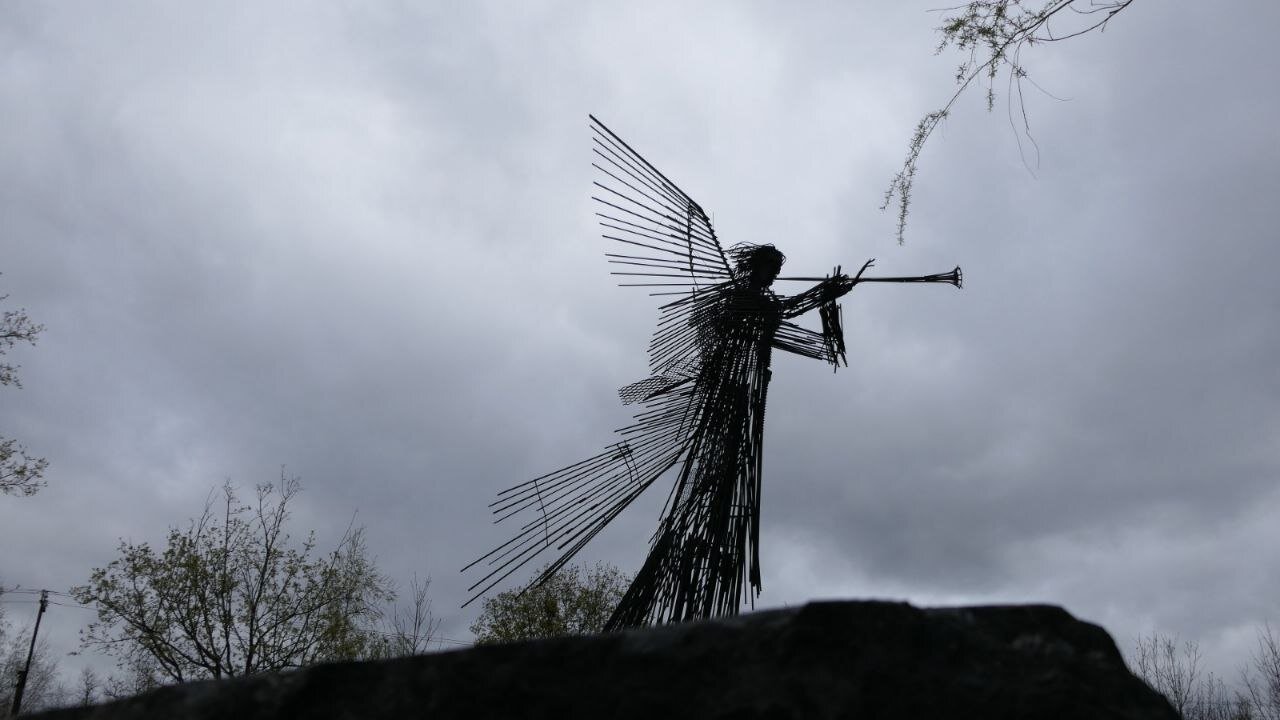
“The Third Angel” sculpture in the Chornobyl Zone — a symbol of the biblical allegory of the catastrophe. Photo: Hlib Yehorov for Zeleny List
Forty years ago, on 26 April 1986, humanity suffered the worst technogenic catastrophe in its history. Yet looking back across these four decades today, what we see is not merely an accident — we see an unbroken line of crime, running from Soviet arrogance through post-Soviet silence to the deliberate Russian nuclear terrorism of 2025.
Soviet DNA: hubris, lies, pits in the forest
Chornobyl did not begin with the explosion of a reactor. It began with a system in which ideological ambition always outweighed human life. When, in the small hours of 26 April, that ingrained hubris finally produced catastrophe, the communist leadership did exactly what the Soviet system had always done: it began to lie. While the people of Prypiat marched in May Day parades and children played in courtyards under radioactive rain, in Moscow the discussion was not how to save the population, but how to keep the truth from the world.
The first firefighters fought a graphite blaze without protection because no one told them what they were dealing with. And when the threat of a second, even more devastating explosion emerged — from molten nuclear fuel meeting the water in the bubbler pools beneath the reactor — three men went down to deal with it: Oleksiy Ananenko, an engineer who knew the plant’s underground communications intimately, Valeriy Bezpalov, a senior engineer of the turbine workshop, and Borys Baranov, a shift supervisor. In chemical-protection suits and respirators, torches in hand, they made their way through corridors flooded with radioactive water on the lower level and manually opened the valves to drain the water from beneath the reactor. Behind them came roughly 600,000 liquidators from across the Soviet Union. Hostages of the information blockade, sent in without proper protection, without truthful instructions, without any real understanding of what they were being thrown into.
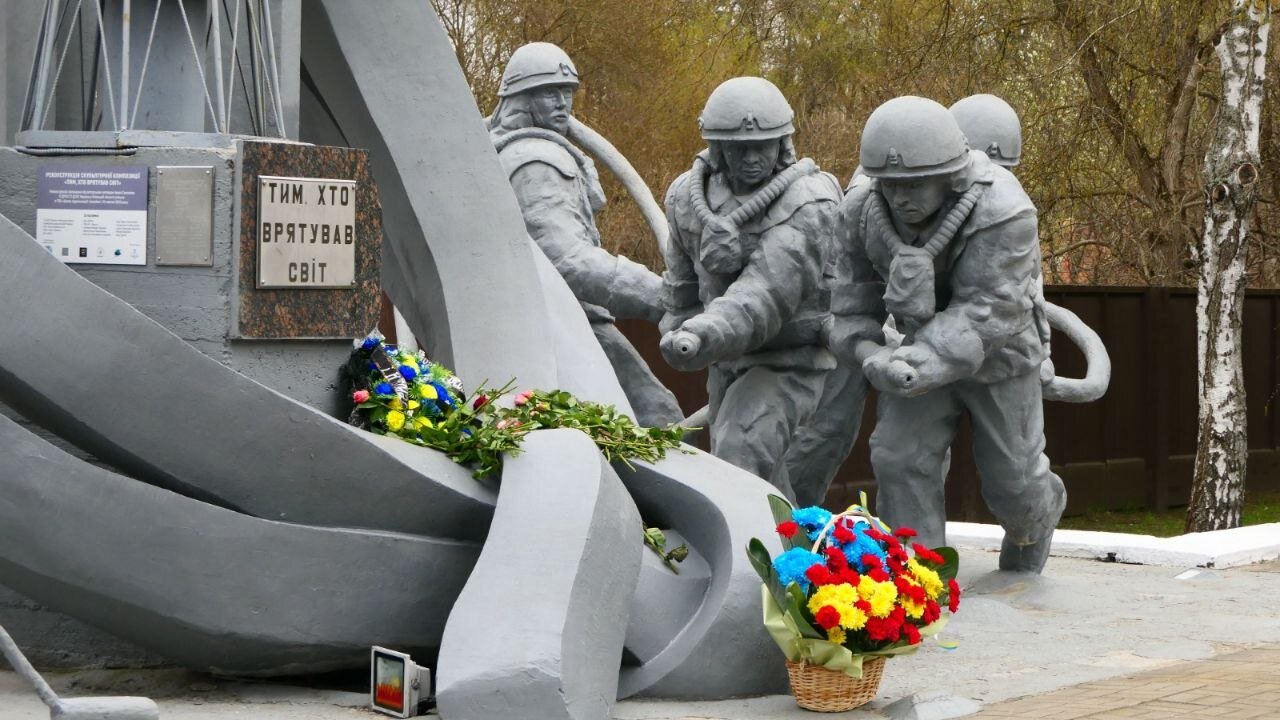
“To Those Who Saved the World” memorial in Chornobyl — a monument to the firefighter-liquidators. Photo: Hlib Yehorov for Zeleny List
No less telling is the way that same system “cleaned up” the consequences. As Nadiia Mudryk-Mochalova told our journalist, in the panic of 1986 contaminated equipment, soil and entire stretches of forest — anything that emitted radiation — were simply scraped into ordinary trenches across the Zone. No waterproofing. No methodology. No standards of any kind. Just pits in the ground, covered over with earth, in which thousands of tonnes of nuclear-hazardous material were buried. Today these Soviet “burial grounds” are poisoning the groundwater of Polissia, and only now, with European Union support, is Ukraine forced to dig them up and move the waste into modern, safe storage. Cleaning up after those who poisoned the land and ran away.
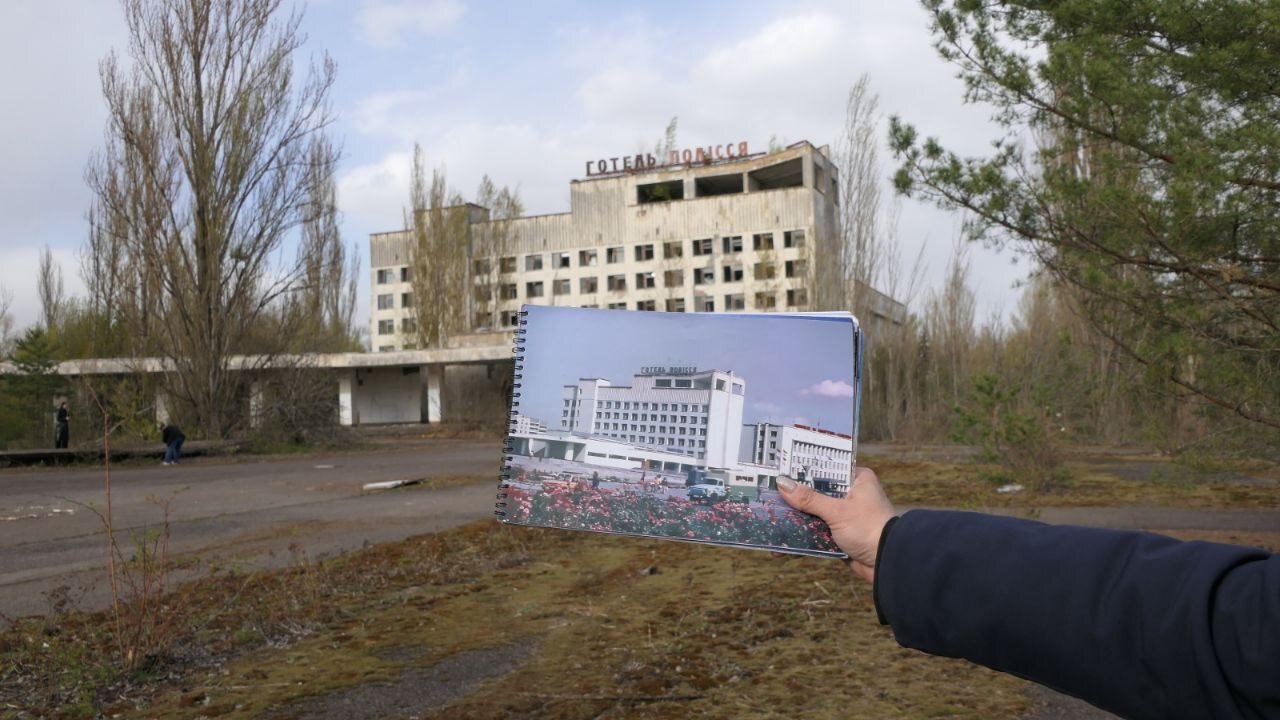
Hotel Polissia in Prypiat: in the photograph held in hand — the way it stood before 26 April 1986; in the background — what it has become. Photo: Hlib Yehorov for Zeleny List
How the world covered Chornobyl: the Arch over catastrophe
After the collapse of the USSR, Ukraine was left alone with a radioactive ruin in the depths of an economic crisis. Moscow, which had caused the disaster, simply washed its hands. The hand that was extended came from the West: in 1995 the Ottawa Memorandum was signed, under which Ukraine committed to closing the Chornobyl plant, while the G7 and the European Union committed to financing its safe decommissioning and the construction of a new and reliable confinement. In 1997, under the auspices of the European Bank for Reconstruction and Development, the Shelter Fund was established. Twenty-five countries joined it: alongside the G7, these included the Netherlands, Norway, Sweden, Denmark, Switzerland, Poland, Kuwait and others.
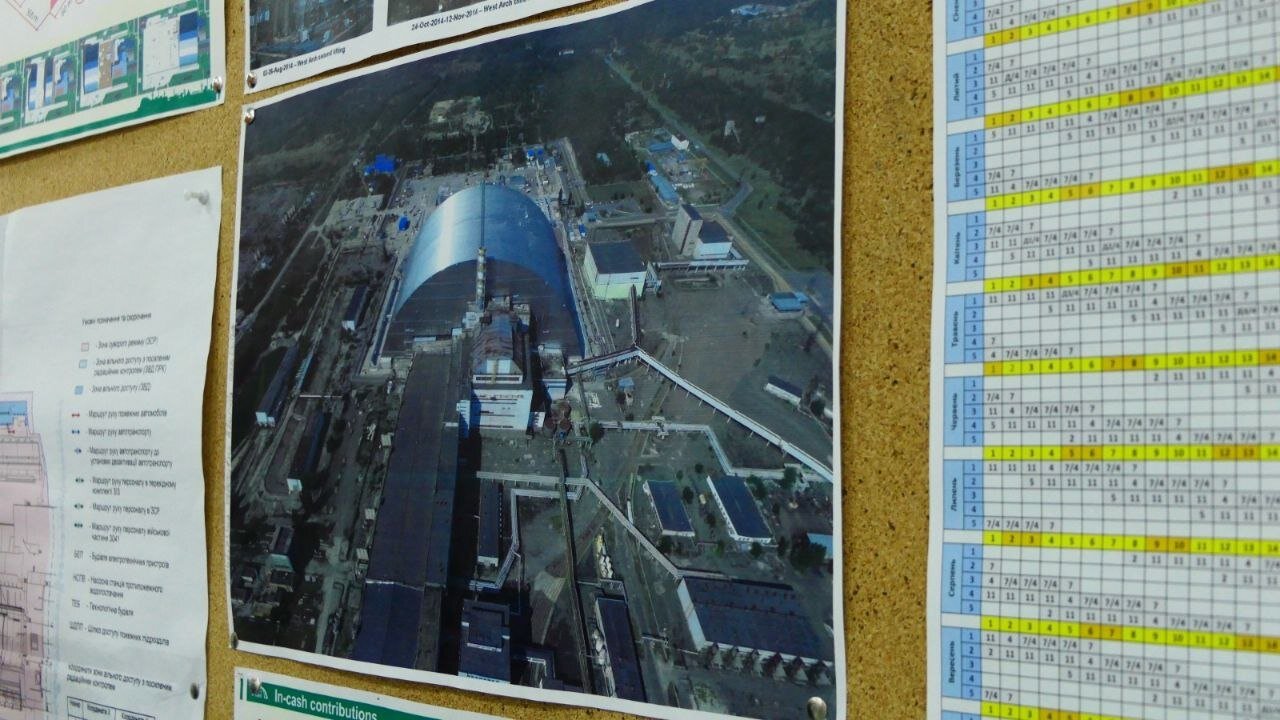
Working materials in the administrative building of the Chornobyl NPP: an aerial view of the New Safe Confinement over the fourth power unit. Photo: Hlib Yehorov for Zeleny List
The result of those international efforts is a structure that engineers describe as one of the most complex ever built. In 2016, a New Safe Confinement (NSC) was rolled into place over the destroyed fourth power unit — an arch more than 100 metres tall, valued at over 2 billion euros. The principal contractor was the French consortium Novarka, formed specifically for the project: a partnership between two global construction giants, Vinci Construction Grands Projets and Bouygues Travaux Publics. Hundreds of subcontractors from more than 30 countries worked on it.
The NSC is not simply a lid over the old sarcophagus. As Serhii Bokov explained to our journalist, the structure consists of an inner and outer cladding separated by an annular gap. A specialised ventilation system maintains controlled humidity, slowing corrosion. A pressure differential between the gap and the main volume creates an additional barrier against the release of radiation. Designed lifespan: 100 years.
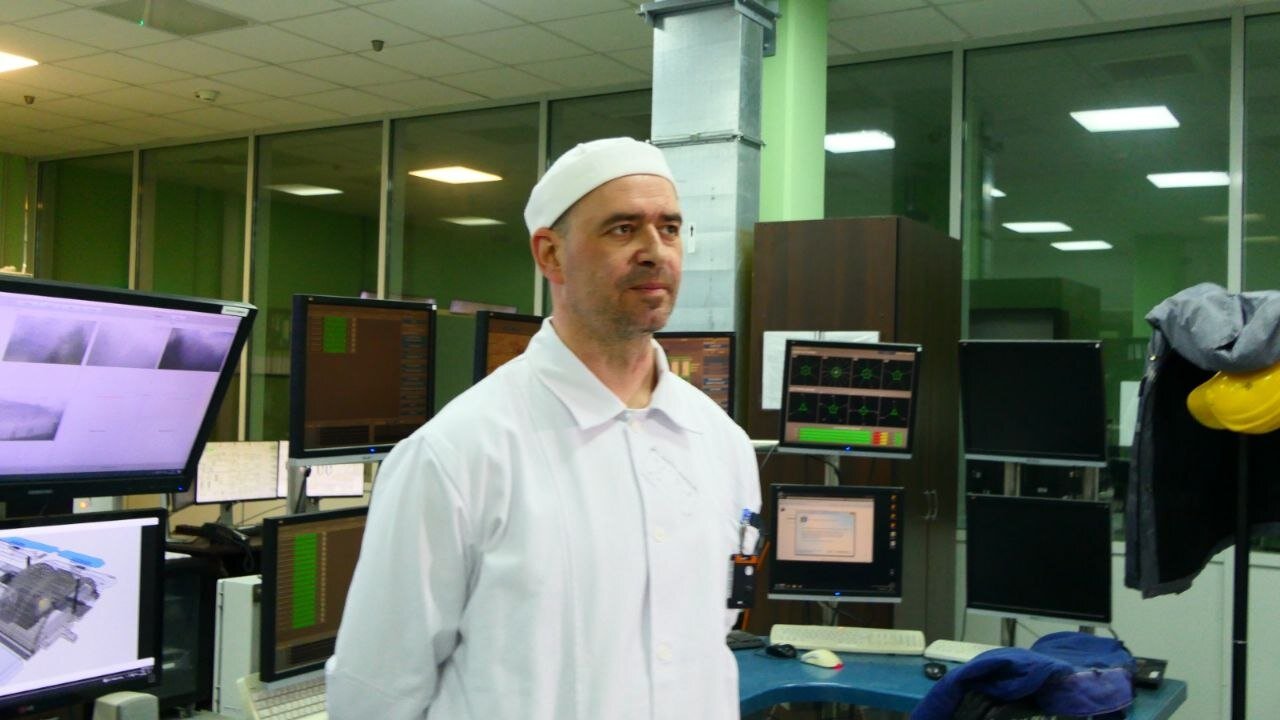
Serhii Bokov, shift supervisor of the Shelter Object and the New Safe Confinement. Photo: Hlib Yehorov for Zeleny List
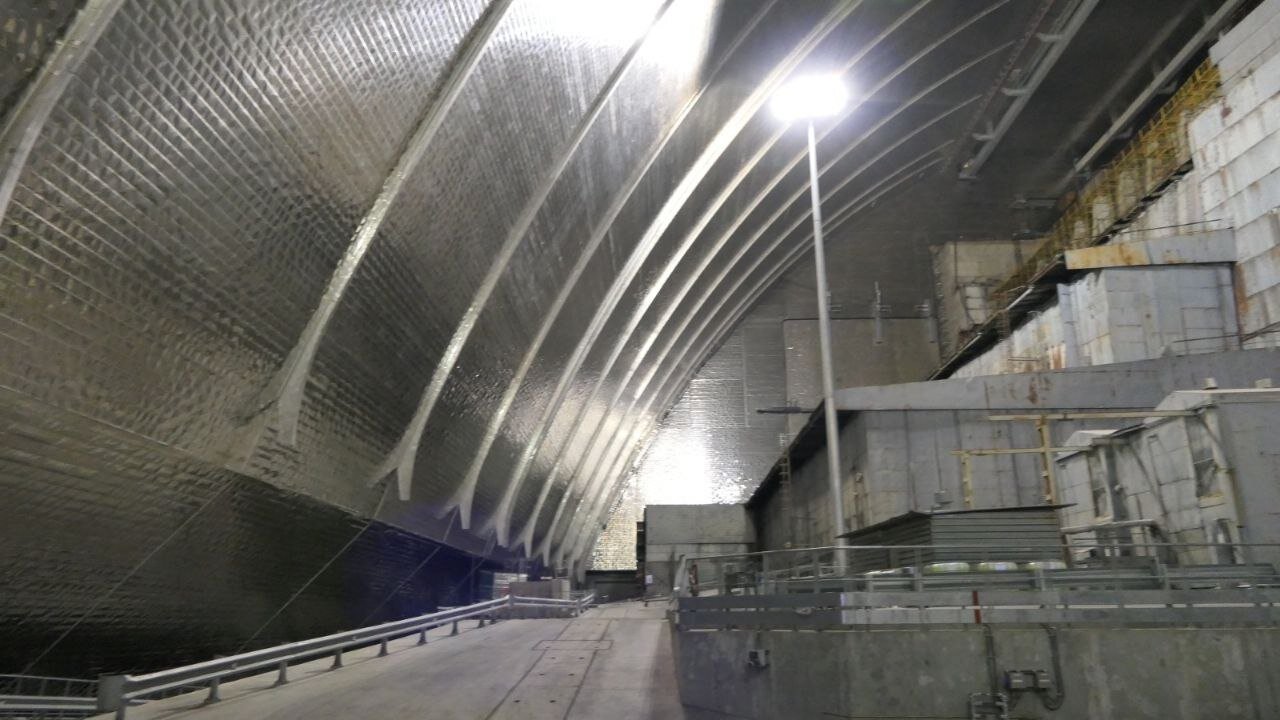
The inner cladding of the New Safe Confinement. Between this and the outer cladding lies the annular gap with controlled humidity and pressure differential. Photo: Hlib Yehorov for Zeleny List
During that century, Bokov stresses, the NSC was meant to allow the safe dismantling of the old Soviet “sarcophagus” — a structure built for a 20-year lifespan that has long since exhausted its design life and effectively ceased performing its function.
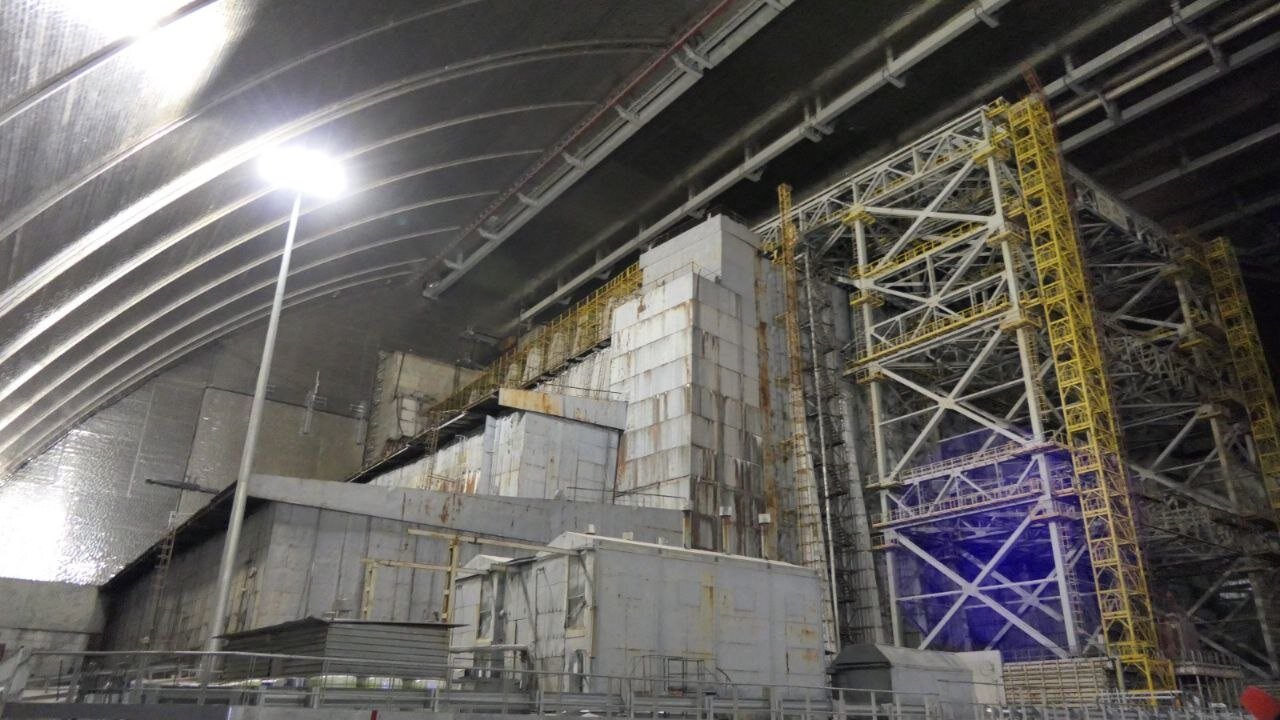
The old Soviet “sarcophagus” of 1986, now sheltered by the New Arch. It was precisely this structure the NSC was meant to allow dismantled safely. Photo: Hlib Yehorov for Zeleny List
14 February 2025: an act of nuclear terrorism, and its price
And then came the Geran-2.
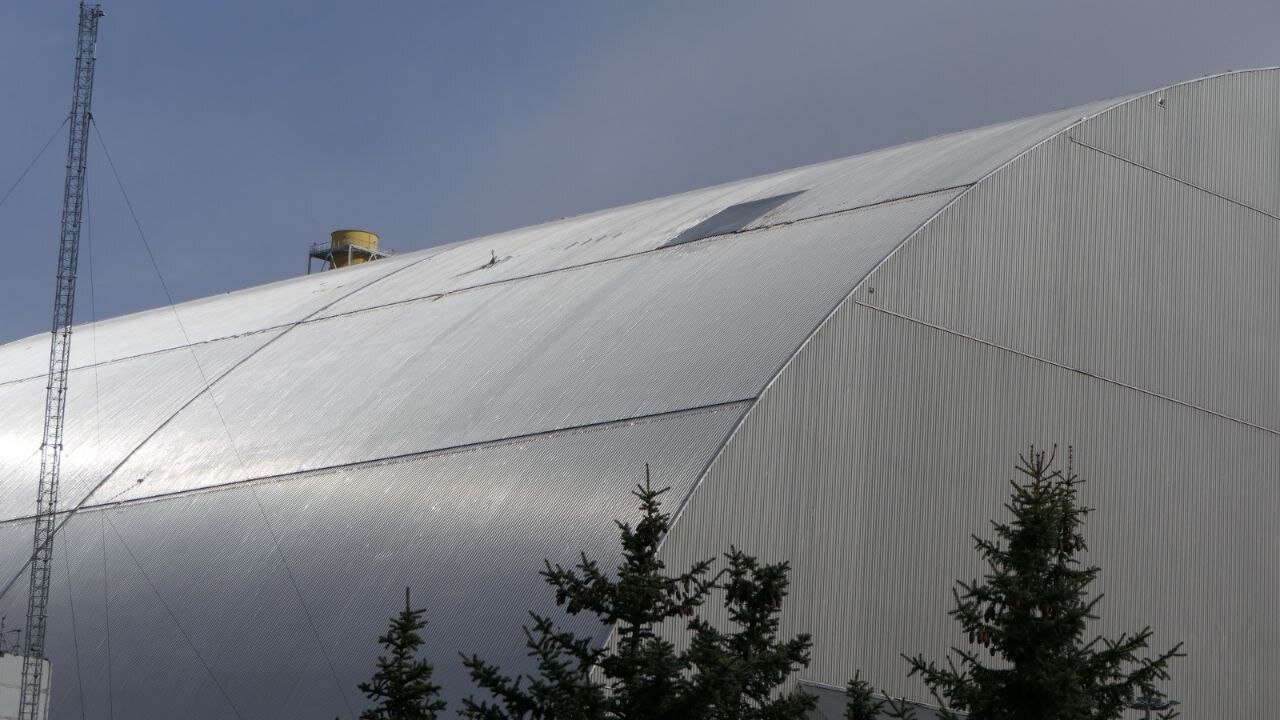
On 14 February 2025, the russian federation carried out a deliberate strike with an attack drone against the roof of the NSC. As Bokov describes, the drone punched through both the outer and inner cladding and ignited the sealing membrane — a high-strength polyurethane element that is critical to the structure: it joins the movable Arch with the existing buildings of the fourth power unit, forming the barrier that keeps radioactive aerosols from escaping into the environment.
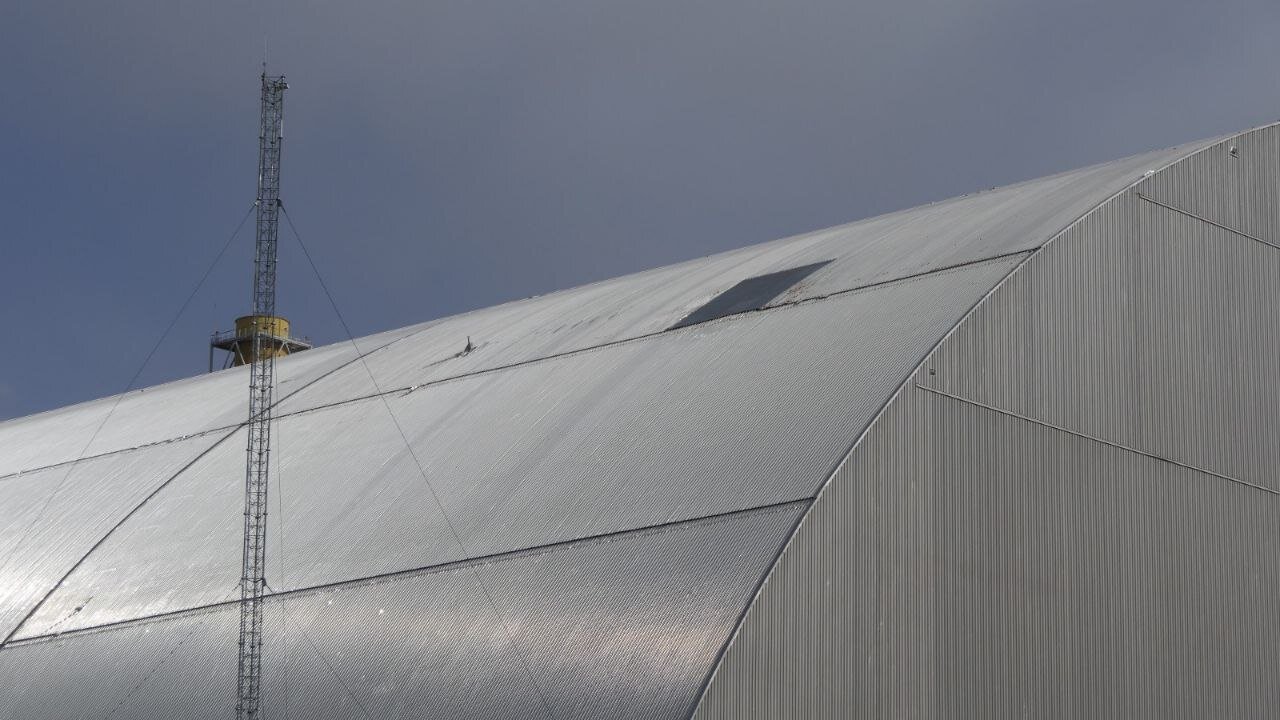
The roof of the New Safe Confinement after the russian Shahed strike of 14 February 2025. The damaged area is visible in the centre. Photo: Hlib Yehorov for Zeleny List
The same damage from a different angle — approximately 15 square metres of through-and-through destruction of both outer and inner cladding. Photo: Hlib Yehorov for Zeleny List
The fire burned for two weeks. To extinguish hidden seats of combustion inside the roof, rescuers had to cut 332 technological openings in the outer cladding. The total area of through-and-through damage came to roughly 15 square metres. The object temporarily lost its principal function: the system maintaining excess pressure in the inter-cladding space was disrupted.
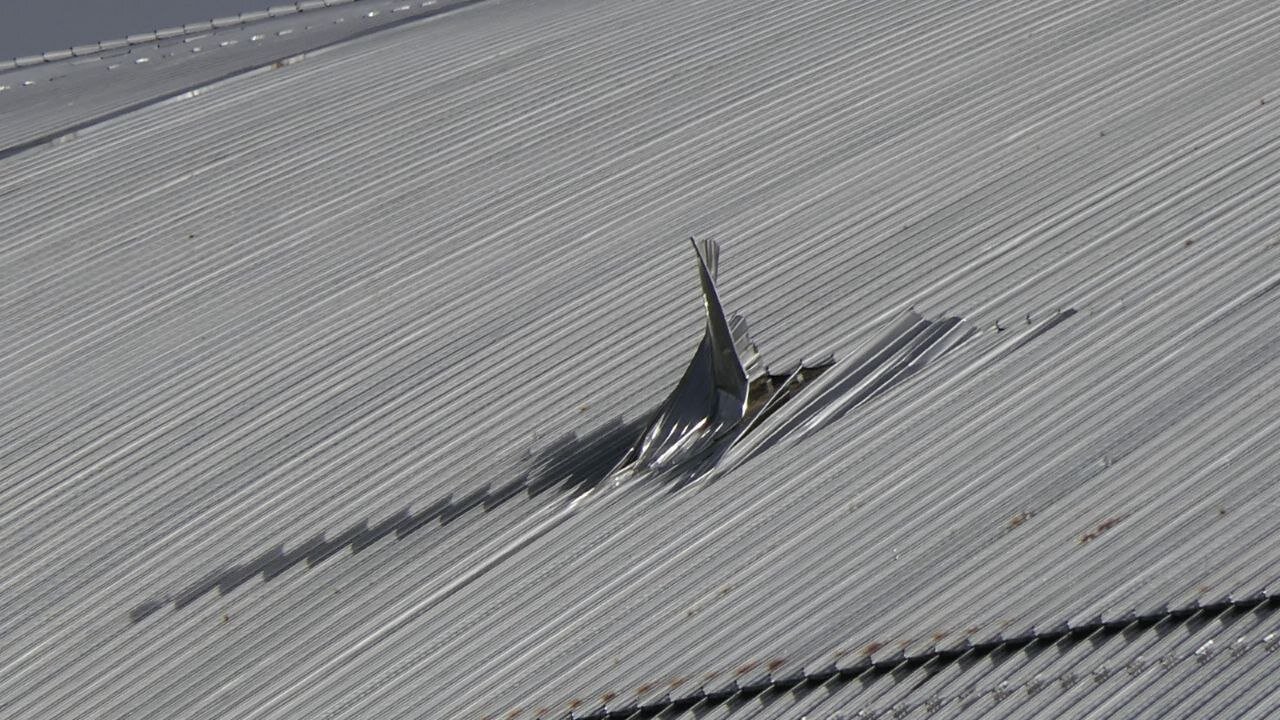
Damage to the outer cladding, close-up. The track of the drone’s passage and one of the technological openings. Photo: Hlib Yehorov for Zeleny List
“That this strike did not lead to a large-scale radioactive catastrophe,” Bokov relays the assessment of the plant’s specialists, “can only be considered limitless luck.”
According to the shift supervisor, the engineering solutions for the repair are being developed by the same French companies — Bouygues and Vinci — that originally built the Arch. Because of high radiation levels and the height of more than 100 metres, much of the work will be carried out by remote-controlled robots and manipulators. The repair plan covers the replacement of damaged sections of inner and outer cladding, the complete replacement of the sealing membrane and waterproofing layer, and the restoration of the integrated automatic system for monitoring temperature and humidity. The estimated cost: 500 million euros. Through the end of 2026, temporary repairs will be carried out to restore basic confinement and partial sealing. The main phase will begin in 2028 and must be completed by the end of 2030. That is a critical deadline — beyond which, with ventilation compromised, corrosion will begin to destroy the structure irreversibly. Around 30 million euros has already been allocated for the initial works in 2026. The remainder will be raised by the EBRD from donor countries by the end of 2027.
Once again, the world is paying for a russian crime.
Storage facilities held hostage
The NSC is not the only sore point of the Exclusion Zone. As Nadiia Mudryk-Mochalova notes, two spent-nuclear-fuel storage facilities operate on the Chornobyl industrial site, with fundamentally different safety profiles.
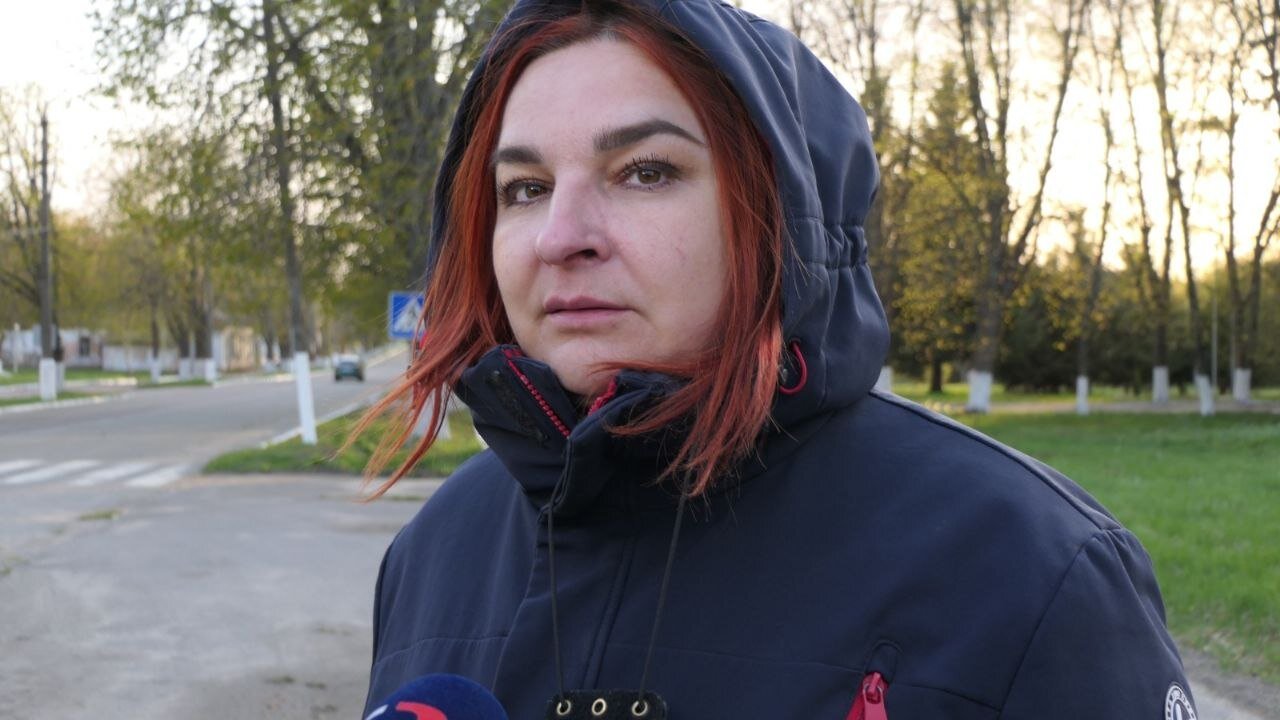
Nadiia Mudryk-Mochalova, head of the press service of the State Agency for the Management of the Exclusion Zone. Photo: Hlib Yehorov for Zeleny List
ISF-1 is the old Soviet wet-type storage where fuel from reactors 1, 2 and 3 is kept in pools of water that require continuous active cooling. According to Mudryk-Mochalova, it was precisely during the russian occupation of the plant in 2022 that prolonged loss of power nearly produced disaster: had the water boiled off, the fuel would have overheated and a radioactive release would have followed.
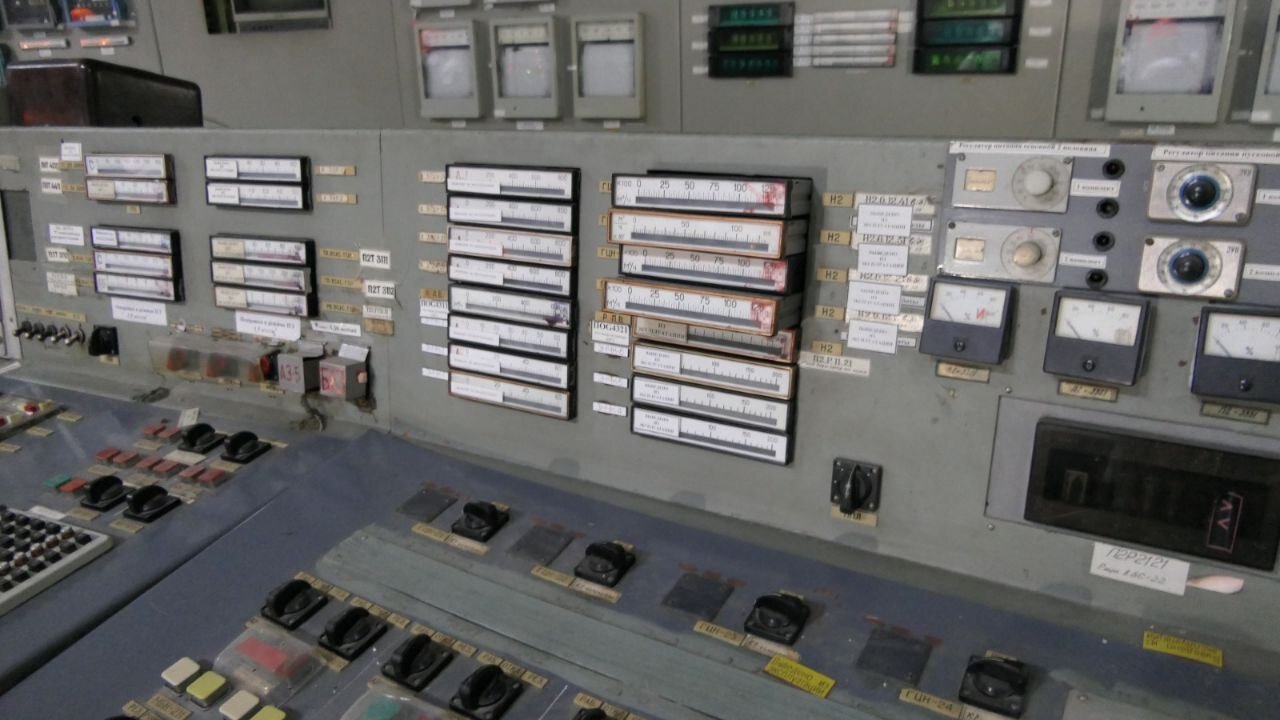
A Soviet control panel at the Chornobyl NPP — the era in which safety was guaranteed by analogue instruments and human vigilance. Photo: Hlib Yehorov for Zeleny List
The fuel is now being transferred to ISF-2 — a new dry-type facility commissioned shortly before the full-scale invasion. Its construction cost the international community around 448 million euros. More than 28 countries — once again primarily the G7 and the European Commission — financed the facility through the EBRD’s Nuclear Safety Account. Unlike ISF-1, the new facility uses passive ventilation and is designed for 100 years of autonomous, safe storage.
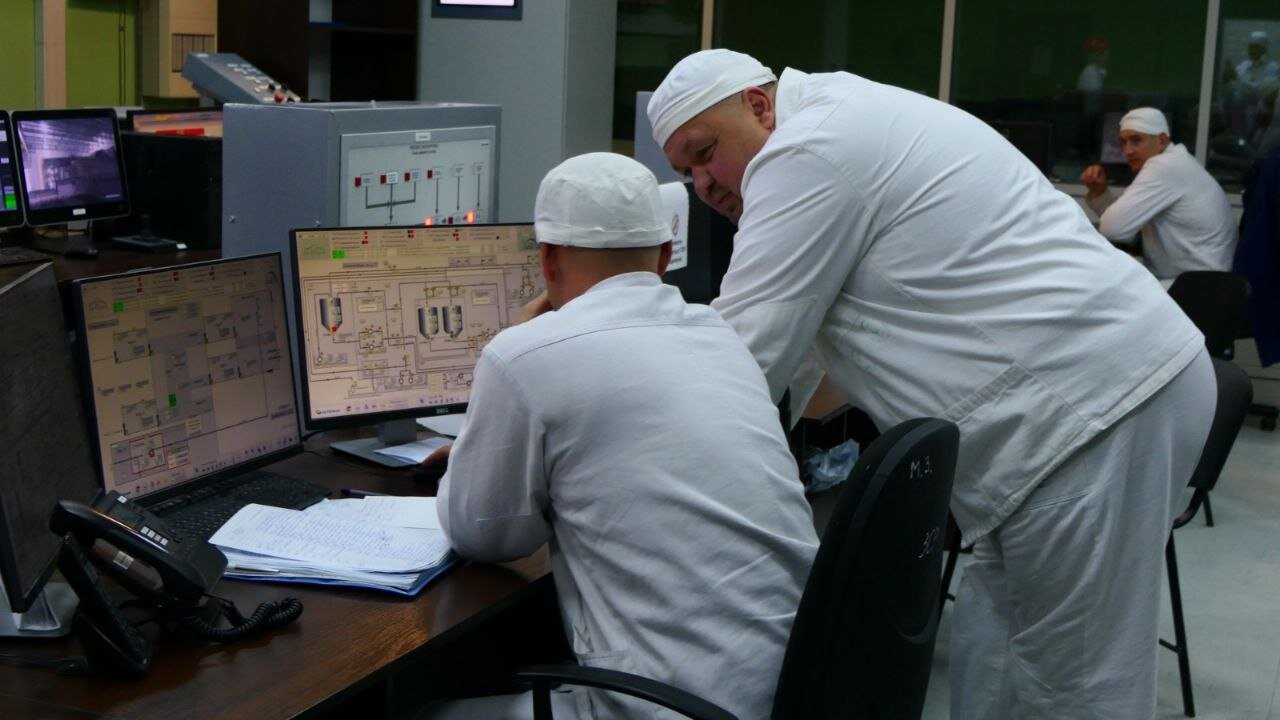
The modern ISF-2 control centre — the new dry-type spent-fuel storage facility, built by 28 donor countries. Photo: Hlib Yehorov for Zeleny List
Nor is the russian nuclear threat confined to Chornobyl alone. The Zaporizhzhia NPP — the largest nuclear power plant in Europe — is now in its fourth year of russian military occupation, converted from a civilian object into a platform for nuclear blackmail. And every day, every night, dozens of russian missiles and drones cross the Exclusion Zone on their way from “fraternal” belarus deep into Ukraine. Each of those flights, our interlocutors emphasise, is a potential continental-scale catastrophe.
A business built on fear: the rosatom protectorate, and the habit of concealment
Here begins the most cynical chapter of this story. What for the world became a lesson, for the Kremlin became a commodity. For decades, Moscow has exploited the theme of Chornobyl on two parallel tracks. On one track — nuclear blackmail: by frightening the world with the spectre of another disaster, russia has positioned itself as a “monopolist of knowledge”, insisting that only we understand these technologies, only we know how to deal with the consequences, only we can be trusted with nuclear safety.
On the other track — the commercialisation of that fear. Having moved on to a new generation of genuinely safer Generation 3+ reactors, russia began building NPPs across the world — in Hungary, Turkey, Bangladesh, Egypt, India. But this was never simply the sale of energy infrastructure. This is a technological protectorate: contracts are structured so that only russian fuel, only russian service teams, only russian control software, only russian operator training — every component is bound exclusively to rosatom. The classic “hooking on the needle”: a country that buys a russian reactor enters a multi-decade dependence from which exit is politically and economically all but impossible. The reactor becomes a Trojan horse — an instrument of soft occupation that runs for sixty years.
And here lies the most important parallel of our day. Ukrainian strikes against russian oil-refining facilities are strikes against legitimate military targets: russia’s oil infrastructure is a dual-use industry — and often, in essence, a primarily military one. It feeds the war machine directly, producing fuel for missiles, components for explosives, and the logistics of the front. Ukraine, as the defending side, acts within the bounds of the Geneva Conventions, and strikes against these objects are today among the most effective means of degrading the aggressor’s military potential. The question is not the strikes themselves. The question is how the russian authorities deal with the consequences for their own population. In Tuapse, Novorossiysk, Ryazan, Samara, storage tanks burn, oil flows into the Black Sea, carcinogenic compounds vent into the air. What does the russian government do? Exactly what the Soviet government did in 1986: residents are not informed of what is actually being released, contamination data is classified, the local population lives in an information vacuum — precisely as the people of Prypiat did in the spring of 1986.
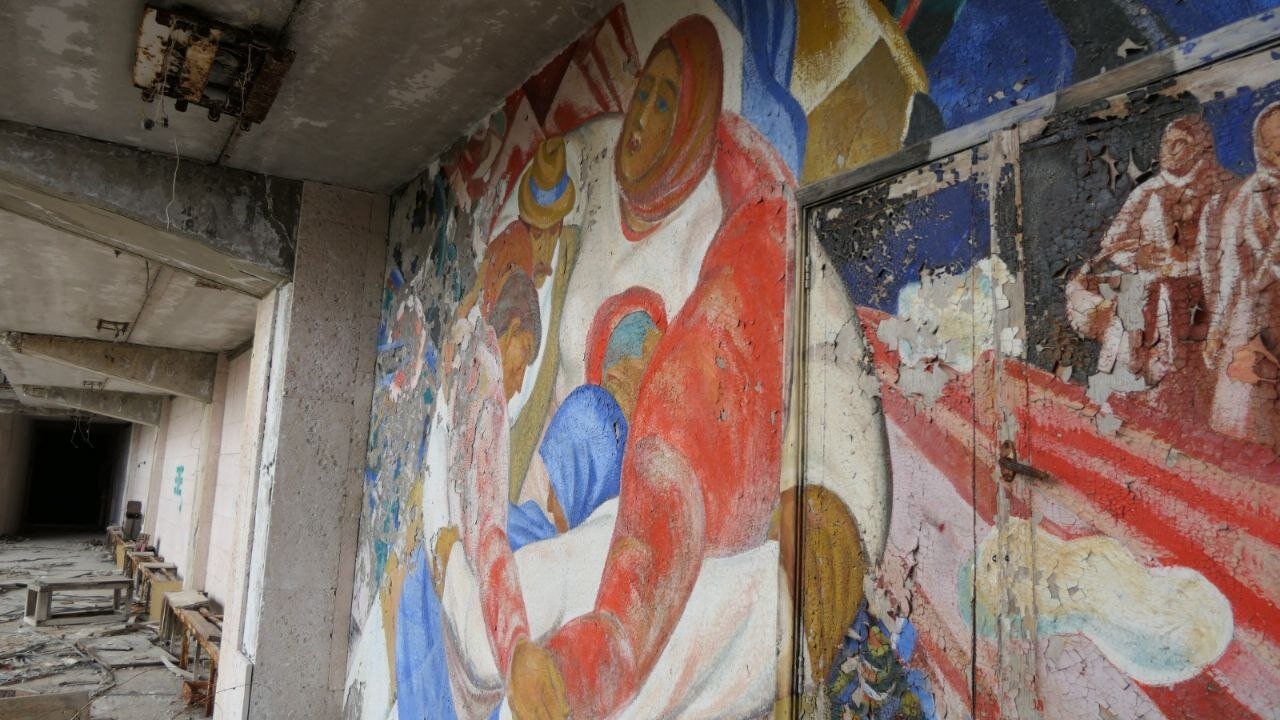
Soviet murals in an abandoned building in Prypiat — a monument to the ideology that raised generations accustomed to silence. Photo: Hlib Yehorov for Zeleny List
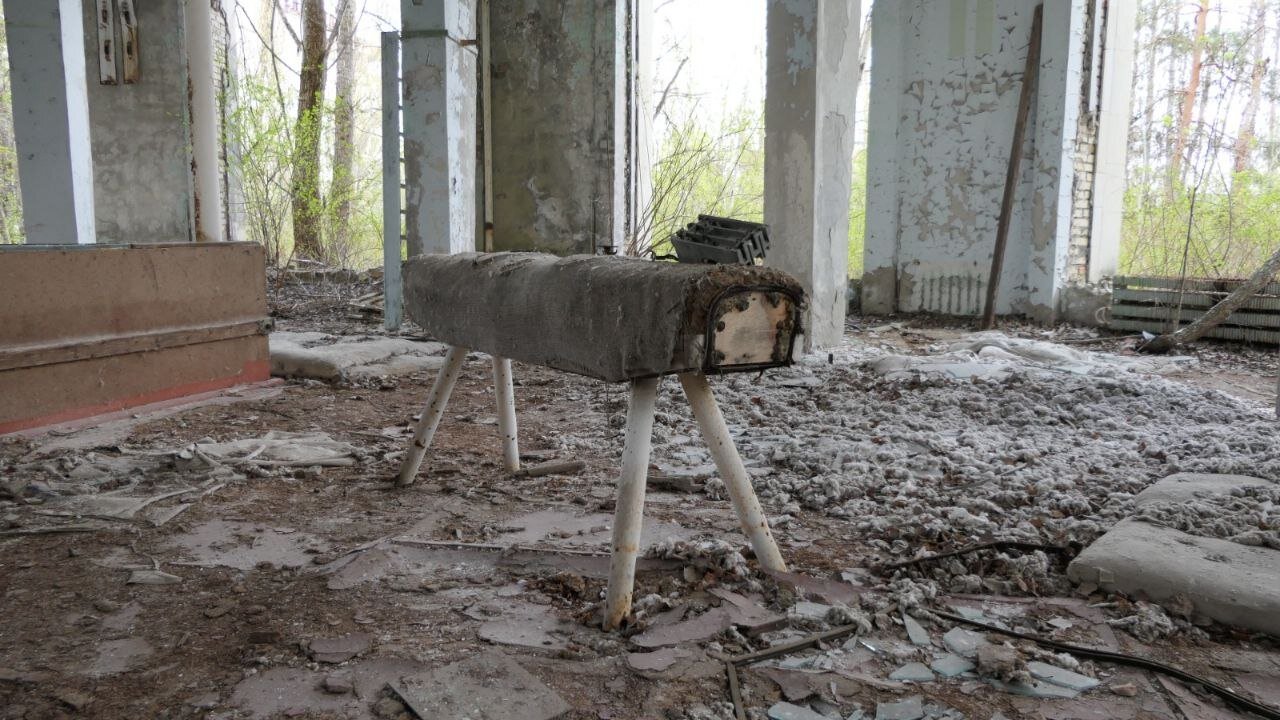
An abandoned gymnasium in Prypiat. The pommel horse has stood in this same spot since 27 April 1986. Photo: Hlib Yehorov for Zeleny List
More than that, russia’s bet on risk needs no war as its pretext. The catastrophe involving Volgoneft-class tankers in the Kerch Strait at the end of 2024 confirmed it: old Soviet vessels, structurally unfit for sea service, broke apart in a storm and dumped tens of thousands of tonnes of mazut into the water. More than a year later, the Kremlin still has not carried out a proper cleanup — the mazut is still washing up on the coast, birds are dying, beaches are poisoned, and local residents are scraping it up by hand. The russian oil and transport industries were an ecological time bomb long before the full-scale war — that fact was simply suppressed.
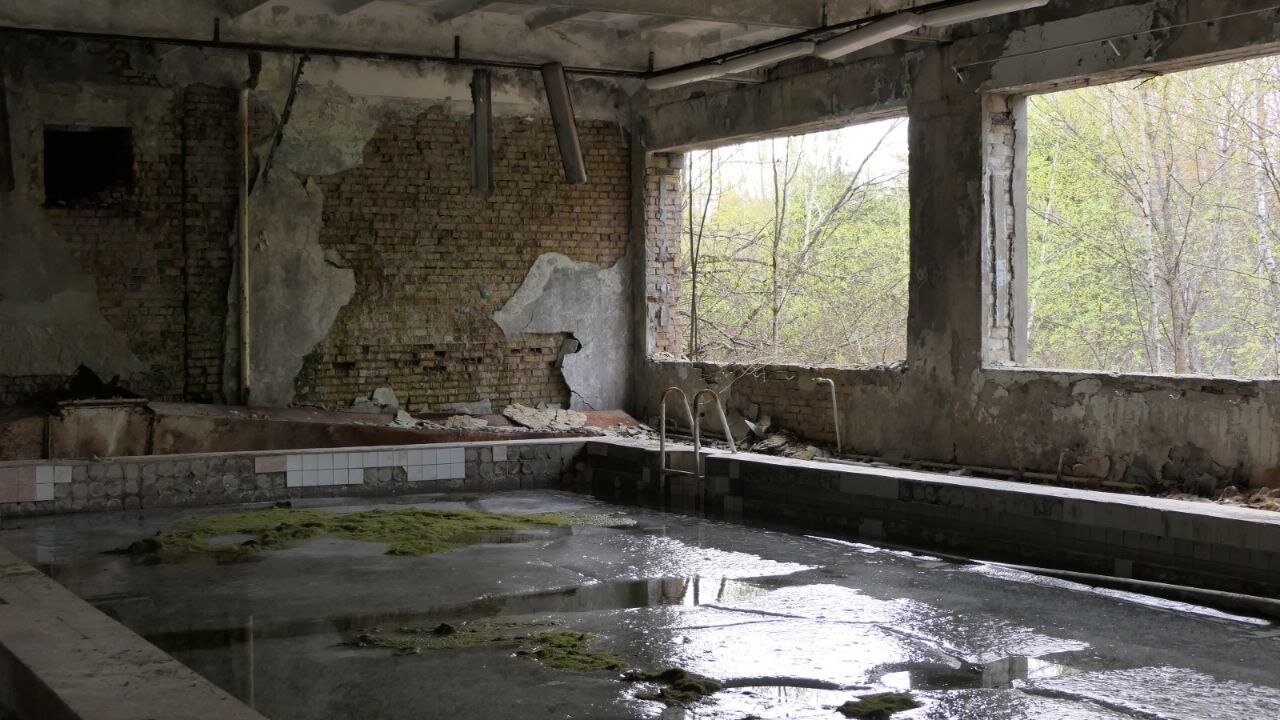
The “Lazurny” swimming pool in Prypiat. One of the most recognisable symbols of the catastrophe — it continued operating for liquidators until 1998. Photo: Hlib Yehorov for Zeleny List
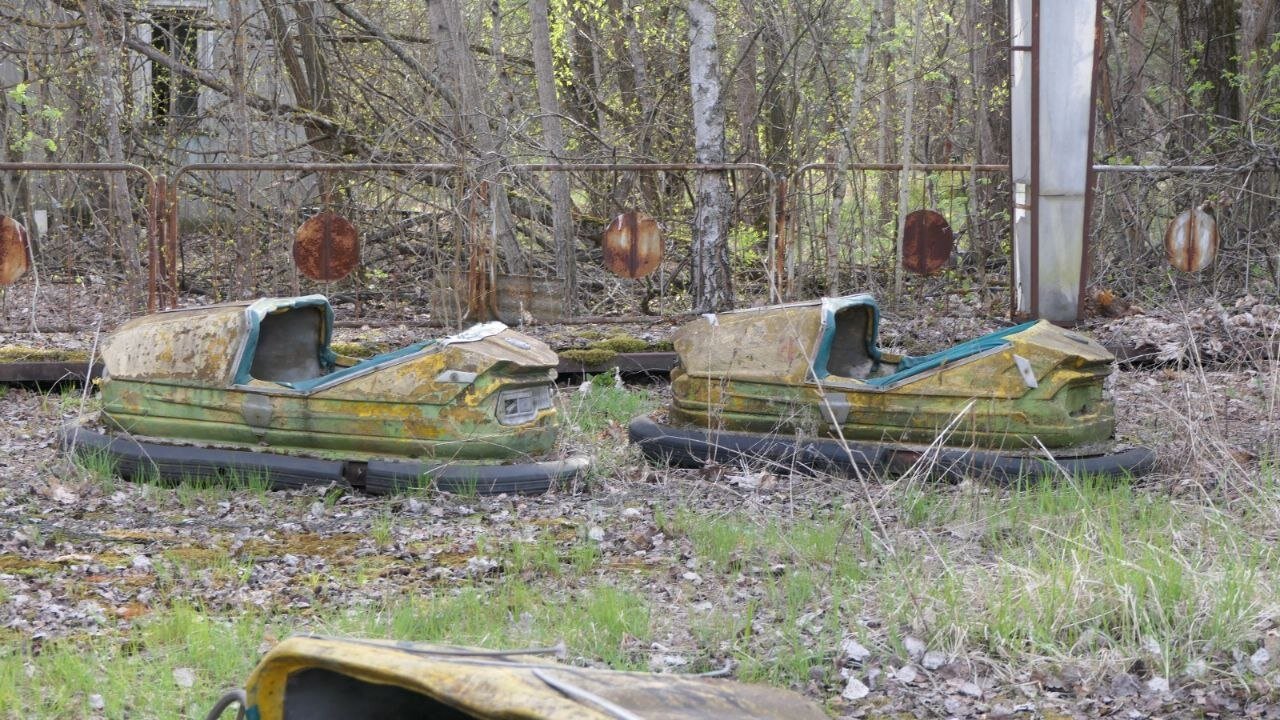
Bumper cars at the amusement park in Prypiat. The park was due to open officially on 1 May 1986 — five days after the catastrophe. Photo: Hlib Yehorov for Zeleny List
The Soviet genetic code — the human being as resource, the truth as a threat to power — has not gone anywhere. It has merely changed its clothes.
Chornobyl is not over
For russia, Chornobyl was never a lesson. It was, and remains, an instrument: first, an instrument of Soviet concealment; then, an instrument of monopolistic blackmail; now, an instrument of direct nuclear terrorism. The common denominator runs through all three: indifference to human life — its own and that of others — and to international security as such.
Forty years on, the chain is unmistakable: Soviet hubris in 1986 → Soviet silencing and lawless dumping of waste → post-Soviet flight from responsibility → the conversion of Chornobyl into commodity and threat → the seizure of the Zaporizhzhia NPP → the deliberate strike on the Arch on 14 February 2025.
While russian missiles cross the Exclusion Zone, while tanks burn in Tuapse, while the mazut from the Volgonefts poisons the coast, while the groundwater of Polissia still glows beneath Soviet trenches — this is not history. This is the present.
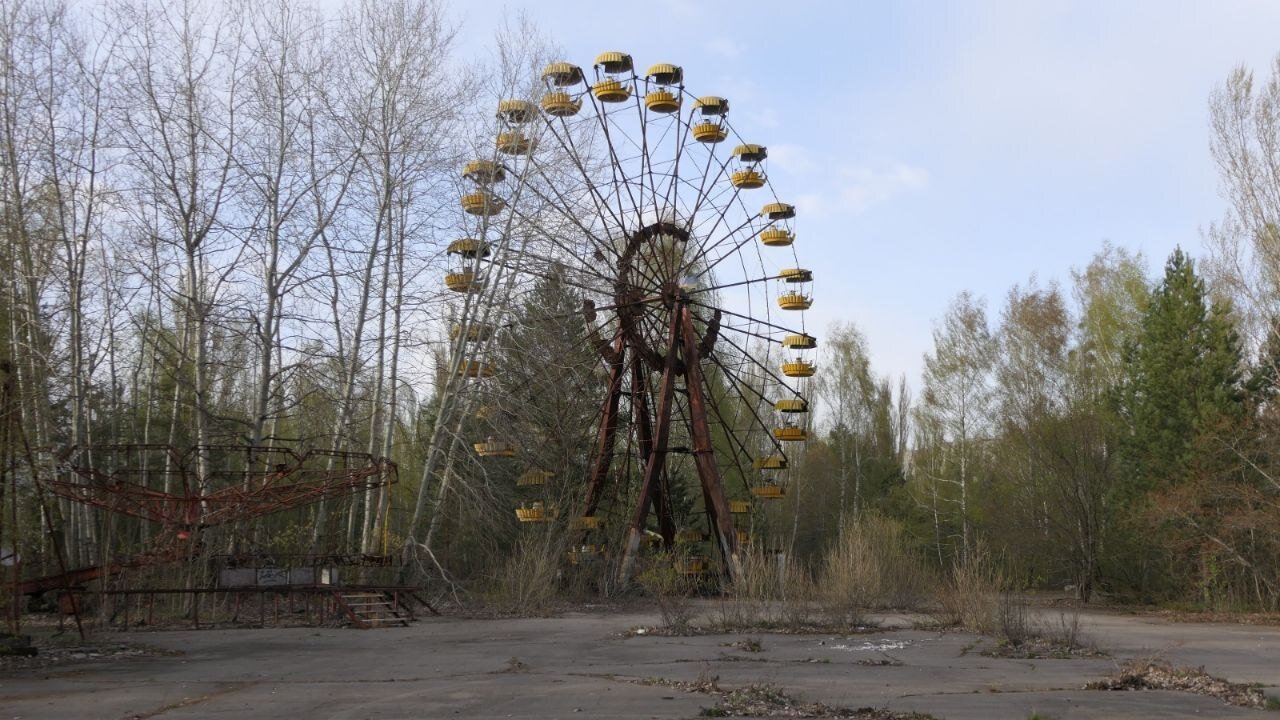
The Ferris wheel in Prypiat’s amusement park — perhaps the most recognised symbol in the world of a catastrophe that has never stopped. Photo: Hlib Yehorov for Zeleny List
The Chornobyl catastrophe continues. And it will continue until nuclear terrorism, as an instrument of russian policy, is brought to an end.
This report from the Chornobyl Exclusion Zone was prepared by Zeleny List journalist Hlib Yehorov. Exclusive comments for this piece were provided by Serhii Serhiyovych Bokov, shift supervisor of the Shelter Object and the New Safe Confinement, and Nadiia Mudryk-Mochalova, head of the press service of the State Agency for the Management of the Exclusion Zone.